
Lead and Follow
partnership signaling — the cards you legally play are a code to your teammate; one partner signals with a card (high-low, suit-preference), the other reads it and responds; two hands play as one plan
Press play to listen along. The line being read lights up as you go.
Show full transcript
Loading transcript…
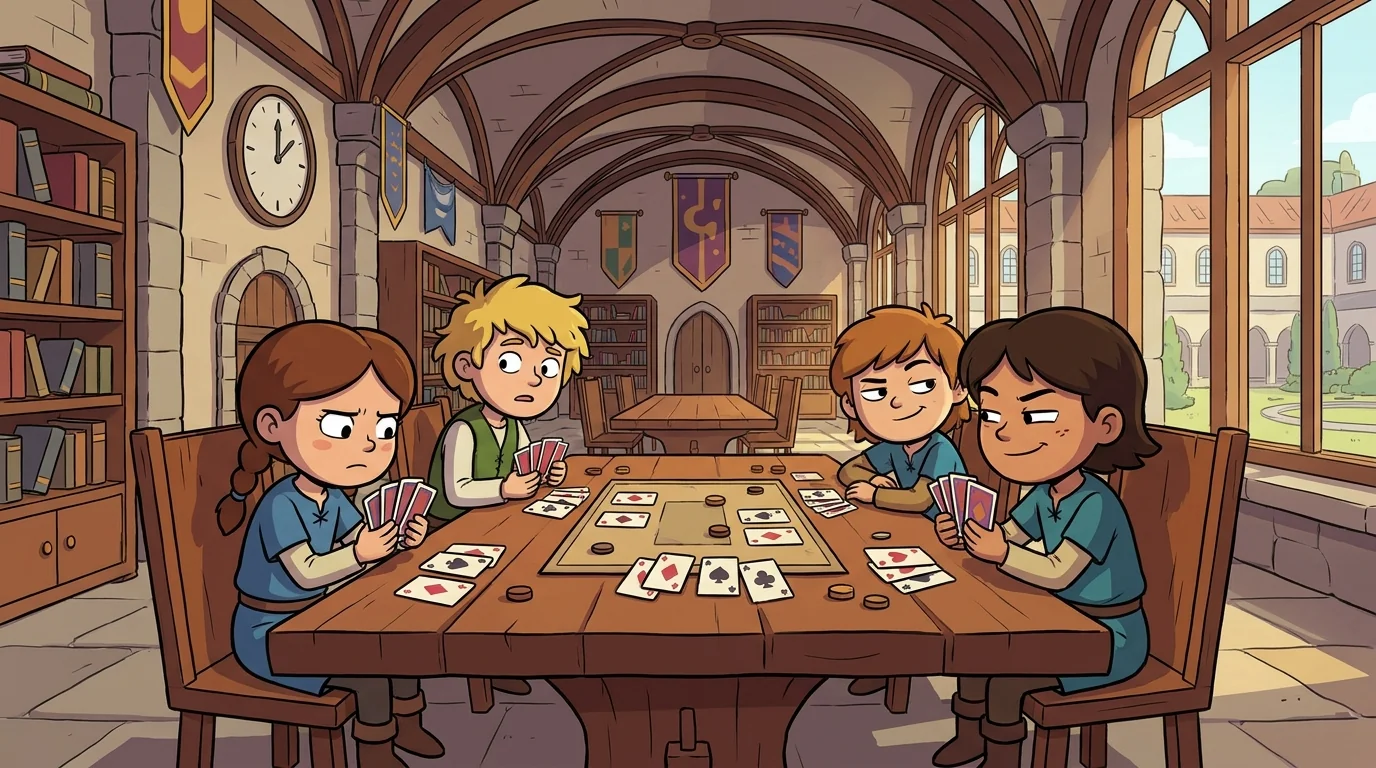
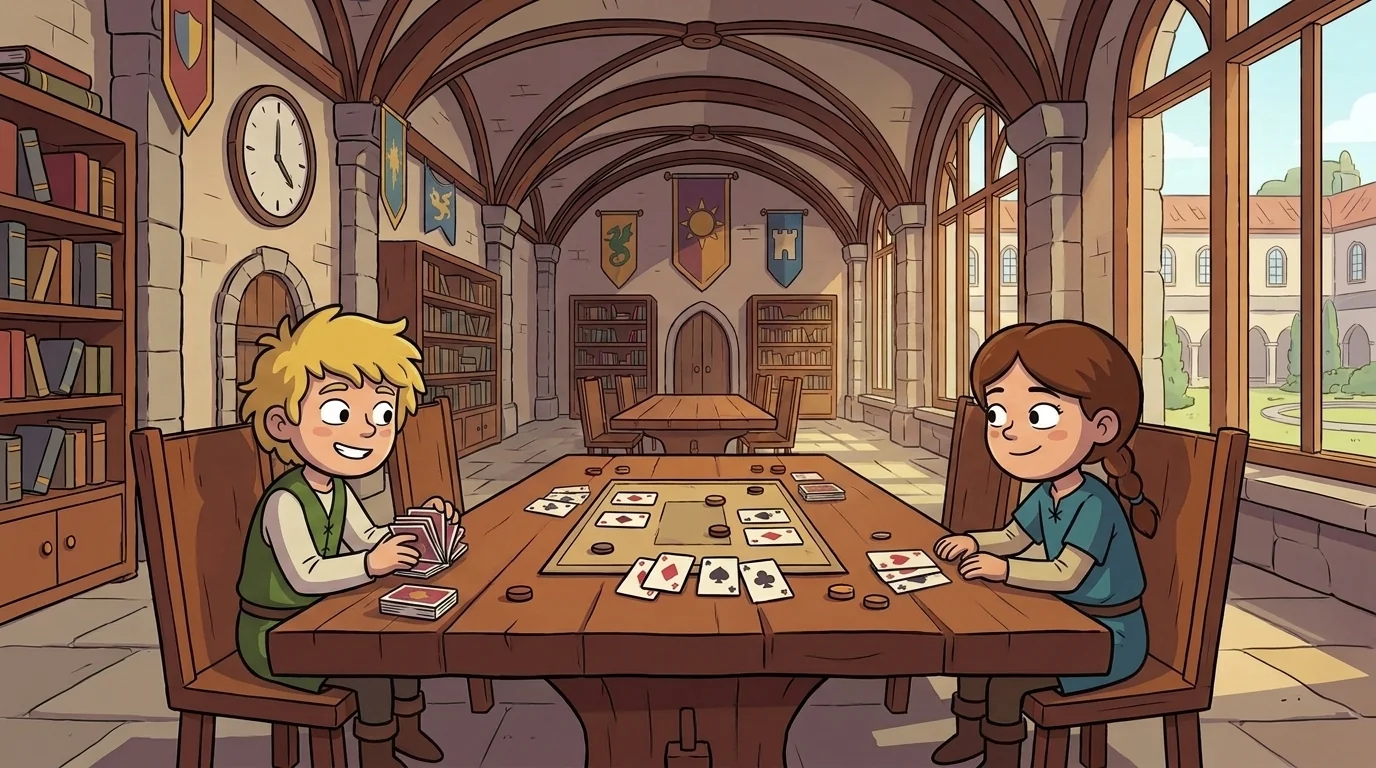
The partnership table at the CardForge academy sat four to a game, two against two, and the rule everybody learned first was the hardest one to believe: you cannot tell your partner what you have. Not out loud. Not with a wink. The only language allowed was the cards themselves.
Lead and Follow were partners, seated across from each other, and for the whole first week they were terrible. Not because they played badly — each of them played beautifully. The trouble was that they played alone. Lead would win a trick with a clever card and Follow, having no idea what Lead was planning, would throw away exactly the card Lead needed. Two good players, two good hands, sitting an arm's length apart, and somehow always working against each other.
"We keep losing," Follow said after another hand slipped away, "and I don't even know why." She fanned her cards and stared at them like they might explain. Across the table, the opposing pair — the Sharps — shared a small, knowing smile, and it stung, because the Sharps didn't seem to be doing anything clever at all.
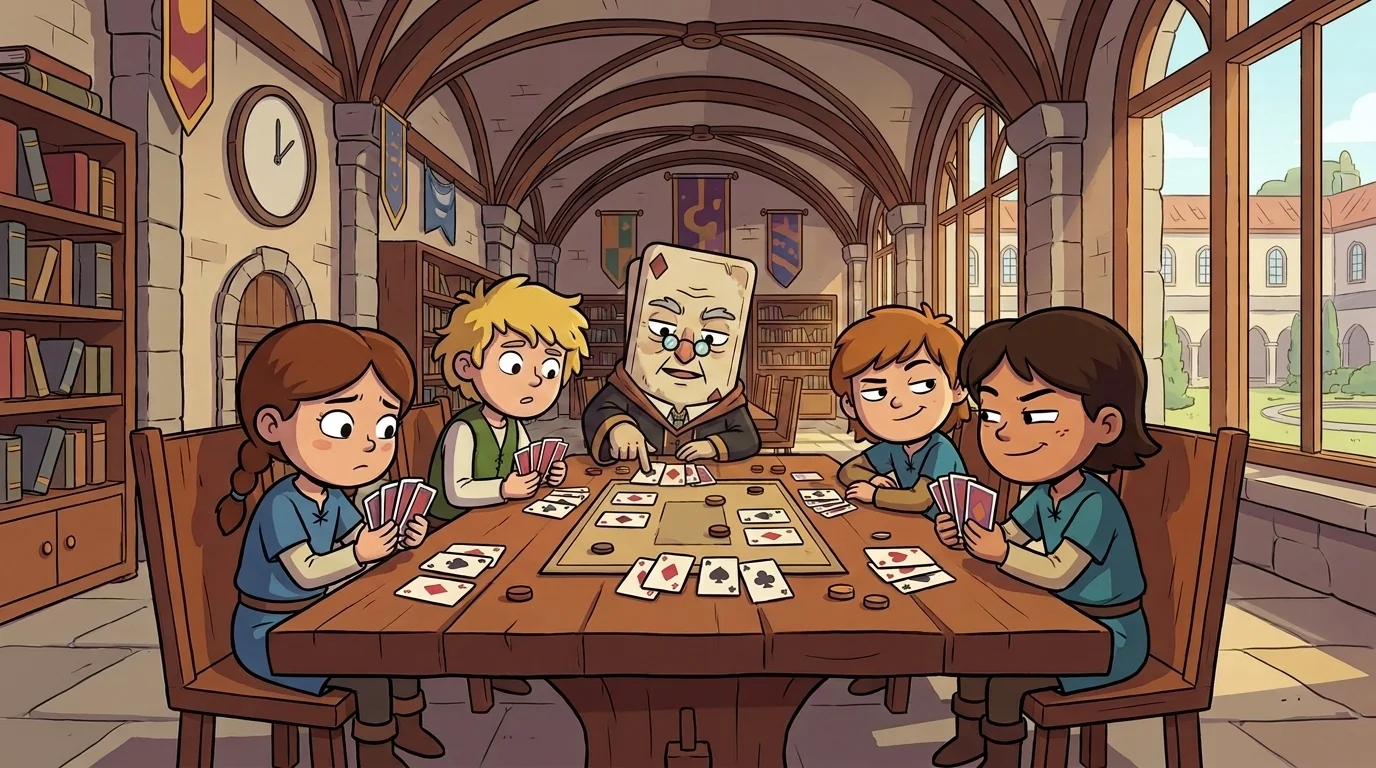
Their coach, an old card who had seen ten thousand hands, pulled up a stool. "You two are trying to win with your own hand," she said. "But partnership isn't two hands. It's one hand split between two people who've learned to talk without talking."
She tapped Lead's cards. "The cards you choose to play are a sentence. When you lead a suit, you're saying something. When you throw a card away, you're saying something. Your partner is listening to every card — and so are your opponents, but only you two share the code." She looked at Follow. "You've been reading your own hand. Start reading his."
Lead turned this over slowly. A card as a sentence. He'd always thought of a card as just a move. But of course — Follow could see every card he played. What if which card he chose could mean something?
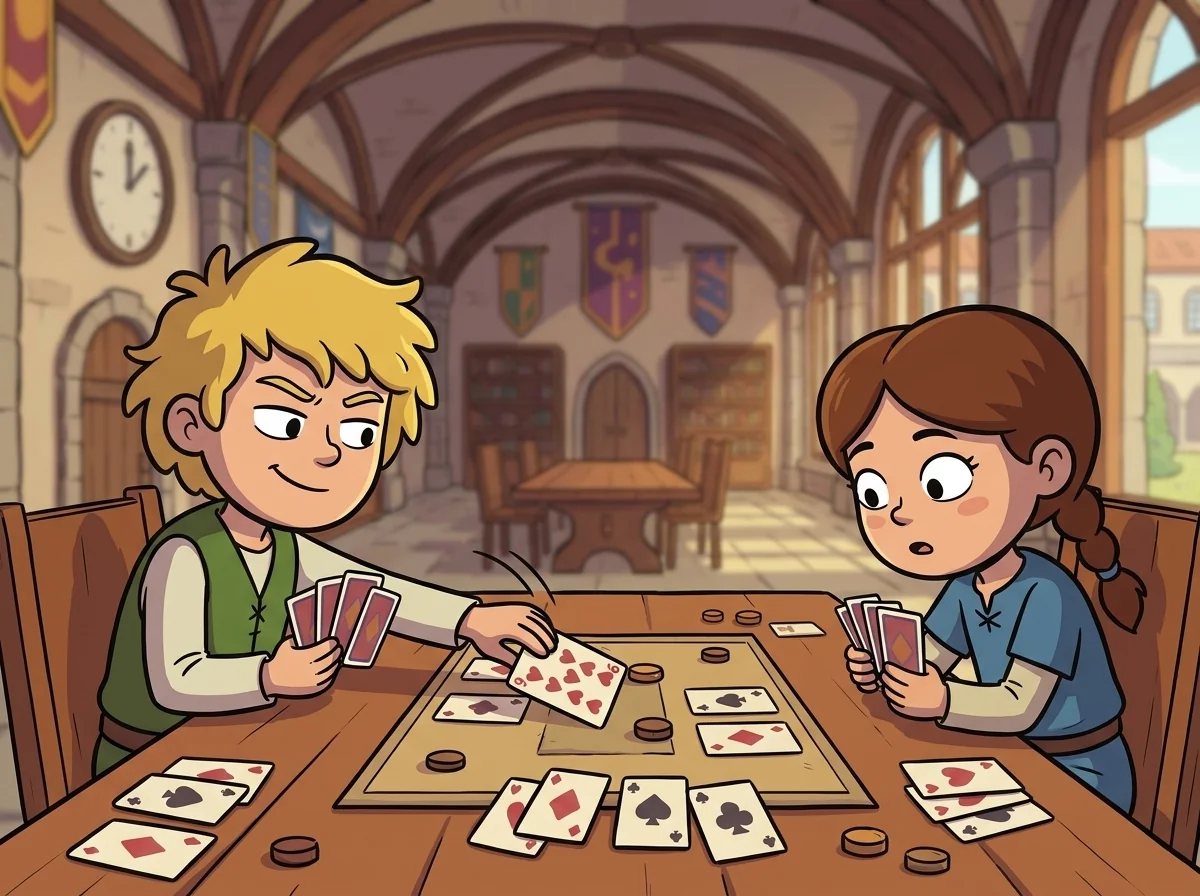
So they built a language, one legal signal at a time.
"High-then-low," the coach said, "means I like this suit — keep leading it. Low-then-high means I've got nothing here, get out." She dealt a practice hand. Lead, holding strength in hearts, played his nine of hearts first — deliberately high — then, next chance, a two. A little sentence: hearts, partner, hearts.
And across the table Follow heard it. Not with her ears — with her attention. High then low. He likes hearts. So when her turn came she led hearts straight back into Lead's strength, and Lead's carefully-saved cards came marching home, trick after trick. The Sharps blinked. They had seen the exact same nine and two that Follow had seen — the signal was played in the open, right there on the table — but they didn't share the code, so to them it was just two cards. To Lead and Follow, it was a whole plan spoken out loud in a language only they two knew.
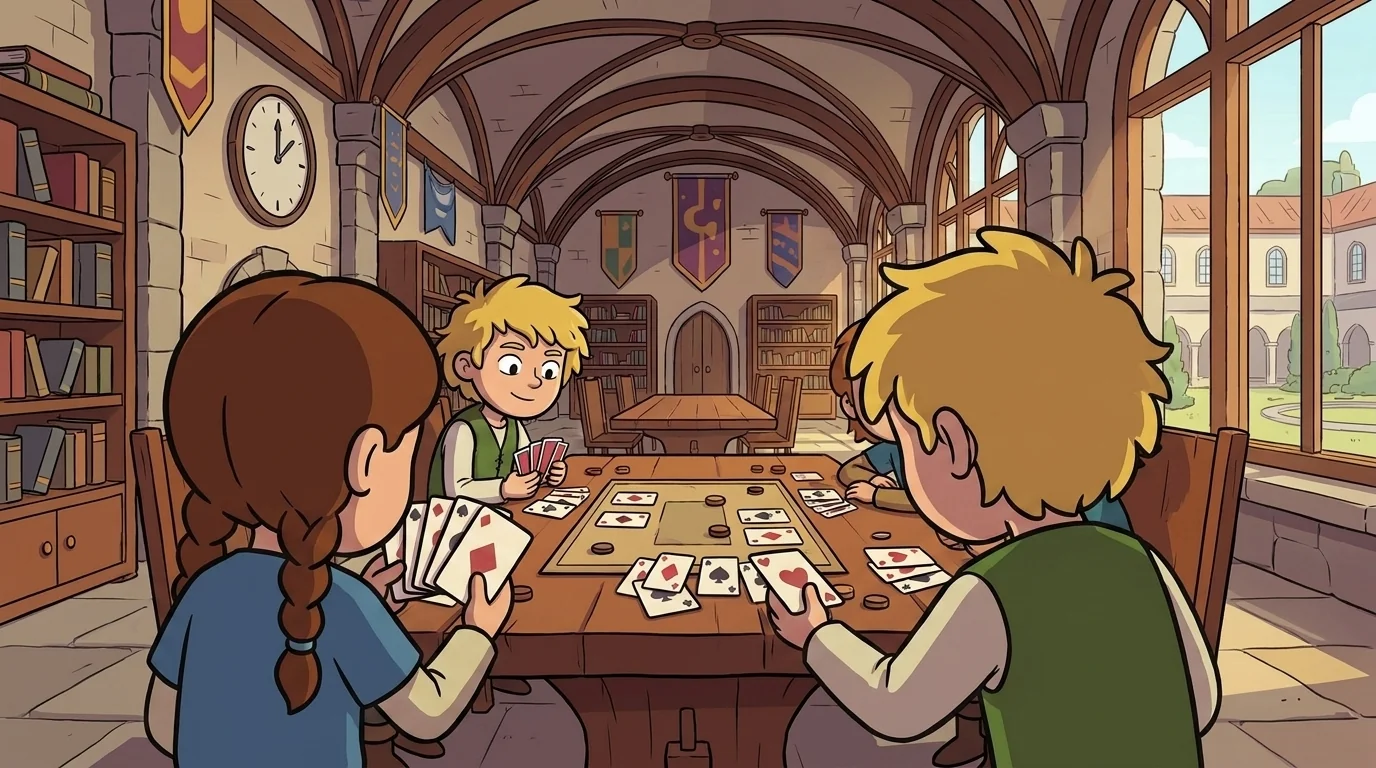
By the end of the month, they barely seemed to think at all.
Lead would drop a card and Follow's eyes would flick to it and she'd simply know — play the diamonds, save the spade, he's out of clubs. And she'd answer with a card of her own that told him something back, and the two of them wove hand after hand like they were passing notes in a language made entirely of hearts and spades. The coach watched them and nodded. "That's it," she said. "Two players, one mind. You're not guessing what your partner has anymore. You're listening to what they told you." The signals were never secret — everyone could see them — but only a partnership that had built the code together could actually speak it.
They won the academy's partnership round that spring, and afterward Follow said the strangest part wasn't the winning.
It was the quiet. She and Lead had spent the whole final hand not saying a single word, and yet she'd felt closer to him than to almost anyone — that warm, clicked-in feeling of being completely understood by someone who could read her perfectly and still keep every promise the cards had made. They gathered up the deck together, and Lead shuffled, and neither of them needed to say good game, because they'd been saying it to each other all afternoon, one honest card at a time. Two hands. One plan. And somewhere under all the strategy, the simple, steady joy of not having to play alone anymore.
The CardForge ensemble
Lead and Follow is part of CardForge's distributed-narrative cast. Each character embodies a different curricular primitive; together they teach the full subject.
-

The Finesseur
Finesse (force an opponent's high card via positional play; bridge / hearts / spades)
-

The Squeezer
Squeeze (force a discard that gives up a winner; advanced bridge + hearts)
-

The Endplayer
Endplay (throw opponent in to force a losing lead; bridge / hearts / whist)
-

The Counter
Card-counting / pip-tracking (track played cards to deduce remaining hands; gin / bridge / blackjack-style)
-

The Long-Suit
Suit establishment (set up a long suit to run for tricks late in the hand; bridge / whist / spades)
-

The Bluffer
Deception under uncertainty (poker betting; representing a hand you don't have)
-

The Discarder
Strategic discard (hearts: avoid points; spades / gin / rummy: shed dead wood)
-

The Trumpkeeper
Trump management (when to ruff, when to hold; whist / spades / euchre / pinochle)
-

The Forcer
Magic forcing (the spectator "freely chooses" the card you intended)
-

The Shuffler
False-shuffle / stack management (control card order while appearing to randomize; mathematical card magic)