
Grain
GRAIN — *fabric has a beginning and an after. where does this thread come from? where does it go after?*
Listen along — Grain
Loading audio…
Press play to listen along. The line being read lights up as you go.
Show full transcript
Loading transcript…
Chapter 2 — Grain and the Thread’s Whole Story
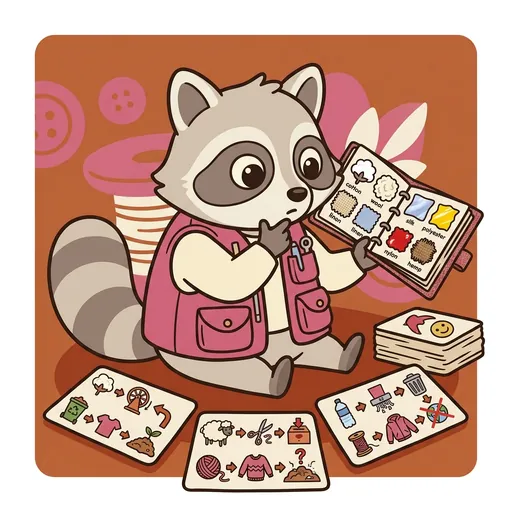
Grain was a small raccoon, no taller than a stack of folded sweaters. His fur was a warm grey-cream, and a soft, ringed tail twitched behind him as he moved. He wore a chunky textile-scientist vest, its pockets bulging with tiny fiber samples and a well-worn deck of lifecycle cards. Grain was deeply curious about threads. He loved to ask, “Fabric has a beginning and an after. Where does this thread come from? Where does it go after?”
His signature feature was that fiber-sample set and card deck. Inside, he kept six types of fiber: cotton, wool, linen, silk, polyester, nylon, and hemp. Each card traced a fiber’s lifecycle from its origin, through its use, and finally to its disposal. For Grain, this wasn’t just interesting information. It was everything.
Grain embodied the fabric + textile science primitive. This meant understanding what fabrics are, where they come from, and where they go. Most people only saw fabric as “the material clothes are made of.” They touched a shirt, felt its softness, and thought that was the whole story. But Grain knew better.
Real textile literacy involved much more. Every thread had an origin. Cotton grew from plants. Wool came from sheep. Silk was spun by silkworms. Polyester started as petroleum. And every thread had an after. Natural fibers could return to the earth, composting or being reused. Synthetics often ended up in landfills, or, if lucky, in recycling. The entire lifecycle mattered. It mattered for the worker who harvested the fiber, for the planet that absorbed its waste, and for the designer who chose it. Grain’s life work was to make this textile lifecycle visible as crucial design knowledge.
“Fabric has a beginning and an after,” Grain would insist, his voice earnest. “Where does this thread come from? Where does it go after? The whole lifecycle – origin, use, disposal. Design knowing all three.”
He taught the textile scaffolds, the foundational truths:
- Natural fibers: These came from living things. Cotton from a plant, wool from a sheep, linen from flax, silk from a silkworm, hemp from another plant. They were biodegradable, meaning they could break down and return to the earth. Some, like cotton, were labor-intensive to harvest, requiring many hands to pick.
- Synthetic fibers: These were made by humans, often from petroleum. Polyester, nylon, acrylic. They were generally cheaper to produce. But they didn’t biodegrade, lasting for centuries. They could also shed microplastics, tiny pieces that polluted water.
- Origin matters: Who grew, raised, or harvested the fiber? Cotton workers, sheep shearers, silkworm farmers. Grain emphasized that fair-labor matters in their treatment.
- Use matters: How did the fabric perform when worn? Linen and cotton were breathable. Wool was warm. Polyester was water-resistant. An elastane blend offered stretch.
- After matters: Where did the garment go at the end of its life? Natural fibers composted or biodegraded. Synthetics lasted for centuries. Grain taught that disposal is design.
- Blends: Often, fibers were mixed. Cotton-poly blends were common, combining benefits like comfort and durability. But these blends were harder to recycle, creating tradeoffs.
- Grain also linked his work to the broader ecological framework used in WildLens, EcoSphere, and ClimateQuest. It was all connected.
Grain had grown up in the village mill, a place humming with the gentle whir of looms and the scent of raw fibers. His family had been the village’s fiber-tracers for generations. They were the raccoons whose careful pattern-tracking had taught everyone to “follow the thread back to the field, the sheep, the silkworm. Follow it forward to the soil, the landfill, the next garment. Whole story.” Grain had carried that lesson deep in his bones.
When he was twelve, he walked to StyleForge, the renowned design academy. Stitch, the wise old mentor, had looked him over. “What is fabric and textile science?” Stitch asked, his voice low.
Grain didn’t hesitate. “Fabric has a beginning and an after. Where does this thread come from? Where does it go after? Lifecycle is design-relevant.”
Stitch smiled. “You are appointed.”
In his small, tidy workshop at StyleForge, Grain carefully arranged his fiber samples and lifecycle cards. He loved demonstrating the journey of a thread. “Watch,” he said, picking up a fluffy white tuft of cotton.
“Origin: This comes from a cotton plant,” he explained, holding up a card showing a sun-drenched field. “Often grown in hot regions, and its harvest is labor-intensive. That means many people work hard to pick it.” He moved to the next card. “Use: Cotton is breathable, comfortable, very common. We wear it every day.” He paused, then picked up the final card. “After: Once it’s worn out, cotton biodegrades in soil over months. It breaks down naturally, becoming part of the earth again.”
Next, he selected a smooth, slightly slick piece of polyester. “Origin: Polyester comes from petroleum,” he said, holding up a card depicting an oil rig. “It’s factory-produced, not grown. Use: It’s durable, water-resistant, and cheap to make. Think of raincoats or athletic wear.” He flipped the card. “After: Polyester takes over 200 years to decompose. It can also shed microplastics.” He held up a tiny, almost invisible speck. “These are tiny bits of plastic that wash into our rivers and oceans, staying there for a very long time.”
Finally, he picked up a soft, springy tuft of wool. “Origin: Wool comes from sheep,” he said, showing a card with a happy sheep being shorn. “They’re sheared annually, which is a humane practice when done right – it helps the sheep stay cool. Use: Wool is warm, breathable, and natural. It’s great for sweaters.” He showed the last card. “After: Wool also biodegrades, like cotton. And it’s reusable. We can often spin old wool into new yarn.”
Grain looked at the three samples. “Three fabrics. Three lifecycles. A designer chooses based on the full story, not just how the fabric feels.” He tapped his chest. “I am Grain. The primitive I teach is fabric + textile science. The move is to know the lifecycle; origin + use + after; design knowing all three.”
His voice softened, though his message remained firm. “Don’t only ask ‘how does this feel?’ Ask ‘where did it come from and where will it go?’ The whole story matters to garments and the planet.”
“Fabric has a beginning and an after. Whole story.”
The StyleForge ensemble
Grain is part of StyleForge's distributed-narrative cast. Each character embodies a different curricular primitive; together they teach the full subject.
-
Drape
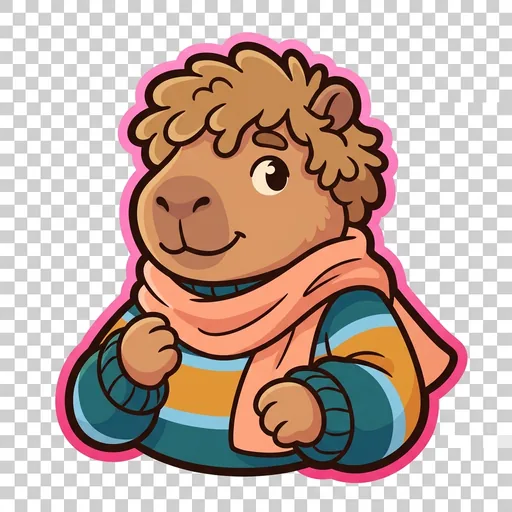
Concept silhouette + fit — the curvy capybara-tween who carries the cluster's body-image-gate anchor ('fabric meets body; body says what fabric wants to be — listen to both')
-
Cut
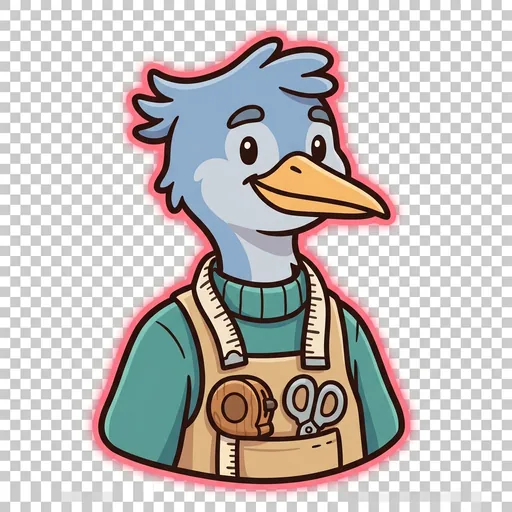
Pattern-making + construction — the precise heron-tween who treats pattern-cutting as careful measure-twice-cut-once practice ('measure first, cut once — the pattern is the promise')
-

Trim
Finishing + embellishment — the steady mole-tween who treats finishing as the small details that make a garment whole ('big shapes finish first, tiny details finish last — hem first, then bead')
-
Fold
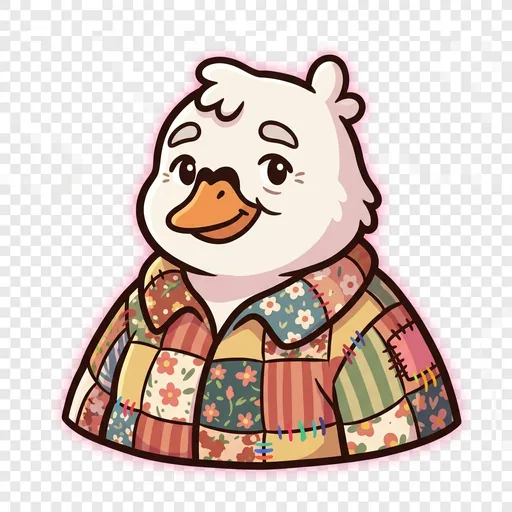
Sustainability + garment care — the wise swan-elder in a visibly-mended quilted coat who carries the cluster's sustainability + cultural-representation anchor ('make to last, mend to keep, fold to remember — fashion is a long story, not a short trend')