
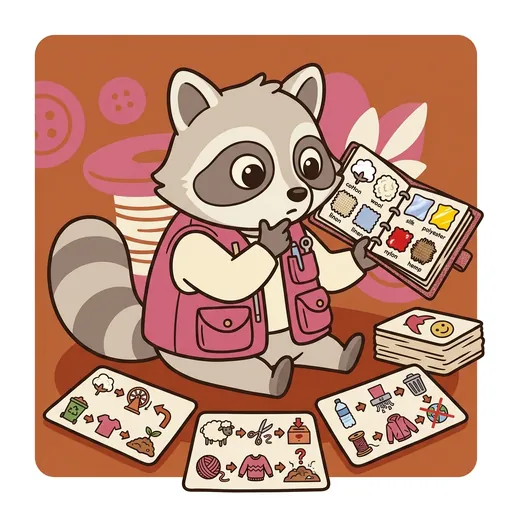
Grain
GRAIN — *fabric has a beginning and an after. where does this thread come from? where does it go after?*
Listen along — Grain
Loading audio…
Press play to listen along. The line being read lights up as you go.
Show full transcript
Loading transcript…
Chapter 2 — Grain and the Thread’s Whole Story
Grain pulled a single thread loose from the hem of an old shirt and held it up to the lamp, turning it slowly between two claws, following it with his eyes the way you follow a road on a map.
He was a small raccoon with a soft ringed tail and a chunky vest, and he was doing what he always did — reading a thread backward. Cotton, he thought, feeling the fluff of it. So: a field somewhere warm. Somebody’s hands picking it. A truck. A mill. Then he read it forward. And after this shirt is done — back into the soil, a few months, gone. He set the thread down gently, like it was something alive.
His lifecycle-card kit lay open beside him, little squares of cotton and wool and shiny polyester tucked in rows. Grain never touched a fabric without asking it two questions, out loud, even alone: “Where did you come from?” A pause. “And where do you go after?” He wanted the whole story or none of it.
Grain grew up by the village mill, in a family of raccoons everyone called the thread-trackers.
His mother could take a scrap of cloth and tell you its life like a bedtime tale. “This linen? Started as flax, blue flowers in a field. Somebody pulled it, rotted it in water, combed it out.” She’d tap the next part. “Wore soft over years. And when it’s done —” she’d smile — “back to the earth, quick and clean.”
One evening a peddler tried to sell them a bin of cheap, shiny shirts. Grain, small, held one up and it felt slippery and strange. “Where’s this one from?” he asked. The peddler shrugged. “Does it matter?”
His mother crouched down to Grain’s level. “It always matters,” she said softly, and she didn’t buy the shirts. Later she told him why: “A thread has a whole life, love. If nobody asks about it, nobody has to answer for it.” That landed in Grain and stayed, a small serious weight he chose to carry.
When Grain turned twelve he walked to StyleForge with his card-kit strapped across his chest.
Stitch, the head designer, met him at the gate. “Most young ones tell me how a fabric feels,” she said. “Soft. Scratchy. Warm. Is that all you’ve got?”
Grain shook his head. He unclipped a cotton swatch and, instead of describing it, laid three cards on the ground in a line — a fluffy plant, a person in a shirt, a handful of dark soil. “This one starts here,” he said, pointing to the plant. “Lives here.” The shirt. “And goes here.” The soil. “A few months and it’s earth again.”
Then he laid down a second row for a shiny swatch — a smoking factory, a shirt, and a mountain of trash. “This one starts as oil. And that last card doesn’t change for two hundred years.”
Stitch looked at the two rows a long moment. “You’re not designing a shirt,” she said. “You’re designing what it becomes.” She stepped aside. “Come in.”
Grain’s workshop smelled of old cloth and fresh earth. Threads hung from the ceiling in bright loops, and kids crowded around his sample table.
“Watch the whole trip, not just the touch,” he told them, and picked up soft cotton. “Feel it — light, breathes.” He held its card. “It was a plant in a warm field. People bent over it for hours to pick it, and they should be paid fairly for that.” He turned the card. “You wear it, your skin breathes. And after —” he showed the soil card — “months, and it’s back in the ground.”
He picked up shiny polyester next, and a girl said “ooh, smooth.” Grain nodded, then held its card up — the factory, the smoke. “Smooth, yes. It started as oil, made in a place like this. Strong. Keeps rain off. But,” he said, and his voice went quieter, showing the trash-mountain card, “two hundred years to break down. And it sheds tiny bits — so small they slip into the water.”
Then springy wool, its card a sheep getting a gentle spring haircut. “Warm, still breathes, and it goes back to the earth too — or gets spun into something new.”
“Three fabrics,” Grain said, laying them side by side. “Three completely different journeys. When you design, you don’t only ask how it feels in your paw. You ask where it’s been and where it’s headed — and then you choose.”
When the others had gone, a student stayed, holding up her own sleeve and looking at it a long, long moment, the way you look at something you’re truly seeing for the first time.
“It’s kind of a lot to carry,” she said quietly. “Knowing all that. Where everything comes from and where it goes.”
Grain sat down next to her. He knew that feeling — the heavy, tender ache of caring about something you can’t un-know. “It is,” he said honestly. “I won’t pretend it isn’t.”
The girl’s shoulders had crept up. Grain waited, and gently, “But it’s a good weight. The kind you’re glad to be strong enough to hold. It only feels heavy because you care now — and caring is the best thing that can happen to a thread.”
He watched her let out a slow breath, watched the sleeve stop being just cloth in her paws and start being something she was looking after. There it was — that warm, quiet, protective feeling settling into her chest, the same one that had lived in his all his life.
That feeling — the tenderness of holding a whole thread’s story and choosing to care for it — was the thing Grain most hoped to leave in a kid. Not a fact. A fondness.
He picked his loose thread back up, turned it once more toward the lamp, and smiled, feeling that warm and caring tenderness settle again in his chest — the good, gentle weight of loving something enough to look after its whole life. That feeling, the quiet fondness that turns a scrap of cloth into something you care for, was the thing Grain most hoped would stay with you, warm and steady, long after this shirt was done.
The StyleForge ensemble
Grain is part of StyleForge's distributed-narrative cast. Each character embodies a different curricular primitive; together they teach the full subject.
-
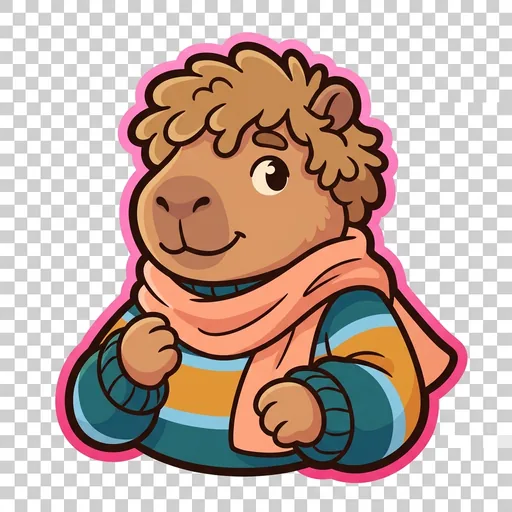
Drape
Concept silhouette + fit — the curvy capybara-tween who carries the cluster's body-image-gate anchor ('fabric meets body; body says what fabric wants to be — listen to both')
-
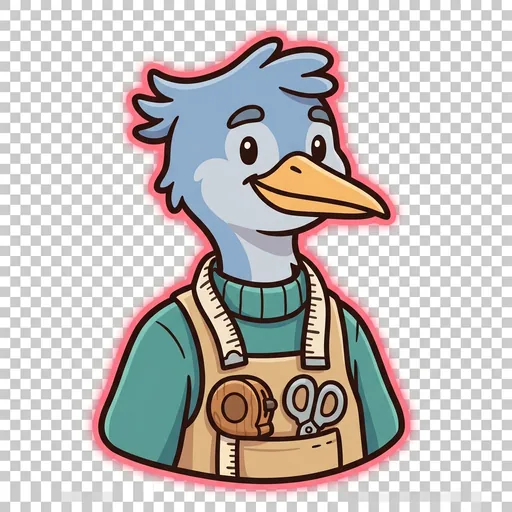
Cut
Pattern-making + construction — the precise heron-tween who treats pattern-cutting as careful measure-twice-cut-once practice ('measure first, cut once — the pattern is the promise')
-

Trim
Finishing + embellishment — the steady mole-tween who treats finishing as the small details that make a garment whole ('big shapes finish first, tiny details finish last — hem first, then bead')
-
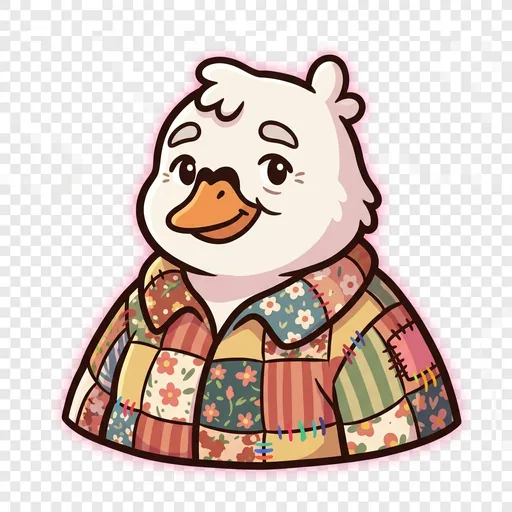
Fold
Sustainability + garment care — the wise swan-elder in a visibly-mended quilted coat who carries the cluster's sustainability + cultural-representation anchor ('make to last, mend to keep, fold to remember — fashion is a long story, not a short trend')