
Fold
FOLD — make to last, mend to keep, fold to remember. fashion is a long story, not a short trend.
Listen along — Fold
Loading audio…
Press play to listen along. The line being read lights up as you go.
Show full transcript
Loading transcript…
Chapter 5 — Fold and the Garment That Outlasts the Trend
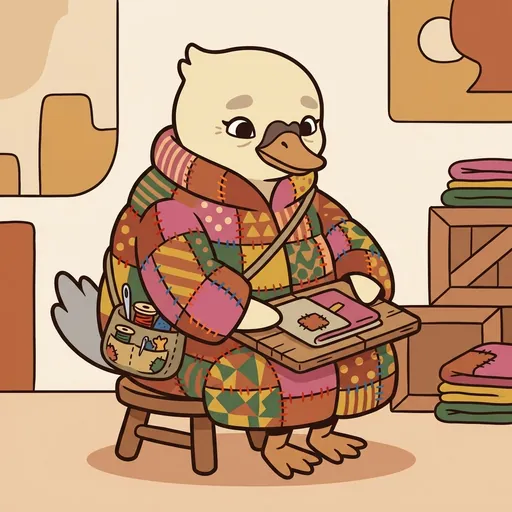
In the quietest corner of StyleForge, an old swan named Fold sat cross-legged on the floor with a torn sleeve across her knees, threading a needle by the window light.
She was not hurrying. She never hurried. She smoothed the tear flat, lined up the edges, and began to stitch — not hiding the mend, but placing each stitch in a neat little row across the top, so the repair sat right there on the outside where anyone could see it. Small even stitches, one after another, patient as breathing.
A student stopped in the doorway, watching. “Why aren’t you hiding it? You could put the patch on the inside.”
Fold held the sleeve up to the light and turned it. The row of stitches caught the sun. “Because the mend isn’t something to be ashamed of,” she said. “It’s part of the story now. This sleeve tore on a thorn three winters ago. Now it wears the mark of the day it lived through.” She lowered the sleeve and went back to stitching. “Hide the repair, and you’re saying the wear was a mistake. Show it, and you’re saying — this coat and I have been through things together.”
The student came closer and sat down. Fold’s own coat was a whole quilt of such stories — patches of a dozen fabrics, geometric and plain, each one a different repair. She tugged one gently. “This patch is older than you are,” she said, and smiled. “Older than most of the shops selling coats down the road.”
Fold had learned the long story from her family, many years and many places ago.
They had been the keepers of the village cloth — the swans whose slow, deep memory ran back generations. When Fold was small, she used to think that was a dull job. Cloth was cloth. Then one evening her grandmother had spread three coats on the floor: one nearly new, one worn soft, and one so patched you could barely find the first fabric underneath.
“Which is worth the most?” her grandmother asked.
Fold pointed to the new one, of course.
Her grandmother shook her head slowly and rested a wing on the most-patched coat. “This one. It has been loved the longest. Someone carried it through twenty years of weather and mended it every time it asked. The new coat has no story yet. It might last a season and be thrown away.” She looked at Fold with those slow, warm eyes. “People will tell you the new thing is always better. But a thing that lasts, a thing you keep and care for — that is worth more than twenty things you throw away.”
Fold hadn’t understood it all that night. But something settled in her, a feeling like the difference between a stranger and an old friend. From then on, when she held worn cloth, she didn’t feel this is used up. She felt this is trusted. That feeling had a shape now, and she could hold onto it.
She walked to StyleForge when she was very old, because a place that made beautiful things ought to know how to keep them.
Stitch, the mentor, met her at the door and asked one question. “What do you know about caring for what we make?”
Fold didn’t answer straight away. She reached into the folds of her coat and drew out a small folding-board and a mending kit — needle, thread, a few scraps of patient fabric. She set them on the ground between them like an offering.
“I know that a garment is meant to last,” she said. “That when it tears, you mend it and keep it. That you fold it with care so it rests well and lasts longer. And that many peoples have their own beautiful ways of mending — I learn from them, and I say their names, and I never pretend the ways are mine.” She looked up. “That’s what I know.”
Stitch was quiet for a moment. Then he stepped aside to let her in. “Then you belong here,” he said, “more than you know.”
Fold’s corner filled up, over the seasons, with things that other places would have thrown away.
A boy came in one afternoon holding a sweater by two fingers, like it had disappointed him. “There’s a hole in the elbow,” he said. “It’s ruined. I saw a new one in the window for cheap. I should just get that.”
Fold took the sweater and found the hole — small, at the elbow, right where an elbow lives. “Cheap,” she repeated, gently. “How many times do you think you could wear a cheap one before it wears out?”
The boy shrugged. “A few?”
“And this one — how long have you had it?”
”…Years. Since I was little.”
“Years,” she said. “Sit.” She patted the floor. Then she cut a small round of soft blue fabric, laid it under the hole, and began to stitch — slow rows of thread that pulled the worn edges onto the patch. As she worked, she talked. “This kind of mending, where you show your stitches instead of hiding them — I learned it from the sashiko tradition, from Japan. I don’t call it mine. I honor it, and I tell you where it comes from, so you can honor it too.” Her needle moved. “There. Now watch.”
She handed the sweater back. The elbow was whole again — stronger than before, a small blue circle stitched with care sitting right where the hole had been.
The boy turned it over in his hands. “It looks… better than before. Like it means something now.”
“It does,” Fold said. “You almost threw away years to save a little money on something that would’ve lasted weeks. Fewer things, better made, mended and kept — that’s not the small choice. That’s the big one.” She tapped the patch. “The trend in the window will be gone by spring. This sweater will still fit you next winter.”
Later, when the workshop had gone still, the boy came back with the sweater on and one more question.
“When you keep something a long time,” he said, quieter now, “and mend it, and fold it up careful… doesn’t it get old and sad? Isn’t newer supposed to feel better?”
Fold thought of the three coats on the floor, long ago, and her grandmother’s slow wing resting on the most-patched one.
“Newer feels exciting,” she said. “That’s different from better. Excitement is loud and it fades fast — that’s what a trend is, really. But there’s another feeling, a slower one.” She drew her patched coat closer around herself. “It’s the feeling of pulling on something that knows you. Something that’s been cold and warm with you, torn and mended with you. It doesn’t shout. It just… holds you. Like an old friend who doesn’t need you to be anyone new.”
The boy looked down at the blue patch on his elbow and pressed it gently with his thumb.
Fold watched him do it and felt her old chest go warm and easy — the same settled, trusted feeling she’d found the night of the three coats, still there after all these years, quiet as folded cloth.
The StyleForge ensemble
Fold is part of StyleForge's distributed-narrative cast. Each character embodies a different curricular primitive; together they teach the full subject.
-
Drape
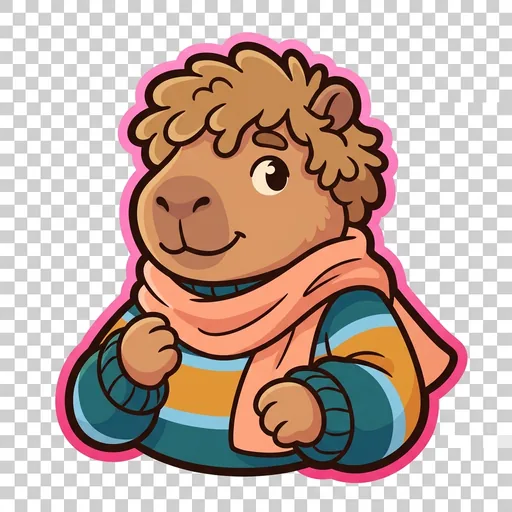
Concept silhouette + fit — the curvy capybara-tween who carries the cluster's body-image-gate anchor ('fabric meets body; body says what fabric wants to be — listen to both')
-

Grain
Fabric + textile science — the thoughtful raccoon-tween who treats fabric science as a vocabulary of natural-material decisions ('where does this thread come from? where does it go after? fabric has a beginning and an after')
-
Cut
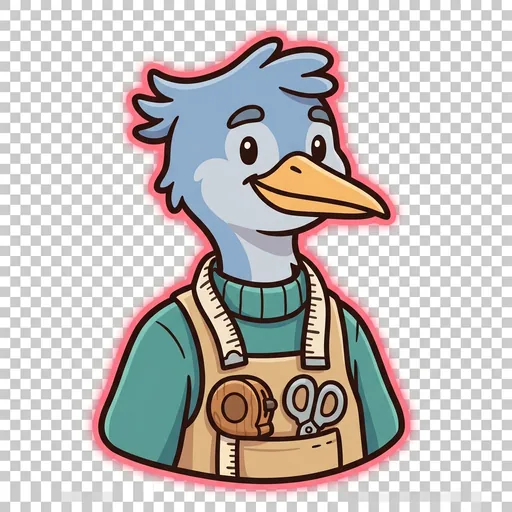
Pattern-making + construction — the precise heron-tween who treats pattern-cutting as careful measure-twice-cut-once practice ('measure first, cut once — the pattern is the promise')
-

Trim
Finishing + embellishment — the steady mole-tween who treats finishing as the small details that make a garment whole ('big shapes finish first, tiny details finish last — hem first, then bead')