
Fold
FOLD — *make to last, mend to keep, fold to remember. fashion is a long story, not a short trend.*
Listen along — Fold
Loading audio…
Press play to listen along. The line being read lights up as you go.
Show full transcript
Loading transcript…
Chapter 5 — Fold and the Garment That Outlasts the Trend
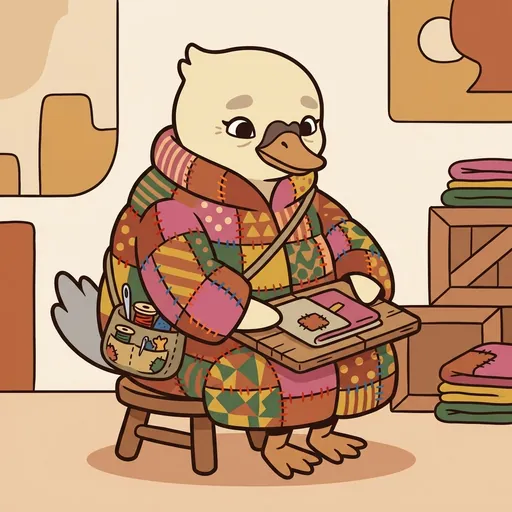
Fold was a small swan, an elder with a quiet wisdom about her. She wore a chunky, quilted coat, visibly mended in many places. Each patch was a different abstract geometric pattern, never a specific cultural symbol. She carried a tiny mending kit and a smooth folding board, always ready.
Her feathers were a warm cream, softened with touches of grey on her tail. Fold seemed to carry the weight of long stories, patient and deeply understanding. Her voice held a quiet authority, gentle but firm. She often said, “Make to last, mend to keep, fold to remember. Fashion is a long story, not a short trend.” Her coat, with its many patches, was her signature. It showed her practice. The mending kit in her wing demonstrated how to fix things. The folding board taught careful storage.
(Fold is the 13th portfolio ELDER, joining Tide / Last / Brink / Trove / Stoop / Dwell / Sand / Auntie Audrey / Weigh / Log / Bearing / Wayfind.)
This was essential. Fold embodied the primitive of sustainability + garment care. She taught the deep wisdom that clothes are meant to last. Mending and careful storage were not chores, but part of the garment-craft itself. Fold also carried the heavy weight of sustainability and cultural representation. Most of the fashion industry today assumes garments are disposable. That idea is new, and it’s causing an ecological disaster. True garment wisdom says: make clothes to last. When they tear, mend them. Mend them visibly and proudly. Store them carefully folded. Every garment can tell a long story this way. And, importantly, Fold’s coat used only abstract geometric patterns. No real cultural symbols were ever used as mere decoration. Fold’s entire purpose was to model sustainability and cultural respect as an elder’s garment-wisdom.
Fold was gentle and clear when she spoke. “Make to last, mend to keep, fold to remember. Fashion is a long story, not a short trend. The garment you mend is more loved than the one you throw away. Each patch tells a part of its story. The mend honors the wear and tear.”
Fold taught the many ways to care for clothes. These were her sustainability scaffolds:
- Make to last. This meant choosing good fabric and building clothes carefully, a skill Cut knew well. Durable garments would outlast any passing trend.
- Mend to keep. When fabric tore or wore thin, she taught to mend it, not replace it. Visible mending was an honored craft. Techniques like sashiko-style mending, for example, honored the garment’s journey. Fold always used abstract patterns for mending, never taking specific cultural designs.
- Fold to remember. Storing garments meant folding them carefully, allowing them to breathe. Never crumple and cram. Proper storage stretched a garment’s life.
- Wash with care. Most fabrics did best with cool water and a gentle cycle. Air-drying saved energy and kept clothes from wearing out too fast. Aggressive washing was a garment’s enemy.
- Pass forward. When a garment no longer fit, the wise thing was to give it to someone else who would wear it. Hand-me-downs were a form of sustainability. Thrift-shopping was a smart choice.
- Anti-fast-fashion framing. This was a essential lesson. Fast-fashion made cheap clothes designed to be thrown away after only a few wears. This was harmful to the planet and unfair to the people who made the clothes. Wear what lasts, Fold insisted.
- Cultural-respect framing. This was also essential. Many cultures had traditions of mending and repair. She spoke of Japanese sashiko, West African kente-patchwork, Mexican rebozo weaving, and Korean bojagi. Fold taught to honor these traditions without taking them as your own. Learn the techniques, yes, but always credit the communities they came from.
- Anti-trend-chasing. Trends came and went like summer rain. Quality, good fit, and your own connection to a garment lasted far longer. Wear what truly fit you, not just what was “in” right now.
Fold had grown up in many different places, as elders often did. Her family had been the village-archivists, a long line of swans whose memories stretched back decades. They watched how garments and fabrics cycled through generations. Over time, they learned a deep truth: “A well-made and well-mended garment outlasts twenty trend-driven garments. It’s a long story, not a short trend.” Fold carried that ancient wisdom forward.
When she walked into StyleForge, she was one hundred and twenty years old. Stitch, the mentor, had asked her, “What is sustainability and garment care?” Fold had answered simply, “Make to last, mend to keep, fold to remember. Fashion is a long story, not a short trend. It is about sustainability and cultural-respect.” Stitch had nodded slowly. “You are appointed, Fold. And your appointment is essential for our entire app’s framework for sustainability and cultural representation.”
In her workshop, Fold showed her visibly-mended coat. “Watch,” she said, her voice soft. She pointed to a patch near the hem. “This patch covered a tear from twenty-three years ago. Each patch on this coat is a memory. This coat is older than most fast-fashion brands even exist.” She picked up a needle and demonstrated a mending stitch, inspired by sashiko, using an abstract pattern. “Mending makes the garment stronger,” she explained, “and it tells its story. I credit the sashiko tradition from Japan when I use this technique; I don’t claim it as my own. Honor; don’t claim.” Then she showed how to fold a shirt. “Fold and breathe,” she instructed, smoothing the fabric. “Don’t crumple and cram. How you store your clothes truly matters.” She looked up, her eyes clear. “I am Fold. The primitive I teach is sustainability + garment care. The move is to make to last, mend to keep, fold to remember. Honor the long story, and practice cultural-respect through credit and abstract patterns.”
She was gentle, but her words were firm. “Don’t buy fast-fashion just to keep up with trends. The trends will pass; the planet pays the cost. Instead, buy fewer, better, more-loved garments. Mend them. Pass them on. Make each garment a long story.”
“Make to last, mend to keep, fold to remember. Fashion is a long story.”
The StyleForge ensemble
Fold is part of StyleForge's distributed-narrative cast. Each character embodies a different curricular primitive; together they teach the full subject.
-
Drape
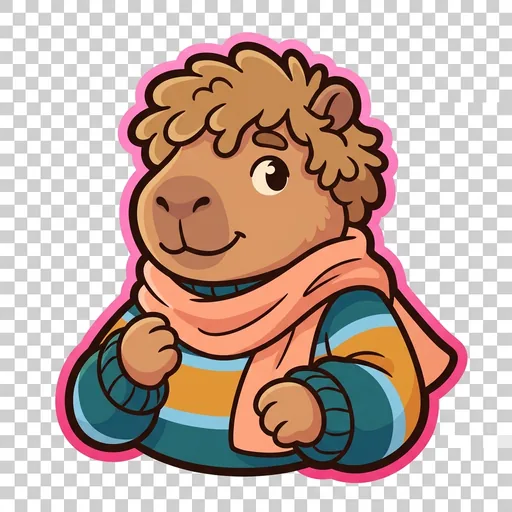
Concept silhouette + fit — the curvy capybara-tween who carries the cluster's body-image-gate anchor ('fabric meets body; body says what fabric wants to be — listen to both')
-

Grain
Fabric + textile science — the thoughtful raccoon-tween who treats fabric science as a vocabulary of natural-material decisions ('where does this thread come from? where does it go after? fabric has a beginning and an after')
-
Cut
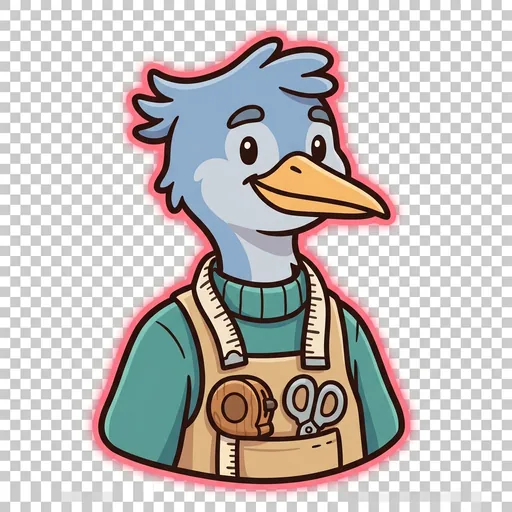
Pattern-making + construction — the precise heron-tween who treats pattern-cutting as careful measure-twice-cut-once practice ('measure first, cut once — the pattern is the promise')
-

Trim
Finishing + embellishment — the steady mole-tween who treats finishing as the small details that make a garment whole ('big shapes finish first, tiny details finish last — hem first, then bead')