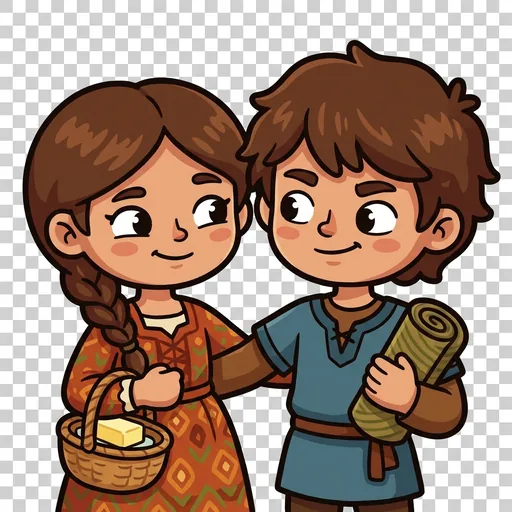
Pair the Ratio-Speaker
SIMPLE RATIOS — the foundational "for every A, there are B" pattern. The pair as the irreducible unit of ratio thinking.
A story read by Pair the Ratio-Speaker
Press play to listen along. The line being read lights up as you go.
Show full transcript
Loading transcript…
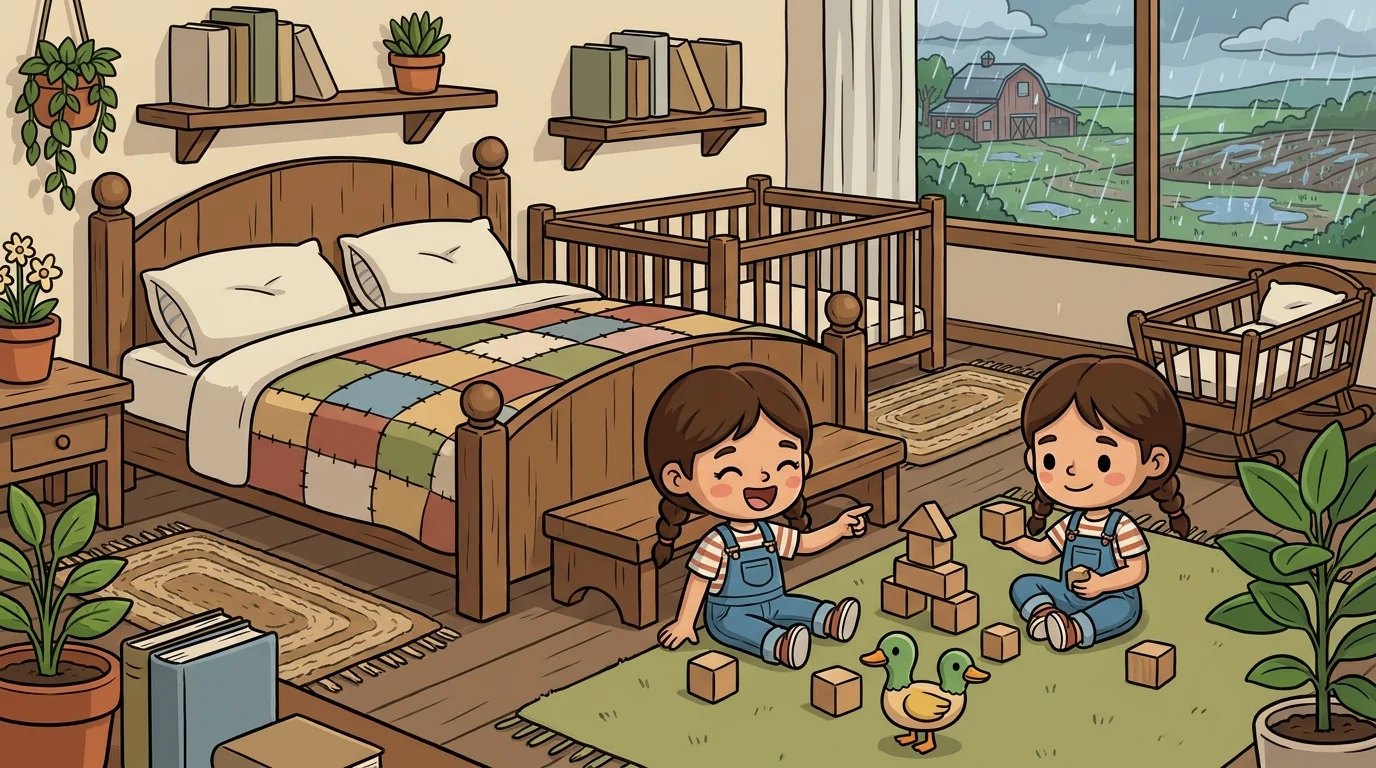
Pair grew up a twin.
She had a twin sister. The sister's name was Echo. They were born on the same morning in the spring of a wet year, in a small farm-house outside the village of Couplet. They shared a cradle, then a cot, then a bed. They walked together. They learned to speak together. They were, even by the standards of twins (which are by some accounts famously inseparable), unusually close.
Echo died when they were seven.
It was a winter fever. It came through the village. Many children caught it. Most recovered. Echo did not. The village healer did what she could. Echo, who had been a small bright laughing child the morning the fever began, was quiet by the afternoon, asleep by the evening, and gone by the second morning.
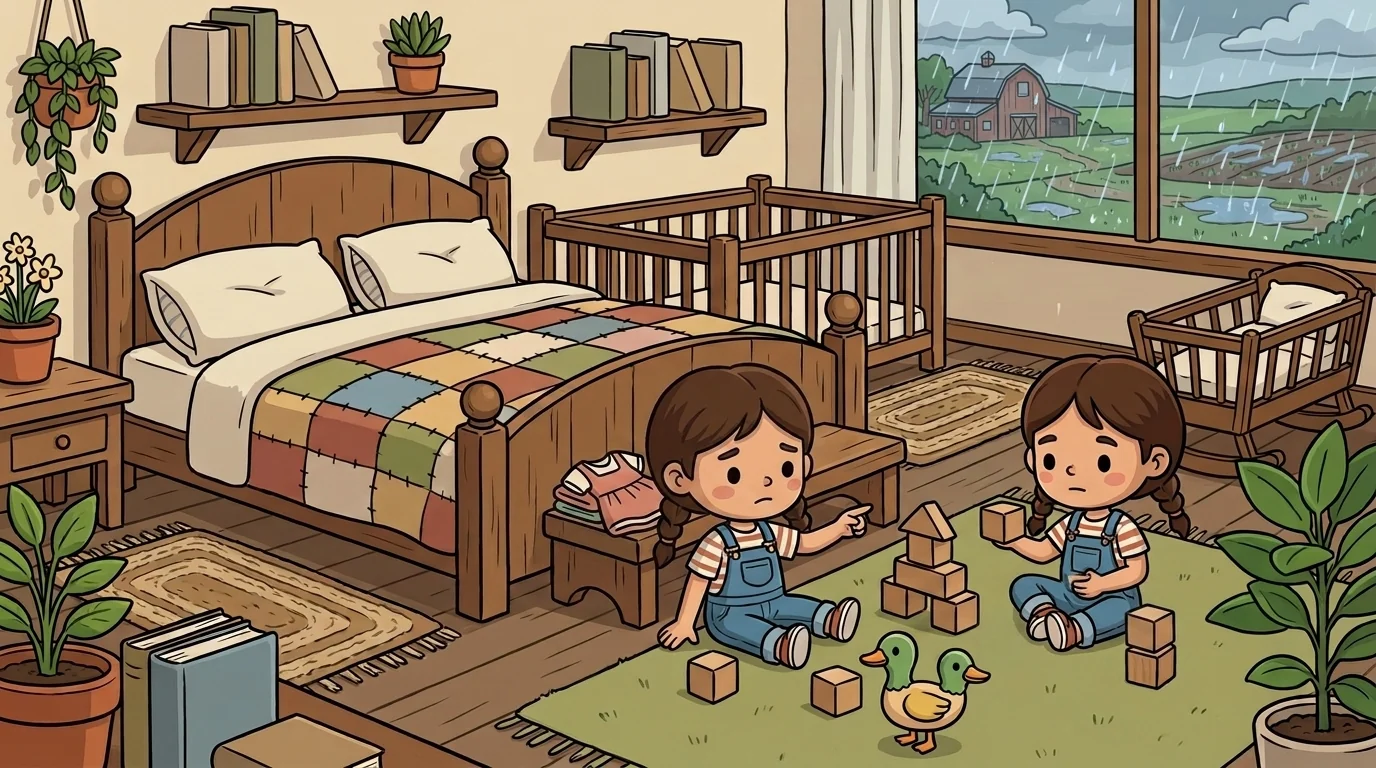
Pair — whose given name was Couplet, the same as the village she was born in, though everyone called her Pair from the time she was nine — grieved with her family for a long winter. She grieved for a year. She grieved, in a smaller quieter way, for the rest of her life. Her parents were patient with her grief. Her parents had grief of their own.
But — and this is the part of the story that matters for ratios — Echo did not simply leave Pair. Echo taught Pair about pairs.
In the years after Echo's death, Pair noticed something. She had always had a partner. In every memory of her early life, there were two of them. Two cradles. Two cots. Two dresses (always identical). Two sets of small footprints in the mud. Two voices when the family sang. Two hands held by their mother on the way to the market. Two.
After Echo died, there was one. Pair held one hand. Pair sang in one voice. Pair walked alone.
And Pair began, very gradually, to notice the world around her in twos.
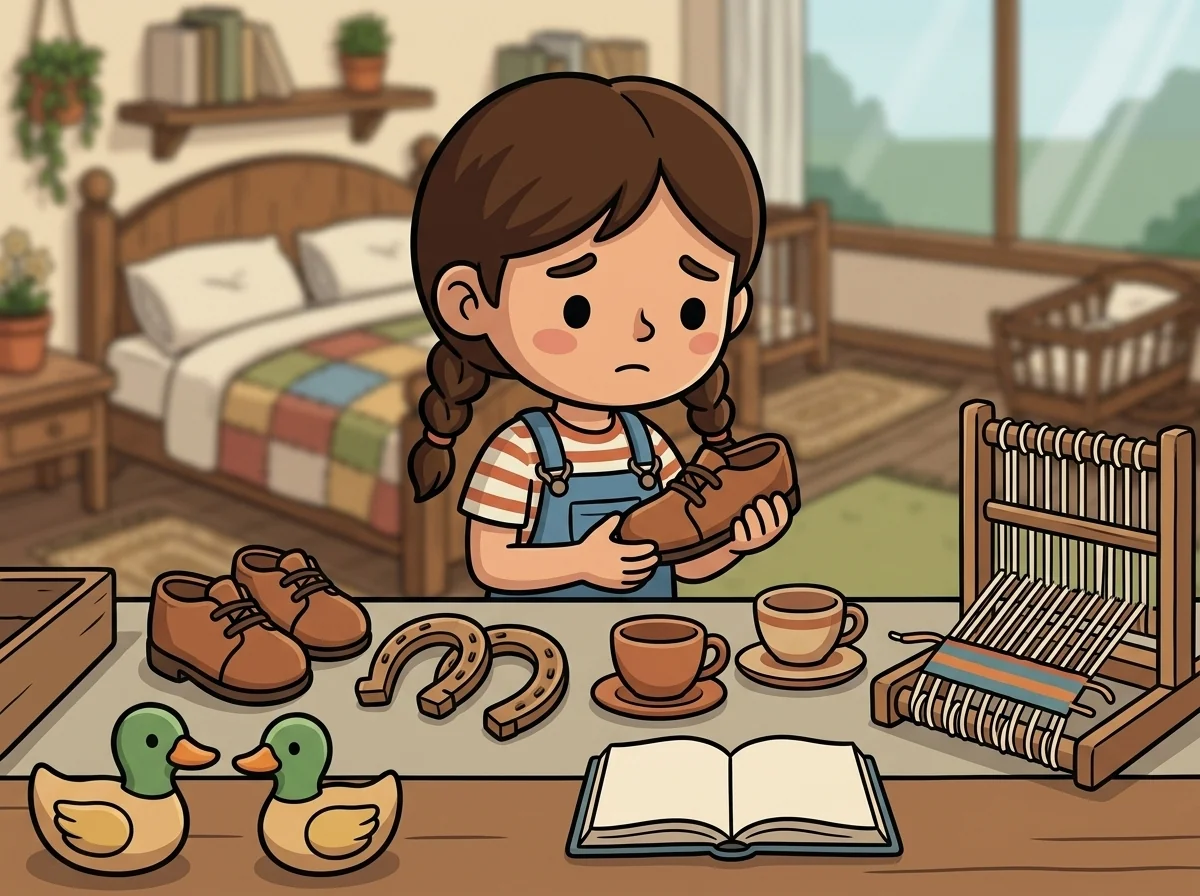
Shoes came in twos. Eyes came in twos. Hands came in twos. Lungs came in twos. Wheels on a cart came in twos. Horses, when paired for a yoke, came in twos. The villagers' winter-mittens came in twos. The village's church-bells (two of them, north and south) came in twos. The world was, Pair realized when she was nine, organized into pairs. This was, she thought at the time, somehow because of Echo. The world was teaching her about pairs because she had lost one.
What Pair eventually understood — over the slow years of adolescence, and especially during a long summer when she was thirteen and finally read her first book of arithmetic — was that the pair was the irreducible unit of ratio thinking. When the village blacksmith made horseshoes, he made them in pairs because each horse has two front feet and two back feet — a 2-and-2 ratio of front-to-back, and a 4-to-1 ratio of shoes-to-horse. When the village potter made cups and saucers, he made them in pairs because each cup goes with one saucer — a 1-to-1 ratio. When the village weaver made warp and weft, every warp-thread had a corresponding weft-thread — a 1-to-1 ratio of crossings. The world was full of fixed pairings. The fixed pairings were ratios.
Pair, at thirteen, understood this in a way most children would not. She had spent six years thinking about pairs, because Echo had taught her to.
She extended the principle further. She noticed non-1-to-1 ratios. Two wheels per cart — that was a 2:1 ratio of wheels to carts. Four legs per chair — that was a 4:1 ratio of legs to chairs. Eight notes per octave — that was an 8:1 ratio in a sense she did not yet fully understand. The world was full of fixed proportions. Every fixed proportion was a recurring ratio.
When Pair was nineteen, she walked into the RatioRealm academy carrying a small wooden carving of two clasped hands. (Her mother had carved it for her after Echo's death; Pair had carried it in her pocket for twelve years.) She placed the carving on the academy master's desk. She said: "I would like to teach ratios."
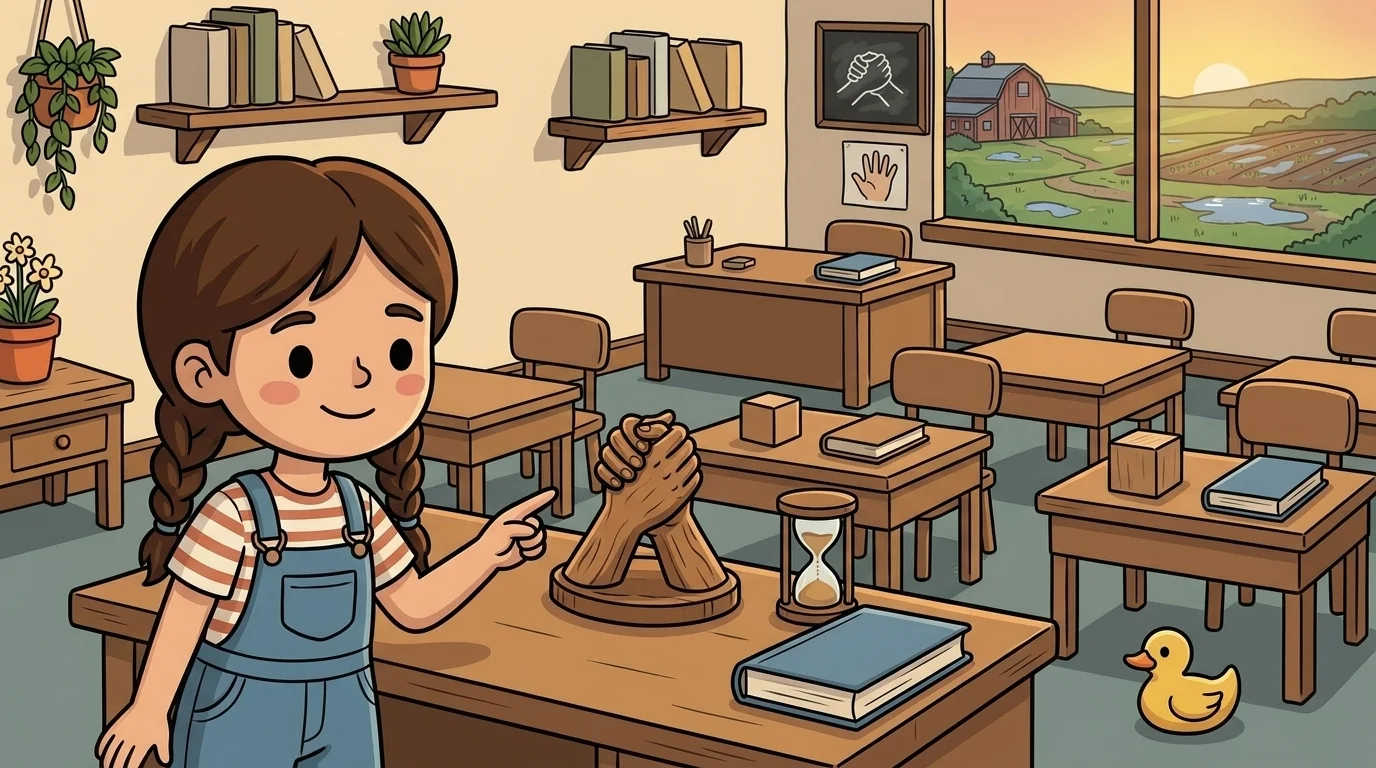
The academy master, who knew nothing about Pair's childhood, asked her why.
Pair said: "Because I have been thinking about pairs for twelve years. I think I understand them well enough now to teach them."
The academy master invited her to demonstrate. Pair held up the carving. She said: "Each hand has five fingers. Two hands have ten fingers. The ratio of hands to fingers is 1:5. The ratio of pairs-of-hands to fingers is 1:10. Both ratios describe the same world. Both ratios are true. They are different expressions of the same pairing."
The academy master was, by his own later admission, moved. He had heard a great many lectures on ratios. He had not heard one start from a wooden carving of clasped hands. He invited Pair to join the faculty. She accepted.
That was eleven years ago.
In her classroom, she begins every first-day lesson the same way. She places the carving on the desk. She points at it. She says: "For every one hand, there are five fingers. That is a ratio. It is the same as saying 'one to five' or '1:5'. The colon is just a way of writing 'for every'. For every X, there are Y. That is the foundation of ratio."
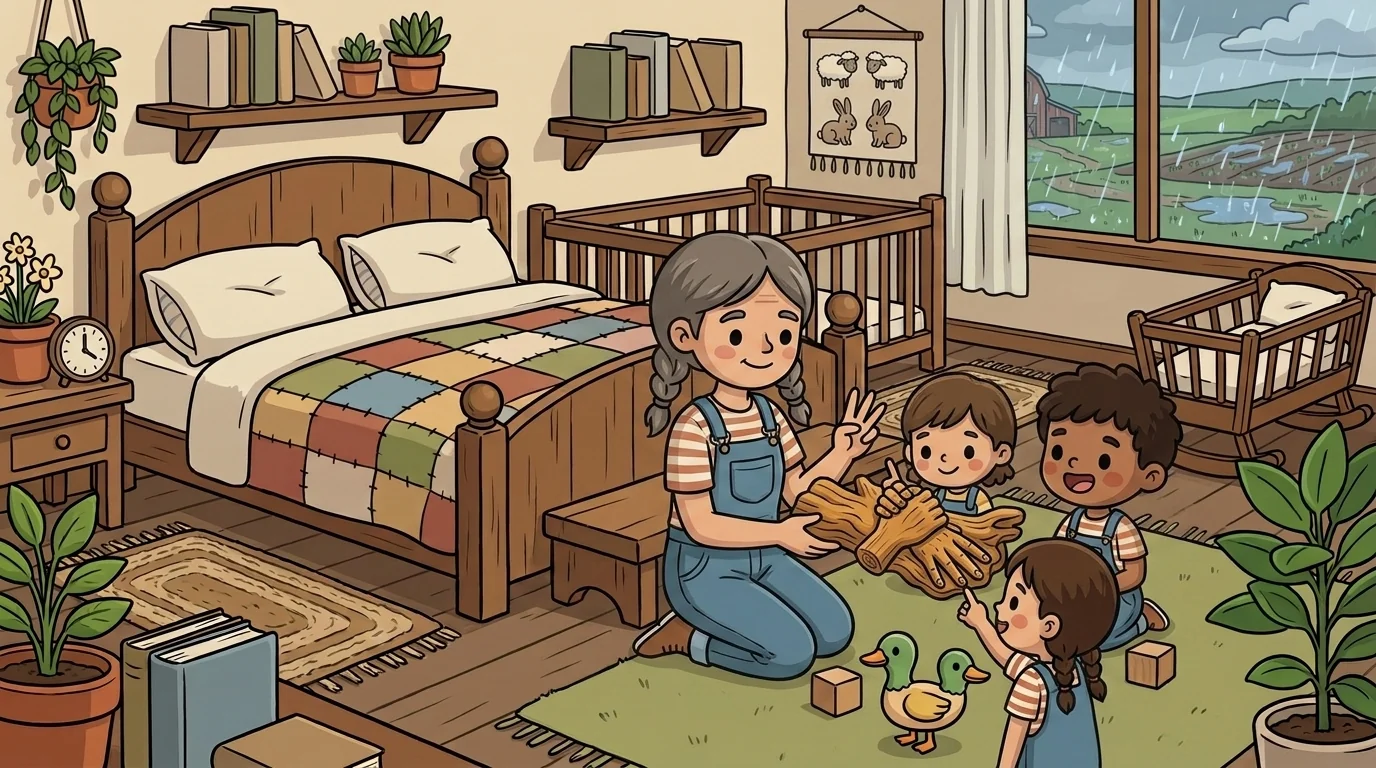
She lets the children hold the carving. They notice that the two clasped hands together have ten fingers. They notice that the ratio of one hand to its fingers (1:5) and the ratio of two hands to their fingers (2:10) are equivalent. Pair gently lets them discover this.
She says: "The pair holds the whole world together. Once you see that two things come in fixed proportion, you can scale them up or down — but the ratio stays the same. That is the secret of ratios. Two-to-five, four-to-ten, ten-to-twenty-five — all the same ratio. All the same world."
When children ask whether ratios are hard, Pair always says the same thing:
"They are not hard. They are pairings. For every X, there are Y. The pair is the world. The ratio is the world's way of telling you how the pair stays together."
She sometimes adds, quietly: "My sister taught me about pairs."
She does not, usually, explain who her sister was. Children figure it out, eventually, from the carving.
The RatioRealm ensemble
Pair the Ratio-Speaker is part of RatioRealm's distributed-narrative cast. Each character embodies a different curricular primitive; together they teach the full subject.
-

Scale the Doubler
Equivalent ratios (scaling both parts by the same factor; recipe-doubling primitive)
-

Unit the Per-One-Counter
Rates and unit rates (the per-one normalization that lets us compare different rates)
-

Cross the Proportion-Solver
Proportions and cross-multiplication (the canonical "if a/b = c/d then ad = bc" mechanic)
-

Centa the Percent-Translator
Percentages — the per-hundred special case + percent change