Cross the Proportion-Solver
PROPORTIONS AND CROSS-MULTIPLICATION — if a/b = c/d, then ad = bc. The diagonal-multiplication trick that solves any proportion.
A story read by Cross the Proportion-Solver
Press play to listen along. The line being read lights up as you go.
Show full transcript
Loading transcript…
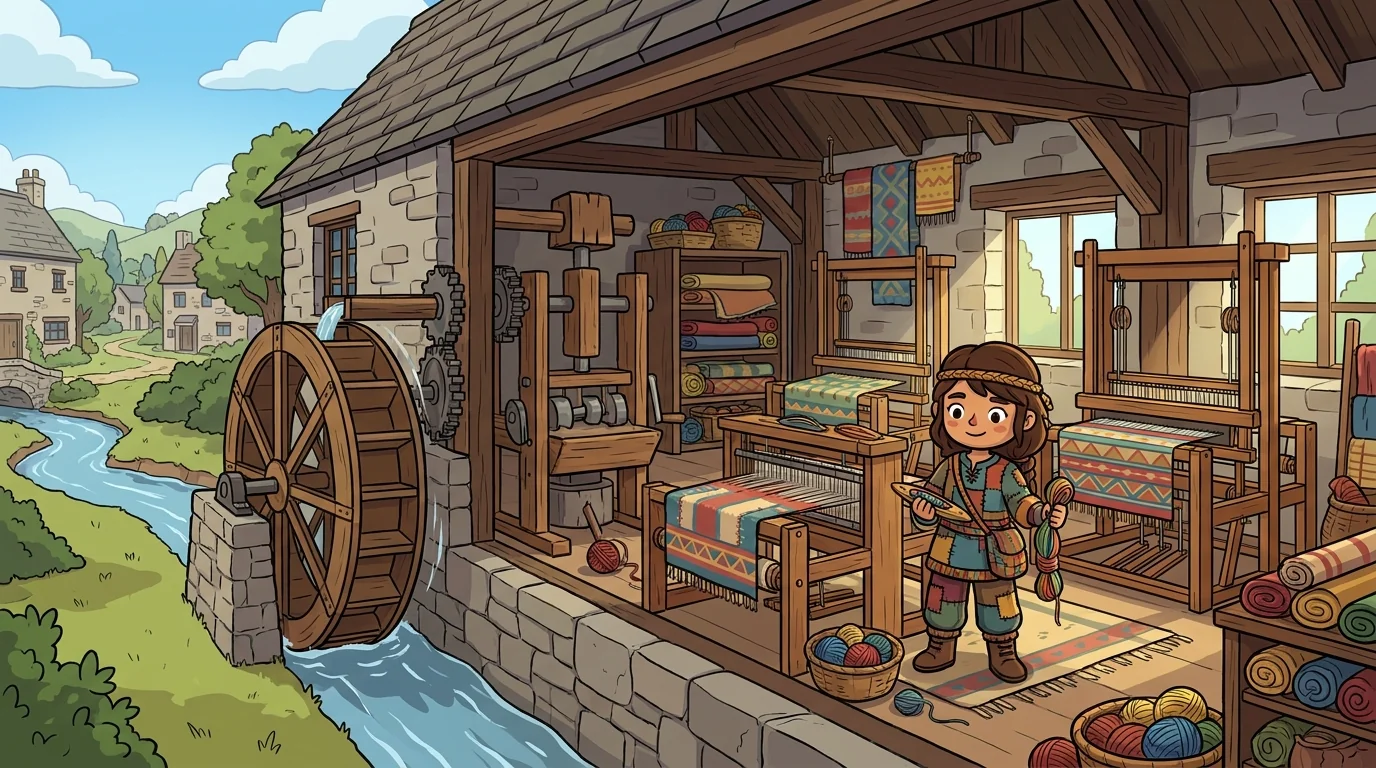
Cross grew up in a weaving family.
The family lived in the village of Warpwell, in a long stone house at the edge of a stream. The stream powered the family's fulling-mill — a wooden hammer-and-wheel that thumped wool cloth into denser, finer cloth — and the family ran four hand-looms in the same building. The looms wove tablecloths, bedsheets, woolen blankets, and (on special commissions) the very large altar-cloths the kingdom's churches occasionally ordered.
Cross — whose given name was Marlee, though everyone called her Cross from the time she was twelve — was the second of four children. She grew up among the looms.
The family's loom-tradition had a specific, peculiar habit that Cross's grandmother had inherited from her grandmother and had passed on to Cross's mother and then to Cross. The habit was this:
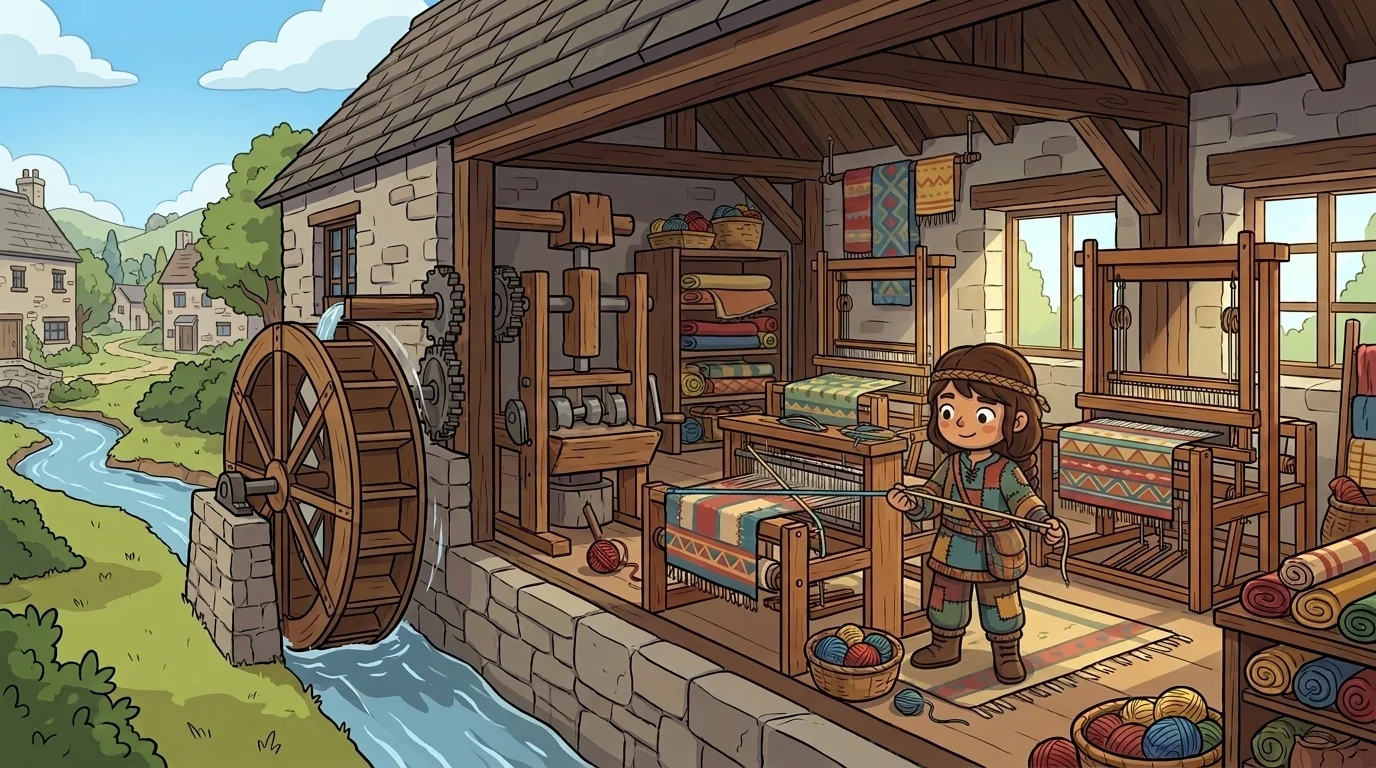
After every yard of cloth was woven, the weaver checked the diagonals of the cloth's rectangular border.
This was, even in the weaving trade, unusual. Most weavers, when they wanted to check that their cloth was woven straight (rather than skewed into a parallelogram), would measure the cloth's width in three places — top, middle, bottom — and confirm the widths were equal. Cross's family did not do this. Cross's family checked the two diagonals.
The principle was: a rectangular piece of cloth has equal diagonals. If you measure the diagonal from the top-left corner to the bottom-right corner, and you measure the diagonal from the top-right corner to the bottom-left corner, the two diagonals should be exactly the same length. If they are not, the cloth has skewed — one set of warp-threads has been pulled more tightly than the other — and the rectangle has become a parallelogram. The diagonals tell you.
This was Cross's grandmother's diagnostic. It was an elegant test. Width-checking required three measurements. Diagonal-checking required two. The diagonals were also more sensitive — a small skew that did not show in widths would show in diagonals.
Cross learned to check diagonals before she could read. She was eight years old before she had ever heard of mathematics. She was ten years old before she had ever encountered a proportion. She was thirteen years old when she walked into the small village school for the first time and heard the schoolteacher say:
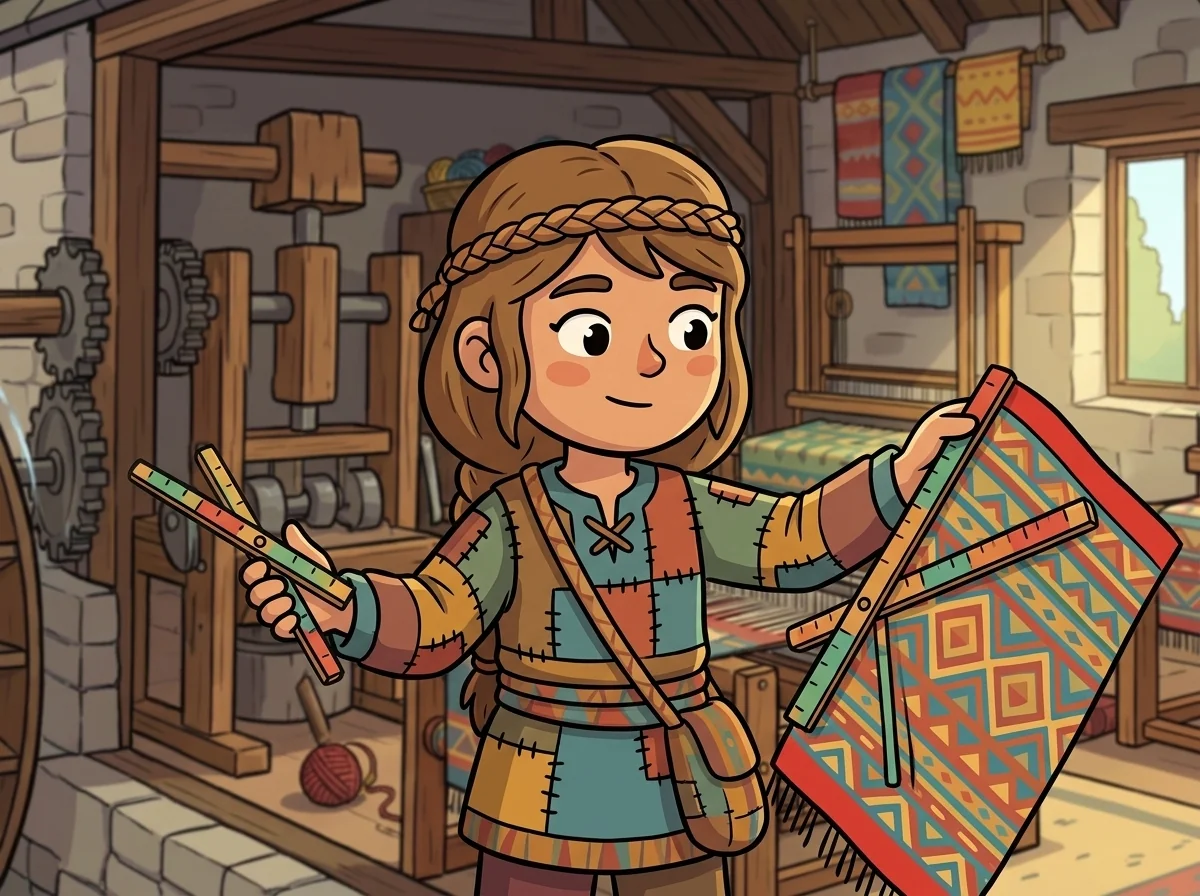
"If a/b = c/d, then ad = bc. This is called cross-multiplication. You multiply diagonally."
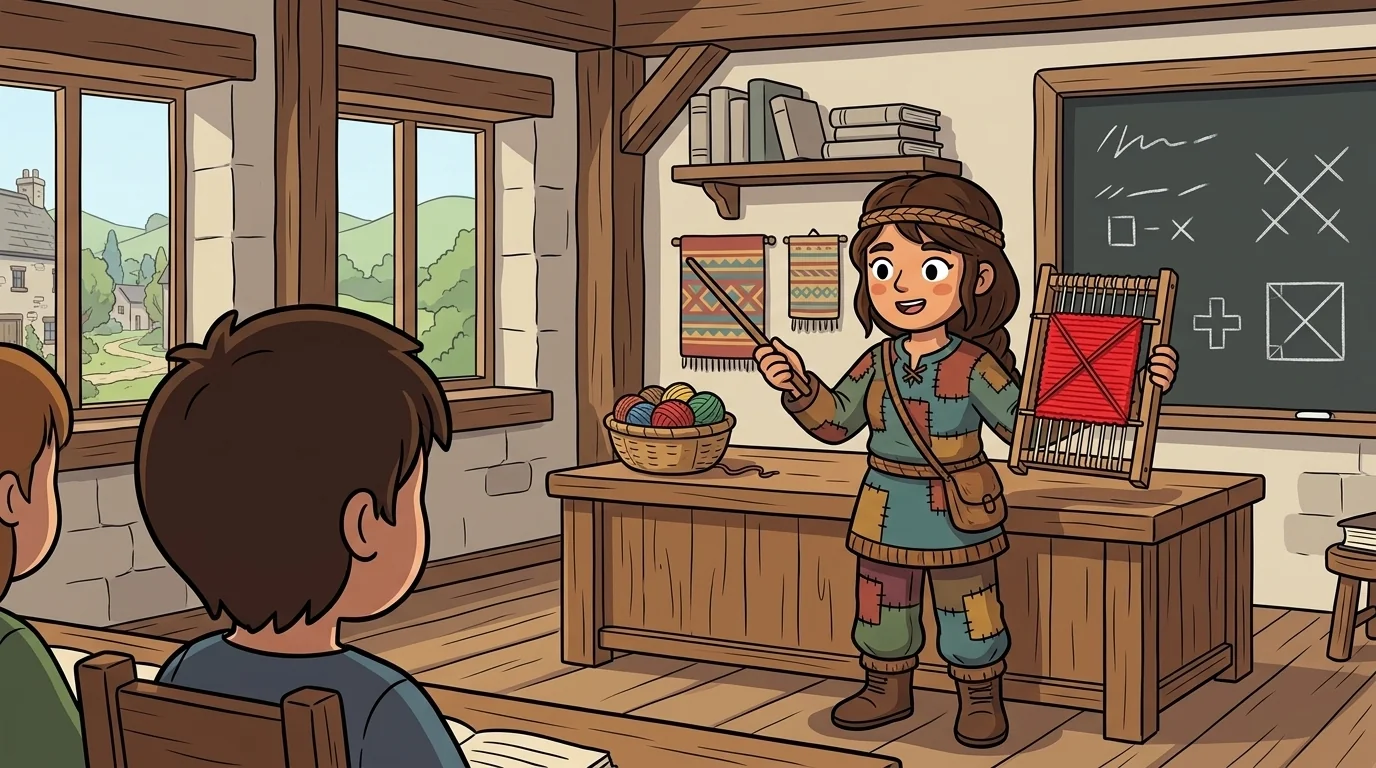
The schoolteacher wrote it on the board. Cross looked at it. Cross said, slowly: "That is the same as checking the diagonals on a loom."
The schoolteacher said: "What?"
Cross said: "On a loom, you check that the two diagonals of a rectangle are equal. You measure top-left-to-bottom-right and you measure top-right-to-bottom-left. The two diagonals must be equal. If a/b = c/d, then the diagonals of the proportion (a-times-d and b-times-c) are equal. That is the same test. The cloth has equal diagonals if it is a true rectangle. The proportion has equal cross-products if it is a true proportion. The diagonals are doing the same thing."
The schoolteacher set down his chalk. He had been teaching the cross-multiplication rule for twenty years. He had never heard a child compare it to weaving.
He said: "Yes. That is correct. The geometric basis of cross-multiplication is exactly the same idea — equal diagonals indicate a closed proportional relationship. You have, frankly, understood the rule better than I ever did, and you are thirteen."
Cross was a little embarrassed. She had not meant to outdo the schoolteacher. She had just been thinking out loud.
But the comparison stuck with her. Over the next several years, every time she encountered a proportion problem at school, she pictured the loom. Does the proportion hold? Check the diagonals. The cross-products either matched (the proportion was true) or they did not (the proportion was false). The rule was elegant and visible and the same rule she had been applying to cloth for ten years.
When she was eighteen she walked away from the family's looms (her younger brother had taken to weaving naturally and was eager to inherit the workshop) and went to the RatioRealm academy. She studied for four years. She joined the faculty when she was twenty-two. She has been teaching cross-multiplication ever since.
In her classroom, she begins every first-day lesson the same way. She brings, from the family workshop, a small loom (about the size of a tea-tray; she built it herself when she was twelve as a model). She places it on the desk. She weaves a small two-inch rectangle of red thread. She holds it up to the class. She points at the diagonals. She says: "This is a rectangle. The two diagonals are equal. That is how I know it is not skewed."
The children — always — agree.
Then she writes on the board: 2/3 = 4/6. She points at the two diagonals of the proportion. She says: "Now the proportion. Two-times-six equals twelve. Three-times-four equals twelve. The diagonals are equal. The proportion holds."
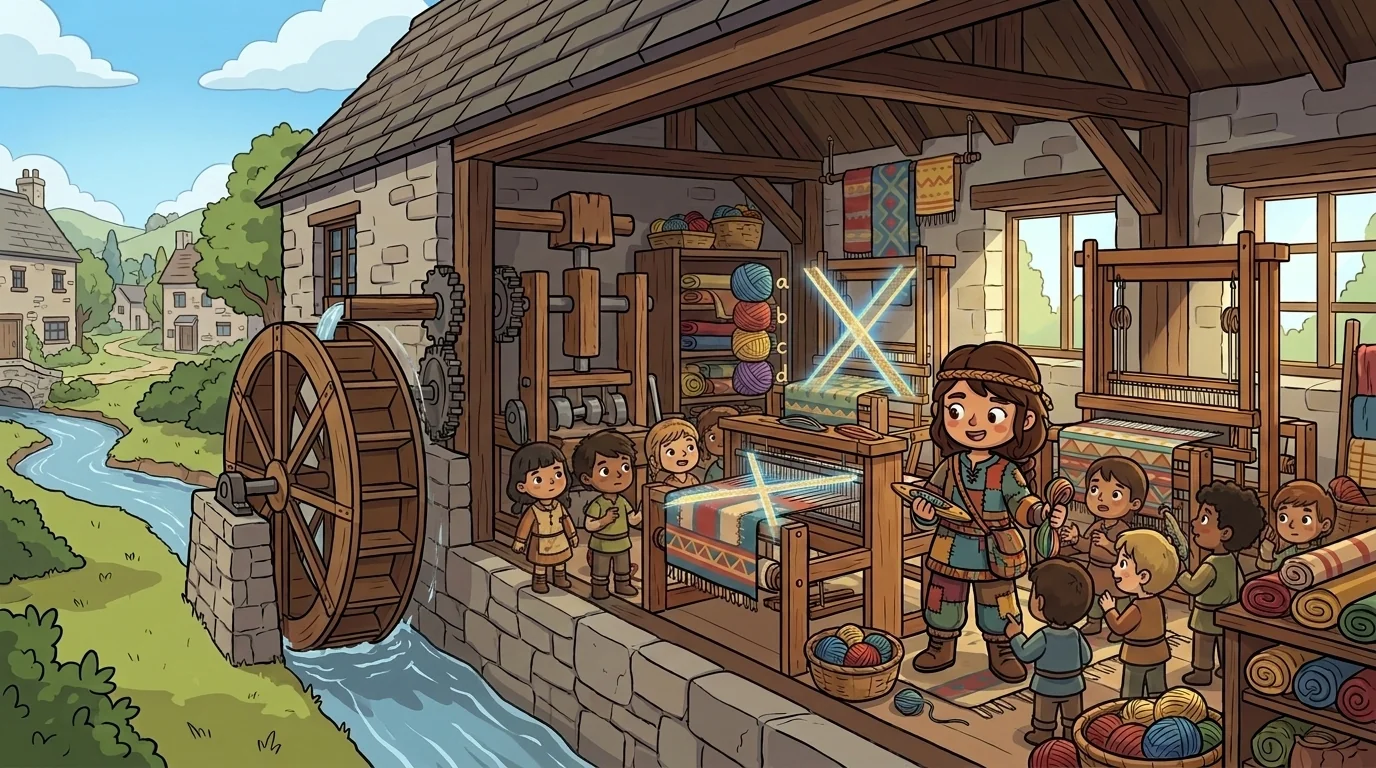
The children stare. They see the rectangle. They see the proportion. They see that the rectangle's diagonals and the proportion's diagonals are doing the same job.
Cross says: "This is cross-multiplication. The rectangle's diagonals tell you whether the cloth is straight. The proportion's diagonals tell you whether the proportion is true. Same diagnostic. Same diagonals. Different scale."
When children ask whether proportions are hard, Cross always says the same thing:
"They are not hard. They are diagonals. If the two diagonals are equal, the proportion holds. If they are not equal, the proportion does not hold. That is the whole rule. It is the same rule my grandmother used on cloth."
She still has the small model loom. The children sometimes ask to weave a rectangle on it. She always lets them.
She also sometimes adds: "If you ever go to Warpwell, you can see my family still checking diagonals on the big looms. The trick is older than I am. It is older than my grandmother. It is older than the village. It is just how cloth works." And when she says this, her voice goes soft and glad, because it makes her feel held — like her grandmother's steady hands are still in the room, and the children can feel it too: that quiet warmth of belonging to something older and kinder than themselves.
The RatioRealm ensemble
Cross the Proportion-Solver is part of RatioRealm's distributed-narrative cast. Each character embodies a different curricular primitive; together they teach the full subject.
-

Pair the Ratio-Speaker
Simple ratios (a:b) — the foundational "for every A, there are B" pattern
-

Scale the Doubler
Equivalent ratios (scaling both parts by the same factor; recipe-doubling primitive)
-

Unit the Per-One-Counter
Rates and unit rates (the per-one normalization that lets us compare different rates)
-

Centa the Percent-Translator
Percentages — the per-hundred special case + percent change