Spire
PATTERN-AS-DISCOVERY — *patterns are everywhere when you slow down enough to see them.* The math-as-story primitive of *pattern-recognition as universal human work across civilizations.*
Press play to listen along. The line being read lights up as you go.
Show full transcript
Loading transcript…
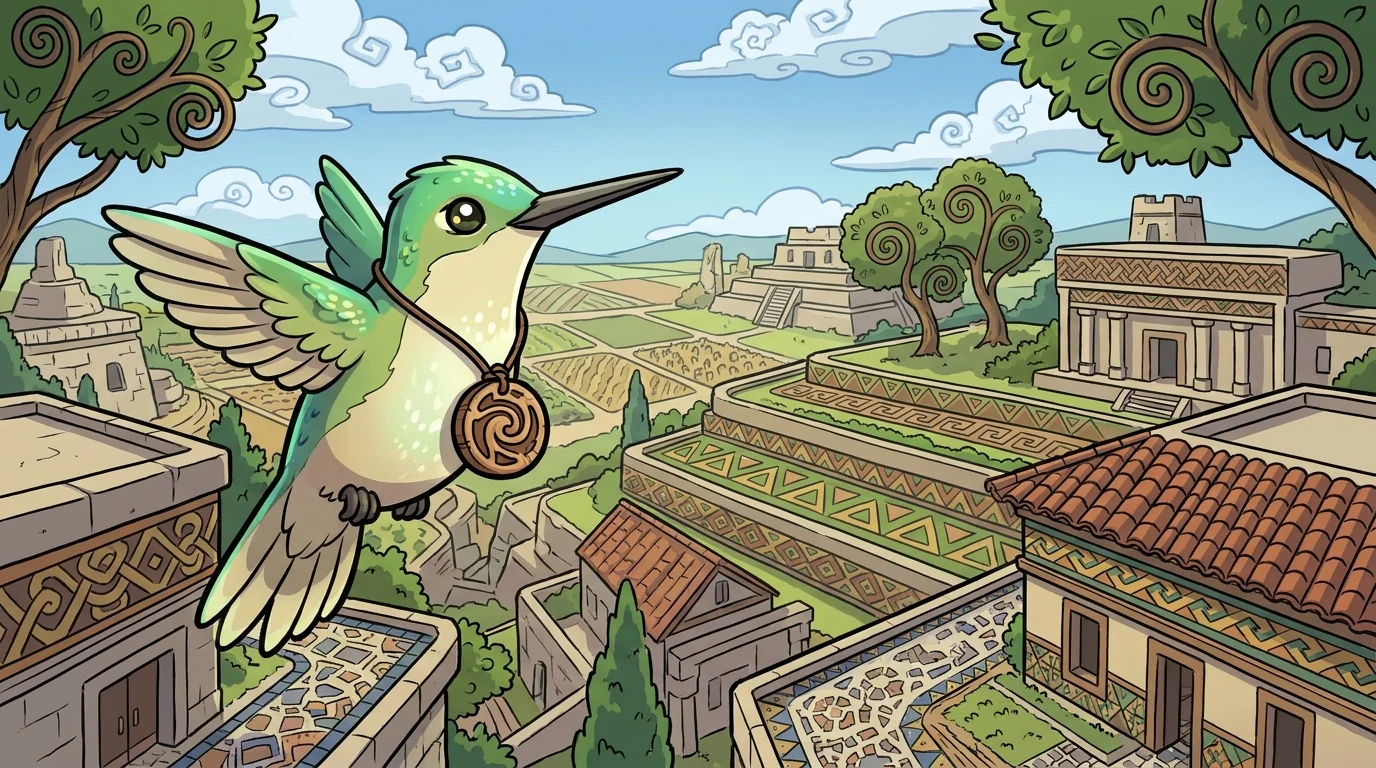
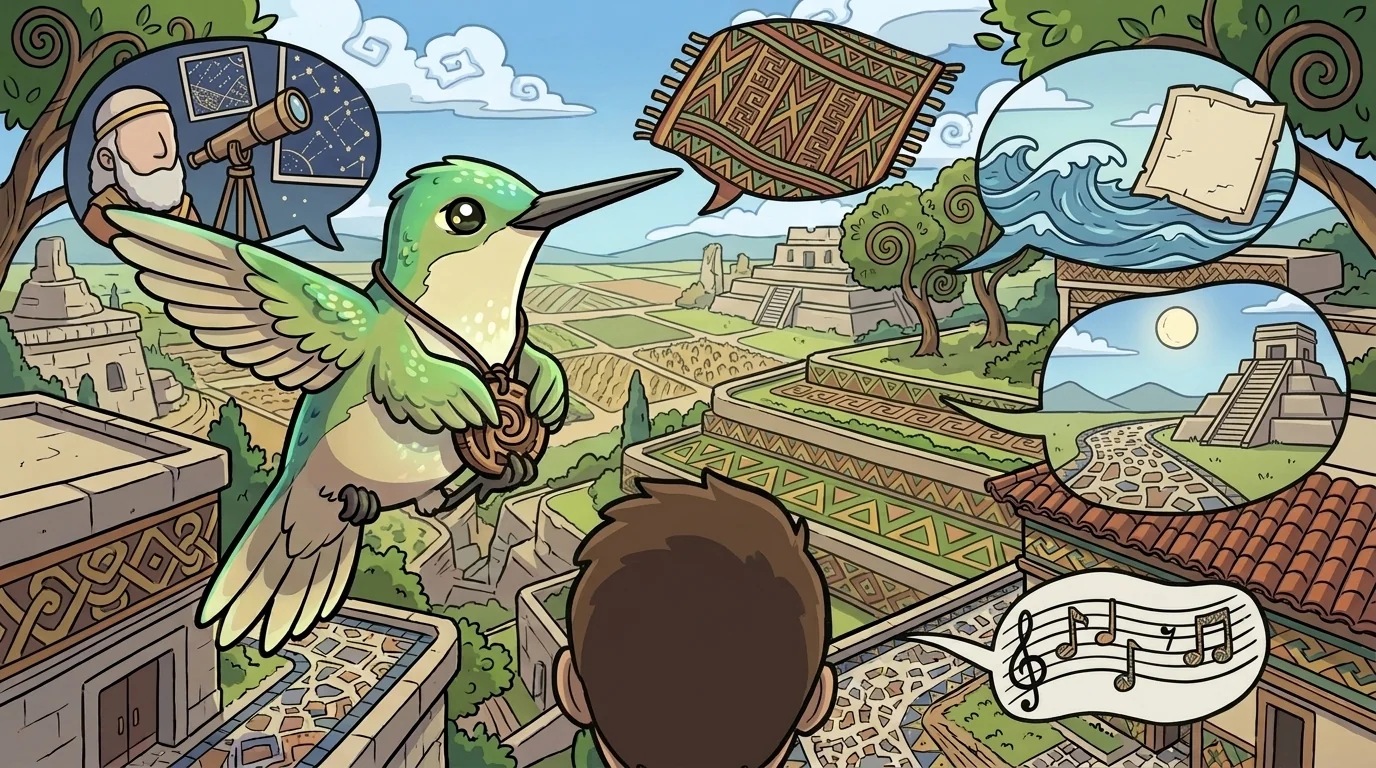
Spire was tiny. She was like a hummingbird, but a kid. Her skin shimmered with greens and creams. Her eyes were bright, always looking. Around her neck hung a leather cord. On it was a small, round pendant. It had a spiral pattern carved into it. This spiral was special.
It wasn't the famous golden spiral. It wasn't the Sankofa symbol from Africa. It wasn't the Koru from New Zealand. It wasn't the Taiji from China. Spire's spiral was different. It was a mystery spiral. It hinted at all those other spirals. But it didn't belong to just one. It was just a pattern. A pure, simple pattern.
This pendant was important. It showed what Spire was all about. She helped kids find *patterns*. Finding patterns is something everyone does. All people, everywhere, look for patterns. They see them in nature. They see them in art. In music. In clothes. In buildings. They take these patterns. Then they turn them into math ideas.
Things like matching sides. Or things happening over and over. Or shapes that repeat inside themselves. Or how often something comes back. Or how big one thing is compared to another.
Spire always made one thing clear. Finding patterns wasn't just one culture's idea. "Patterns are everywhere," she'd say. "You just have to slow down. Then you can see them." She'd tap her pendant. "Every culture saw patterns. They saw different ones first. They saw them in different places. My pendant shows the pattern across all of them. It's a general idea."
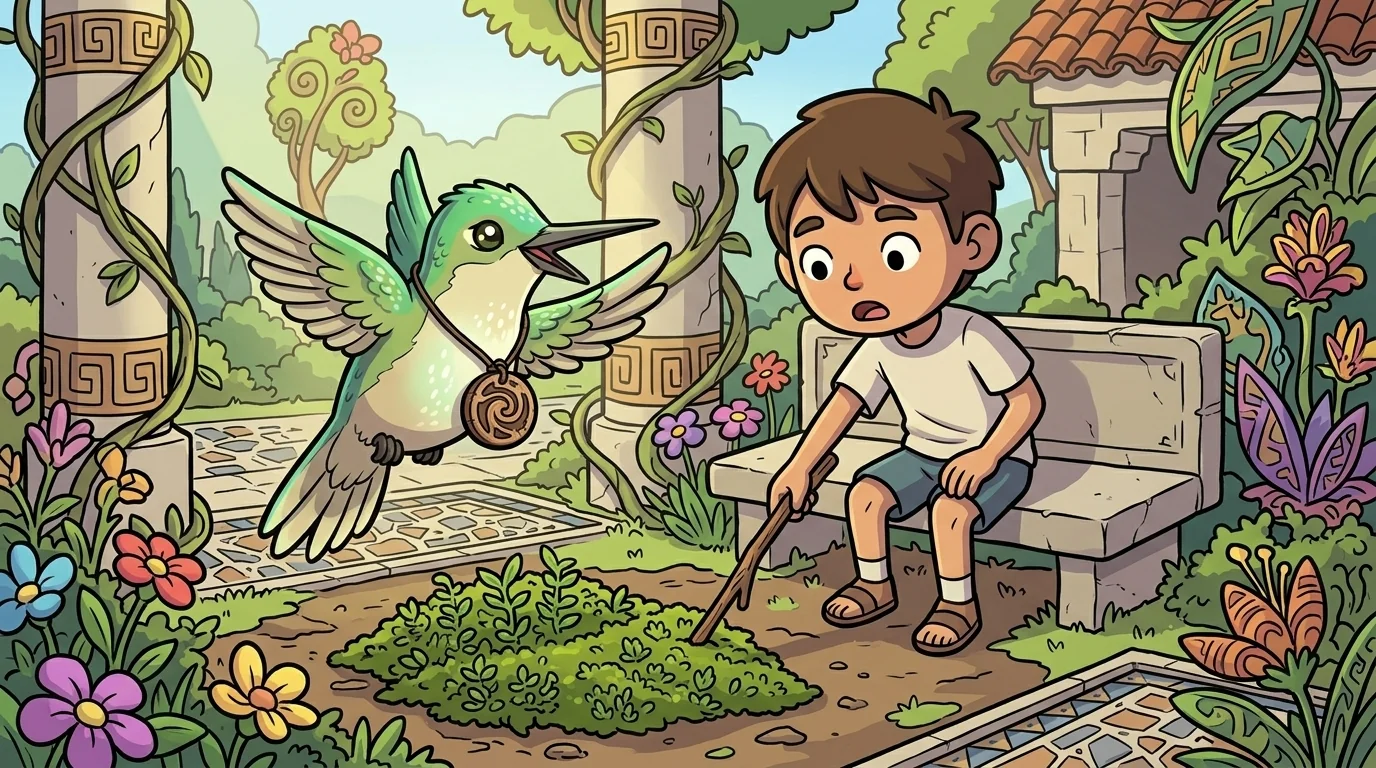
One sunny afternoon, Spire zipped through the MathLore gardens. Flowers bloomed in bright, impossible colors. Vines twisted up tall pillars. A new student, Pip, sat on a bench. Pip looked a bit bored. He was poking a stick into the dirt.
Spire hovered near Pip's ear. "Lost in thought, or just lost?" she chirped.
Pip jumped. He nearly dropped his stick. "Oh! Just... looking at dirt."
Spire landed lightly on the bench beside him. Her tiny feet barely made a sound. "Dirt has patterns, you know."
Pip looked at her. "Really?"
"Really," Spire said. She pointed to a patch of moss. "Look at the tiny leaves. See how they grow? Each one is small. But they all look like the big one. That's a repeating shape pattern."
Pip leaned closer. "Oh, yeah! Like mini-leaves."
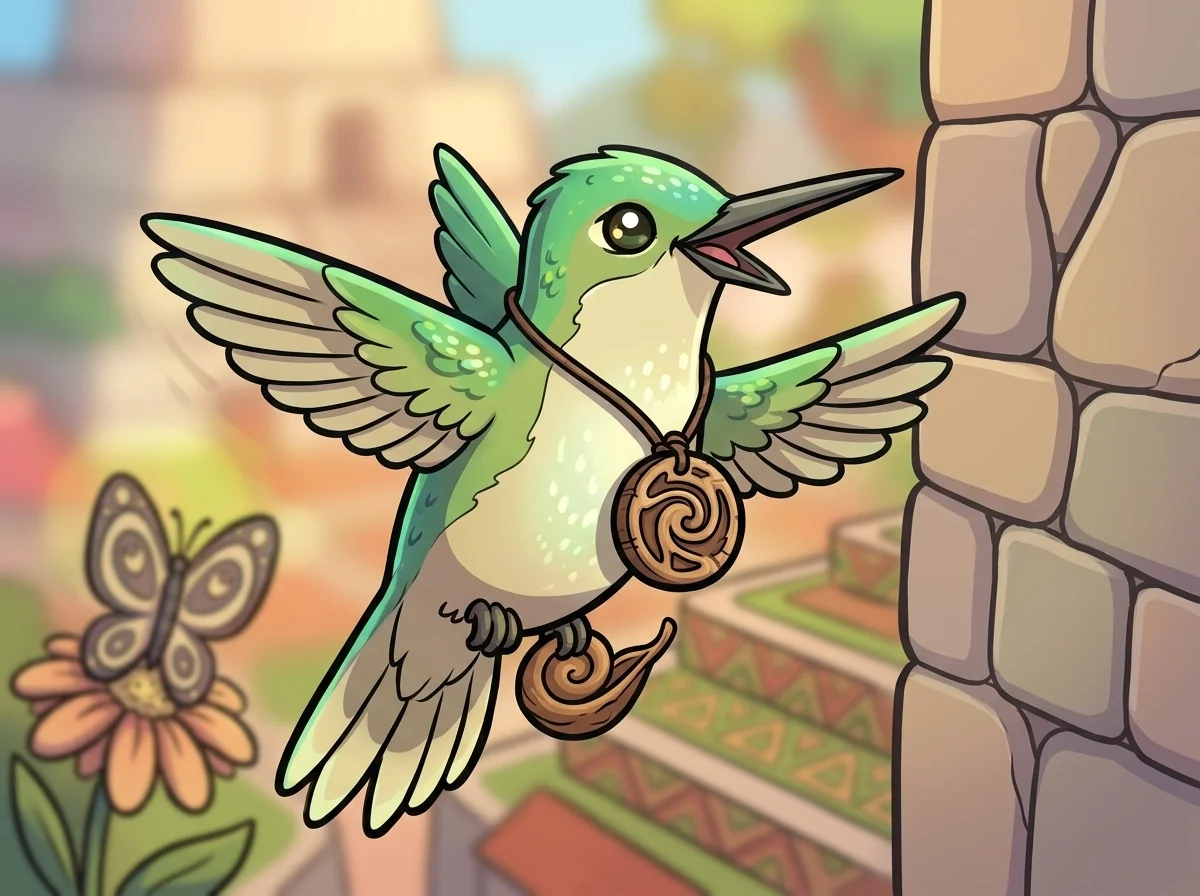
"Exactly," Spire said. She picked up a fallen seed pod. It was shaped like a tiny swirl. "And this. See how it curves? It's a spiral. Spirals are everywhere."
She pointed to a wall made of smooth, flat stones. "Look at the stones. They're all different sizes. But they fit together. There's a pattern in how they connect. That's called *repetition*. Things happening again and again."
Pip traced a finger along the wall. "Like bricks."
"Yes, like bricks!" Spire agreed. She flew up to a butterfly resting on a flower. "And this butterfly. One wing is just like the other. If you fold it, they match. That's *symmetry*. A balanced pattern."
Pip's eyes widened. He hadn't noticed that before.
"And listen," Spire whispered. A faint drumbeat came from a distant chamber. Thump-thump-tap. Thump-thump-tap. "Hear that? It's a beat. It comes back again and again. That's *periodicity*. A pattern that repeats over time."
Spire landed back on the bench. "These are all patterns. They are like types of patterns. The butterfly is one example. But its pattern is a type of pattern. You'll see it in other things, too. Each butterfly is different. But the pattern is the same."
Pip nodded slowly. "So, patterns are everywhere."
"Yes!" Spire said. "And different people saw different patterns first. In ancient Babylon, they watched the stars. They saw patterns in how the stars moved. In India, they found patterns in music. In the ocean, Polynesians saw patterns in waves. They used them to find their way. In Africa, people wove patterns into cloth. They used repeating shapes. The Mayans watched Venus. They saw how it moved in the sky."
Spire paused. "All these cultures found patterns. They just looked in different places. My pendant shows the big idea. The idea of finding any pattern."
"Can anyone find patterns?" Pip asked.
"Of course!" Spire said. "It's not a magic trick. It's a skill you learn. The more you look, the better you get. It's like practicing a game."
"How do you do it?" Pip asked.
Spire smiled. "It's not hard work. It's just three steps. Slow down. Look closely. Then figure out the main idea. That's how you find patterns."
Spire didn't grow up in one town. She traveled a lot. Her family moved from village to village. They were like pattern detectives. They watched for patterns everywhere. In different cultures. In different ways of life. They took all those patterns. Then they put them together. They made the special abstract spiral pendant. Spire wore it proudly.
When Spire was older, she went to MathLore. Lore was the wise leader there. "What do you know about finding patterns?" Lore asked.
Spire stood tall. "Patterns are everywhere," she said. "You just have to slow down. Then you can see them." She continued, "Every culture noticed patterns. They saw different ones first. They saw them in different places. I carry the big idea of patterns. The specific cultures tell their own stories."
Lore nodded slowly. "You are chosen," Lore said.
"My pendant is a general pattern," Spire explained to Pip. "I keep it that way for a reason. Real spirals from real cultures are special. The Sankofa, the Taiji, the Koru. The golden spiral. The repeating shapes. They all have their own places. They have their own stories. They show up in other parts of MathLore. I just carry the main idea. The idea of finding patterns."
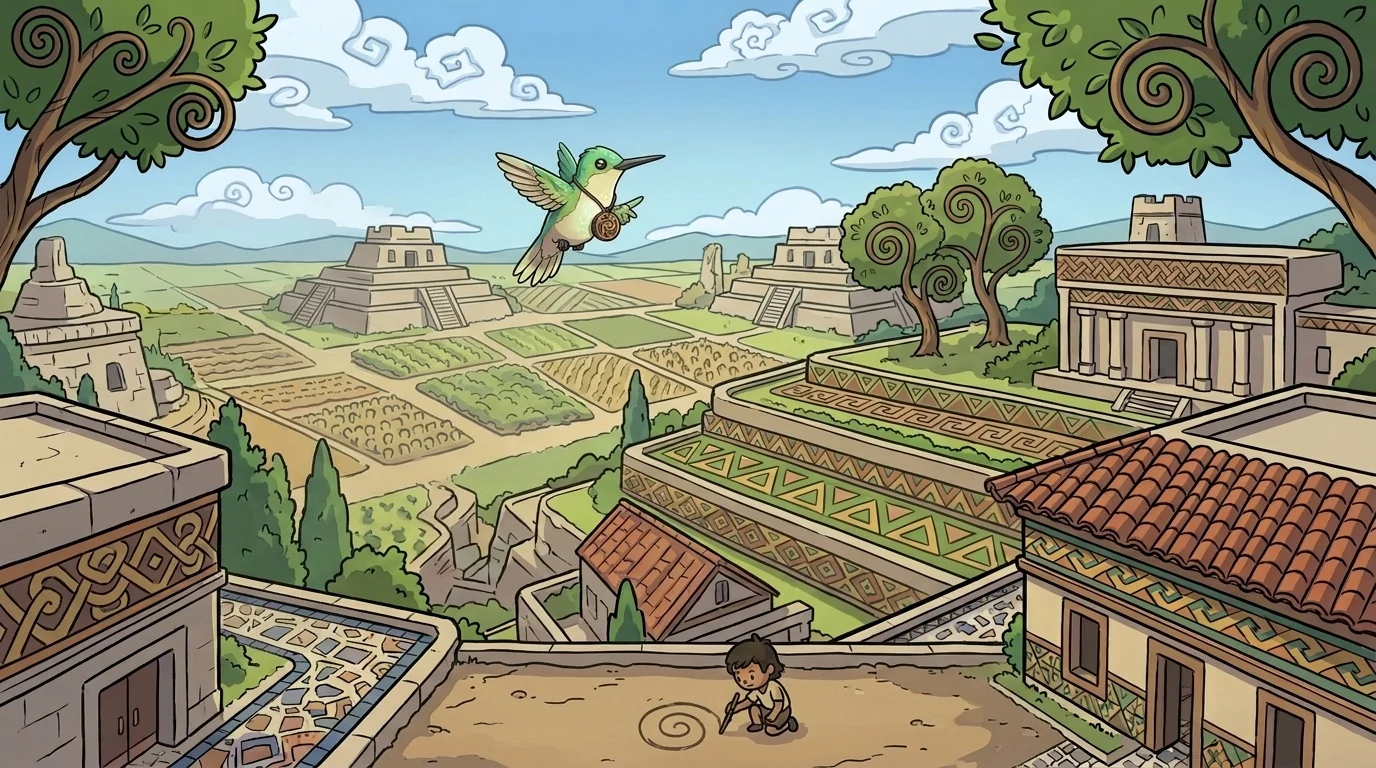
Pip looked at his stick. He started drawing a spiral in the dirt. He was slowing down. He was looking. He was finding a pattern.
Spire's pattern-spiral pendant caught the light. It shimmered with a tiny flash. And Pip, tracing his little spiral, felt a warm buzz of delight bloom right behind his ribs — the happy, wide-awake feeling of realizing that the whole world was quietly full of things waiting for someone patient enough to notice them.
The MathLore ensemble
Spire is part of MathLore's distributed-narrative cast. Each character embodies a different curricular primitive; together they teach the full subject.
-

Heap
Counting-as-first-story — every people figured out their own way to count
-
Vouch
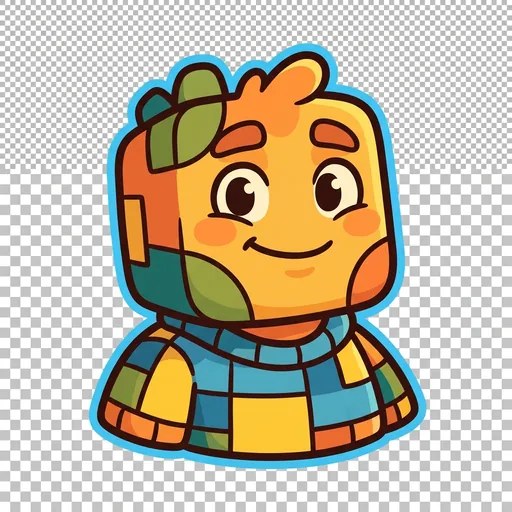
Proof-as-shared-knowledge — show me why; if your why holds up, I'll build on it
-

Home
Math-as-cultural-context — this idea was born somewhere, for someone, with reasons
-
Carry
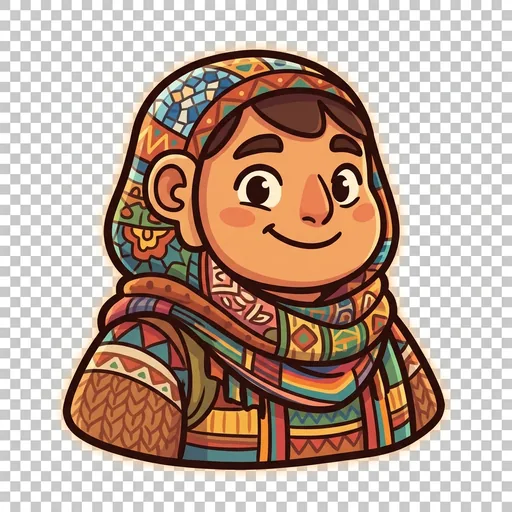
Cultural-transmission — the idea traveled; every place it visited, it grew