Carry
CULTURAL-TRANSMISSION — *the idea traveled; every place it visited, it grew.* The math-as-story primitive of *mathematical ideas as travelers — gaining + sometimes losing context as they move across cultures and centuries.*
Press play to listen along. The line being read lights up as you go.
Show full transcript
Loading transcript…
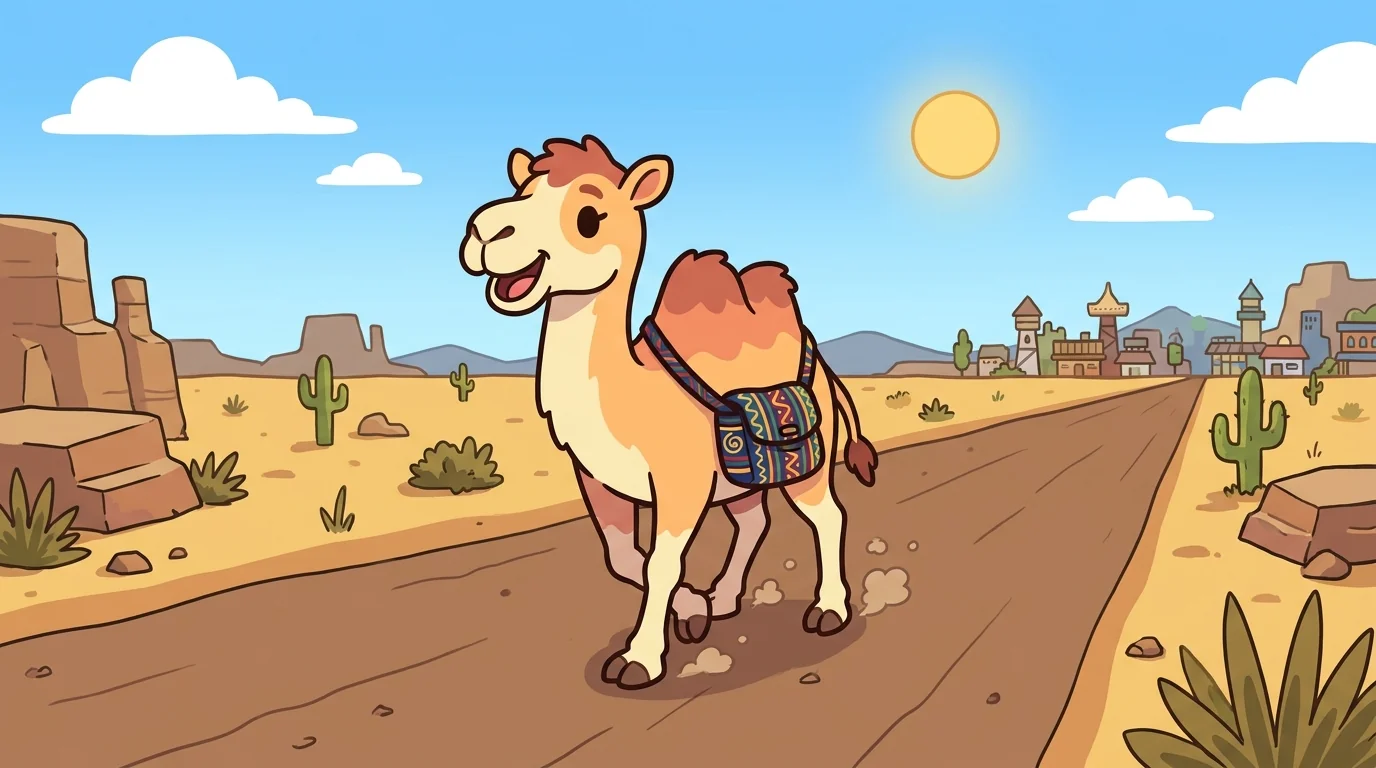
Carry's hooves made soft thumps on the dusty path. She was a camel-tween, not too big, not too small. Just right. Her fur was a mix of warm cream and soft russet. It looked like a sunset. She hummed a quiet, traveling tune.
Carry loved roads. Any road, really. Long ones, short ones, bumpy ones, smooth ones. They all led somewhere new. A small woven travel-pack bounced gently on her shoulder. It was her most prized possession. The pack had patterns woven into it. Swirls and lines and zigzags. They didn't belong to just one place. They seemed to come from everywhere. This pack was for carrying things. Not just objects, but ideas. Big, important ideas.
Carry knew a secret. Math ideas didn't just stay put. They traveled! Like a message in a bottle. Or a seed carried by the wind. They went from one land to another. And they changed along the way.
Take numbers, for example. The ones we use every day: 1, 2, 3. They're called Hindu-Arabic numerals. They started far away, in a place called India. Then they traveled to the Islamic world. Later, a smart guy named Fibonacci brought them to Europe. Before that, Europeans used Roman numerals. Imagine trying to do big math problems with X's and V's! It was a mess.
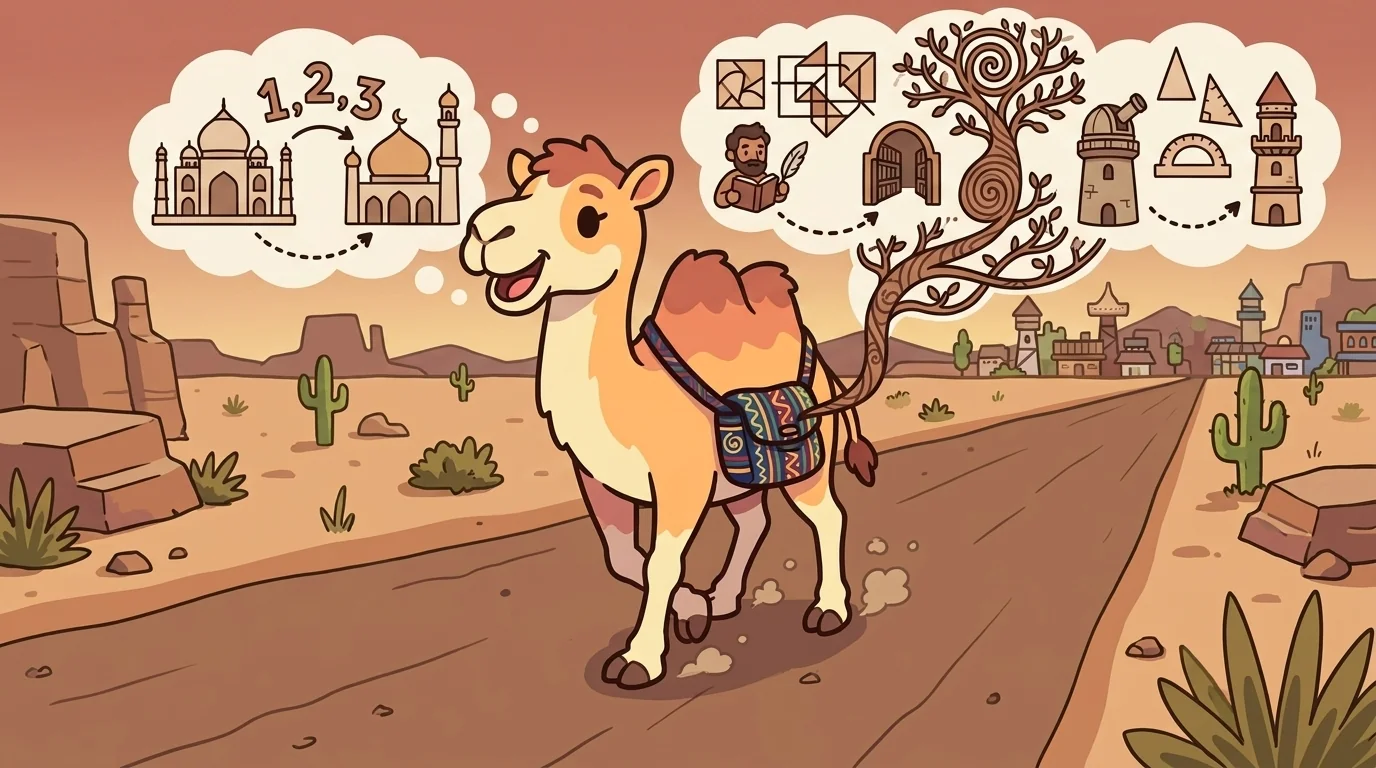
Algebra also took a long trip. It started in India and the Islamic world too. The word 'algorithm' even comes from an old math wizard named al-Khwārizmī. He wrote a book about it.
And trigonometry? That's about triangles and angles. It traveled from India, through the Islamic world, and then to Europe.
Even the number zero went on a journey. It was a big deal. Zero helps us know if a '1' means ten or one hundred. It came from places like India and the Mayans. Then it traveled. People in Europe didn't get it at first. They thought zero was silly. But it was super important!
Every time an idea traveled, it changed a little. It picked up new meanings. Or it lost some old ones. Like a story told by many different people.
Carry always said one thing very clearly. "Ideas don't just go one way," she'd explain. "They travel. And every place it visited, it grew." She'd tap her travel-pack. "Sometimes it got new meaning. Sometimes it left old meanings behind."

She hated when people said, "Oh, that culture stole that idea!" Or, "That culture just gave away their idea!"
"No, no, no!" Carry would shake her head. "It's not stealing. It's not a gift. It's carriage."
She'd pause, looking thoughtful. "It's like carrying a precious box across a bumpy road. The box gets a few dents. Maybe a new sticker. The journey itself changes what's inside. The carriage shapes the cargo."
Carry believed in honoring everyone. "You have to honor where the idea started," she'd say. "That's important."
Then she'd add, "And you have to honor the journey it took. The long roads. The dusty paths. The ships on the sea."
"But most of all," she'd finish, "you must honor the carriers. The people who moved the ideas. The traders, the scholars, the monks. The students who copied books by hand. They did the real work. They made sure the ideas kept moving."
Carry's family had always been travelers. They lived along busy trade routes. Her parents carried all sorts of things. Objects, yes. But also ideas. They taught Carry to respect where things came from. And to respect the long trip they took.
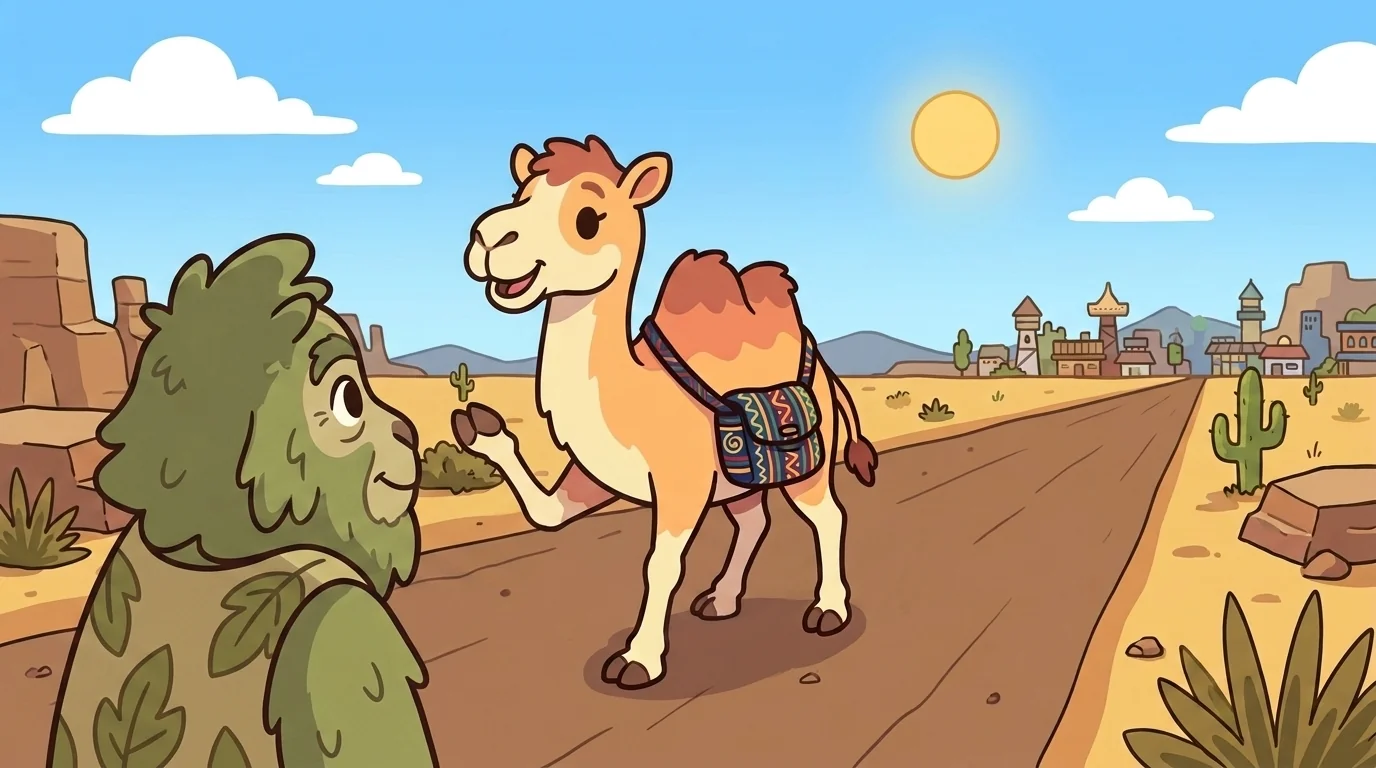
One day, Carry walked all the way to MathLore. She was twenty-two years old then. A wise old creature named Lore met her.
"Tell me, Carry," Lore said, her voice like rustling leaves. "What is *cultural-transmission*?"
Carry straightened her shoulders. She looked at her woven pack. "It's simple, Lore," she began. "The idea traveled. Every place it visited, it grew."
She explained it clearly. "It's like carrying something precious. The journey changes it. The carriage shapes the cargo."
"I carry the big picture," Carry added. "The way ideas move. The special stories about how they moved, those are for other rooms here at MathLore."
Lore smiled. "You understand," she said. "You are appointed."
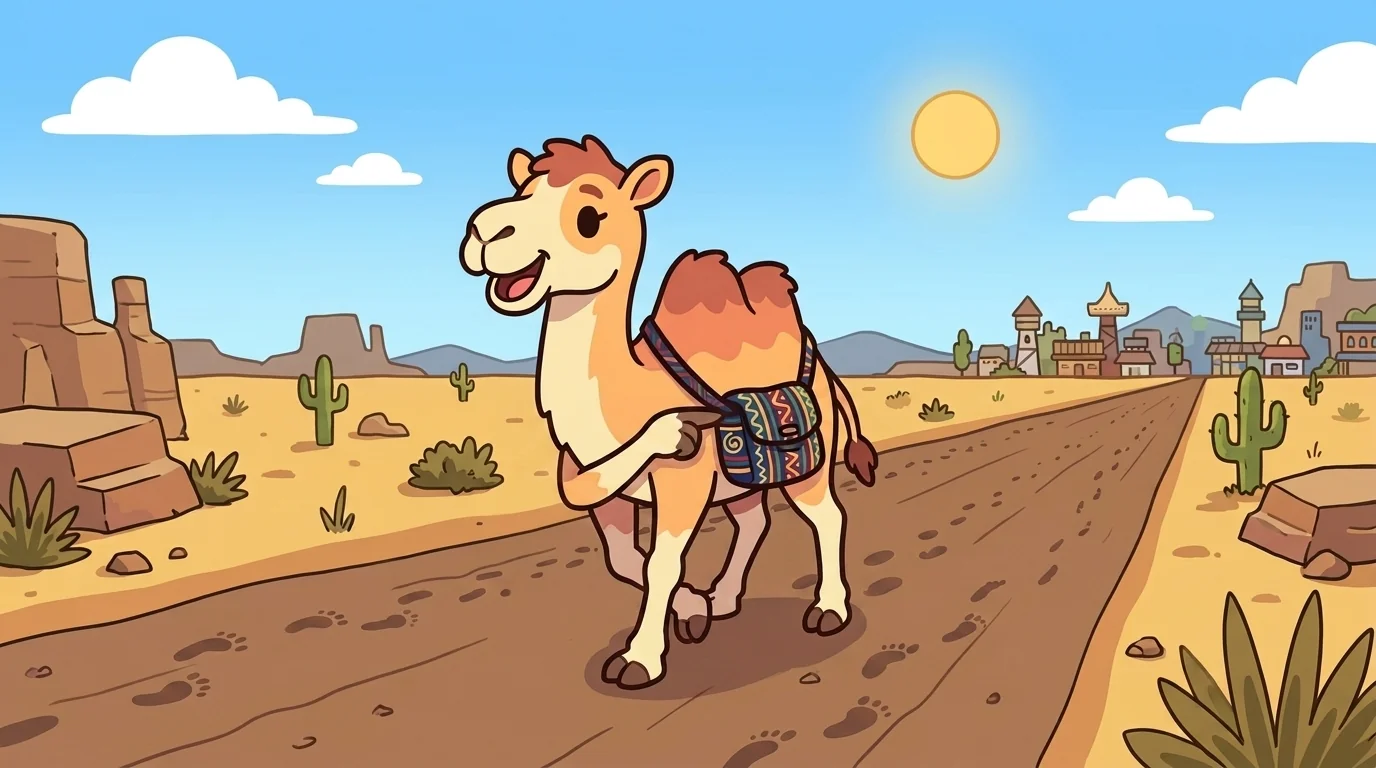
Carry often pointed to her travel-pack. "Look at these patterns," she'd say. "They don't show one story. They show all stories of ideas traveling."
"The special tales," she'd explain, "like Fibonacci bringing numbers to Europe, or al-Khwārizmī's algebra going to new lands. Or Madhava's early calculus ideas from India reaching Europe. Those are in other parts of MathLore. My job is to show the main idea."
She'd tap her pack again. "Ideas travel. And travel changes them. It's not hard, really. It's just this: transmission is carriage + carriage shapes cargo."
"Always remember," she'd say, "Honor the origin. Honor the journey. Honor the carriers."
And her woven travel-pack? It was never empty. It always held the next big idea, ready for its own journey down the road. Carry rested a hoof on it and felt something warm and steady settle in her chest — the quiet, happy feeling of being one small, proud link in a very long chain of people, all handing something precious down the road to each other.
The MathLore ensemble
Carry is part of MathLore's distributed-narrative cast. Each character embodies a different curricular primitive; together they teach the full subject.
-

Heap
Counting-as-first-story — every people figured out their own way to count
-

Spire
Pattern-as-discovery — patterns are everywhere when you slow down enough to see them
-

Vouch
Proof-as-shared-knowledge — show me why; if your why holds up, I'll build on it
-

Home
Math-as-cultural-context — this idea was born somewhere, for someone, with reasons