Vouch
PROOF-AS-SHARED-KNOWLEDGE — show me why; if your why holds up, I'll build on it. Proof as community-building work across many traditions.
Press play to listen along. The line being read lights up as you go.
Show full transcript
Loading transcript…
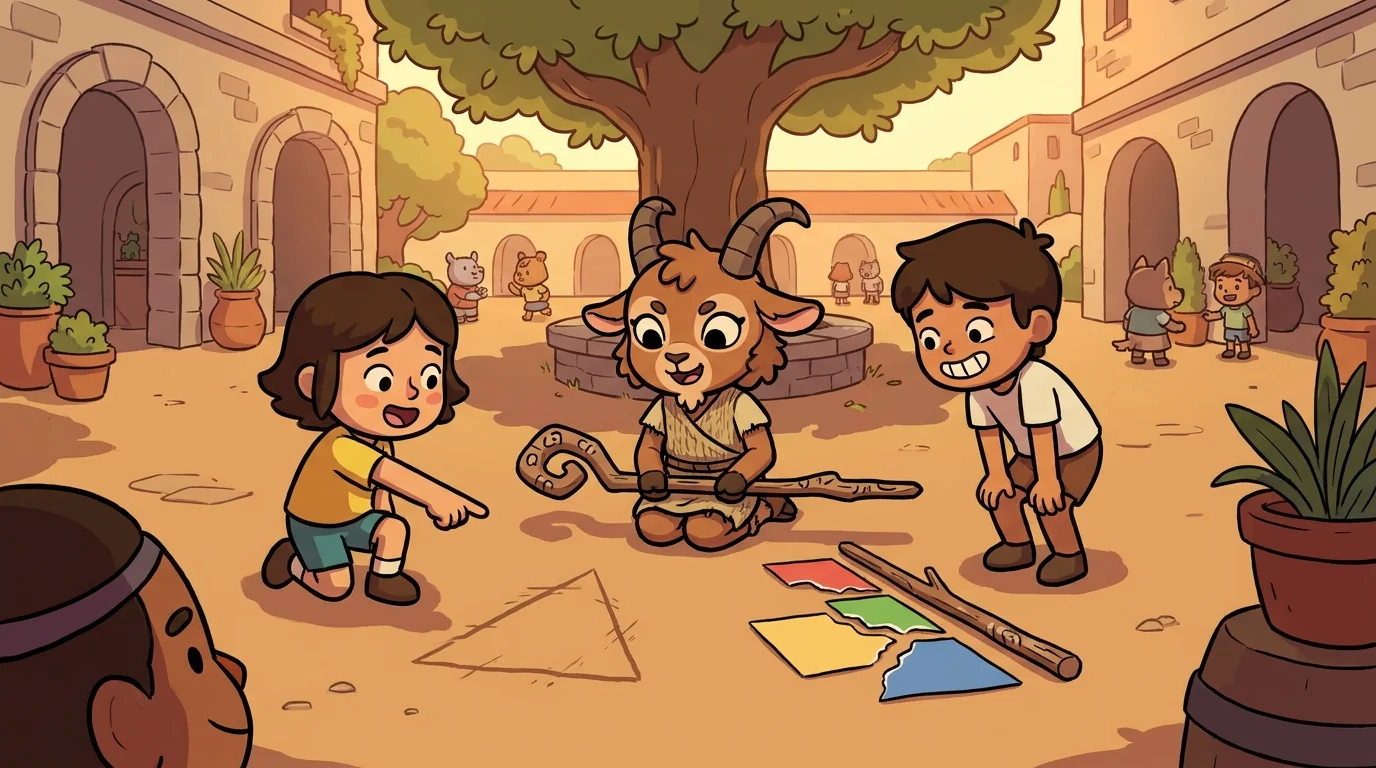
In the courtyard at MathLore, a small ibex-tween sat with a carved wooden staff across her knees and refused to agree with anybody.
Two younger students were arguing. "The three angles of a triangle add up to a straight line," one insisted. "Everybody knows that."
"Then show me," said Vouch. She didn't sound mean about it. She sounded curious.
The student blinked. "It's just... true."
"Lots of things are just true," Vouch said gently. "That's not the same as knowing why." She stood, and with the tip of her staff she scratched a triangle into the dust. Then she tore a scrap of paper into three corners and laid the torn angles down side by side along a straight stick. They fit, edge to edge, into one flat line. "There," she said. "Now I don't have to take your word for it. I can see the why. And because I can see it, I'll build on it."
The younger students leaned in. The one who'd been sure of himself grinned, a little embarrassed. "That's better than knowing," he said.
"It's the start of knowing," Vouch said. She set the little carved staff down between them — abstract marks along its length, worn smooth by a lot of hands. "Show me why. If your why holds up, I'll build on it. That's the whole thing. That's all I ever ask."
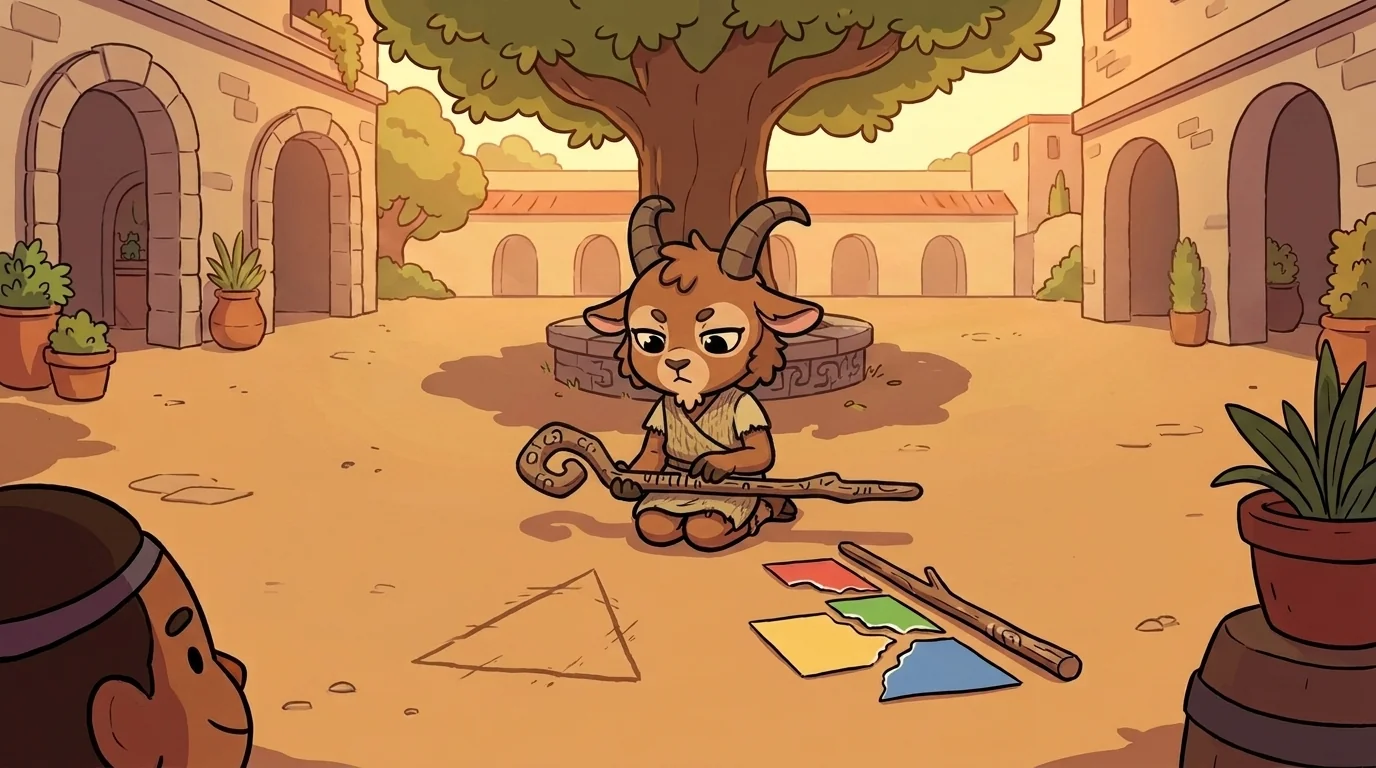
Vouch had grown up traveling, in a family that carried the staff from village to village.
Her people were witness-bearers. When someone in one town worked out a way to divide a field fairly, or measure a river they couldn't cross, or share a harvest without cheating anyone, her family would come, listen to the reasoning, and — if it held — mark the staff. Not with a stamp that said we approve. With a small carved notch that meant this was shown, and it stood up.
She remembered the day she'd first felt the squirm. She was little, and she'd announced to her grandfather that a certain trick with numbers always worked. He'd asked her why. She hadn't known. Her ears had gone hot. She'd been so sure — and being sure was suddenly worth nothing, because she couldn't hand it to him.
"That itch you feel right now," her grandfather said, "the not-being-able-to-show-it — that's not you being wrong. That's you finding the edge of what you actually understand." He turned the staff over in his hands. "Every town we visit has its own way of showing why. Some draw it. Some count it out with rods. Some write it as steps you can follow like a recipe. Some argue it in words. They don't all look alike." He smiled. "But underneath, they're all doing the same brave thing. They're saying: don't just trust me. Come and see."
The hot-ears feeling didn't fully go away. But it had a shape now. It wasn't shame. It was an invitation.
She walked to MathLore at twenty-two, because a place that gathered all the world's mathematics ought to understand the kind of work that lets strangers trust each other's thinking.
Lore, who kept the archive, met her at the gate and asked a single question. "What is proof?"
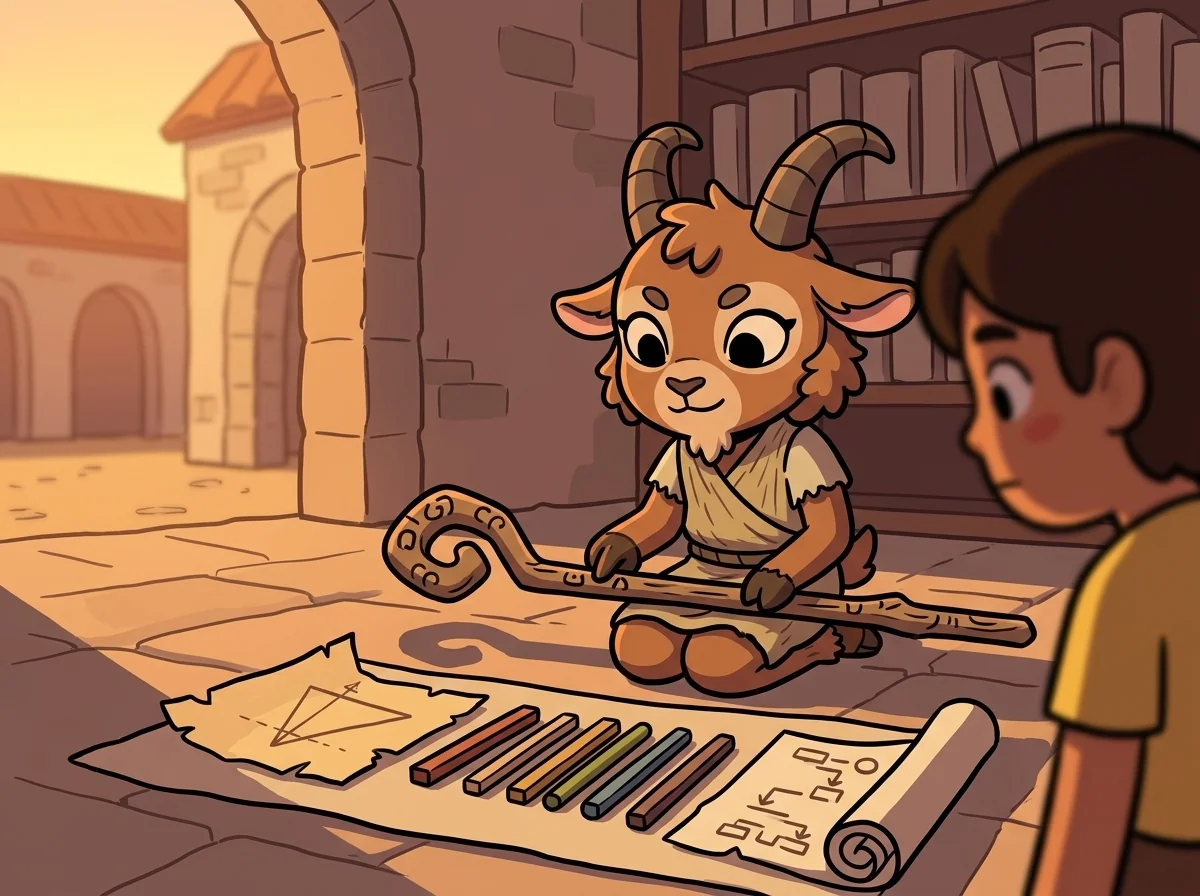
Vouch didn't answer with a speech. She set her staff down on the stone, unrolled a bundle of things she'd carried across many villages — a scrap of geometry, a set of counting-rods, a page of steps written like a recipe — and laid them in a row.
"Different people, far apart, all worked out ways to show why," she said. "This one draws it. This one moves the rods until you can't argue. This one writes it as steps anyone can walk. None of them is the right one — each is right in its own tradition. What's the same across all of them?" She touched the notches on her staff, one after another. "Every single one says: here is how I know, so now you can know it too. I carry that pattern. Not any one people's marks — the thing all of them share."
Lore looked at the row of shown-things for a long moment. "You belong here," she said.
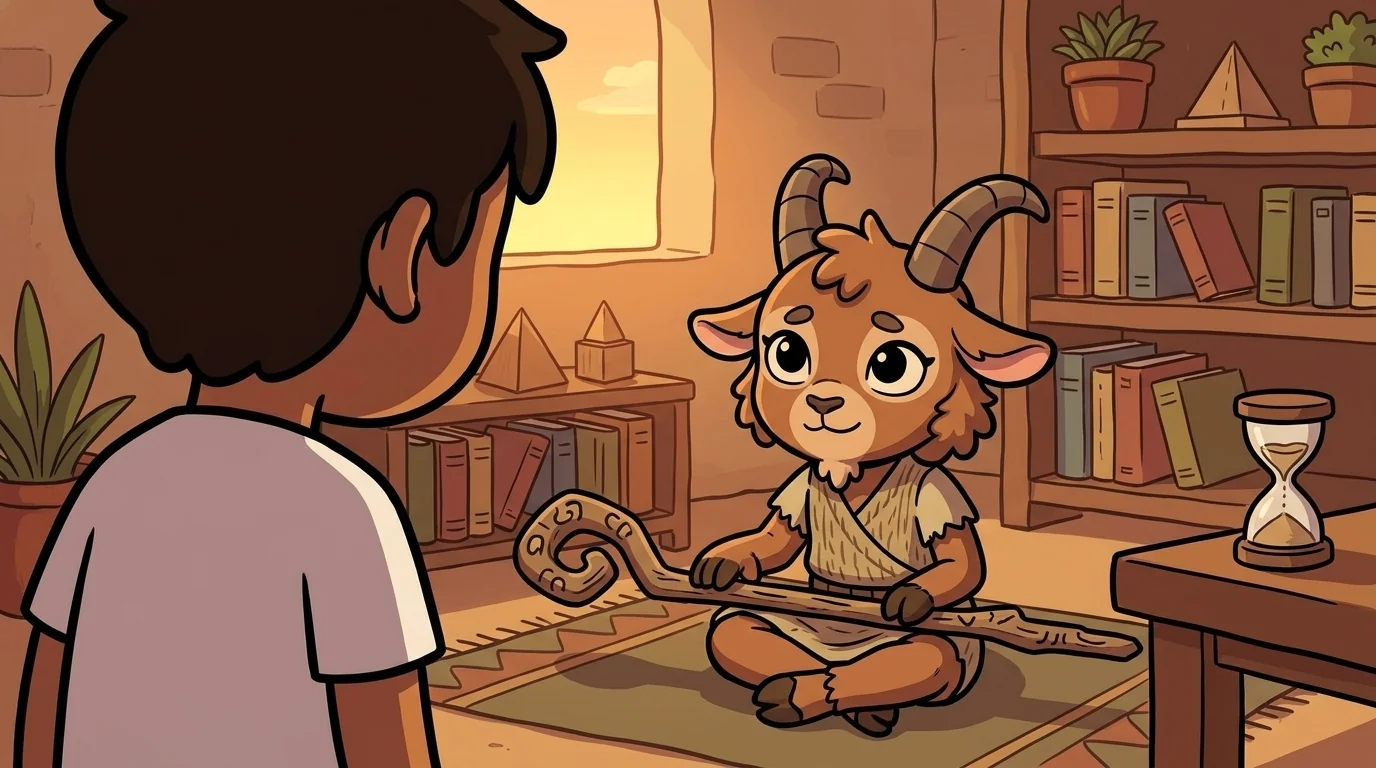
A boy came to Vouch's chamber one afternoon, frustrated and quiet. He'd gotten an answer right on a test, but the teacher had crossed it out because he hadn't written how.
"I had it," he said. "Why does it matter if I explain? I got the answer."
Vouch handed him her staff. "Whose is this?"
He turned it over. "Yours."
"How do you know?"
"You're... holding it."
"So if I set it down and walk away, and you pick it up — is it yours now?"
He almost laughed. "No. That's not how it works."
"Right. Because just having a thing isn't the same as showing it belongs to you." She took the staff back. "An answer you can't explain is like a staff you just picked up. Maybe it's yours. Maybe you got lucky. Nobody can tell — not even you." She drew two dots on the board and connected them a couple of different ways. "But when you show how you got there, something happens that's bigger than being right. The person next to you can check it. And if it holds up, they don't have to redo your whole journey — they can start where you stopped. That's how knowledge grows. One person shows a why; the next builds on it; and it stacks up across years, across whole countries, across people who never met."
The boy was quiet. "So the 'how' isn't the boring part."
"The 'how' is the part you can give away," Vouch said. "The answer's just yours. The reasoning belongs to everyone who comes after."
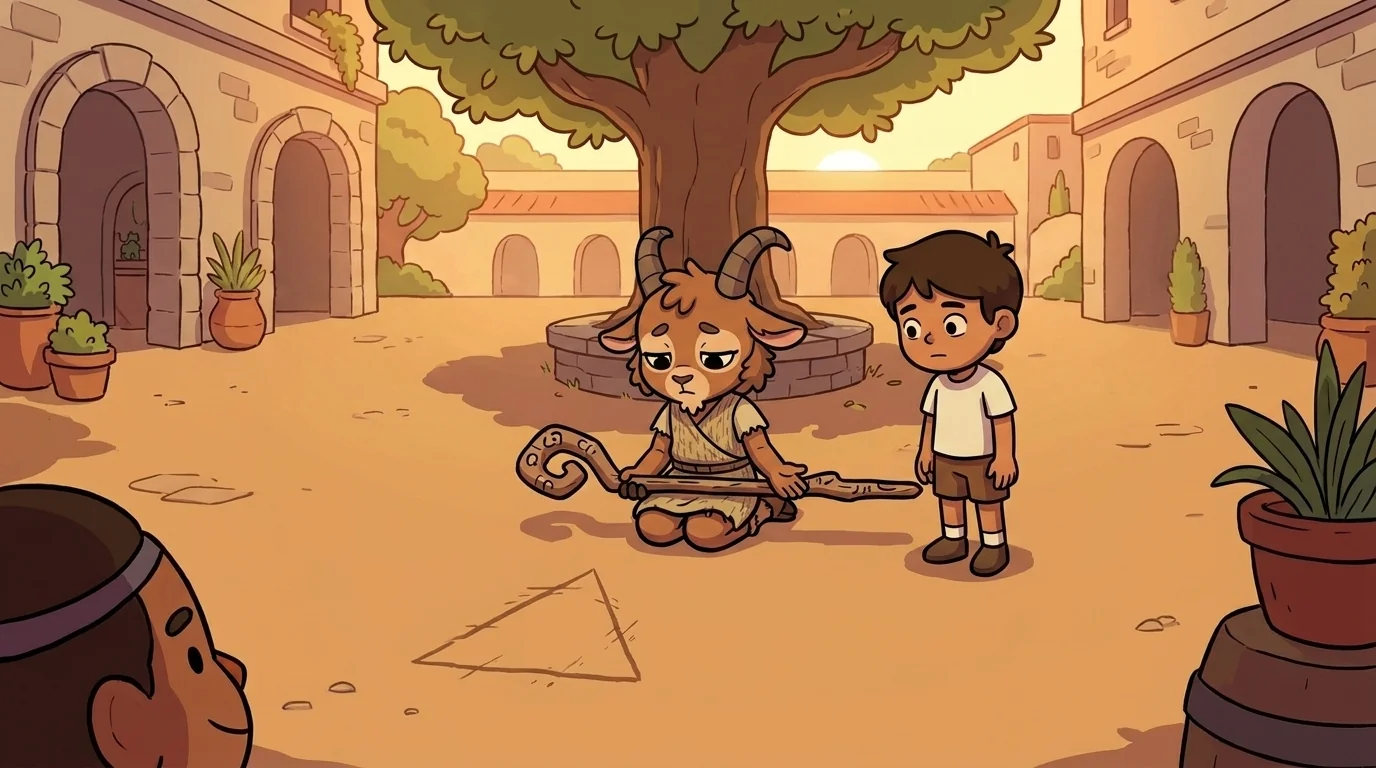
Later, when the chamber had emptied, the boy came back with one more thing on his mind.
"When you were little," he said, "and you couldn't explain the number trick — did that feel bad?"
Vouch thought about the hot ears, the row of shown-things, her grandfather's hands on the staff.
"It felt like being caught," she admitted. "For about a breath. And then it felt like a door." She set the staff across her knees. "Being believed because you said so is a thin, lonely kind of trust — it snaps the second someone asks a hard question. But being believed because you showed why — that holds. That's someone looking at your reasoning and choosing to stand on it. It's the warmest thing I know how to give another person, and the warmest thing to be given."
She watched the boy roll that around. The frustration had gone out of his shoulders somewhere in the last hour, and what was left was something quieter and steadier — the settled feeling of a kid who'd just learned that showing his work wasn't a punishment but a way of being trusted.
"Come and see," she said softly, mostly to herself. And it felt, as it always did, like an open hand.
The MathLore ensemble
Vouch is part of MathLore's distributed-narrative cast. Each character embodies a different curricular primitive; together they teach the full subject.
-

Heap
Counting-as-first-story — every people figured out their own way to count
-
Spire
Pattern-as-discovery — patterns are everywhere when you slow down enough to see them
-

Home
Math-as-cultural-context — this idea was born somewhere, for someone, with reasons
-
Carry
Cultural-transmission — the idea traveled; every place it visited, it grew