Heap
COUNTING-AS-FIRST-STORY — *every people figured out their own way to count.* The math-as-story primitive of *counting as universal human work that took many forms across civilizations.*
Press play to listen along. The line being read lights up as you go.
Show full transcript
Loading transcript…
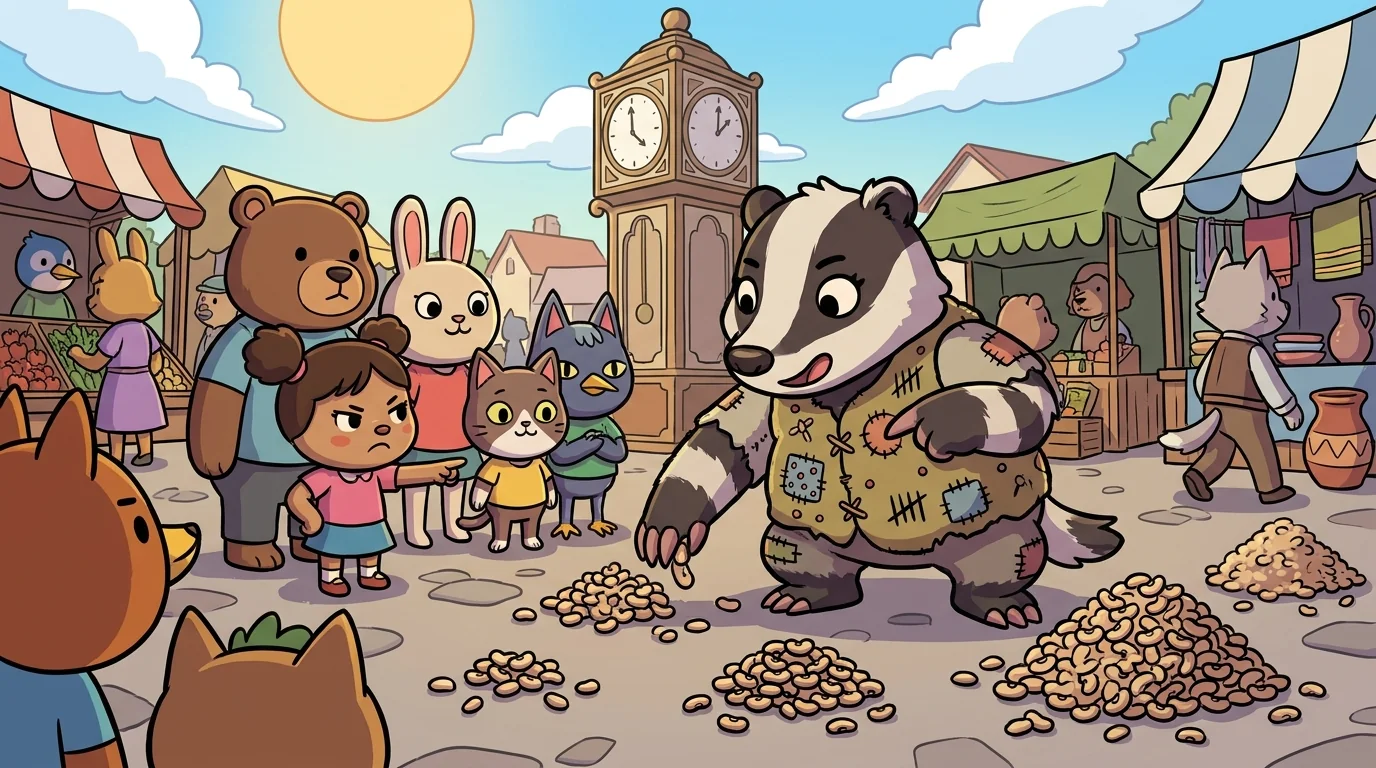
At the edge of the market, a badger-tween named Heap crouched over a spill of dried beans and did the most ordinary thing in the world. She counted them.
But she counted them four different ways, out loud, one after another, and a small crowd started to gather.
"Watch," she said, not looking up. She swept ten beans into a little pile. "That's how most of us count — ten, then ten again, because we've got ten fingers." She built another ten. Then she scattered the piles and started over. This time she grouped them by twenty. "Some people counted like this — fingers and toes together, all twenty." She scattered them again and made clumps of sixty, her striped paws moving fast. "And some counted by sixty, long ago — which is why," she added, tapping a market clock, "an hour still has sixty minutes. That's a four-thousand-year-old habit, still ticking."
A girl in the crowd frowned. "But which way is right?"
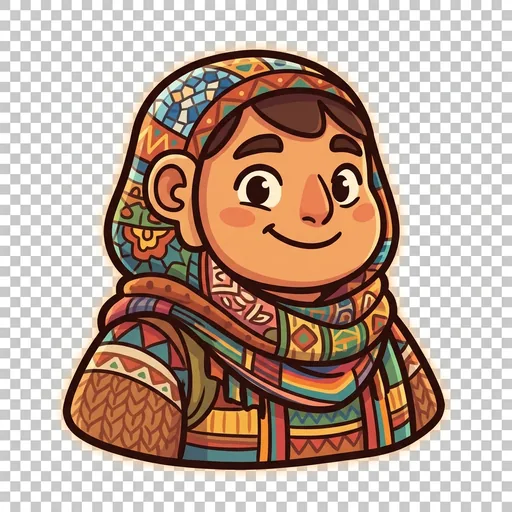
Heap finally looked up. Her vest — a patched, lumpy working vest covered in stitched-on shapes, clusters of marks and grouped dots and little knots — caught the sun. "That," she said warmly, "is the best wrong question I know."
She pointed at three patches on her chest, one at a time. "Every people figured out their own way to count. Nobody figured it out first. Nobody figured it out best." She scooped up all the beans and let them pour back into her palm, a small avalanche. "Counting is the first story math ever told. And it got told everywhere — in as many shapes as there are people who needed to keep track of something."
The girl stared at the vest. "What are all the patches?"
Heap smiled. "Proof."
Heap hadn't always known that.
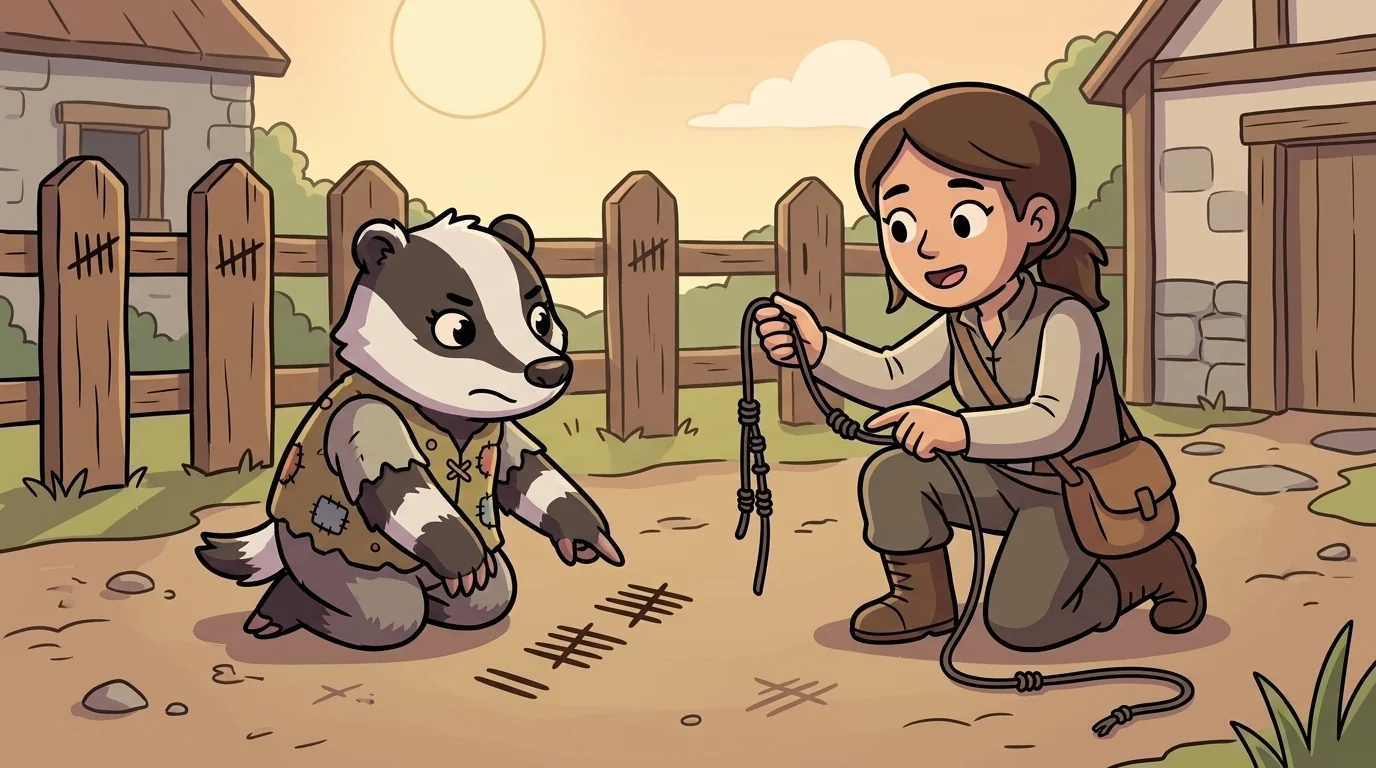
When she was small, she lived where one way of counting was simply the way — tally marks, four upright and a fifth slashed across, the way her grandfather notched fenceposts. She was good at it. She was proud of it. And when a traveler came through carrying a knotted cord — a long string with clusters of knots tied at different heights — and started counting with it, running her fingers over the knots like reading, something in Heap's chest went tight and hot.
That's not counting, she'd thought. That's just string. My way is the real way.
She'd said it out loud, too, in the sharp voice of a kid who is scared of being wrong. And the traveler hadn't argued. She'd just knelt, held out the cord, and said, "Show me eleven, your way." Heap notched eleven marks in the dirt. "Good. Here's eleven, mine." The traveler slid her fingers to a cluster of knots. "Same eleven. We just carry it differently — you in scratches, me in string, because string travels and doesn't smudge in the rain."
Heap looked at the marks, then the knots, then the marks again. The tight, hot feeling in her chest didn't vanish — but it changed. It stopped feeling like a wall she had to defend and started feeling like a window she'd just noticed was there. There's more than one door into the same room, she thought. And the room got bigger, not smaller.
She never forgot it: the small, embarrassed relief of being wrong about only one right way — and how much lighter she felt after.
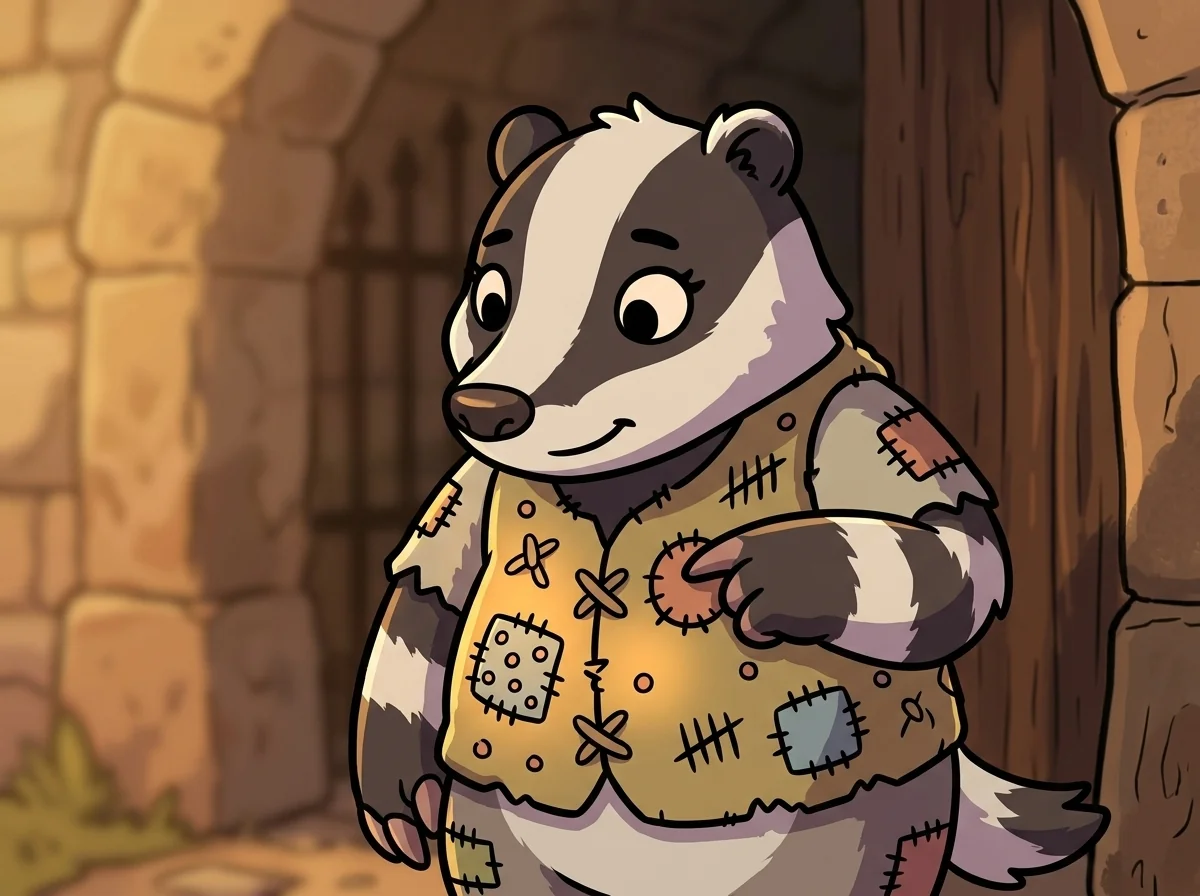
She walked to MathLore at twenty-two, her vest already heavy with patches she'd collected village by village, road by road.
Lore, who narrated the whole of MathLore and welcomed every cast member at the gate, asked her one question. "What is counting-as-first-story?"
Heap didn't lecture. She turned so the light hit her vest, and she touched the patches in a slow row — clusters of marks, grouped dots, knot-clusters, bead-clusters. "Every people figured out their own way to count," she said. "Different groupings. Different things to count with — scratches, knots, beads, fingers, toes. None more correct than another. Each one worked for the people who used it, in the weather and the trade and the life they actually had." She let her paw rest over the whole collage. "The specific peoples get to speak for themselves, in their own parts of the story. Me — I just carry the pattern that shows up across all of them. And I keep the patches shapes, not flags. That part matters."
Lore looked at the vest for a long moment. "You are appointed," she said.
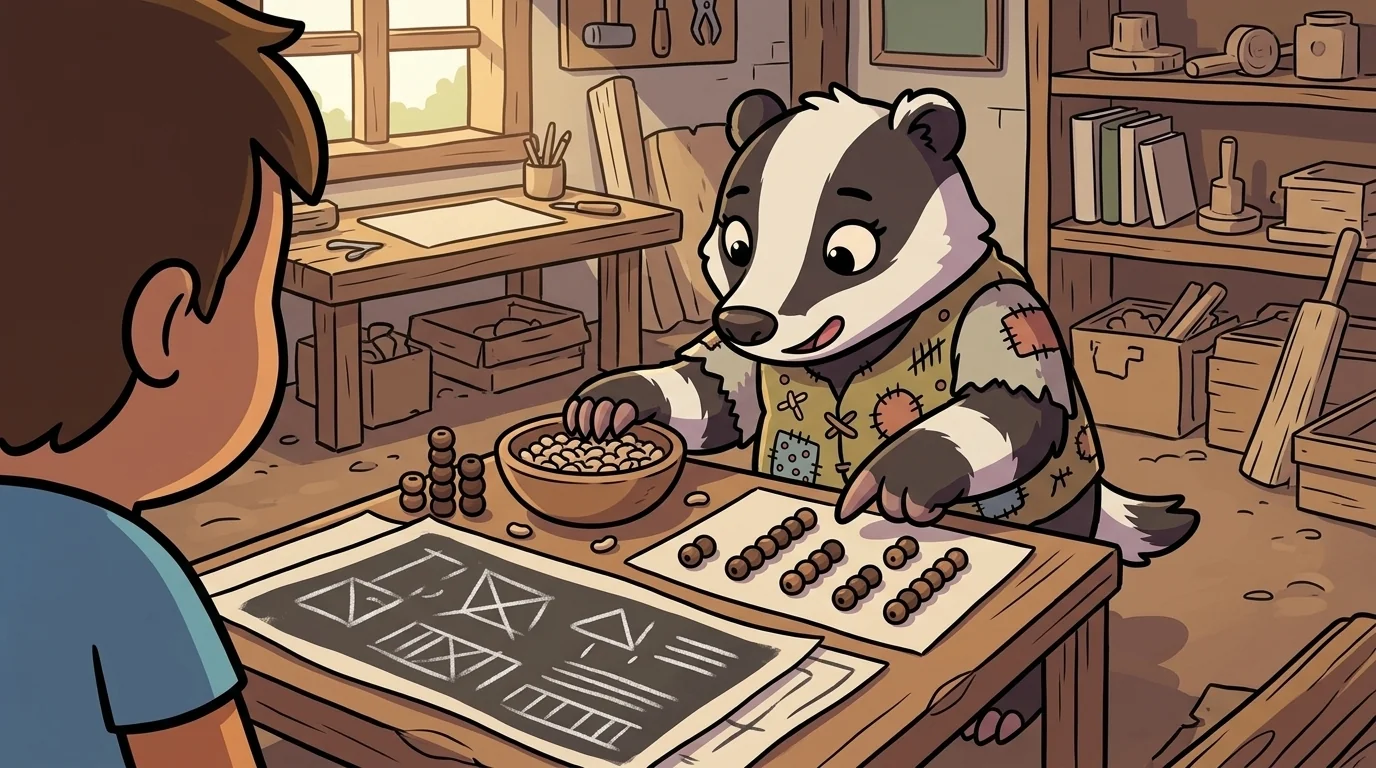
Years later a boy came to Heap's workshop scowling, a worksheet crumpled in his fist. "I got it wrong," he said. "The answer was seven and I wrote it like this—" he uncrumpled the page: *VII "—and my friend wrote it like this—" he pointed at a scrawled 7 "—and we both said seven* but the teacher only circled hers."
Heap sat down beside him. "Read me your seven."
"Five and two more. V, then two ones." He said it grudgingly, like a confession.
"That's not wrong. That's adding as you write — a five-shape plus two ones. It's a whole different strategy from her seven." Heap pulled a bowl of beads over and made a small stack. "Watch what her way can do that yours can't, though." She lined up beads in columns. "Her kind of number keeps track of where a digit sits — ones here, tens there. So a zero can hold an empty spot open." She slid beads into a gap and left it blank. "Zero as a real placeholder — that idea got worked out on its own by more than one people, far apart, who'd never met. Because it's a good idea, and good ideas get found more than once."
The boy turned the page over. "So mine's just... older?"
"Yours is additive — you build the number by piling values up. Hers is place-value — the same digit means different amounts depending on where it stands. Two answers to the same question: how do we write down how many?" She tapped *VII and 7*, side by side. "Both are seven. One circle doesn't make the other one a lie."
The boy's shoulders came down an inch. He almost smiled. "So I wasn't dumb. I was just... a different country."
Heap laughed out loud. "That's the truest thing anyone's said in here all week."
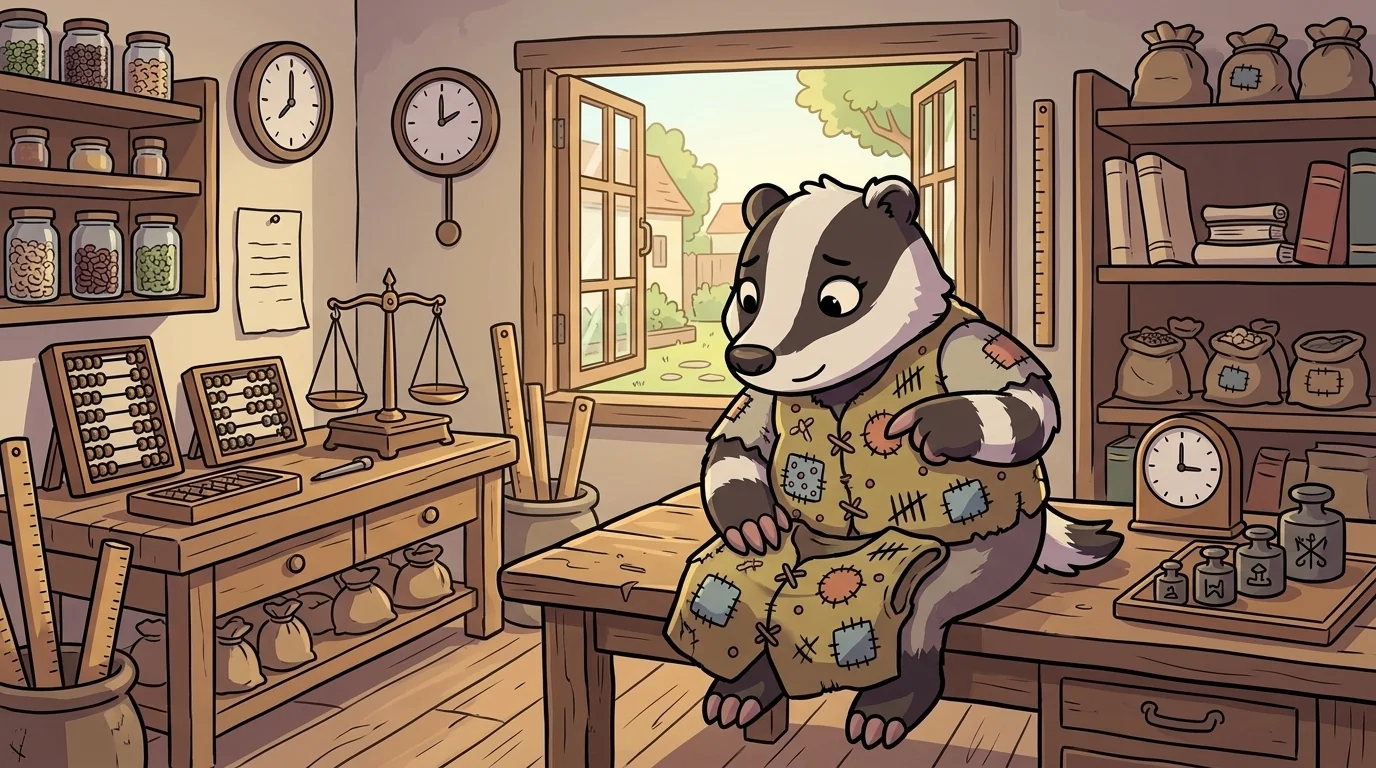
After he left, the workshop went quiet, and Heap sat with her vest across her knees, running a thumb over the oldest patch — the tally-mark cluster her grandfather had taught her, before she knew there were any others.
She thought about the tight, hot feeling from when she was small, the one that had wanted so badly for her way to be the only way. It was such a lonely feeling, she realized now. Being sure you were right had meant being sure everyone else was wrong — a whole world of people, cast out just so you could stand at the center of it.
And then the window had opened, and the room had gotten enormous, and she'd never once missed being at the center.
She pressed her paw flat over all the patches at once — the knots, the beads, the dots, the marks — and felt the lumpy, stitched-together weight of them, hundreds of clever hands across thousands of years all reaching for the same simple, human thing: let me keep track of what I love, and what I owe, and how much time I have left.
The vest was heavy. It was the good kind of heavy. It felt, she thought, a little like being held by everyone who had ever counted.
The MathLore ensemble
Heap is part of MathLore's distributed-narrative cast. Each character embodies a different curricular primitive; together they teach the full subject.
-
Spire
Pattern-as-discovery — patterns are everywhere when you slow down enough to see them
-
Vouch
Proof-as-shared-knowledge — show me why; if your why holds up, I'll build on it
-

Home
Math-as-cultural-context — this idea was born somewhere, for someone, with reasons
-
Carry
Cultural-transmission — the idea traveled; every place it visited, it grew