
Gather and Stretch
COMBINING UNLIKE FRACTIONS — you can only add or subtract pieces that are the same size. When they aren't, you first scale them to a common size (Stretch's common denominator), and only then can you gather them into one total (Gather's sum).
Press play to listen along. The line being read lights up as you go.
Show full transcript
Loading transcript…
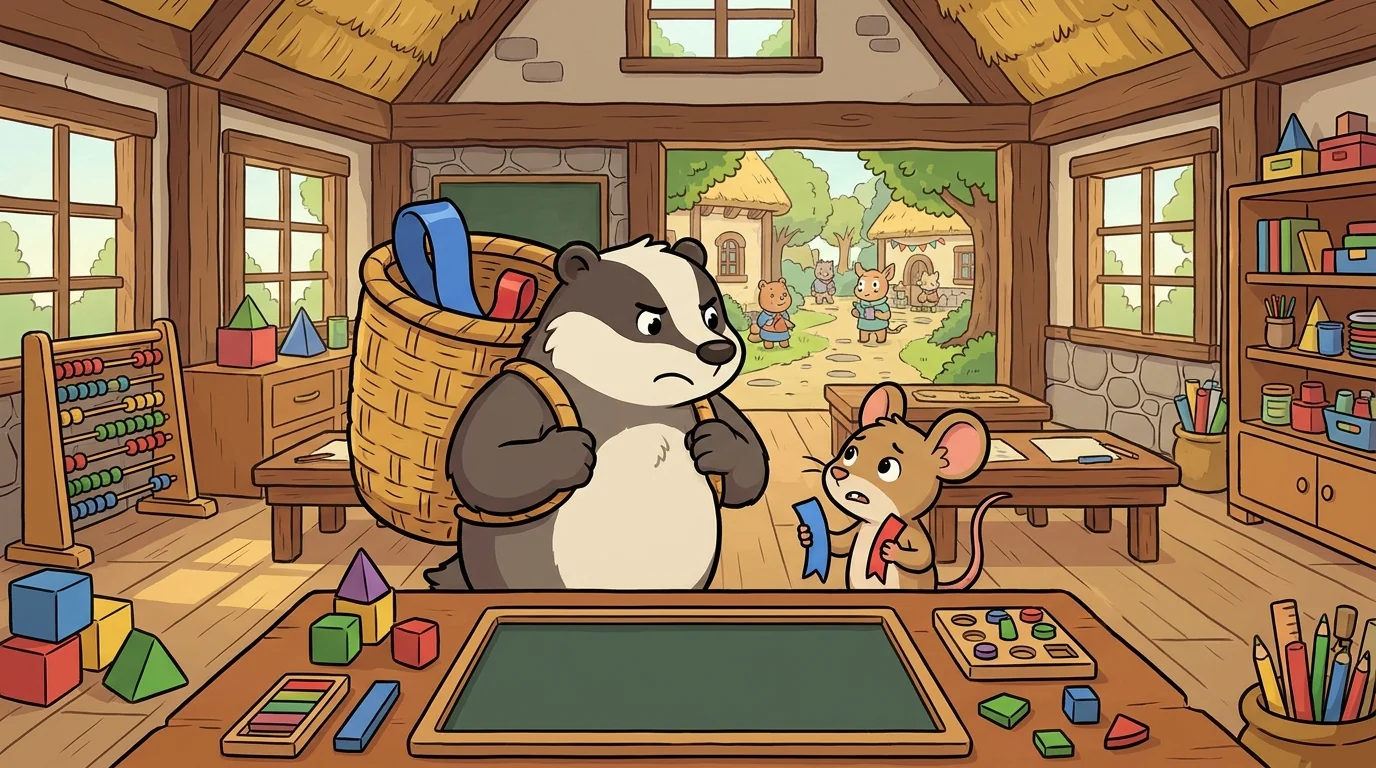
Gather could add almost anything in his basket. Almost.
He was a round, busy badger, and at the FairShare Village academy he spent his days dropping fraction pieces into the big woven basket on his back, giving it a shake, and announcing the total. Two-fifths of a ribbon and one-fifth of a ribbon? In they went. "Three-fifths," he'd say. Easy.
But this morning a young mouse named Pip brought him a different sort of problem.
"I have one-third of a blue ribbon," Pip said, "and one-fourth of a red ribbon. How much ribbon is that altogether?"
Gather reached for his basket, cheerful as ever. He dropped in the third. He dropped in the fourth. He gave the basket a shake.
And then he stopped, his cheer fading. He peered inside. He shook again, harder. He frowned.
"It won't tally," he admitted. "A third and a fourth. They're... different sizes. My basket only knows how to count pieces that match. These two don't match, so I can't count them up. For the first time in ages, Pip, I'm stuck."
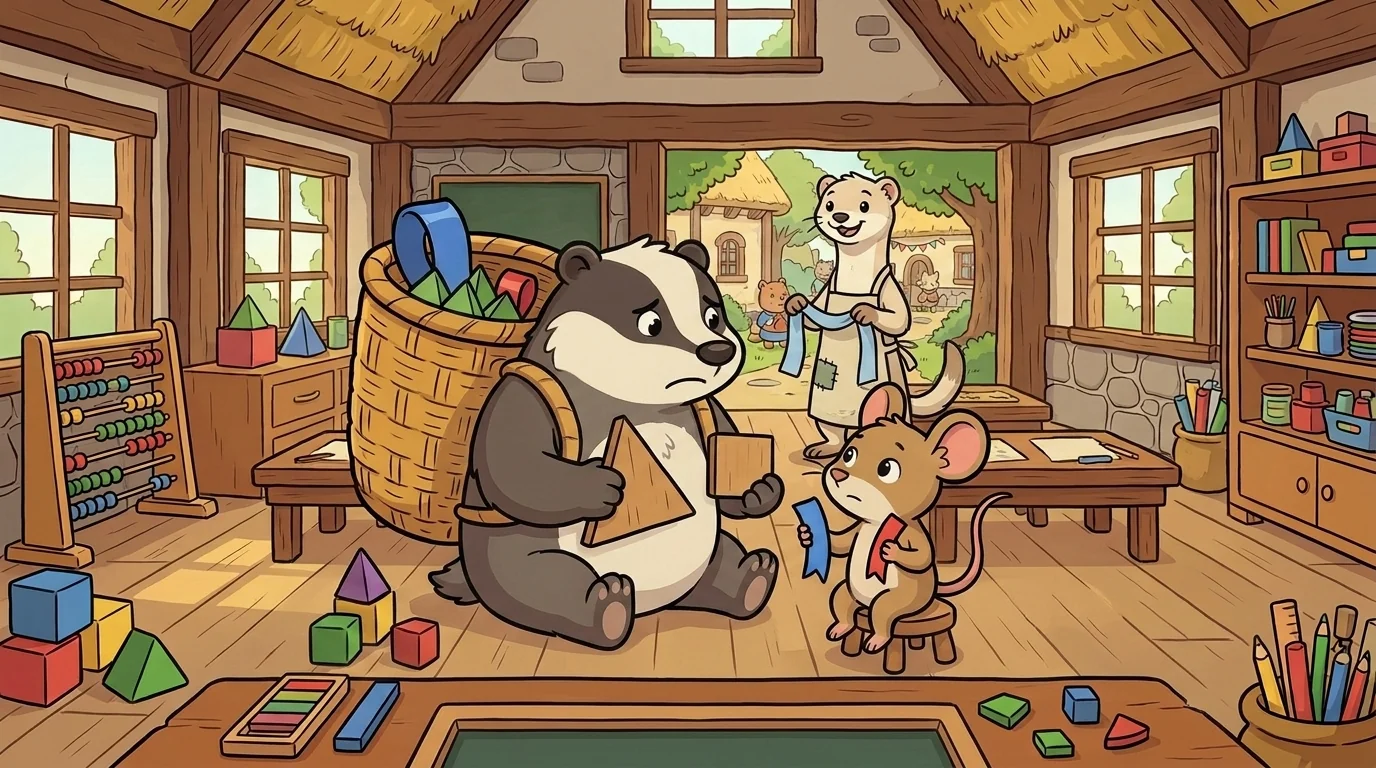
Gather sat down with a heavy flump and explained, because he believed in being honest with a kid.
"Here's my whole secret," he said. "Adding fractions is just counting — when the pieces are the same size. Two fifths plus one fifth is three fifths, because every piece is a fifth. I just count them. One, two, three. Done." He tipped his basket so Pip could see the matching pieces from an earlier problem, all the same neat size.
"But a third is a big piece, and a fourth is a smaller piece," he went on, holding one of each. "If I count 'one piece, two pieces,' I'm lying, because the pieces aren't equal. Two different sizes don't make 'two' of anything. It's like saying one apple plus one grape is two apples. It just isn't true."
Pip looked at the mismatched ribbons. "So you can never add a third and a fourth?"
"I can't," Gather said. "Not the way they are. Somebody has to make these pieces the same size first. And making things the same size, Pip" — he brightened, and turned toward the door — "well, that's not my craft. But I know exactly whose it is. STRETCH!"
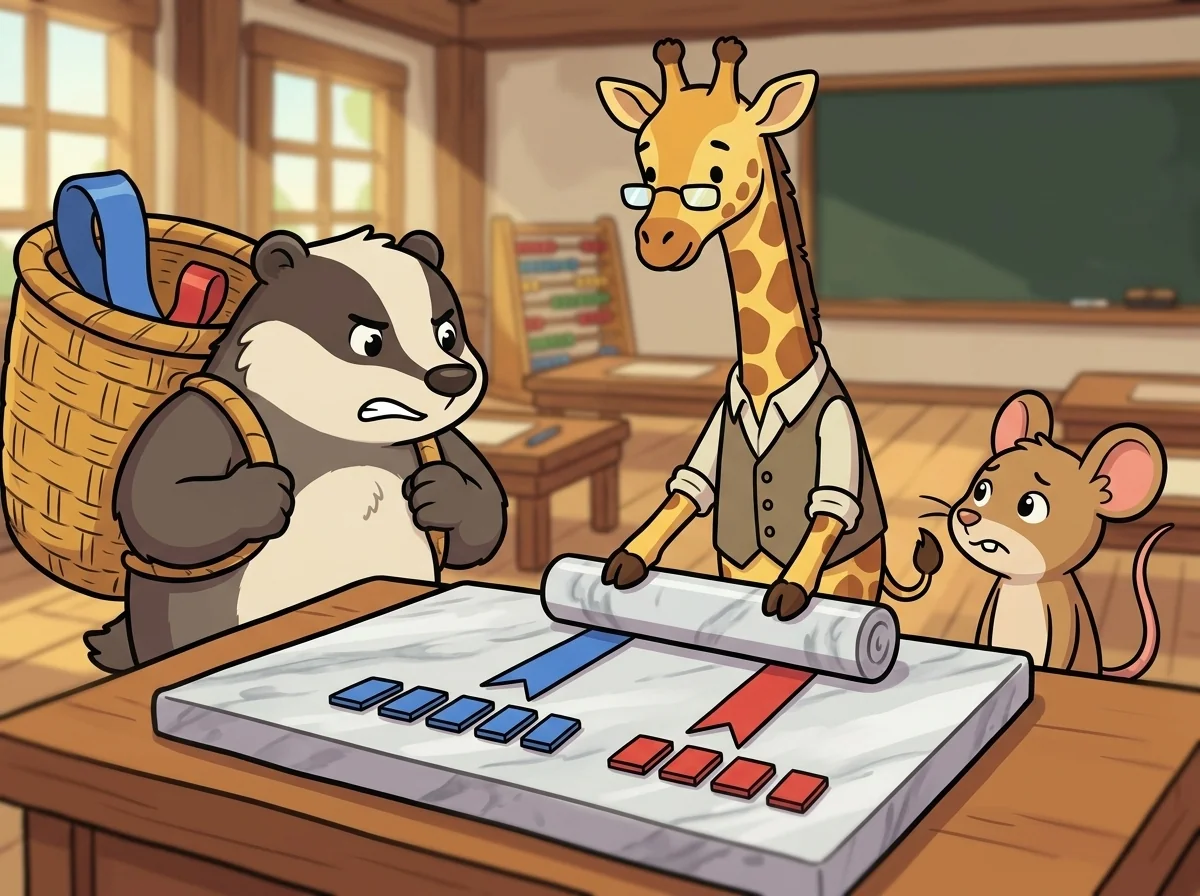
Stretch arrived carrying a long, smooth marble slab under one arm, the way he always did.
Before he was a teacher, Stretch had been a glass-blower's apprentice, and his whole craft had been making things a perfect, even size — rolling hot glass along the marble slab until it was exactly the same width from end to end. Now he did the same thing with fractions.
"Mismatched pieces," he said, eyeing the third and the fourth. "My favorite. Watch." He laid both ribbons on his slab. "I can't change how much ribbon there is — that would be cheating. But I can cut each one into more, smaller, equal pieces, so they finally match each other."
He rolled the slab. "A third — if I slice it into four equal slivers each, it becomes four-twelfths. Same amount of ribbon, just shown in smaller pieces." He rolled again. "And the fourth — if I slice it into three equal slivers each, it becomes three-twelfths. Again, same amount, smaller pieces." He sat back, pleased. "Now look. Four-twelfths and three-twelfths. Both measured in twelfths. The pieces finally match. I haven't added a thing — I've just made them speak the same size."
Pip stared. "They're the same kind of piece now."
"Twelfths, both of them," said Stretch. "That's all a common size is. A size both fractions can agree to be."
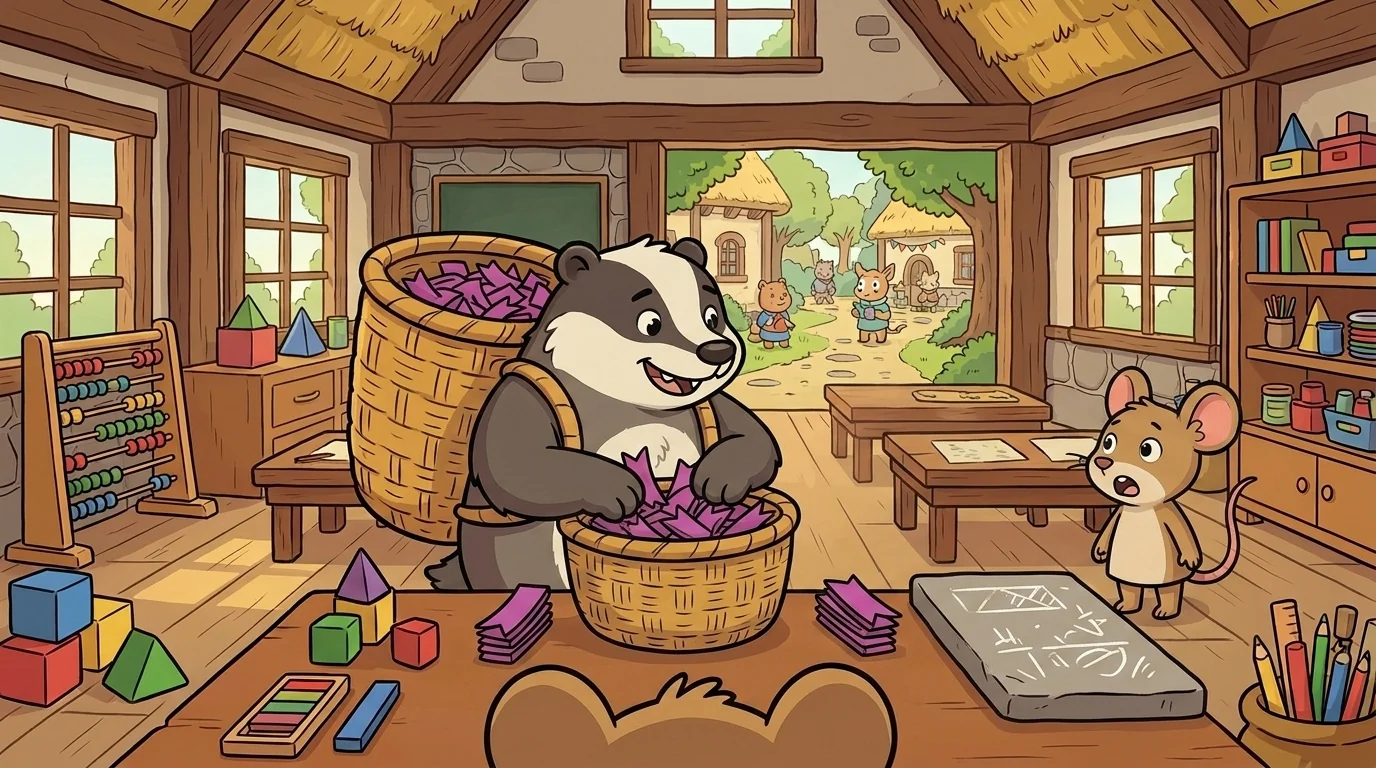
Gather peered over Stretch's shoulder and his whole face lit up.
"Oh, now I can work," he said. He scooped up the four-twelfths and the three-twelfths — all the same size now, every sliver a twelfth — and dropped them into his basket. He gave it his familiar little shake.
"Four pieces, then three more pieces. All twelfths. All matching." He held up the combined ribbon, beaming. "Seven-twelfths. One-third plus one-fourth is seven-twelfths."
Pip's mouth fell open. "You needed each other," she said slowly. "Stretch couldn't add them up — that's your job. But you couldn't add them at all until Stretch made them match. Neither of you could do it alone."
"Never could," said Gather happily. "I bring things together. But I can only ever bring together things that are the same. Stretch makes them the same. He stretches; I gather. That's the whole dance." Stretch gave a small, proud nod from behind his slab. "Half the answer is making the pieces match," Gather said, "and half is bringing them in. We each only ever do one half."
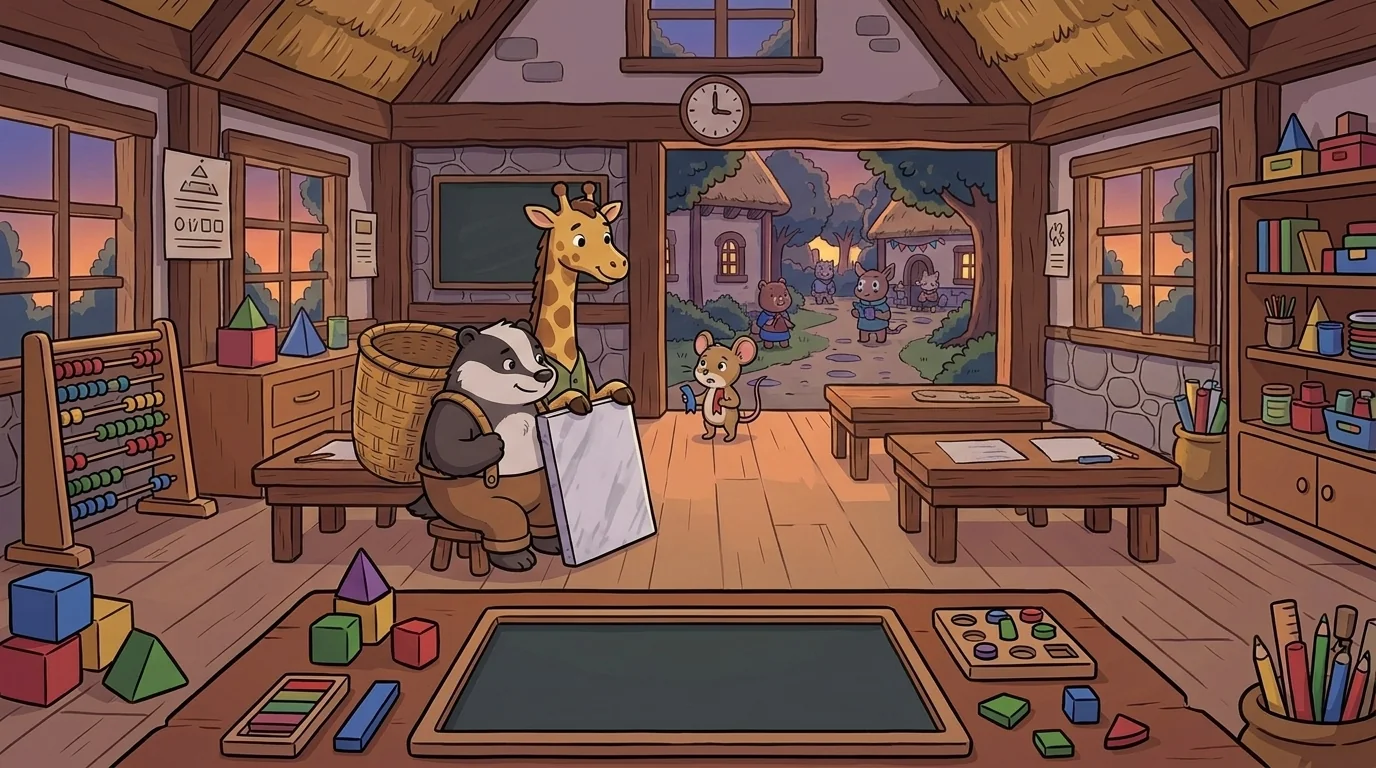
Later, when the academy had gone quiet, Gather sat with his empty basket and Stretch leaned his marble slab against the wall, and the two old friends watched the last light fade over FairShare Village.
Pip lingered in the doorway. "I used to think adding fractions was one thing," she said. "But it's really two. Make them match. Then bring them together."
"Two things," Stretch agreed gently. "Done by two friends."
Gather nudged the slab with a paw. "I'd be stuck forever on every mismatched problem in the world without this fellow and his slab," he said. "And he'd have a workshop full of beautiful matching pieces and no one to gather them up." He gave a contented sigh. "Funny, isn't it. The thing I'm worst at is the exact thing he's best at. So we're never stuck — not as long as we're stuck together."
And as Pip walked home through the village, two ribbons' worth of math finally settled in her head, she found she wasn't thinking about twelfths at all. She was thinking how good it felt — that quiet, leaning-on-each-other kind of good — to know that the thing you can't do alone is so often just the thing a friend was made for.
The FractionForge ensemble
Gather and Stretch is part of FractionForge's distributed-narrative cast. Each character embodies a different curricular primitive; together they teach the full subject.
-

Halver
Partitioning — splitting a whole into equal parts (denominator construction)
-
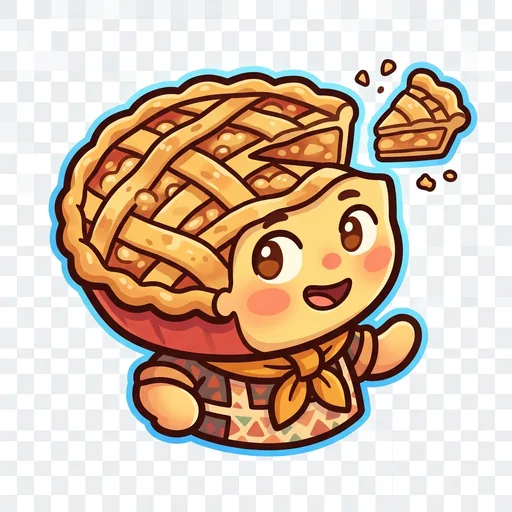
Pie
Wholes and parts — mixed numbers, improper fractions, whole-as-pie anchor
-

Equi
Equivalent fractions — different forms, same value (×n/×n scaling)
-

Stretch
Common denominators — scaling to a common base for comparison + addition
-

Dot
The decimal point and fraction-decimal-percent equivalence
-
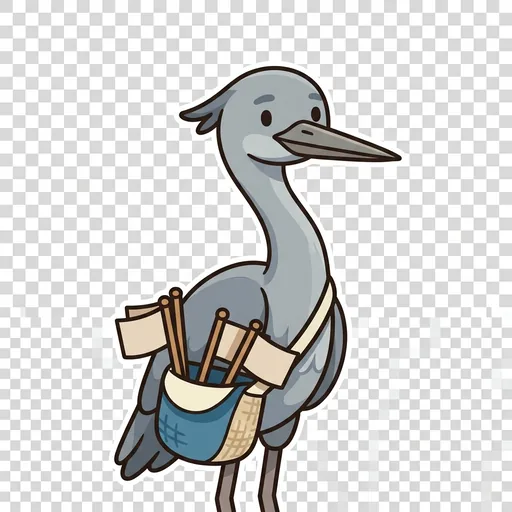
Liner
Number-line placement — every fraction has an exact spot between the whole numbers
-

Gather
Adding and subtracting fractions — you can only combine pieces that are the same size
-

Times
Multiplying fractions — a fraction OF a fraction, shown as the overlap of two strips
-
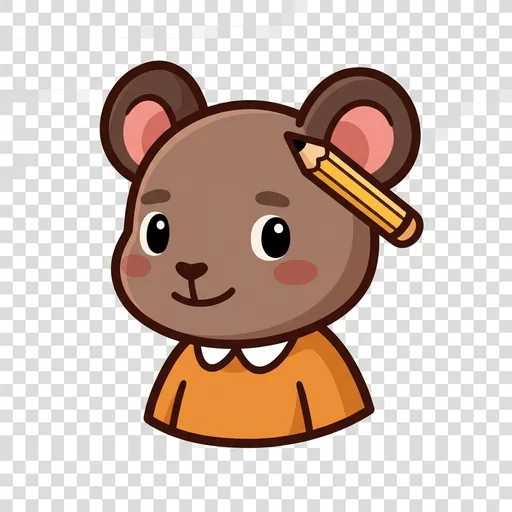
Tenth
Decimal place value — each column right of the point is ten times smaller
-
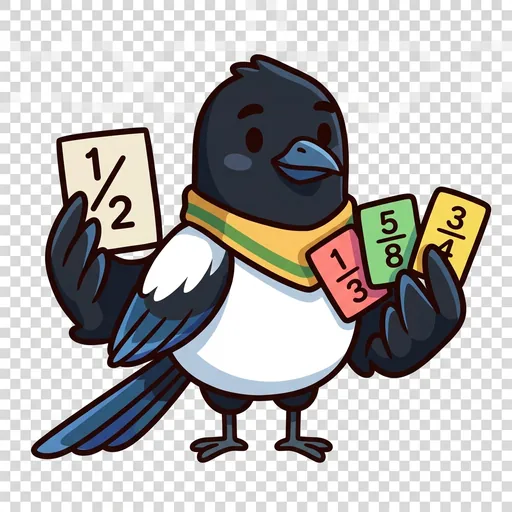
Rank
Comparing and ordering fractions using benchmarks and reasoning