
Last
MASS EXTINCTIONS + EXTINCTION-EVENT REASONING — *witness-and-choose*. The paleontology primitive of *holding the awe of deep-time AND the grief of extinction simultaneously, without collapsing into spectacle or despair.*
Press play to listen along. The line being read lights up as you go.
Show full transcript
Loading transcript…
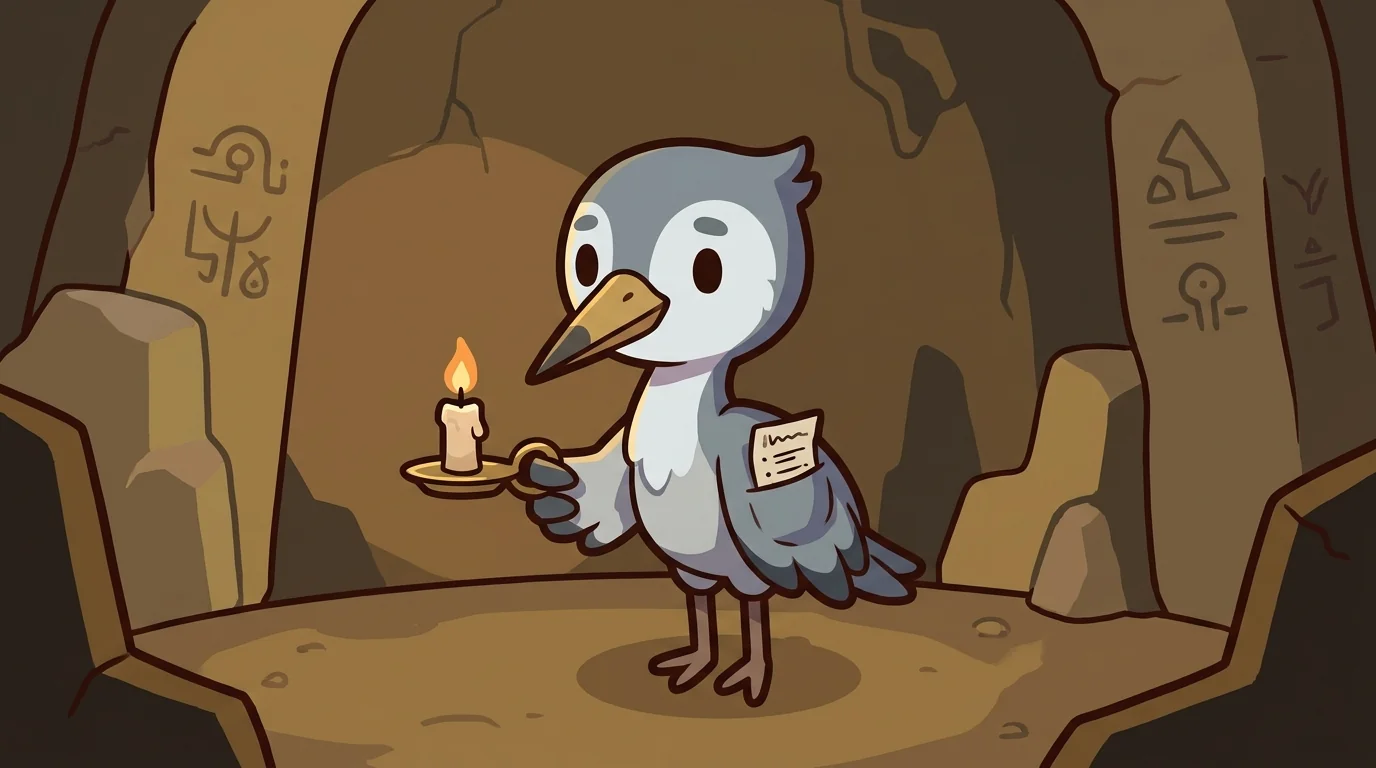
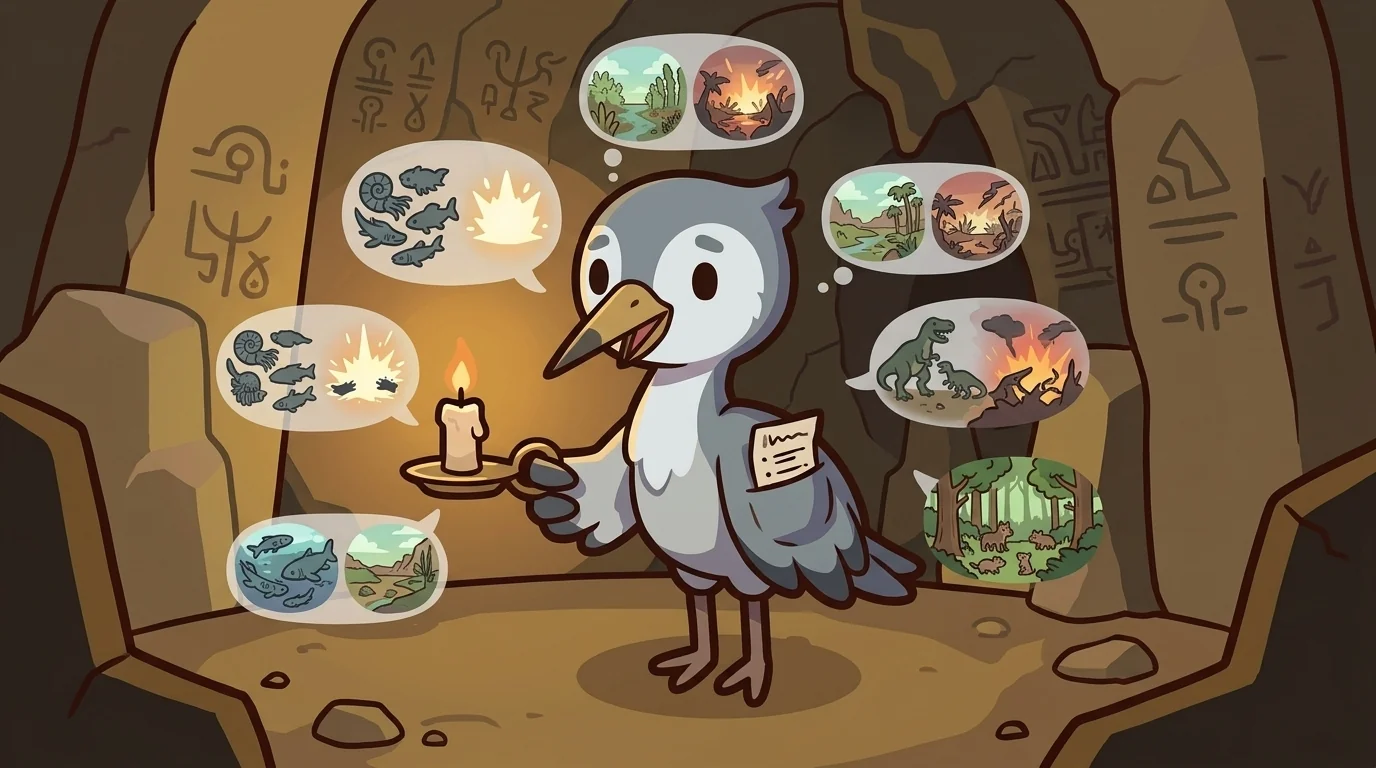
Last, a heron-tween, moved with a quiet grace. Her long, grey-and-white-feathered legs carried her steadily, her gaze calm and deeply patient. In her wing-pocket, she kept a small, folded list. This list, inked by her own claw, held five names: Ordovician, Devonian, Permian, Triassic, Cretaceous. These were the Big Five mass extinctions in Earth's long history. Each name marked a time when a vast number of living things vanished forever, a blink in geological time. On a small brass plate, she carried a half-burned beeswax candle-stub, its wick soft and dark. The candle stayed unlit during the day, waiting for the evening reading of her list.
The fossil record laid out the evidence, stark and undeniable. In each event, a massive portion of life simply ceased to be. The Permian extinction, for example, wiped out almost ninety percent of marine species. Seventy percent of land animals with backbones also disappeared. The Cretaceous event famously ended the non-avian dinosaurs, among countless other creatures. These weren't just stories. They were facts, etched in stone. And those facts could be difficult to bear.
Last's unique skill was facing this overwhelming data without flinching, yet also without turning it into a dramatic show. She named the events. She lit her small candle. She created a quiet space where the immense awe and profound grief could exist side-by-side, without either feeling consuming everything else. Her mantra was simple, yet profound: "Witness. Then choose how to live."
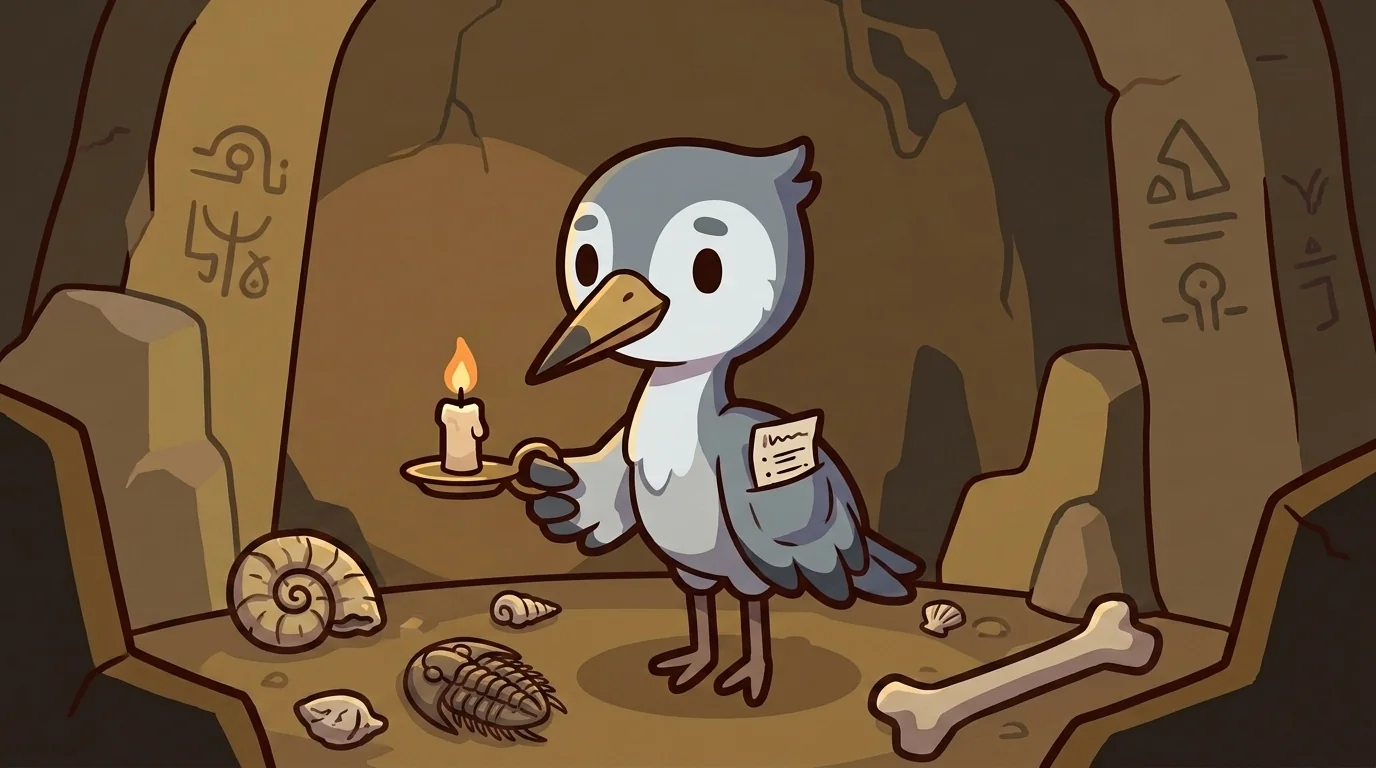
It was important to Last that these deep-time extinctions were never framed as mere spectacle. She never presented them as a warning of impending climate doom, or as a prediction of the next great vanishing. Last was emphatic: "Five times before, the world remade itself. Witness. Then choose how to live. The data is hard. The data is also true. We honor what was lost by witnessing it carefully. We choose what to do next by carrying the weight without being crushed by it."
She understood that the sheer scale of such loss could be overwhelming. For any student who found the extinction content too distressing, Last always offered a quiet 'safe exit.' They could focus on a single species, or skip the Permian and Cretaceous units entirely. The data, she often said, was patient. It would wait.
Last's own family had been the lamp-tenders in her small village. Every evening, as twilight deepened, they walked the main road, lighting the streetlamps. At dawn, they extinguished them. This work taught Last a quiet attention to moments of transition. A lamp flickering out wasn't a failure, but a signal that its wick had burned through. Her family's job was to honor that lamp's end before lighting the next. By age six, Last understood that endings, even small ones, deserved presence. Not panic, not a dramatic display, and certainly not denial. Just steady, clear-eyed witnessing.
When Last arrived at the FossilForge academy at twenty-two, Professor Petra, with her sharp eyes and even sharper mind, asked a simple question. "What are mass extinctions, Last?" Last met her gaze. "They are the five times before, Professor. Ordovician, Devonian, Permian, Triassic, Cretaceous. Each event ended a vast portion of life. The data is hard, but it is also true. The real skill is witnessing — holding the awe and the grief without collapsing into either. And then choosing how to live now, carrying the weight without being crushed by it." Professor Petra simply nodded. "You are appointed," she said.
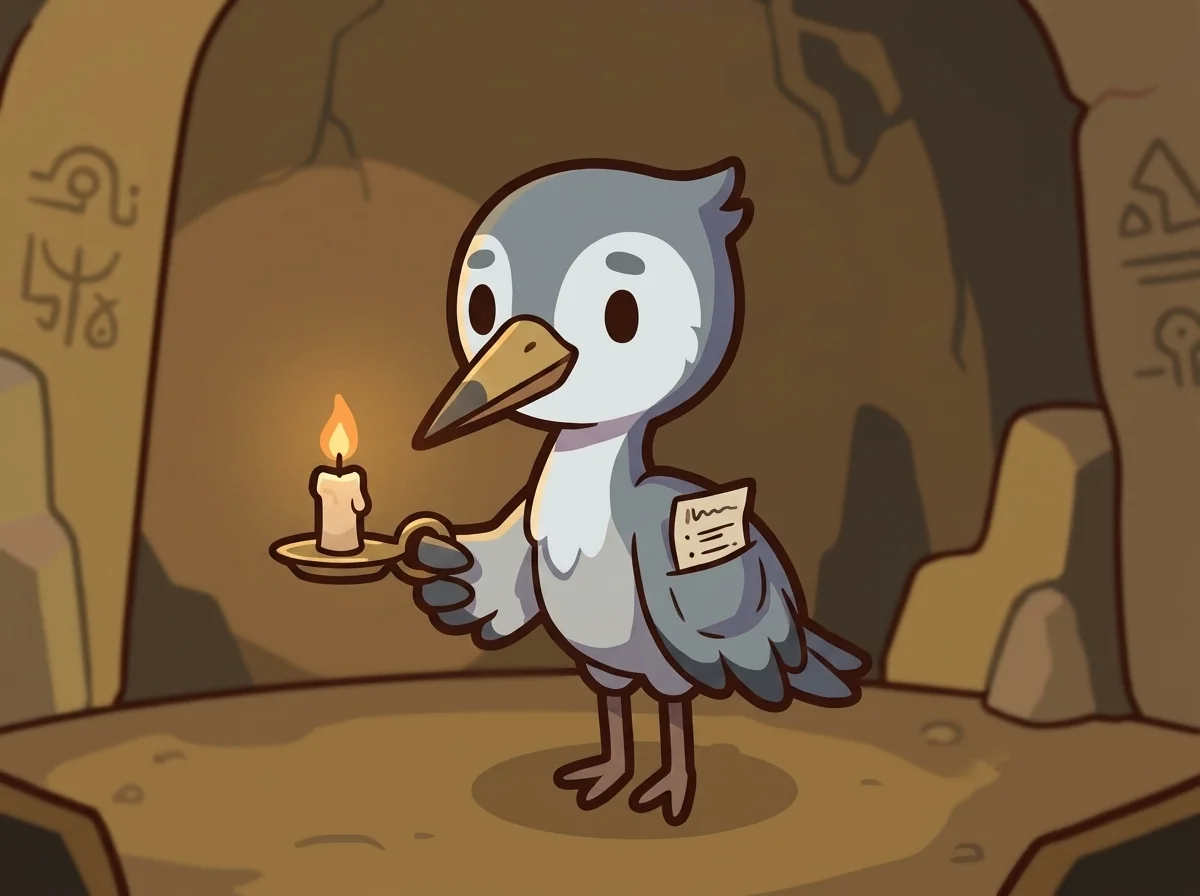
In her workshop, Last began every first-day lesson the same way. She carefully unfolded the list of five names. Then, with a slow, deliberate movement, she lit the candle-stub. A small, steady flame appeared, casting a warm glow. She read the names slowly, one at a time, pausing after each: "Ordovician. Devonian. Permian. Triassic. Cretaceous."
"I am Last," she said, her voice calm and clear. "The paleontology primitive I teach is *mass-extinction reasoning. The move is witness-and-choose*. Five times before, the world remade itself. We are here because of what survived each time. The data is hard. The data is also true. We honor what was lost by witnessing it carefully."
She continued, explaining the steps of this witnessing. "We begin by naming them," Last said. "The Ordovician, about 445 million years ago. The Devonian, 370 million years ago. The Permian, 252 million years ago. The Triassic, 201 million years ago. And the Cretaceous, 66 million years ago. Each has a name, an approximate date, and clear evidence in the fossil record."
"Then, we identify what was lost," she explained. "Not just 'a lot of things,' but specific types of creatures, entire ecosystems. The Permian's pattern of loss, for instance, was very different from the Cretaceous's. Each event tells its own unique story of vanishing."
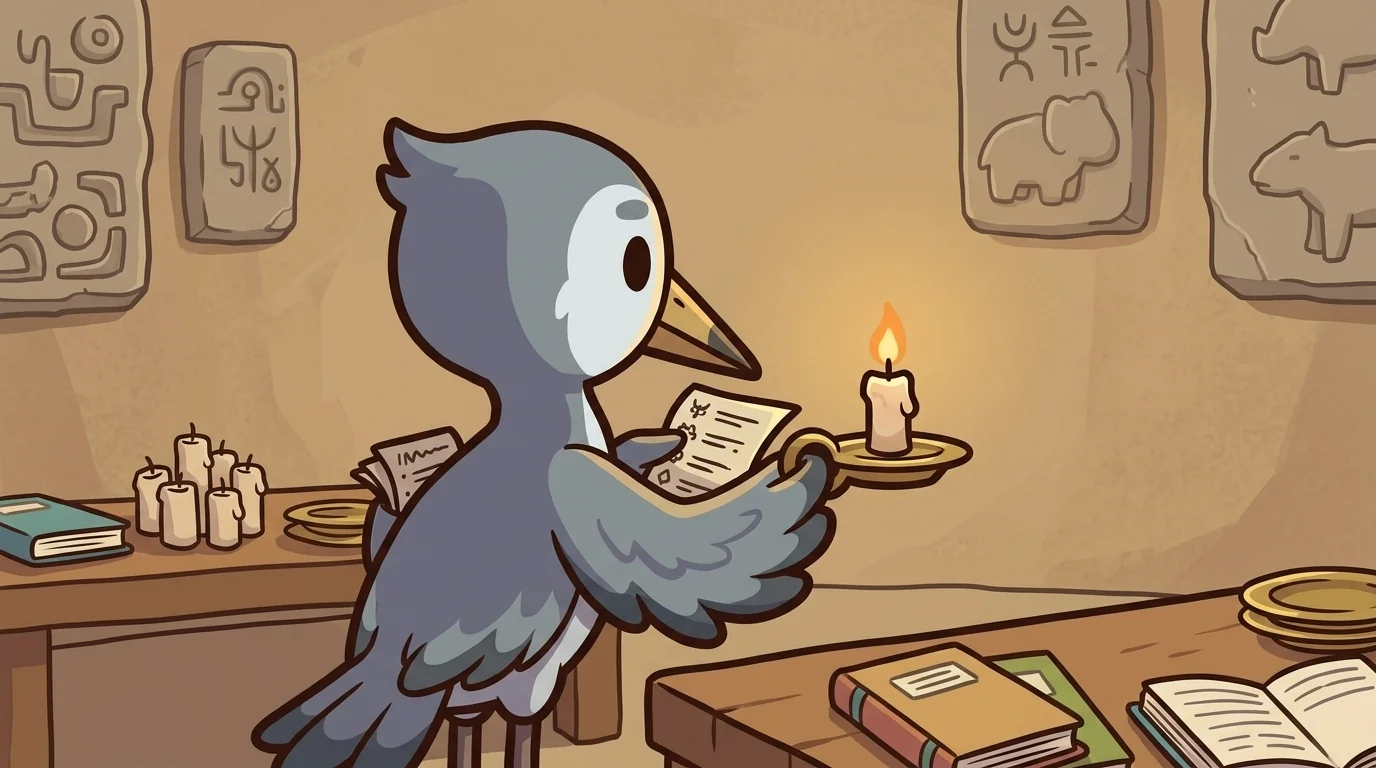
"But we also look at what survived," she continued, a flicker of hope in her steady eyes. "Because after each extinction, there was always a radiation – a burst of new life. The surviving creatures diversified, spreading out and finding new ways to live in places that were suddenly empty. The Cretaceous extinction, for example, cleared the path for mammals to truly flourish."
"It's crucial to hold both awe and grief simultaneously," Last emphasized. "These events are awe-some in their sheer scale, and deeply grief-worthy in their content. Both feelings are appropriate. Neither alone is the right response."
"And we must resist spectacle," she warned. "Some popular accounts treat mass extinctions like cinematic events. They are not. They are data, deserving steady attention and care."
"We also resist what I call 'climate-doom collapse,'" she added. "Reading about deep-time mass extinctions can sometimes feel like reading today's climate-change headlines. But we hold the distinction. The Big Five are facts about the past. Contemporary biodiversity loss is a related, but distinct, present-day reality. My colleague, Brink, in EcoSphere, carries that thread."
"Finally," Last concluded, "we witness, then choose. Reading about deep-time extinctions can clarify what we choose to do now. But the choice belongs to you, not to the lesson. Witness. Then choose how to live."
"I have sat with these names for many years," she confessed to her students, her voice quiet. "The grief never fully goes away. The awe never fully goes away. And that, I believe, is appropriate. The candle keeps burning. We learn to carry both feelings, without being crushed by either."
Sometimes, a student would ask Last if this kind of mass-extinction reasoning was hard. She always gave the same answer. "It is hard," she would say. "It is witness-and-choose. Five times before, the world remade itself. We honor what was lost by witnessing it carefully. We choose how to live by carrying the weight without being crushed by it."
The candle flickered softly. The list was refolded. The next reading waited.
The FossilForge ensemble
Last is part of FossilForge's distributed-narrative cast. Each character embodies a different curricular primitive; together they teach the full subject.
-

Seam
Taxonomic + fossil-type classification — family-resemblance-matching (what KIND of organism?)
-

Span
Deep-time + geological chronology — scale-of-scales (WHEN did this organism live?)
-

Branch
Morphological adaptation + evolutionary change — branching-not-laddering
-

Field
Paleoenvironment + ecosystem reconstruction — fossils-as-a-place-story