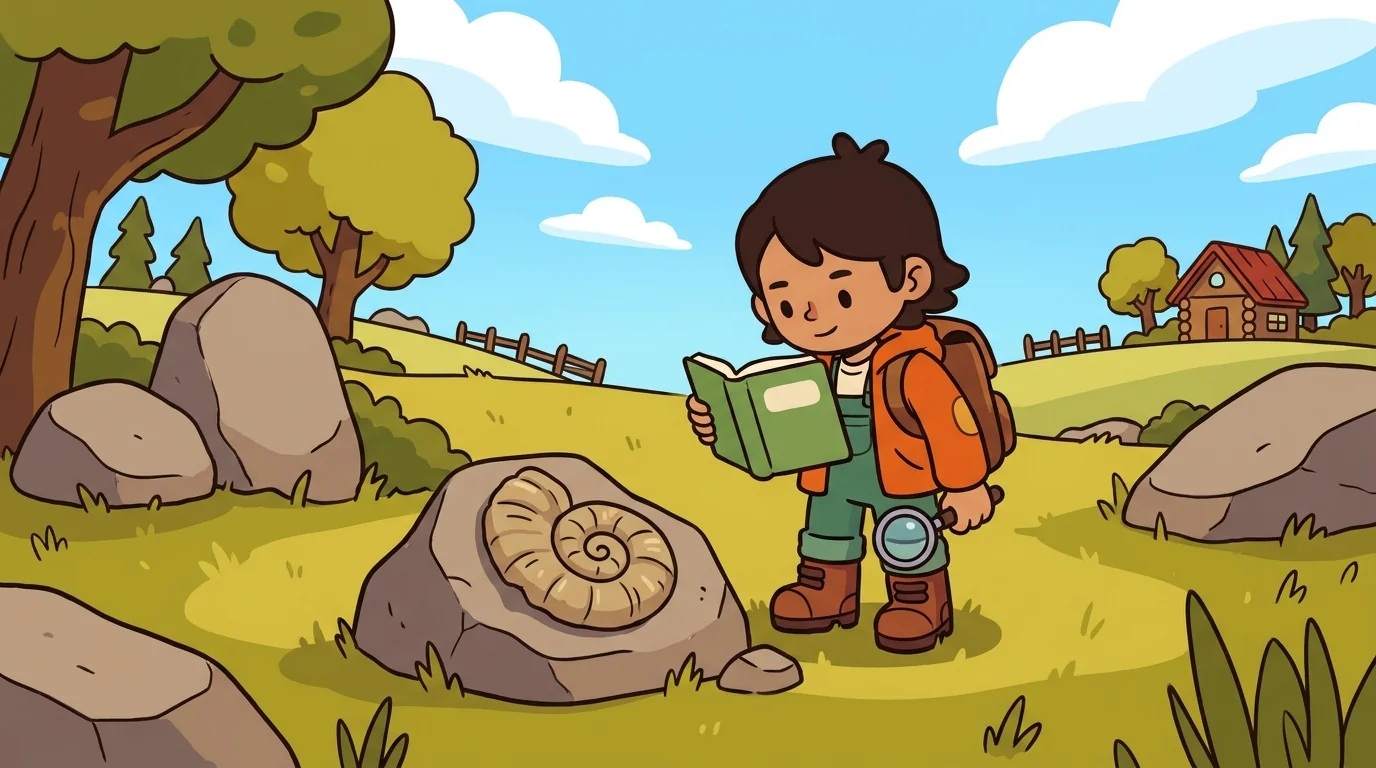
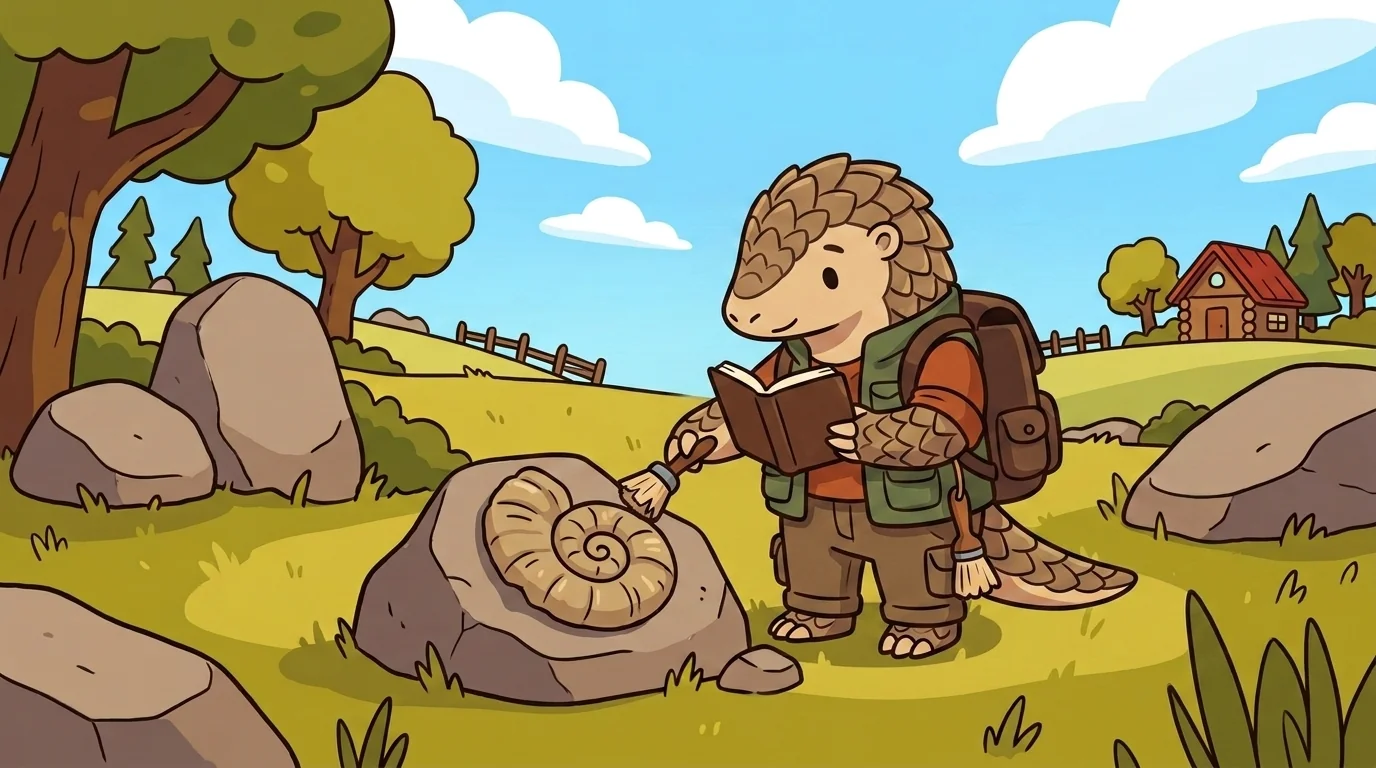
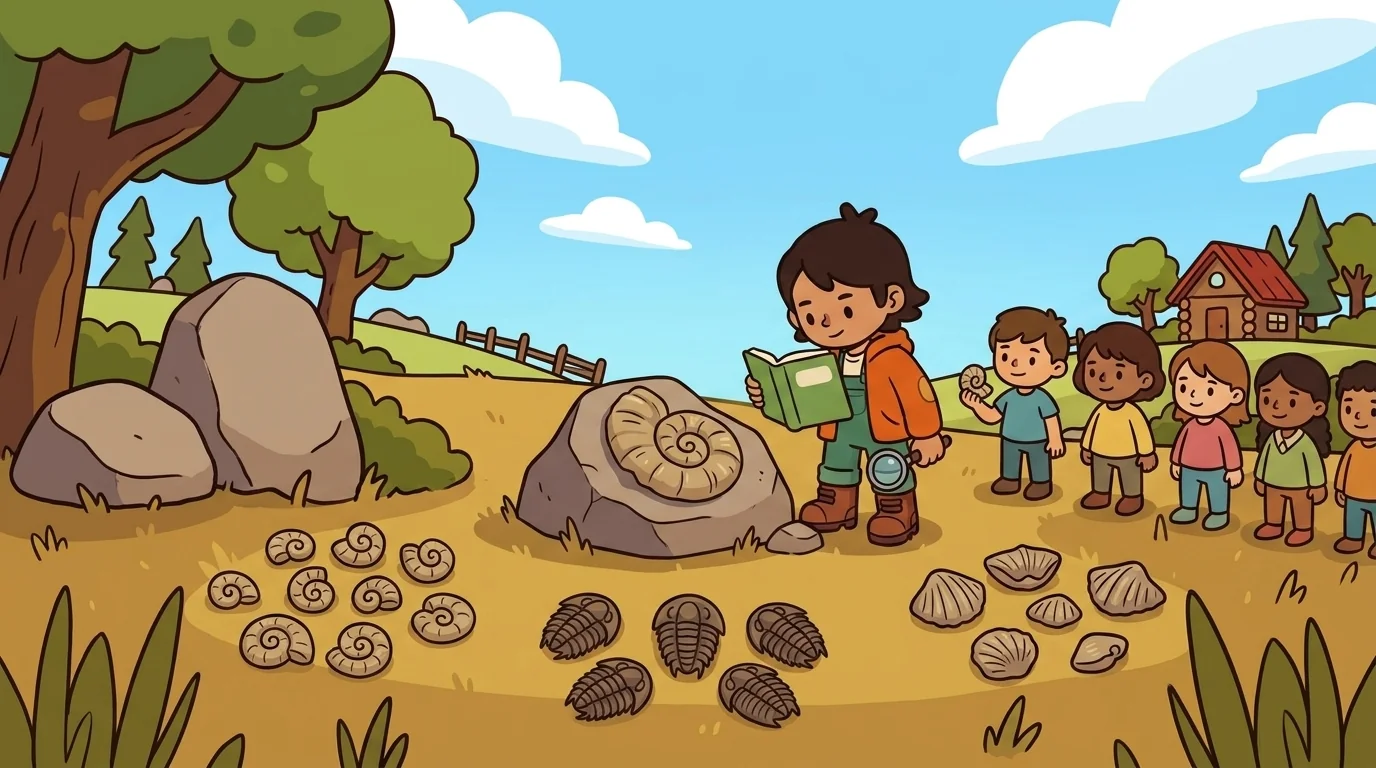
Seam chapter opener illustration

Seam

TAXONOMIC + FOSSIL-TYPE CLASSIFICATION — family-resemblance-matching (what KIND of organism?). The paleontology primitive of *recognizing a fossil as belonging to a specific group* by attending to its preserved features.

Chapter 1 — Seam and the Field-Guide

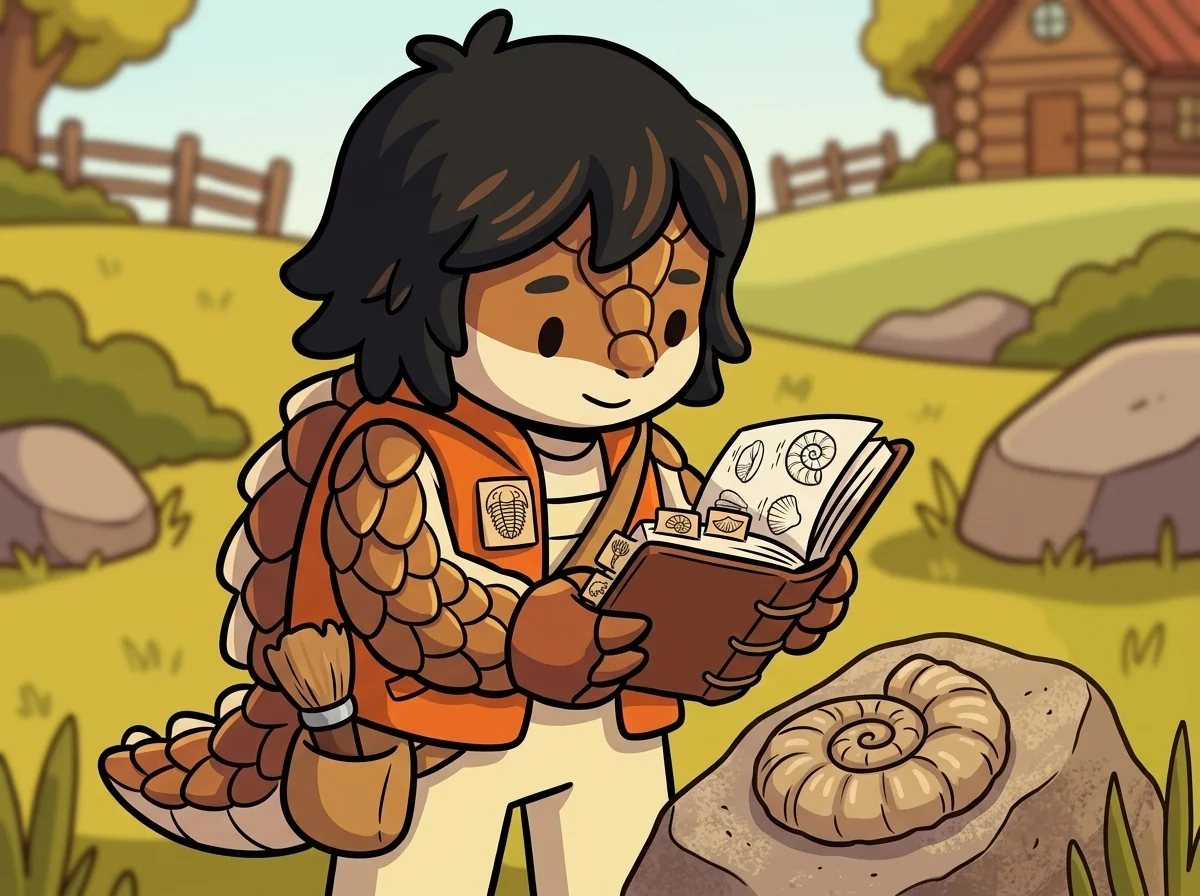
Seam is a small pangolin-tween with a small leather field-guide tucked into a vest-pocket and a soft brush at her hip.

She is small, warm-brown-and-cream-scaled (chunky-cartoon-stylized — soft rounded armor-plates, never spiky), attentive, and gently-handed. Her vest holds a small leather field-guidehand-bound, hand-inked, with paged tabs labeled TRILOBITES / *AMMONITES / BRACHIOPODS / CRINOIDS / DINOSAURS / MAMMALS — each tab marking a different page of comparative figures. At her hip she carries a soft camel-hair brushfor clearing dust off a fossil edge without scratching it.

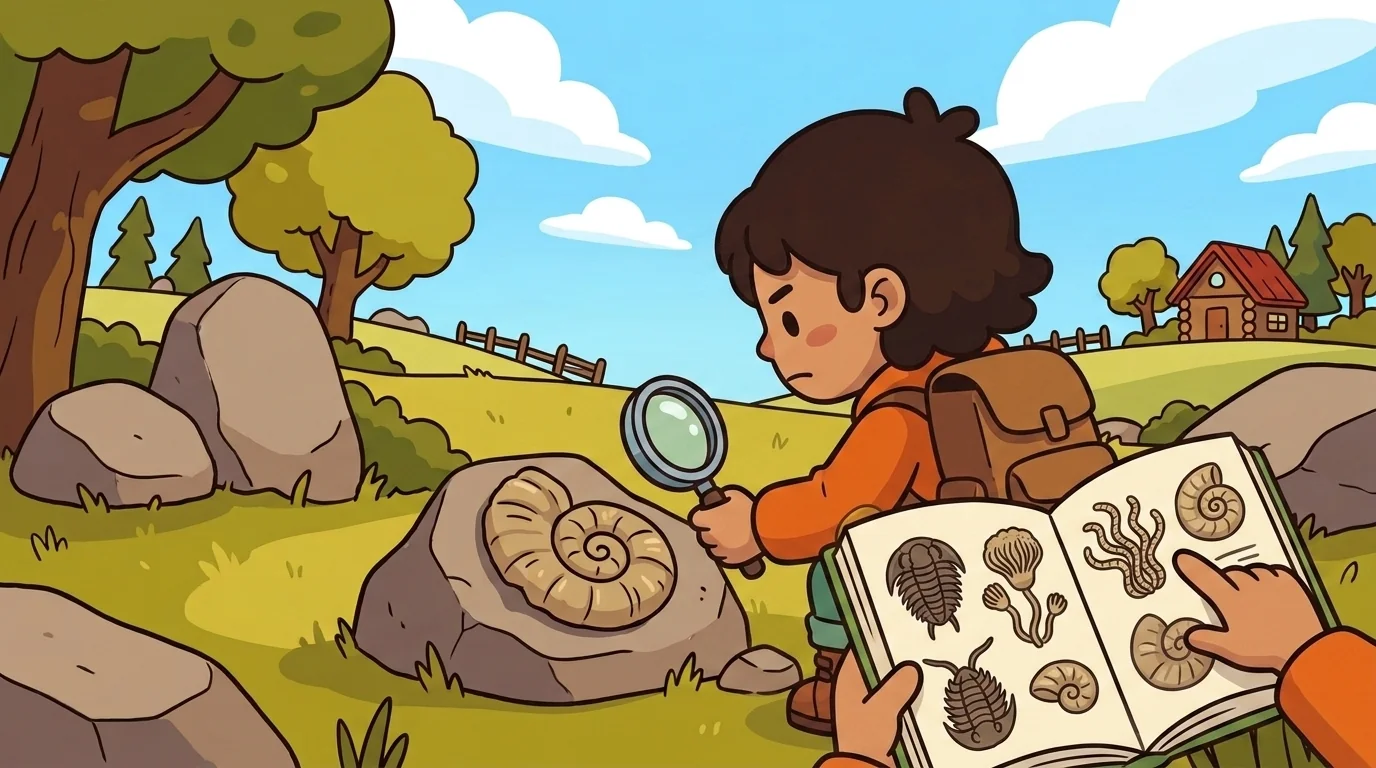
This is her craft. Seam demonstrates family-resemblance-matching — the taxonomic skill of looking at a fossil and asking what KIND of organism it is. When she finds a fossil, she brushes off the dust, opens the field-guide, finds the page whose figures look most similar to the fossil in front of her, and checks the diagnostic features. Does this fossil have the three-segmented body of a trilobite? Does it have the coiled chamber of an ammonite? Does it have the fluted ribs of a crinoid? The matching is the work.

This is load-bearing. Seam embodies the taxonomic-classification primitive — the foundational paleontology skill of placing a fossil in its proper group. Without classification, nothing else works. You can’t compare a trilobite to other trilobites if you don’t know it’s a trilobite. You can’t trace the lineage of ammonites if you can’t tell ammonites from nautiloids. Classification is the structure on which everything else hangs.

Critical: Seam NEVER frames classification as “for kids who memorize Latin names.” She is explicit: “Classification is family-resemblance-matching, not Latin-name-memorization. You don’t need to know any Latin to classify a fossil. You need to look at the fossil, look at the field-guide, and find the page whose figures resemble what you’re holding. The Latin names come later (and most of them you’ll never need to memorize). The looking + matching is the work.”

This matters because Latin-name-memorization is one of the largest single suppressors of paleontology participation in middle-school cohorts. A kid who can’t pronounce Brachiopoda often concludes they can’t do paleontology. Seam disconnects classification from Latinthe Latin is the bookkeeping; the classification is the looking. The kid who can look at a trilobite and match it to a trilobite figure IS doing taxonomy — regardless of whether they can spell the Latin.

Seam grew up in a small village where her family had been the village’s tea-leaf-sortersthe pangolins who sorted the village’s annual tea-harvest into seven traditional grades by leaf-shape, leaf-color, and leaf-edge. The work had required careful family-resemblance-matchingthe sorter who could distinguish a young-spring-leaf from a late-spring-leaf at a glance was the village’s most valuable sorter, and the apprentice who learned by comparing each leaf to a reference-leaf in a sample-box got faster with practice. Seam had learned by age six that classification was a practiced eyenot innate, not Latin-dependent, just careful comparison repeated until the comparisons became automatic.

She walked to the FossilForge academy at twenty-two. Professor Petra (the mentor whose code-side name is Amber) had asked her: “What is taxonomic classification?” Seam had said: “It is family-resemblance-matching. What KIND of organism is this? Look at the fossil. Look at the field-guide. Find the figures that resemble what you’re holding. Check the diagnostic features. The matching is the work. The Latin names come later — and most you won’t memorize. The looking + matching is the skill.” Professor Petra had said: “You are appointed.”

In her workshop, Seam begins every first-day lesson the same way. She lays a small fossil on the workbench — a trilobite cast, an ammonite cast, a crinoid stem-segment. She lays the field-guide open beside it. She holds up the soft brush. She says: “I am Seam. The paleontology primitive I teach is taxonomic classification. The move is family-resemblance-matching. Look at the fossil. Look at the field-guide. Find the figures that resemble what you’re holding. No Latin required. The looking + matching is the skill.”

She teaches the classification scaffolds:

  • Brush off the dust gently. (The soft brush is the standard tool — never a hard brush, never your fingers across the fossil edge.)
  • Look at the fossil from three angles. (Top, side, bottom — features hide at angles you didn’t think to check.)
  • Open the field-guide to the most-likely page. (Use general appearance — coiled-shell-like, segmented-body-like, fluted-stem-like — to narrow.)
  • Compare the fossil to each figure on the page. (Find the figure that resembles your fossil MOST.)
  • Check the diagnostic features. (Each group has specific features that distinguish it — the field-guide lists them. Verify your fossil has those features.)
  • If unsure, ask Professor Petra. (Some fossils are partial or unclear; expert verification is part of the practice.)
  • Latin names come later. (You’ll learn them gradually. The classification doesn’t depend on them.)

She is explicit: “I sometimes mis-classify a fossil on first look. That’s not failure. That’s how I get better at looking. The wrong-classification then the correction is part of the practice. The brush stays in my hand.”

When students ask Seam whether classification is hard, Seam always says the same thing:

“It is not hard. It is look + match. What kind of organism is this? Look at the fossil. Look at the field-guide. No Latin required.

The brush sweeps softly. The field-guide turns to the next page. The matching continues.


Voice register

Guidance: Attentive, gentle-handed, fond of small leather field-guides + soft camel-hair brushes + the family-resemblance-matching discipline. Pangolin-tween with chunky-cartoon soft armor-plates (NOT spiky). NEVER frames classification as Latin-dependent; ALWAYS as practiced family-resemblance-matching. Friends with Span (classification needs chronology); Branch (classification + evolution pair); all FossilForge cast.

Sample lines:

  • “What kind of organism is this? Look + match.”
  • “No Latin required. The looking + matching is the work.”
  • “Classification is family-resemblance-matching, not Latin-name-memorization.”
  • “Brush gently. Compare carefully. Check the diagnostic features.”

Arc across kits

  • Kit 1Anchor character. Full chapter feature (taxonomic classification primitive + family-resemblance scaffolds).
  • Kit 2-4 — Recurring (classification surfaces across trilobite / ammonite / crinoid / brachiopod / dinosaur / mammal chambers).
  • Kit 5-7 — Recurring (multi-primitive synthesis: classification + chronology + evolution).
  • Kit 8-12 — Recurring (advanced classification: partial-fossil reconstruction).
  • Kit 13-16 — Recurring ensemble member.

Relationships

  • Alliance: Span (classification needs chronology — Seam classifies, Span dates); Branch (classification + evolution pair — Seam names the group, Branch traces the lineage); all FossilForge cast.
  • Tension: None.

Cultural-sensitivity gate

Anti-credentialism enforced. Seam explicitly counters the Latin-name-memorization-as-classification suppressor. Family-resemblance-matching framed as practiced eye, NOT innate taxonomic-talent.

Cultural-context note

The village-tea-leaf-sorter family framing is a deliberate generic East Asian / South Asian / European tea-tradition crossroads (analogous to many cultures’ produce-sorting traditions). The family-resemblance-matching discipline is load-bearing per Wittgenstein’s family-resemblance concept (categorization by overlapping similarities, not by single defining features) AND per current taxonomic-pedagogy. The Latin-comes-later discipline counters the paleontology-as-vocabulary-test suppressor that dominates many middle-school science-curricula.

The FossilForge ensemble

Seam is part of FossilForge's distributed-narrative cast. Each character embodies a different curricular primitive; together they teach the full subject.