
Field
PALEOENVIRONMENT + ECOSYSTEM RECONSTRUCTION — *fossils-as-a-place-story*. The paleontology primitive of *reading the environment from the fossil* — one fossil is a snapshot of a whole ecosystem.
Press play to listen along. The line being read lights up as you go.
Show full transcript
Loading transcript…
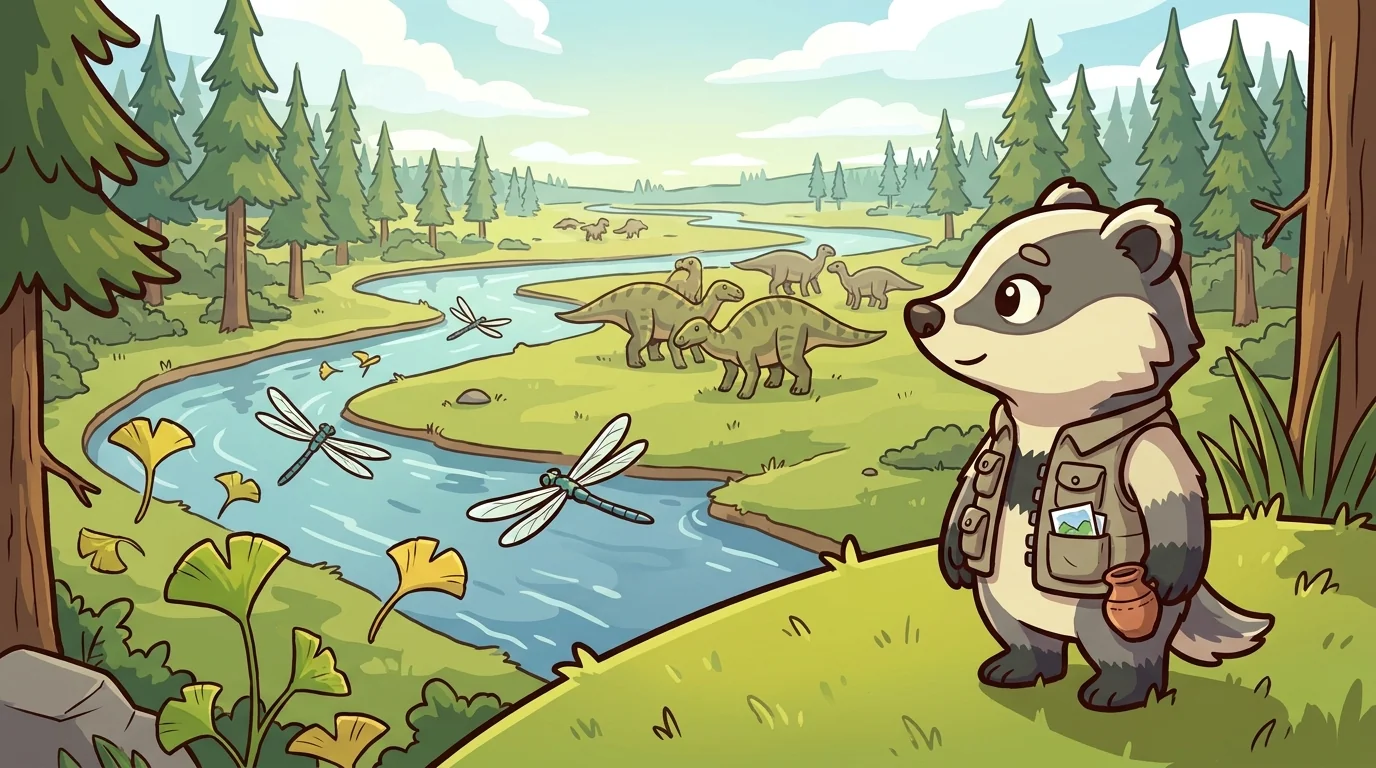
Field was a small badger, no taller than a stack of textbooks. Her fur was a chunky pattern of gray, cream, and black bands. She moved with a quiet, unhurried grace, her attentive eyes always scanning, always noticing. Tucked into her sturdy canvas vest, she carried two special things. One was a folded landscape-sketch, a watercolor she’d drawn herself. It showed a Cretaceous floodplain, alive with an Iguanodon herd grazing near a river. Conifer trees lined the banks, ginkgo leaves floated on the water, and dragonflies zipped overhead. The other treasure, hidden in an inner pocket, was a small clay jar. Inside, tiny pinches of sediment rested, each from a different fossil layer, each carefully labeled with its formation.
This was Field’s craft, her special way of seeing. For her, a fossil wasn’t just the remains of an ancient creature. It was a story, a snapshot of an entire world. She called it *paleoenvironment-reconstruction. Most people looked at a fossil and thought, 'Oh, cool, a trilobite!' They stopped there. Field saw the trilobite, yes, but her mind immediately began asking, 'What kind of world did this trilobite live in?' That was the real question, the more interesting one. The trilobite itself told you about trilobites. But the rock around the trilobite – the sediment, the other tiny fossils, the faint ripples or cracks in the stone – that told you about the place*. It told you about the ancient sea, the forest floor, or the desert where that creature once lived. Field’s job was to read that larger picture, piece by careful piece.
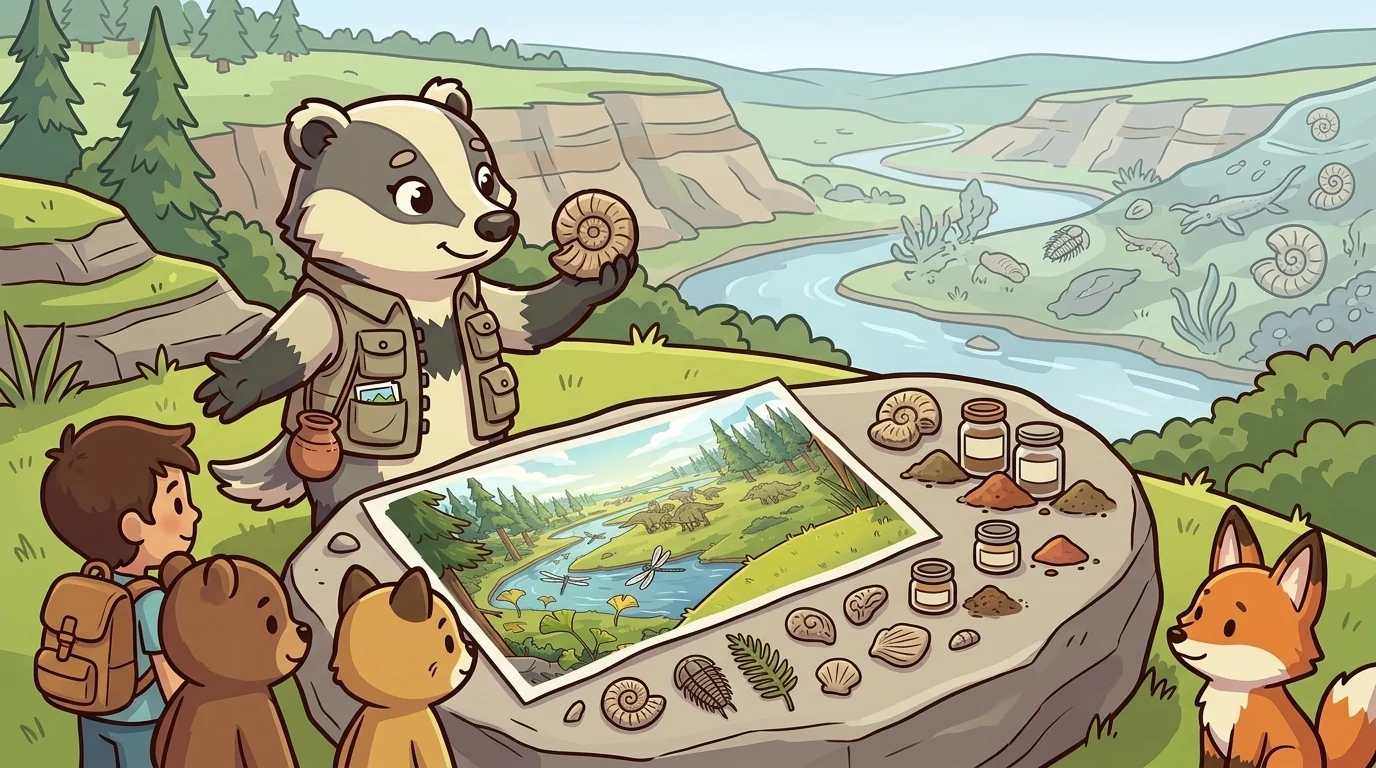
Field made it clear from the start: this wasn't about memorizing long lists of rock names. 'Reading the place around a fossil is about practiced looking,' she’d tell her students. 'It’s not about jargon. You look at the matrix, the rock holding the fossil. You look for other fossils nearby. You examine the sedimentary features – ripples, mud-cracks, cross-bedding. Then you ask: what kind of place leaves these traces? The looking, that’s the real work.'
Field came from a small village nestled in a valley. Her family had been the village’s land-surveyors for generations. They were the badgers who walked the fields each spring, mapping where the soil changed, where the water table rose, or where a new house could safely stand. Field learned early that the ground told stories. Digging a hole in one part of the village might reveal rich, dark topsoil over layers of clay. Digging another hole, just a few yards away, could show sandy loam over gravel. Her parents taught her to read these layers. They showed her how the sediments spoke of ancient floods, or dry spells, or even where a stream once flowed. By the time she was six, Field understood that every place held its own history, written in the earth. A practiced eye could always read it.
When Field arrived at the FossilForge academy at twenty-two, Professor Petra, a wise old owl with spectacles perched on her beak, met her. 'Tell me, Field,' Professor Petra had asked, her voice soft but clear. 'What is *paleoenvironment-reconstruction?' Field didn’t hesitate. She looked Professor Petra right in the eye. 'It’s reading the place from the fossil,' she said. 'One fossil is a whole place. You read the matrix. You read the associated fossils. You read the sedimentary features. Then you ask: what kind of place leaves these traces?* The fossil is just one piece of a much larger picture.' Professor Petra had smiled. 'You are appointed,' she said.
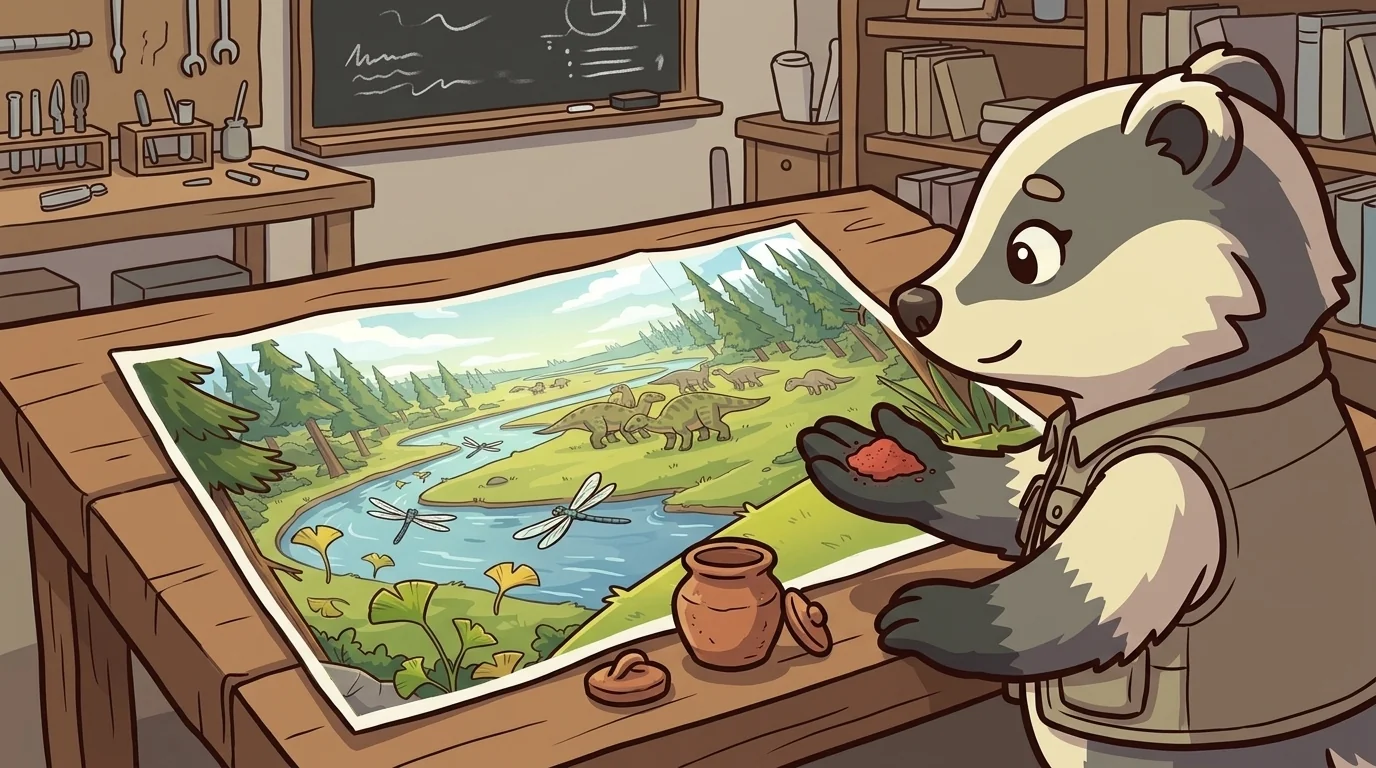
In her workshop, Field started every first-day lesson the exact same way. She’d walk to the long workbench, her movements quiet and deliberate. With a soft rustle, she’d unfold her landscape-sketch, smoothing the watercolor flat. The ancient floodplain, with its grazing Iguanodons and drifting ginkgo leaves, seemed to come alive. Next, she’d place her small clay jar beside it. She’d carefully open the lid, revealing the tiny, labeled pinches of earth inside. Then, she’d pinch a small amount of sediment into her palm, letting the grains sift through her fingers.
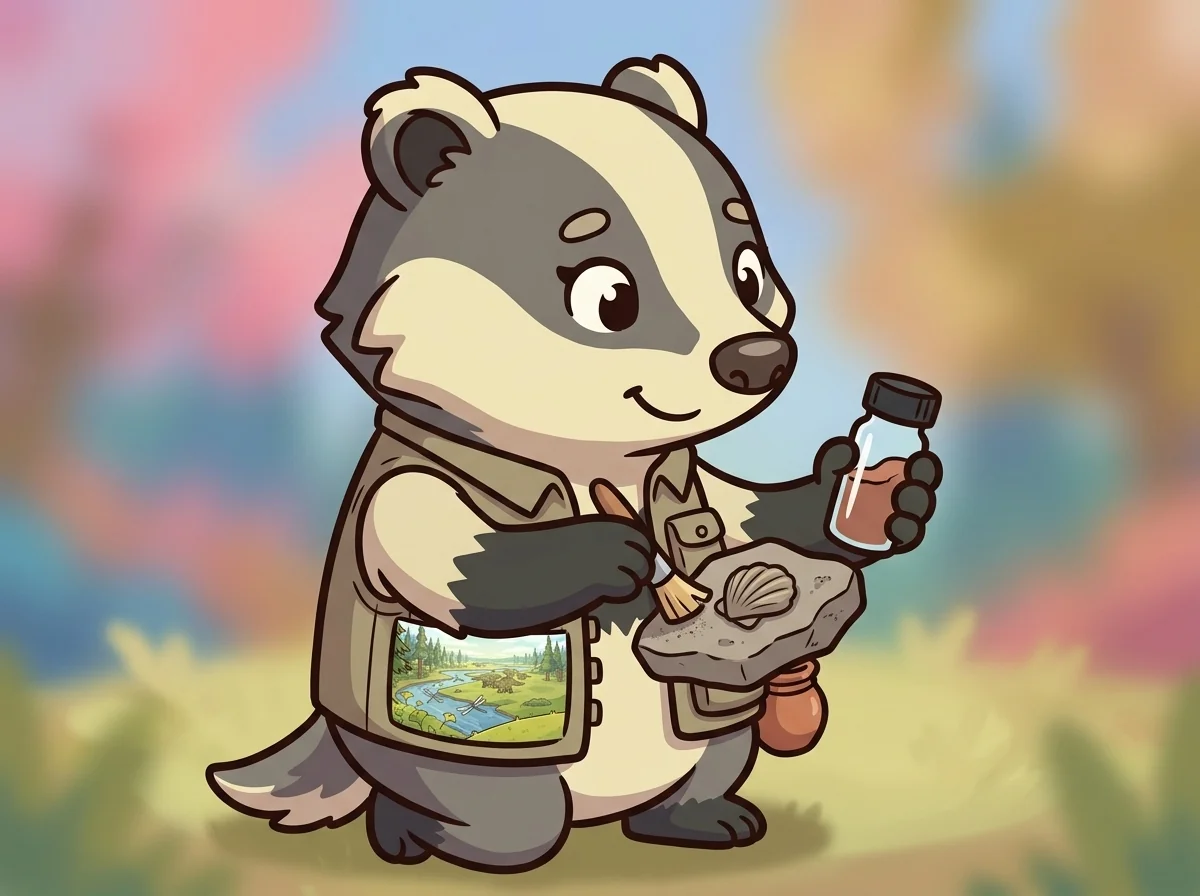
'I am Field,' she’d begin, her voice calm. 'The paleontology primitive I teach is *paleoenvironment-reconstruction. The move is simple: read the place around the fossil. One fossil is a whole place. You look at the matrix. You look at what other fossils are nearby. And you ask: what kind of place leaves these traces?*'
Then she’d dive into the details, the steps she called her 'paleoenvironment scaffolds.'
'First,' she’d explain, holding up an imaginary fossil, 'don’t stop at the organism. The fossil is just the doorway. The place it lived, that’s the real question.'
She’d point to the sediment in her hand. 'Second, look at the matrix. Is the rock fine mud, like a calm lakebed? Or coarse sand, like a river delta? Is it limestone, hinting at an ancient sea, or shale from a deep, quiet basin? Different sediments tell you about different environments.'
'Third, look for associated fossils,' she’d continue. 'What other creatures or plants are preserved in that same rock? Are they marine animals, like clams and corals? Or freshwater fish? Maybe fern fronds from a forest, or grasses from an open savanna? These neighbors tell you who shared the space.'
'Fourth, search for sedimentary features,' Field would say, sketching quick lines on a whiteboard. 'Ripples in the rock mean shallow water with a current. Mud-cracks show the ground was exposed to air and dried out. Cross-bedding, those angled layers, suggest moving water or even wind. Each feature names a process that shaped that ancient world.'
'Fifth, don’t forget trace-fossils,' she’d add. 'Burrows, footprints, tooth-marks – these aren't the creatures themselves, but what they did. They tell you about behaviors, not just bodies.'
'Sixth, build your picture step by step,' she’d advise. 'You might start with "marine," then refine it to "reef," then "tropical reef," then "late-Cretaceous tropical reef" in a specific named formation. The more evidence you find, the more specific your picture becomes.'
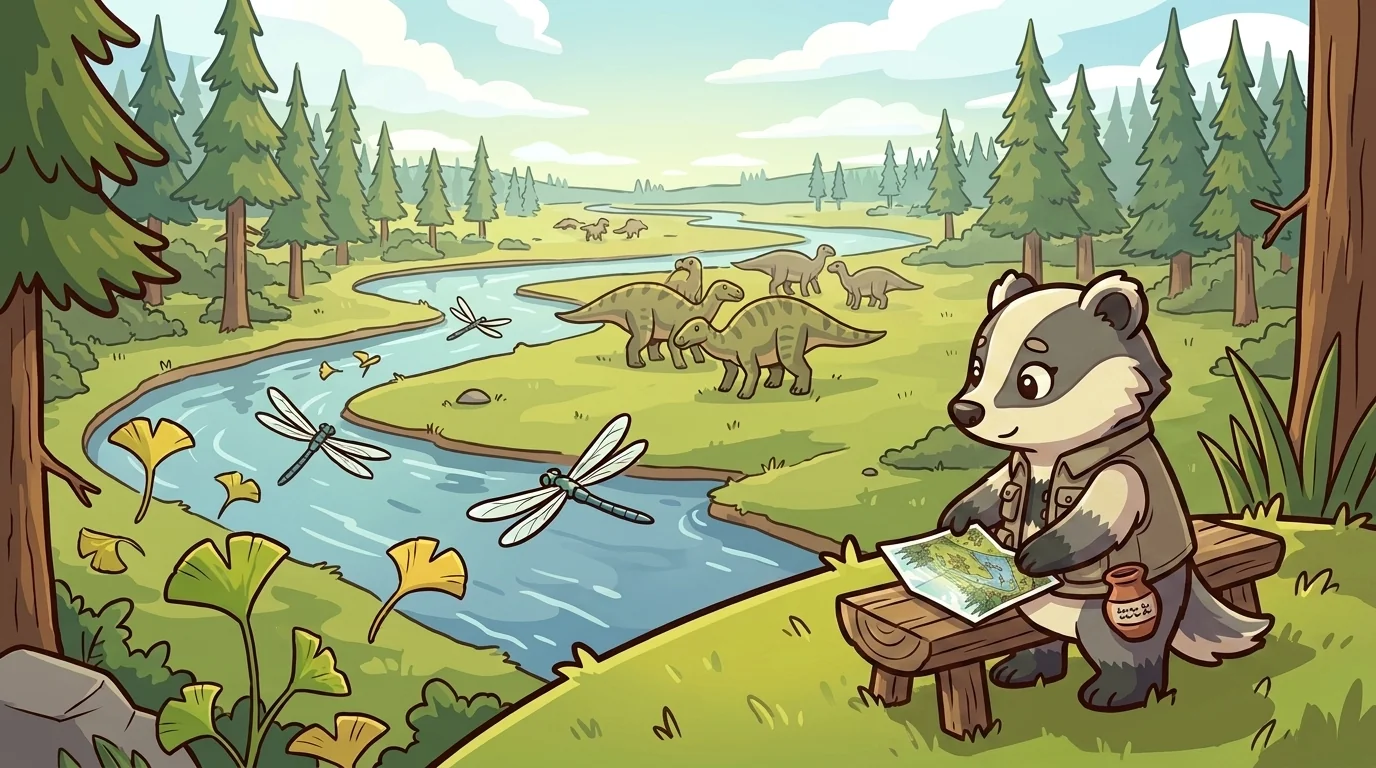
'And finally,' Field would say, gesturing to her own watercolor, 'sketch your reconstruction. Drawing the inferred landscape forces you to commit to what the evidence truly supports. If you can’t draw it, you probably don’t have enough evidence yet.'
Field was always clear about one thing. 'I sometimes draw a reconstruction that has to be revised when new evidence comes in,' she’d tell them. 'That’s not failure. That’s just how reconstructions work. The picture only gets sharper as the evidence accumulates.'
Students often asked Field if *paleoenvironment-reconstruction was hard. She always gave the same answer, her eyes twinkling. 'It’s not hard,' she’d say. 'It’s simply reading the place. One fossil is a whole place. Read the matrix. Read the associated fossils. Read the sedimentary features. Then ask: what kind of place leaves these traces?*'
Field would then carefully refold her landscape-sketch, tucking it back into her vest. The small clay jar, with its layered secrets, waited on the workbench. It waited to be opened again, to share its stories. And the next ancient place, somewhere out in the world, waited patiently to be read.
The FossilForge ensemble
Field is part of FossilForge's distributed-narrative cast. Each character embodies a different curricular primitive; together they teach the full subject.
-

Seam
Taxonomic + fossil-type classification — family-resemblance-matching (what KIND of organism?)
-
Span
Deep-time + geological chronology — scale-of-scales (WHEN did this organism live?)
-

Branch
Morphological adaptation + evolutionary change — branching-not-laddering
-
Last
Mass extinctions + extinction-event reasoning — witness-and-choose (cross-app cameo with EcoSphere Brink)