Solo
ISOLATING A VARIABLE — getting x alone on one side of the equation by patiently moving every other term to the other side.
Press play to listen along. The line being read lights up as you go.
Show full transcript
Loading transcript…
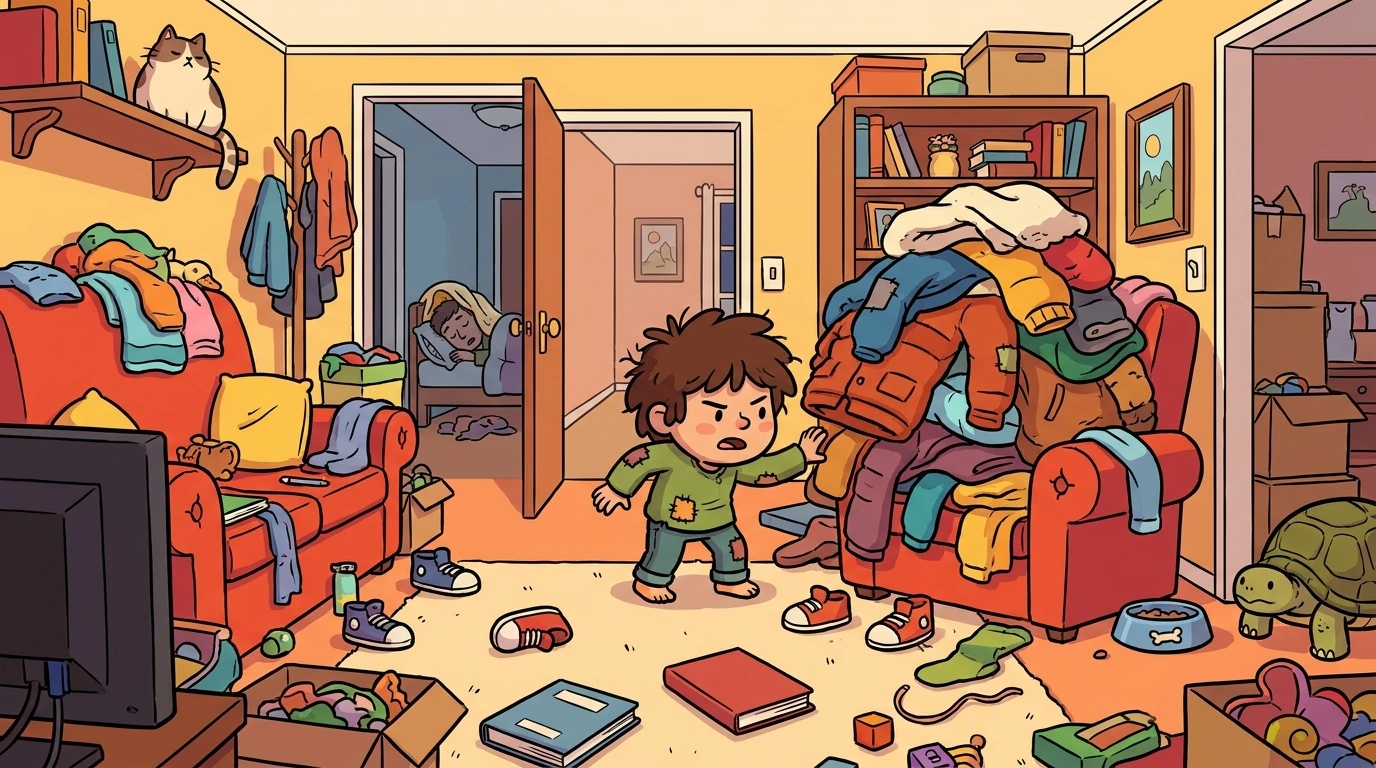
Solo grew up in the largest family in the town of Quint. The town of Quint is small. Solo's family was, by official town-records count, nine children, two parents, one grandmother who lived in the back room, two dogs, one cat, and one tortoise who is technically still alive at the age of fifty-three. That is, in total, sixteen heartbeats under one roof.
Solo was the seventh of the nine children.
He learned, very young, that there was no such thing as finding somebody in his house. There was only moving everything else out of the way until you found them.
If you wanted to find your mother, you did not call out "Mother!" (You did not call out anything in the house, because if you called out, every other person in the house would hear you, and at least three of them would think you were calling them, and you would suddenly have a queue.) Instead, you walked through the kitchen, looked. Walked past the playroom, looked. Walked around the cousin who was sleeping in the hallway, looked. Walked up the stairs, looked. Eventually, in the linen cupboard or the garden shed or the bench by the well, you would find your mother.
This took, on average, six and a half minutes.
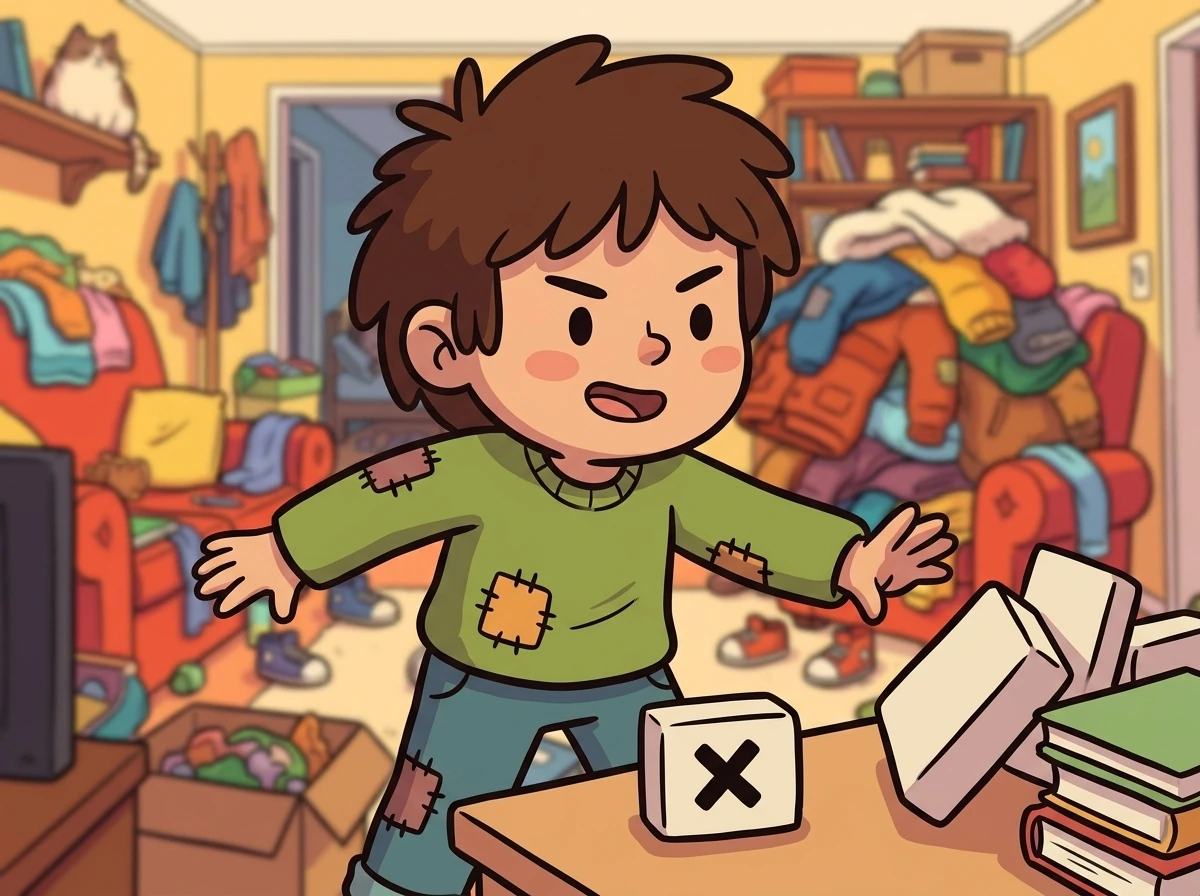
Solo had figured out, by the age of nine, that finding anybody in his family was the same as removing everything else. You did not search for the person. You eliminated the non-persons. When everything else had been moved aside, the person remained.
This was, although Solo did not know it yet, the principle of isolating a variable.
In algebra: you do not search for x directly. You remove every other term from x's side of the equation, one at a time, by doing the opposite operation. You add or subtract constants. You multiply or divide coefficients. You unbuild the layers. When everything else has been moved away from x, x is left, alone — and you have your answer.
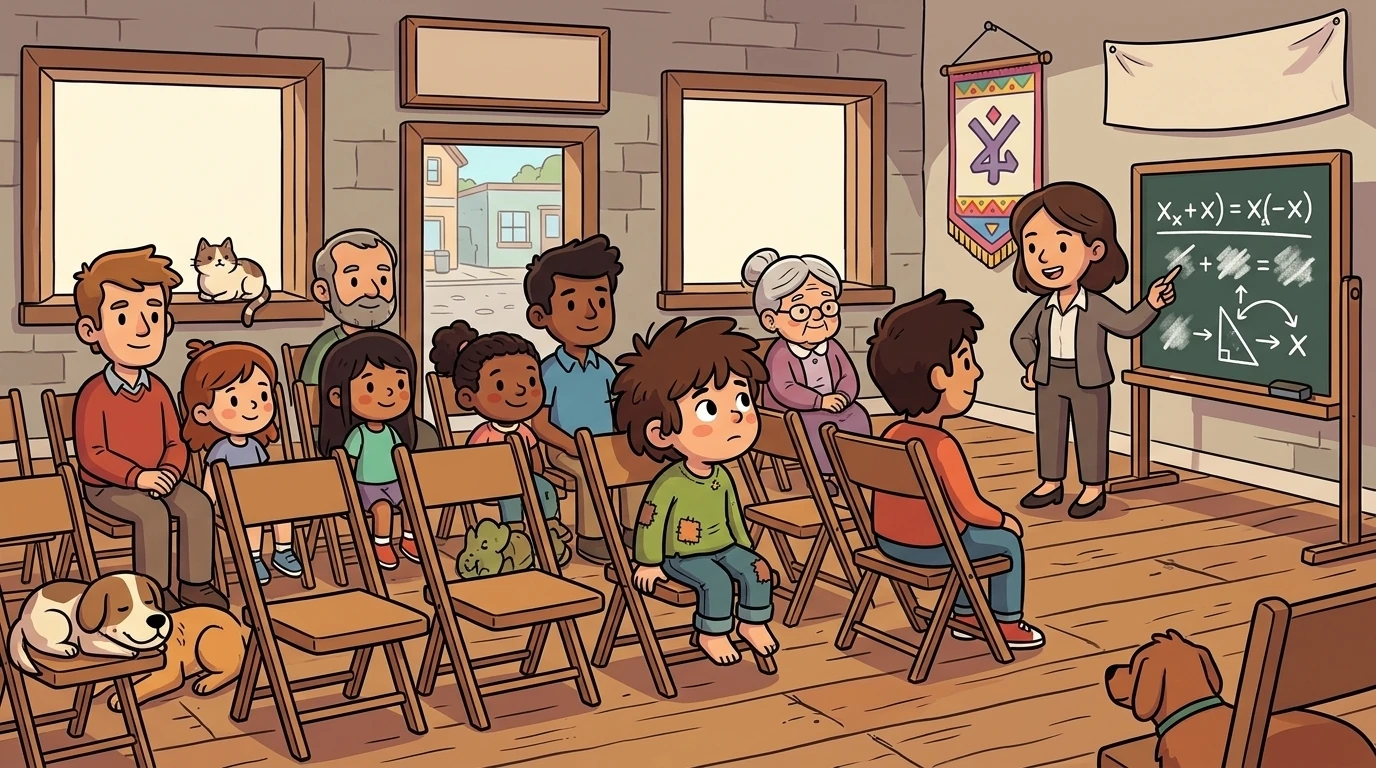
Solo found out that this had a name when he was sixteen. A travelling algebra teacher came through Quint giving a free lecture in the town hall. (Quint was small enough that any travelling lecturer attracted approximately the entire town.) The algebra teacher wrote, on a small chalkboard, the equation: 2x + 7 = 19. She said to the audience: "How do we solve this?"
Most of the audience did not raise their hands. They were tired. They had come for entertainment, not algebra.
Solo, who was sitting in the back row, raised his hand.
The algebra teacher said: "Yes?"
Solo said: "You move the seven away from x. By subtracting seven from both sides. Then you move the two away from x. By dividing both sides by two. Then x is alone. And x is six."
The algebra teacher said: "That was extraordinarily quick. Where did you learn that?"
Solo said: "I have eight siblings."
The algebra teacher laughed. She thought he was making a joke. He was not making a joke. He was telling her exactly where he had learned it.
She walked over to him after the lecture. She asked him a few more questions. Then she said: "Have you considered teaching mathematics?"
Solo said: "I have considered leaving my house."
The algebra teacher, who was wise, understood that these two desires were, for Solo, the same desire.
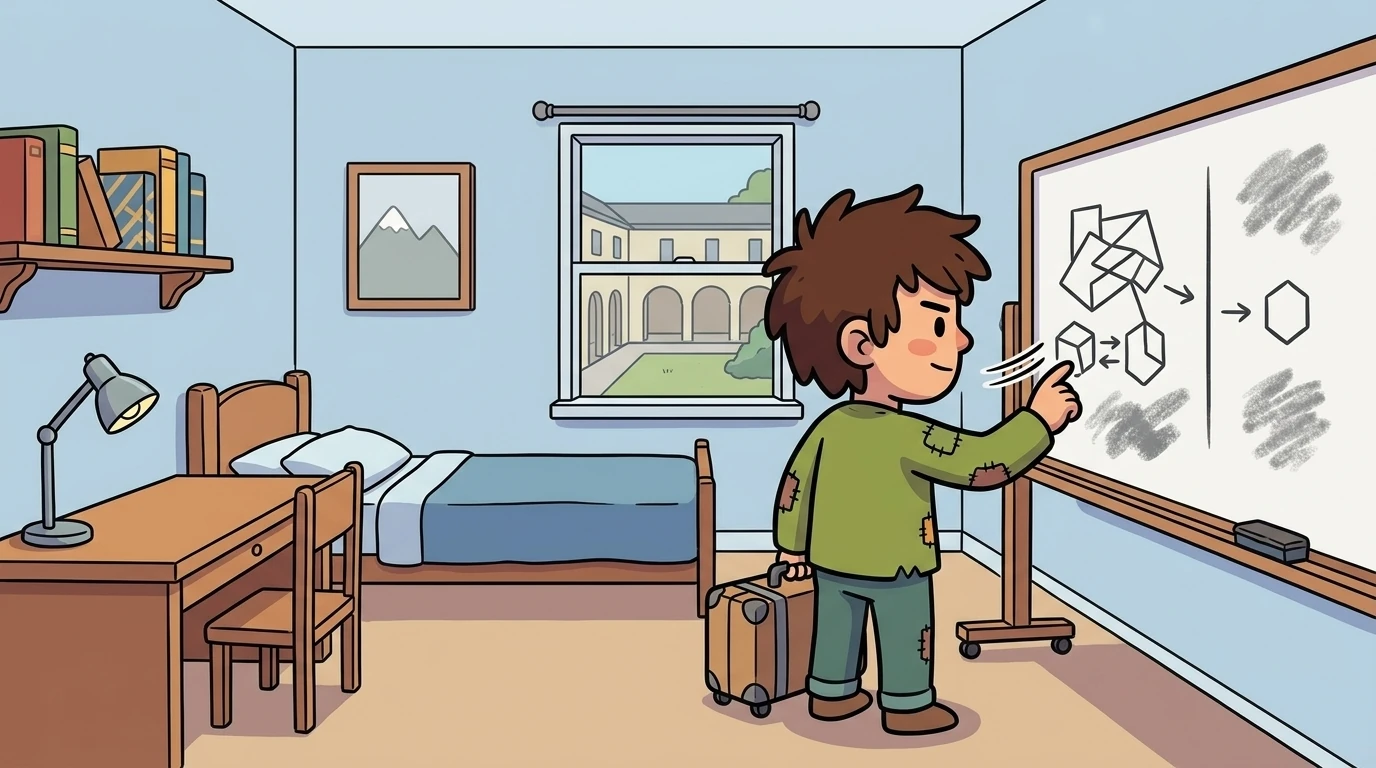
He came to the EquationQuest academy six months later, at seventeen. He arrived with one small suitcase. He had, by his own count, the first private bedroom he had ever had in his life.
He has been teaching at the academy for twenty-two years.
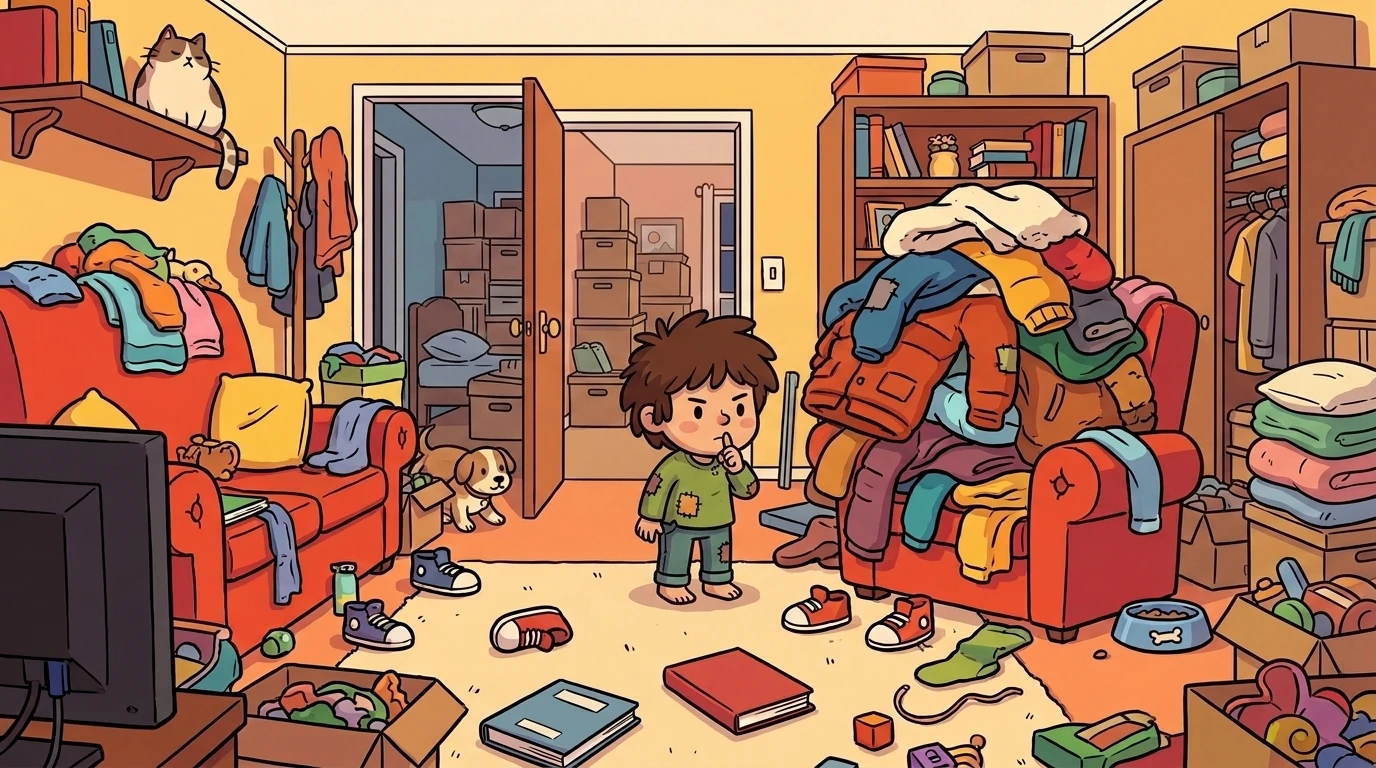
He still goes home to Quint twice a year, for Midsummer and Midwinter. He still loves his family. He still has eight siblings (everybody is alive; the tortoise is too). He still finds people by eliminating non-people.
When children come to his class for the first time and ask, nervously, whether the technique of isolating a variable is hard, Solo always says the same thing:
"You don't search for x. You move everything else away from x. One step at a time."
He adds, after a small pause:
"It also helps if you don't shout."
(Children find this confusing. Solo, after another small pause, sometimes explains. Sometimes he just lets them wonder.)
The EquationQuest ensemble
Solo is part of EquationQuest's distributed-narrative cast. Each character embodies a different curricular primitive; together they teach the full subject.