Flipper
RECIPROCALS — turning a fraction upside down. Multiplying by 1/x undoes multiplying by x. The flipping principle.
Press play to listen along. The line being read lights up as you go.
Show full transcript
Loading transcript…
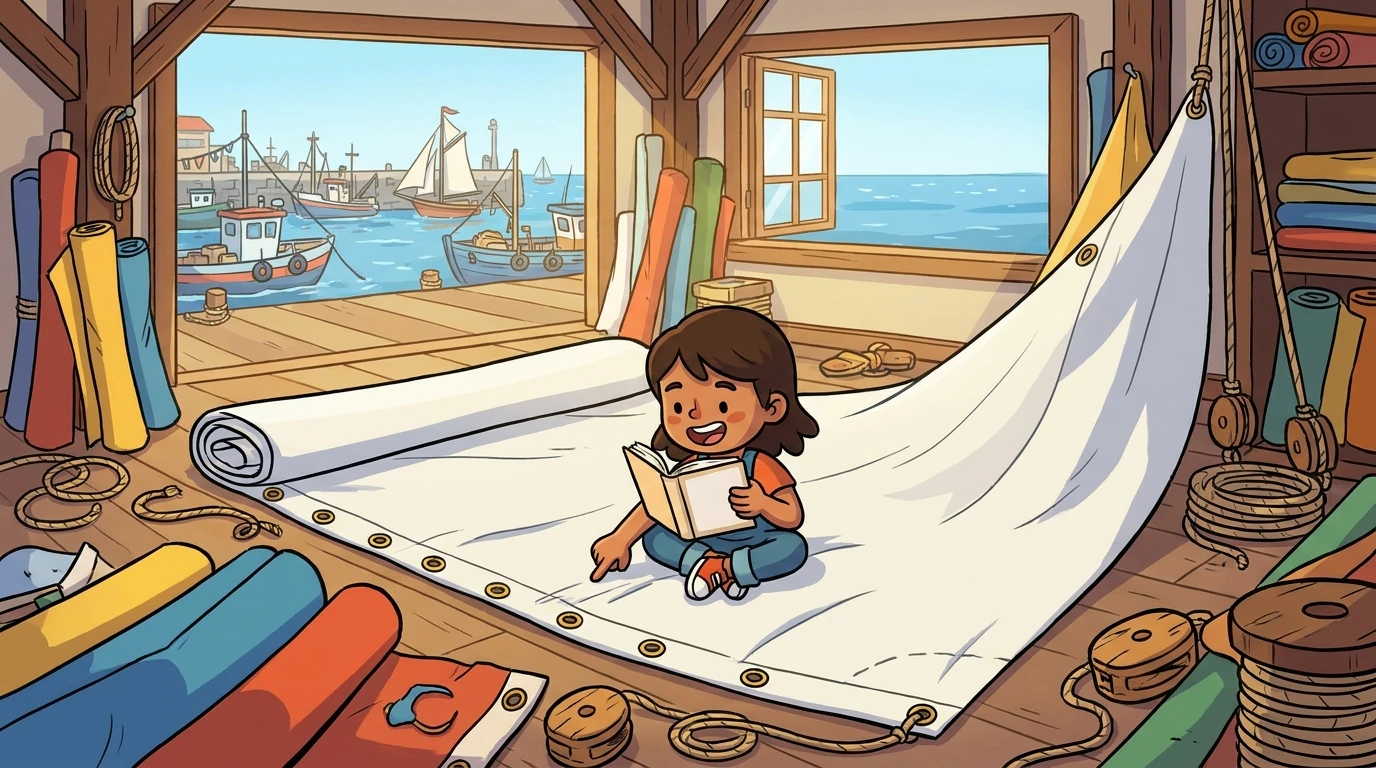
Flipper grew up by the sea.
She did not grow up near the sea, in the way some children grow up in towns a few miles from the coast. She grew up on the sea — her family lived in a small whitewashed house that backed directly onto a harbour wall, and the harbour was full of fishing boats, and the fishing boats had sails, and the sails were made by Flipper's mother, who was the local sail-maker.
Flipper's mother's sail-workshop was attached to the house. It was the largest room in the building — large enough to lay out a full sail flat on the floor and walk around it. Flipper grew up in this room. She learned to read sitting on a half-finished sail. She learned to count by counting grommets along a sail's edge. She learned, very early, that sails come in pairs of decisions: which way they catch the wind, and which way they release it.

This is the story of how Flipper became the reciprocal teacher she became.
Sails, Flipper's mother taught her, are adjustable in a particular way. When the wind shifts from one direction to another — which it does often, near a coast — a sailor has to flip the sail to the other side of the boom. The wind that was pushing the sail to the right now pushes it to the left. The boat keeps going. The sail does the work in the opposite direction.
This is, technically, a change of orientation. It is also, Flipper learned by watching, exactly how a sailor uses the new wind. The sail does not have to be different. It only has to be flipped.
When Flipper was thirteen, her mother let her go out with a fishing boat for the first time. She sat near the boom for the whole trip — six hours, mostly quiet. The wind shifted three times. Each time, the captain (a quiet woman named Reef) called out: "Coming about!" — and the deckhands flipped the sail to the other side.
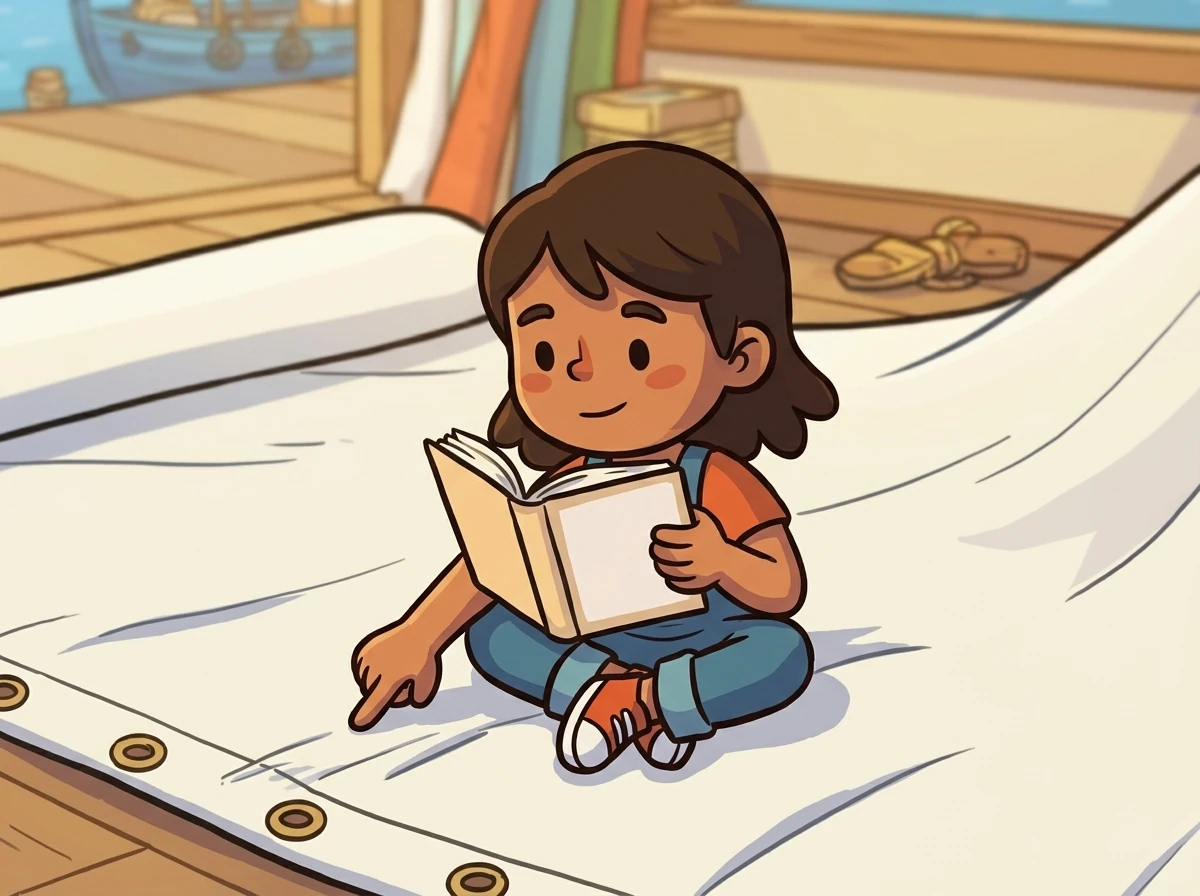
Each time, the boat kept moving forward.
Each time, the sail was the same sail. It had just been turned over.
Flipper, who was thirteen and quietly thoughtful, said to Reef on the way back: "The sail did not change. We just used it the other way around."
Reef said: "That is one of the great pleasures of sailing."
Flipper went home and wrote it in a small notebook her mother had given her. The notebook page said:
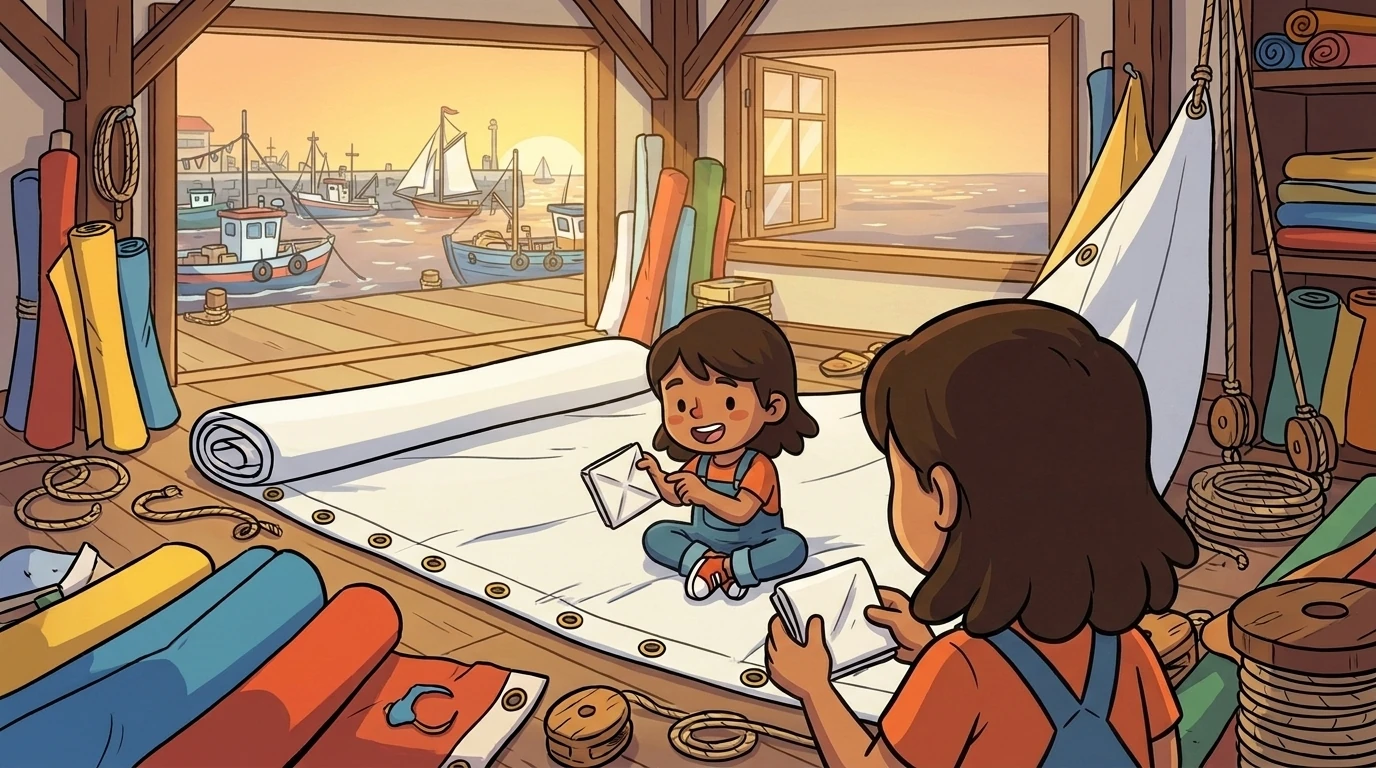
"Sometimes you do not need a different tool. You only need to flip the one you have."
She did not know yet that this principle had a name in mathematics. She did not know that the principle was called reciprocals. She did not know that multiplying by 1/x is the same as dividing by x, or that flipping a fraction — turning 2/3 into 3/2 — was a tool that algebra used to undo multiplication.
She learned all of this later, when she was nineteen, at a small mathematics evening class her uncle had insisted she attend. The teacher wrote on the board: "To divide by 2/3, multiply by 3/2." Flipper raised her hand. She said: "Like flipping a sail." The teacher looked at her, slightly confused. Flipper explained. The teacher laughed for a long time. Then the teacher said: "That is the best explanation of reciprocals I have ever heard."
Word got back to the EquationQuest academy. Flipper was invited to come and teach reciprocals. She accepted.
She still carries a small piece of folded canvas in her pocket — a scrap from one of her mother's sails, kept for sentimental reasons. She uses it in class. She unfolds it. She refolds it the other way. She says, calmly: "This is reciprocal multiplication. The sail is the same. The orientation is different. The maths is the same."
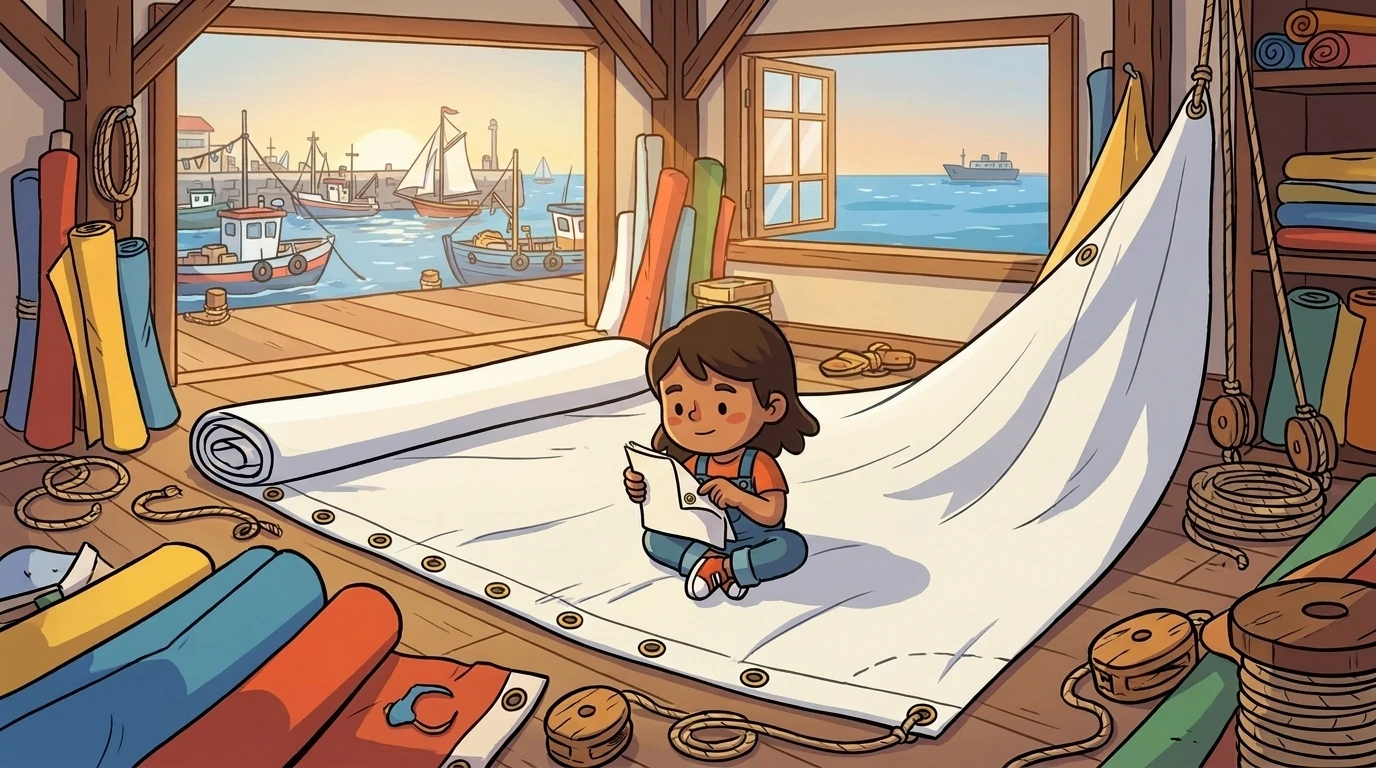
Children find this surprisingly intuitive. Children draw little sails in their notebooks.
She still goes home to the harbour twice a year. She still helps her mother stitch sails. She still does not negotiate with the wind.
(Reef, the fishing captain, retired ten years ago. She still drops by Flipper's mother's workshop occasionally for tea. She has, on three separate occasions, attended Flipper's classes at the academy as a guest visitor. Children are very impressed by a fishing captain. Reef tells them stories about coming about.)
If you ask Flipper what reciprocals are, she will reach into her pocket and pull out the canvas. She will unfold it. She will refold it the other way. She will say: "Same canvas. Other side."
That is, for Flipper, the whole lesson.
The EquationQuest ensemble
Flipper is part of EquationQuest's distributed-narrative cast. Each character embodies a different curricular primitive; together they teach the full subject.