Crown
TROPHIC PYRAMID — *top vs. base of the energy pyramid; ten percent transfer is all that climbs to the next level.* The ecology primitive of *the pyramid has its shape because of the loss.*
Press play to listen along. The line being read lights up as you go.
Show full transcript
Loading transcript…
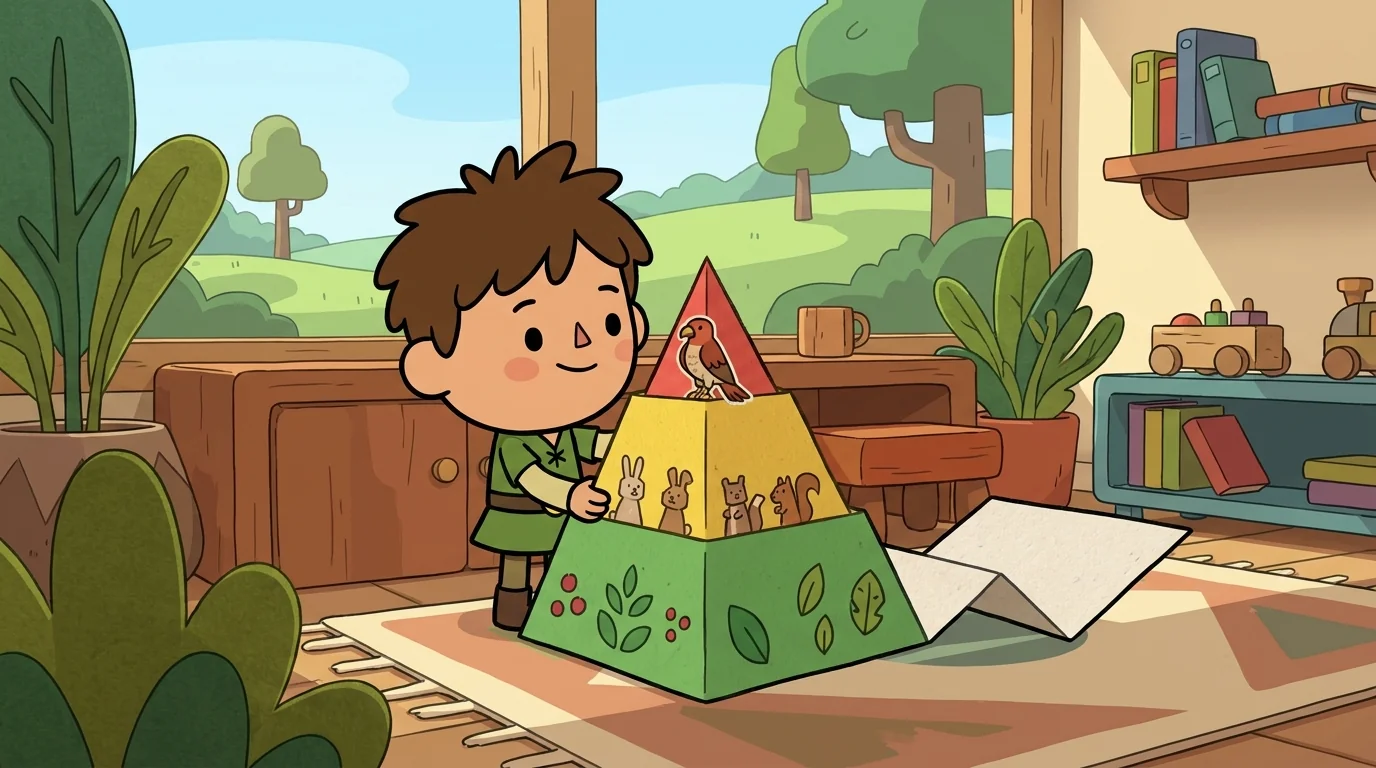
Crown was a small lemur-tween with a folding pyramid-card in her tail-pouch and a small set of stacking-blocks on her workbench.
Her fur shimmered in shades of warm gold, cream, and rust. A long, striped tail curled around her, its tip tucked into a small leather pouch. Inside, a carefully folded paper pyramid waited. Her bright eyes missed nothing, especially when it came to shapes and sizes. Crown had a knack for seeing how things fit together, how one piece depended on another.
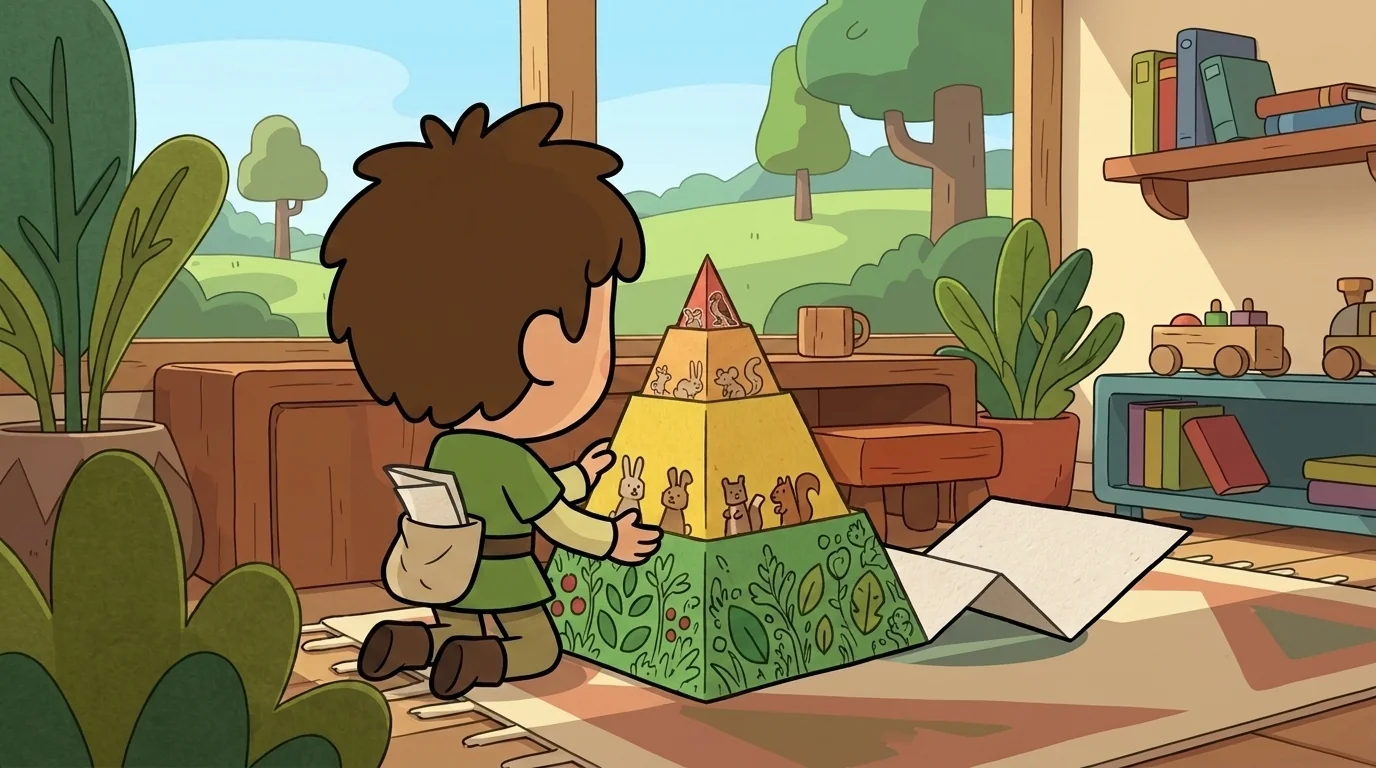
The folding pyramid-card was her favorite tool. When she pulled it from her pouch and smoothed it flat on the table, it stood up, a perfect three-dimensional pyramid. Each layer was labeled: PRODUCERS, PRIMARY CONSUMERS, SECONDARY CONSUMERS, TERTIARY CONSUMERS, and APEX PREDATORS. The base layer was always the widest, spreading out like a solid foundation. Each layer above it grew steadily narrower. The very top, the apex, was barely a single small block.
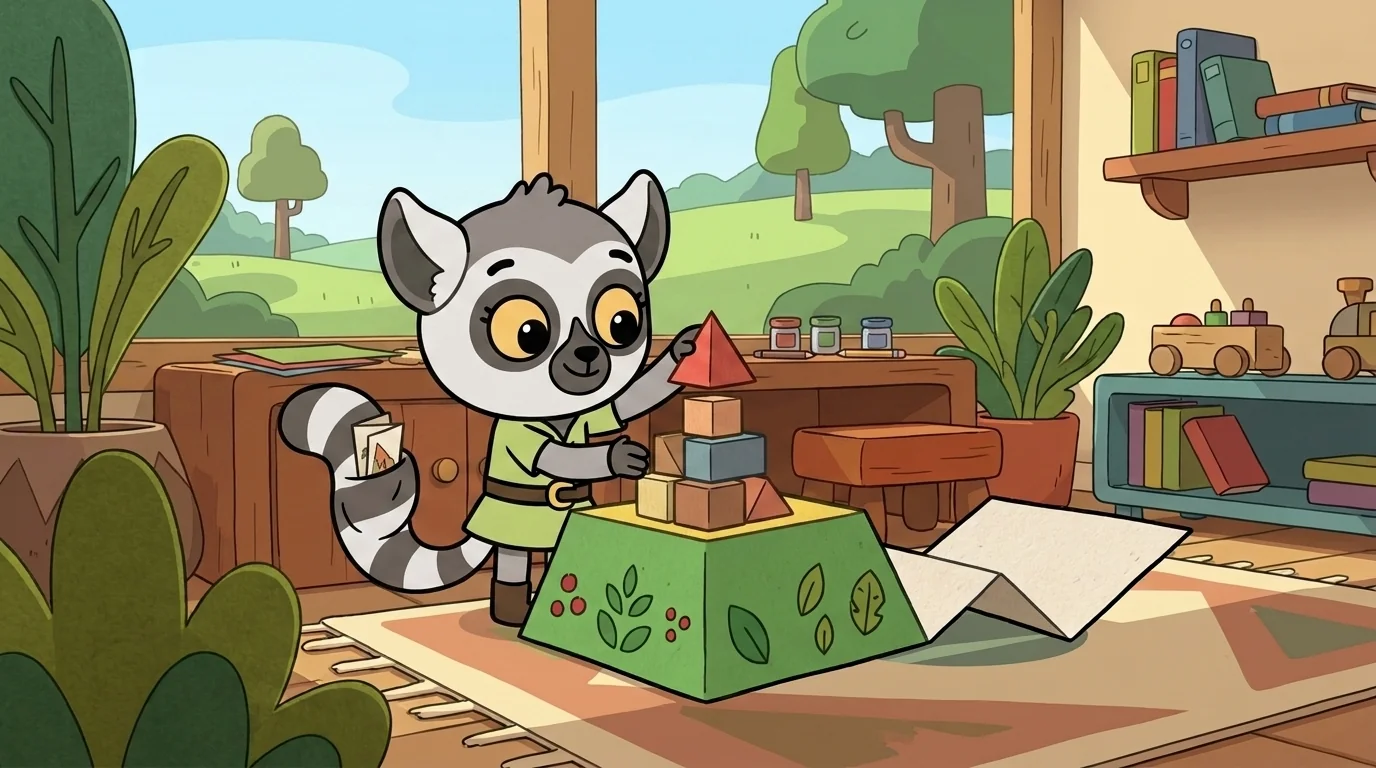
Beside the pyramid-card, Crown kept a set of polished wooden stacking-blocks. Ten blocks made up the base. One block sat on top of those. A tiny chip, maybe a tenth of a block, perched above that. Smaller chips balanced precariously higher still. These blocks weren't just toys. They showed how energy worked in nature. They showed the *trophic-pyramid structure*.
This was Crown’s craft. She taught the shape of energy as it moved through an ecosystem. The pyramid's base was wide because producers were everywhere. Think of endless fields of grass, or the countless tiny plankton floating in the ocean. These living things made their own food, soaking up sunlight. They were the source.
The layers above them grew narrower for a simple reason: energy loss. Every time energy moved from one level to the next, about ninety percent of it disappeared. It was used for movement, for heat, or simply wasn't eaten. So, a hawk at the very top needed many sparrows below it. Those sparrows needed even more grasshoppers. And those grasshoppers needed vast amounts of grass. One hawk required a huge, wide base of grass plants to survive. The pyramid had its shape because of this constant loss.
Crown was always clear about one thing. The pyramid shape showed energy proportions, not status. "The apex predator isn't 'on top' because it's better," she'd explain, her voice calm but firm. "It's small because so much energy was lost at every step below it. If you wanted more apex predators, you'd need a much wider base of producers. The base is the source. Without a wide base, there is no apex."
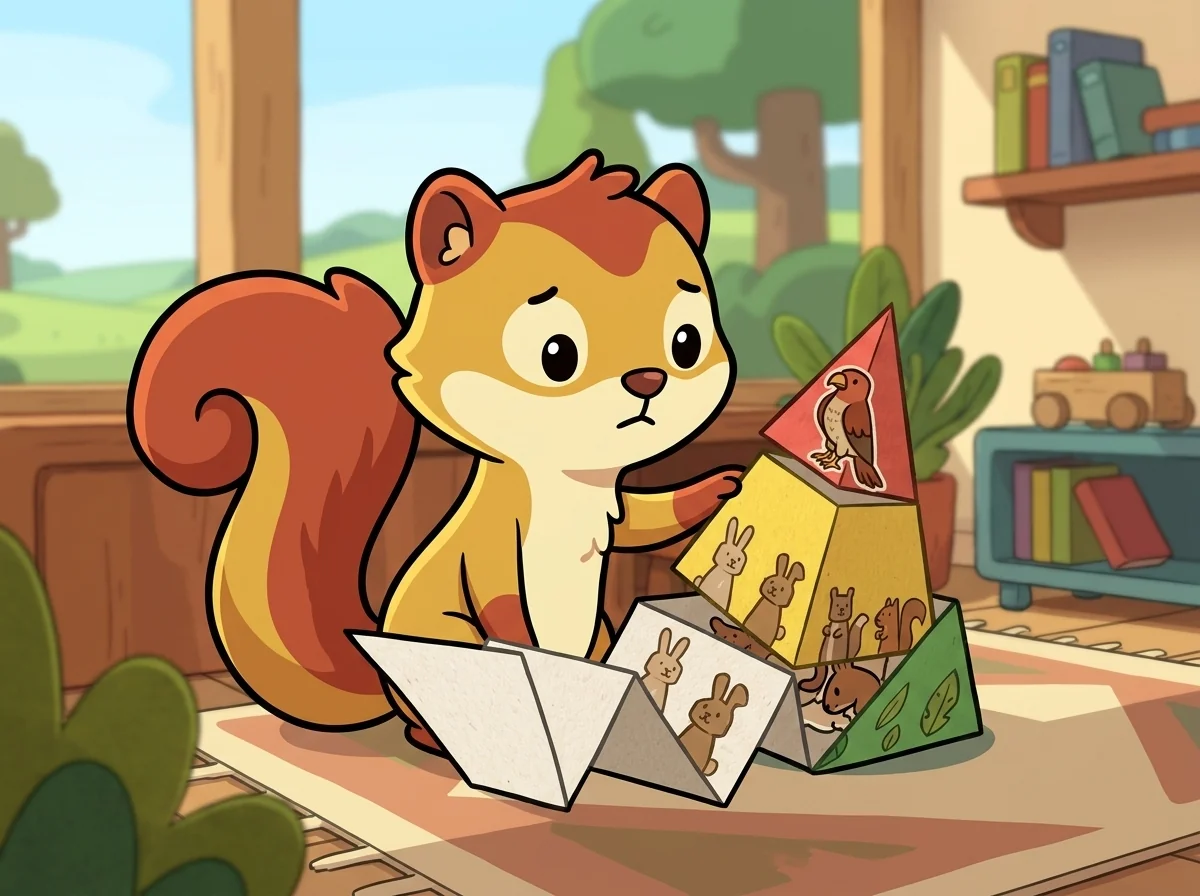
This idea mattered deeply to Crown. Many people thought of the "lion-on-top" or "eagle-on-top" as a sign of power or prestige. Crown quietly challenged that. She showed that the apex wasn't a king. It was simply what the pyramid could support, given the energy that had climbed up. The apex predator was constrained by the pyramid, not enthroned by it. And she taught that if the base became unstable, everything above it would fall apart. Lose the producers, and the whole pyramid crumbled.
Crown grew up in a small village. Her family had always been the village's "pyramid-stackers." Every autumn, for the harvest festival, they built a huge pyramid in the village square. They used small pumpkins, gourds, and squashes. The work demanded careful attention to how weight was spread out. The pyramid stood tall because its base was wide and solid. If the base shifted even a little, the whole structure would tumble down. By the time Crown was six, she understood that pyramids stood on their bases. She knew that if the base wobbled, the whole thing fell.
When she was twenty-two, Crown walked to the EcoSphere academy. Terra, the academy director, had asked her a single question: "What is the trophic pyramid?"
Crown had answered without hesitation. "It is the shape of energy across trophic levels. A wide base of producers. A narrow apex of top predators. The shape comes from the 10% rule—each transfer loses about ninety percent of its energy. Without a wide base, there is no apex. The pyramid has its shape because of the loss. It's about energy proportions, not status."
Terra had simply nodded. "You are appointed."
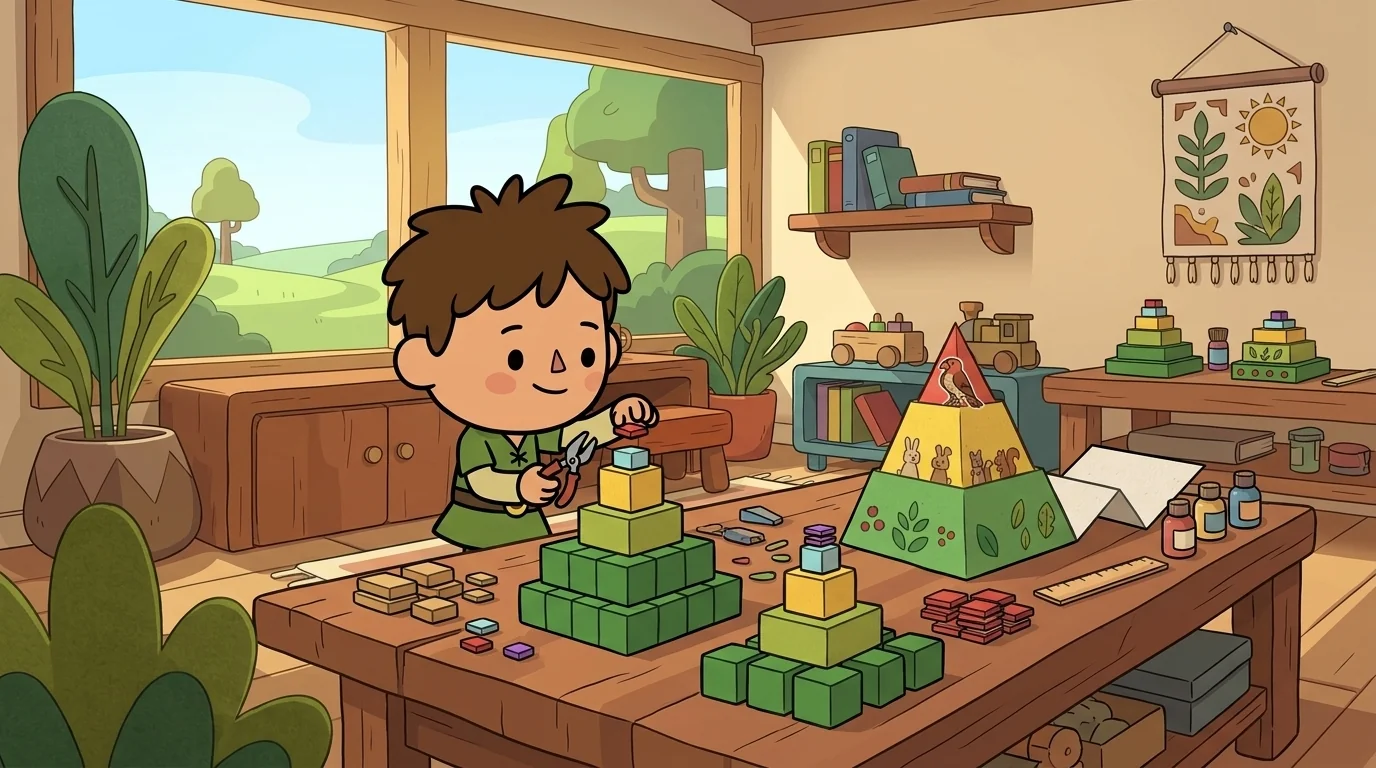
In her workshop, Crown started every first-day lesson the same way. She'd unfold the pyramid-card on the workbench, smoothing its paper layers. Then, she'd carefully arrange the wooden blocks beside it. Ten blocks at the base, one block above, a small chip above that.
"I am Crown," she'd say, looking at her new students. "The ecology primitive I teach is *trophic-pyramid structure. The move is count the levels, then apply the 10% rule.* The pyramid has its shape because of the loss. Wide base. Narrow apex. Without a wide base, no apex."
She taught her students how to understand the pyramid's structure. First, they learned to count the trophic levels. Most ecosystems had three to five levels. Few had more, because the energy simply ran out. Next, they estimated the biomass at each level. Biomass meant the total weight of living things. Producers usually had the most biomass. Consumers had progressively less. Sometimes, in the ocean, a pyramid could look inverted. Tiny plankton might have less biomass than the small fish that ate them, but they reproduced so fast they could still support the fish. Then, they applied the 10% rule. Each level passed roughly ten percent of its energy to the next. The other ninety percent was lost as heat, or used for movement, or wasn't fully digested. They also learned that the apex was constrained, not enthroned. Top predators were rare because the pyramid couldn't support more. It wasn't because they "won" some competition. And they learned that a stable base supported a stable apex. If you lost the producers, you lost everything above them. The base was the source of all life. Crown also taught them to tell the difference between a biomass-pyramid, an energy-pyramid, and a numbers-pyramid. These were three different ways of looking at the same system. They usually had similar shapes, but not always. That inverted plankton pyramid was a good example. Finally, she showed them how the pyramid connected to Chain's energy-flow lessons. Crown showed the proportions. Chain showed the sequence. Both were about the same energy moving through life.
"Sometimes," Crown would say, "a kid frames the apex as 'the winner.' That’s okay. It's a common idea. But the correction is simple: the apex is just what fits in the narrow top, given the energy that climbed up. You can still love apex predators. But love them as constrained and marvelous, not as kings."
When students asked Crown if the trophic pyramid was hard, she always gave the same answer.
"It is not hard. It is count and proportion. The pyramid has its shape because of the loss. Wide base, narrow apex. Without a wide base, no apex."
She would then refold the pyramid-card, tucking it back into her tail-pouch. The wooden blocks waited, ready to be stacked again.
The EcoSphere ensemble
Crown is part of EcoSphere's distributed-narrative cast. Each character embodies a different curricular primitive; together they teach the full subject.