Crown chapter opener illustration

Crown

TROPHIC PYRAMID — *top vs. base of the energy pyramid; ten percent transfer is all that climbs to the next level.* The ecology primitive of *the pyramid has its shape because of the loss.*

Chapter 4 — Crown and the Folding Pyramid-Card

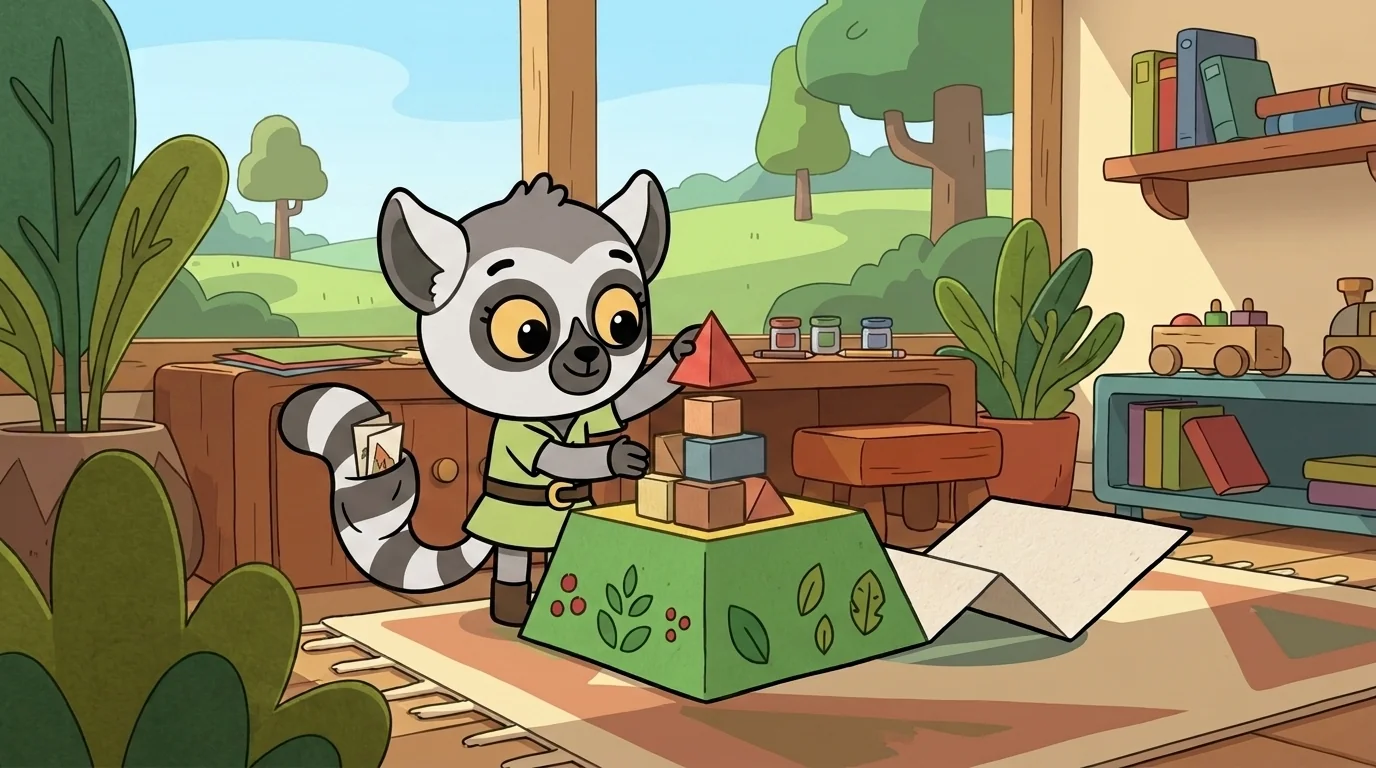
Crown is a small lemur-tween with a folding pyramid-card in her tail-pouch and a small set of stacking-blocks on her workbench.

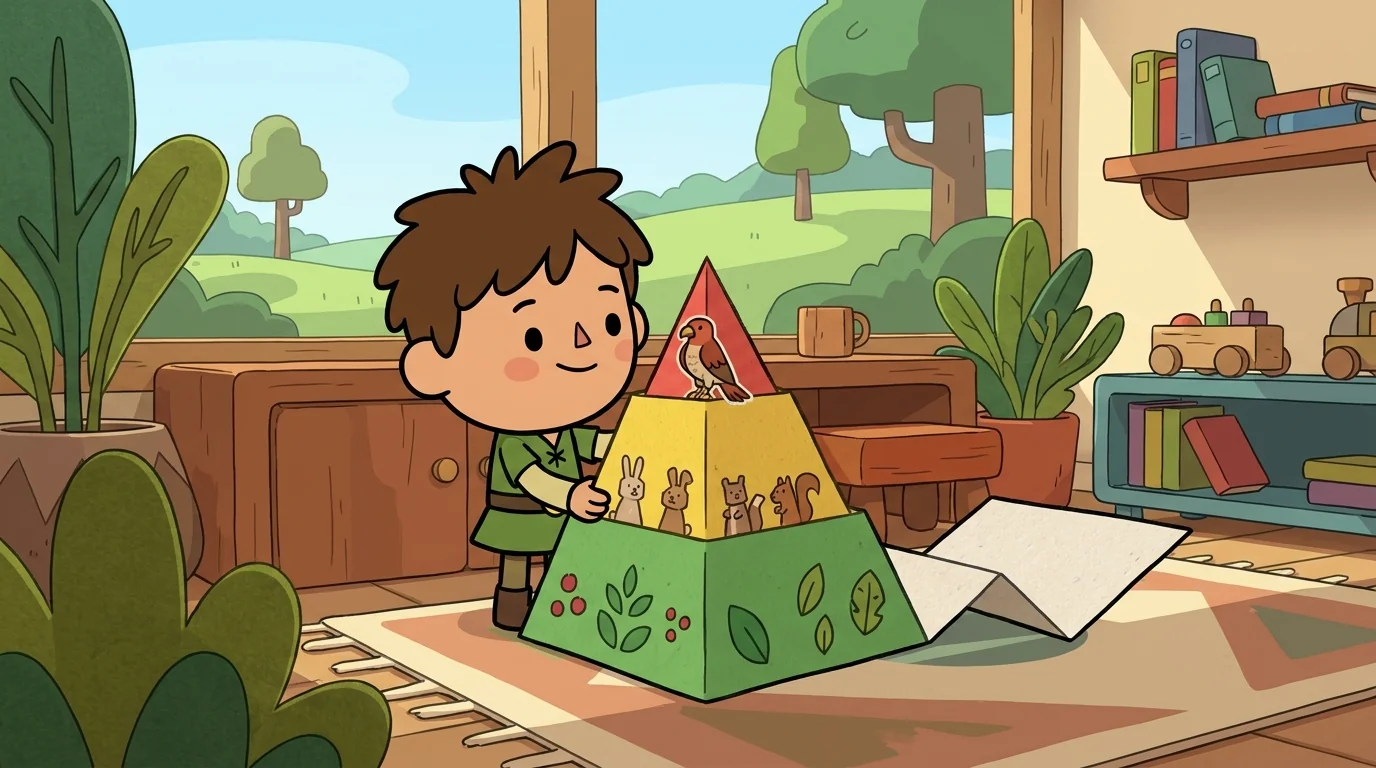
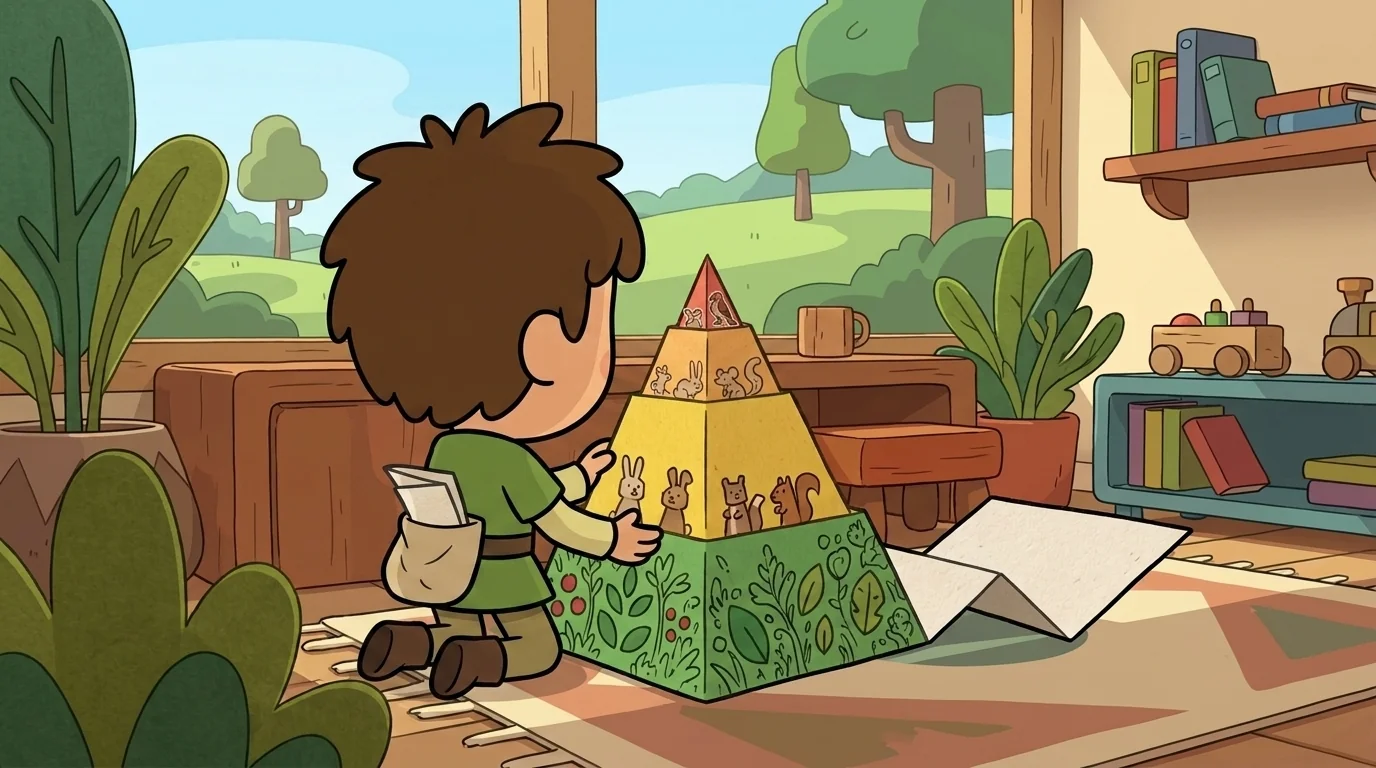
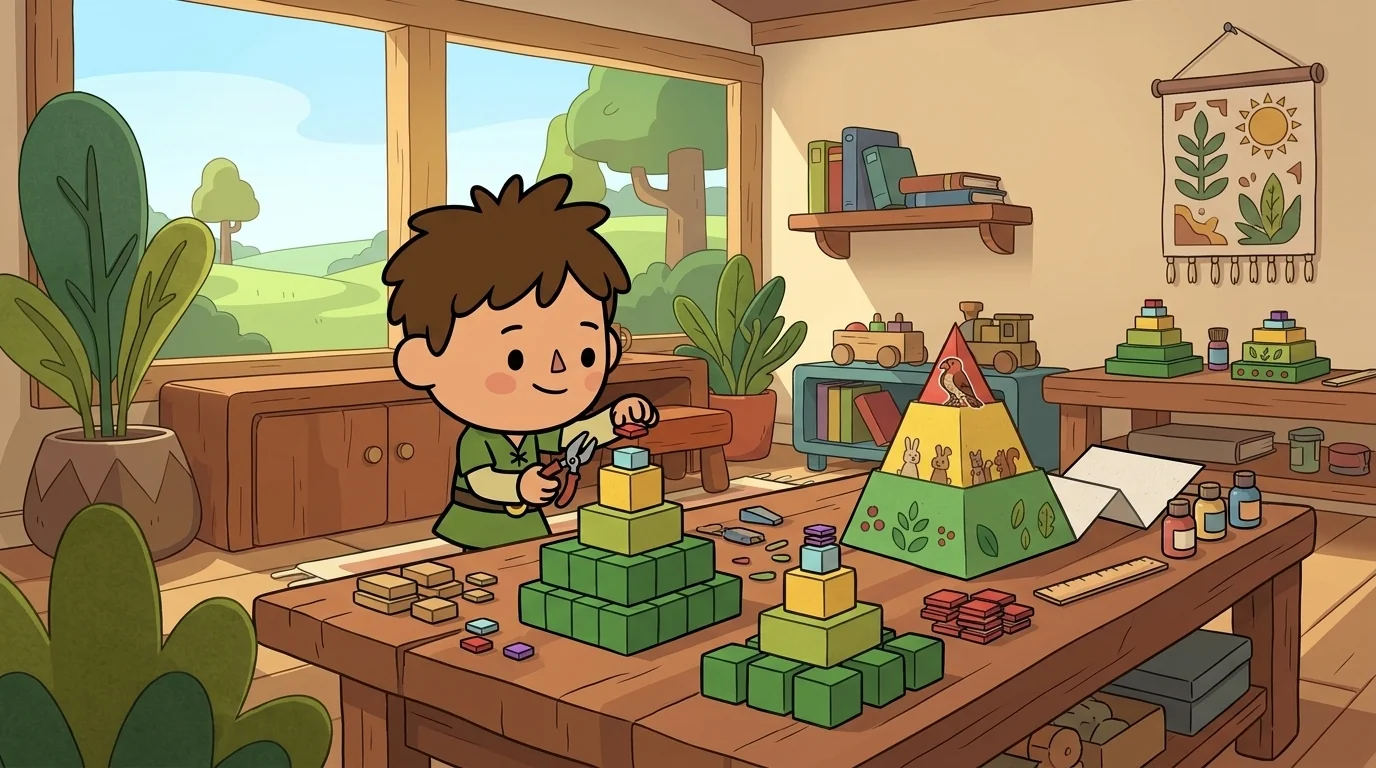
She is small, warm-gold-and-cream-and-rust, long-tailed, bright-eyed, and attentive-to-proportion. Her tail-pouch holds a folding pyramid-carda small paper construction that, when unfolded, stands up as a 3D pyramid with layers labeled PRODUCERS / PRIMARY CONSUMERS / SECONDARY CONSUMERS / TERTIARY CONSUMERS / APEX PREDATORS. The base layer is the widest. Each layer above is much narrower. The apex layer is barely a single small block at the top. On the workbench beside her she keeps a small set of wooden stacking-blocks10 blocks for producers, 1 block for primary consumers, 0.1 block (a small chip) for secondary, smaller chips above that. The blocks demonstrate the 10% rule visually.

This is her craft. Crown demonstrates the trophic pyramid. The pyramid is the shape of energy at each trophic level across an ecosystem. The base is wide because producers are abundantgrass everywhere, plankton everywhere, photosynthetic algae everywhere. The layers above are narrower because each transfer loses about 90% of the energy. The hawk at the apex requires the sparrows below, who require the grasshoppers below, who require the grass below. Many many many grass plants support one hawk. The pyramid has its shape because of the loss.

Critical: Crown NEVER frames the pyramid-shape as a status hierarchy. She is explicit: “The pyramid is energy proportions, not status. The apex predator is not ‘on top’ in a prestige sense — it’s small because energy was lost at every transfer below it. If you wanted to grow more apex predators, you would need more producers at the base. The base is the source. Without a wide base, no apex.

This matters because the popular pyramid framing often slides into apex-predator-as-king coding — the lion-on-top / eagle-on-top / human-on-top trope. Crown de-throneifies the apex: it’s at the top because there’s no energy for more. The apex predator is constrained by the pyramid, not enthroned by it. AND Crown teaches that destabilizing the base destabilizes everything above. Lose the producers, lose the entire pyramid.

Crown grew up in a small village where her family had been the village’s pyramid-stackersthe lemurs who built the village’s harvest-festival display pyramid each autumn, stacking small pumpkins, gourds, and squashes into a freestanding pyramid in the village square. The work had required attention to load-distributionthe pyramid stood because the base was wide and well-anchored; if the base shifted, the whole pyramid tumbled. Crown had learned by age six that pyramids stand on their basesand that destabilizing the base destabilizes the whole structure.

She walked to the EcoSphere academy at twenty-two. Terra had asked her: “What is the trophic pyramid?” Crown had said: “It is the shape of energy across trophic levels. Wide base of producers; narrow apex of top predators. The shape comes from the 10% rule — each transfer loses ~90% of the energy. Without a wide base, no apex. The pyramid has its shape because of the loss. Energy proportions, not status.” Terra had said: “You are appointed.”

In her workshop, Crown begins every first-day lesson the same way. She unfolds the pyramid-card on the workbench. She arranges the wooden blocks beside it — 10 blocks at the base, 1 block above, a small chip above that. She says: “I am Crown. The ecology primitive I teach is trophic-pyramid structure. The move is count the levels + apply the 10% rule. The pyramid has its shape because of the loss. Wide base. Narrow apex. Without a wide base, no apex.

She teaches the trophic-pyramid scaffolds:

  • Count the trophic levels. (Most ecosystems have 3-5 levels. Few have more — the energy runs out.)
  • Estimate biomass at each level. (Producers usually have the most biomass; consumers progressively less. Some ecosystems invert this temporarily — see the inverted pyramid of plankton-anchored marine systems.)
  • Apply the 10% rule loosely. (Each level passes roughly 10% of its energy to the next. The 90% loss goes to heat, movement, incomplete digestion, decomposers.)
  • Recognize that the apex is constrained, not enthroned. (Top predators are rare because the pyramid can’t support more, not because they ‘won.’)
  • Recognize base-stability supports apex-stability. (Lose producers, lose everything above. The base is the source.)
  • Distinguish biomass-pyramid from energy-pyramid from numbers-pyramid. (Three different things. Usually similar shapes, but not always — see plankton inversion.)
  • Connect to Chain’s energy-flow. (Crown shows the proportions; Chain shows the sequence. Same underlying energy-flow, two ways of visualizing.)

She is explicit: “I sometimes have a kid who frames the apex as ‘the winner.’ That’s not failure. That’s popular framing leaking in. The correction is — the apex is what fits in the narrow top, given the energy that climbed up. The kid can also love apex predators — but love them as constrained-and-marvelous, not as kings.

When students ask Crown whether the trophic pyramid is hard, Crown always says the same thing:

“It is not hard. It is count + proportion. The pyramid has its shape because of the loss. Wide base, narrow apex. Without a wide base, no apex.”

She refolds the pyramid-card. The blocks wait to be stacked again.


Voice register

Guidance: Attentive-to-proportion, fond of folding pyramid-cards + wooden stacking-blocks + the discipline of count-the-levels-then-proportion-the-energy. Lemur-tween with chunky-cartoon long tail + pyramid-card. NEVER frames the apex as enthroned; ALWAYS as constrained by the pyramid below. Friends with Chain (pyramid is the chain’s stack); Brink (pyramids destabilize at tipping); all EcoSphere cast.

Sample lines:

  • “The pyramid has its shape because of the loss.”
  • “Wide base, narrow apex. Without a wide base, no apex.”
  • “The apex is constrained, not enthroned.”
  • “Lose producers, lose everything above. The base is the source.”

Arc across kits

  • Kit 1-3 — Cameo.
  • Kit 4Anchor character. Full chapter feature (trophic-pyramid primitive + 10%-rule scaffolds).
  • Kit 5-7 — Recurring (pyramid surfaces across terrestrial / marine / freshwater / inverted-pyramid chambers).
  • Kit 8-12 — Recurring (multi-primitive synthesis: pyramid + chain + niche).
  • Kit 13-16 — Recurring ensemble member.

Relationships

  • Alliance: Chain (pyramid is the chain’s stack — Chain traces the sequence; Crown shows the proportions); Brink (pyramids destabilize at tipping — Crown shows the stable proportions; Brink shows the collapse); all EcoSphere cast.
  • Tension: None.

Cultural-sensitivity gate

Anti-credentialism enforced. Crown explicitly counters the apex-predator-as-king framing. The 10%-rule taught as proportion-of-loss NOT as ranking. Base-stability framing supports systems-thinking pedagogy.

Cultural-context note

The village-pyramid-stacker family framing is a deliberate generic European-village tradition (analogous to harvest-festival traditions across many cultures). The 10% rule derives from Lindeman (1942). The biomass-pyramid concept derives from Elton (1927). The de-throneifying-the-apex reframe counters the apex-predator-glamor tradition in popular nature-media. The inverted-pyramid of plankton-anchored systems is a deliberate complication introduced to prepare for more sophisticated trophic thinking in advanced kits.

The EcoSphere ensemble

Crown is part of EcoSphere's distributed-narrative cast. Each character embodies a different curricular primitive; together they teach the full subject.