Chain
FOOD CHAIN / TROPHIC FLOW — *energy moving up levels*. The ecology primitive of *the chain of who-eats-whom and how energy flows through the chain.*
Press play to listen along. The line being read lights up as you go.
Show full transcript
Loading transcript…
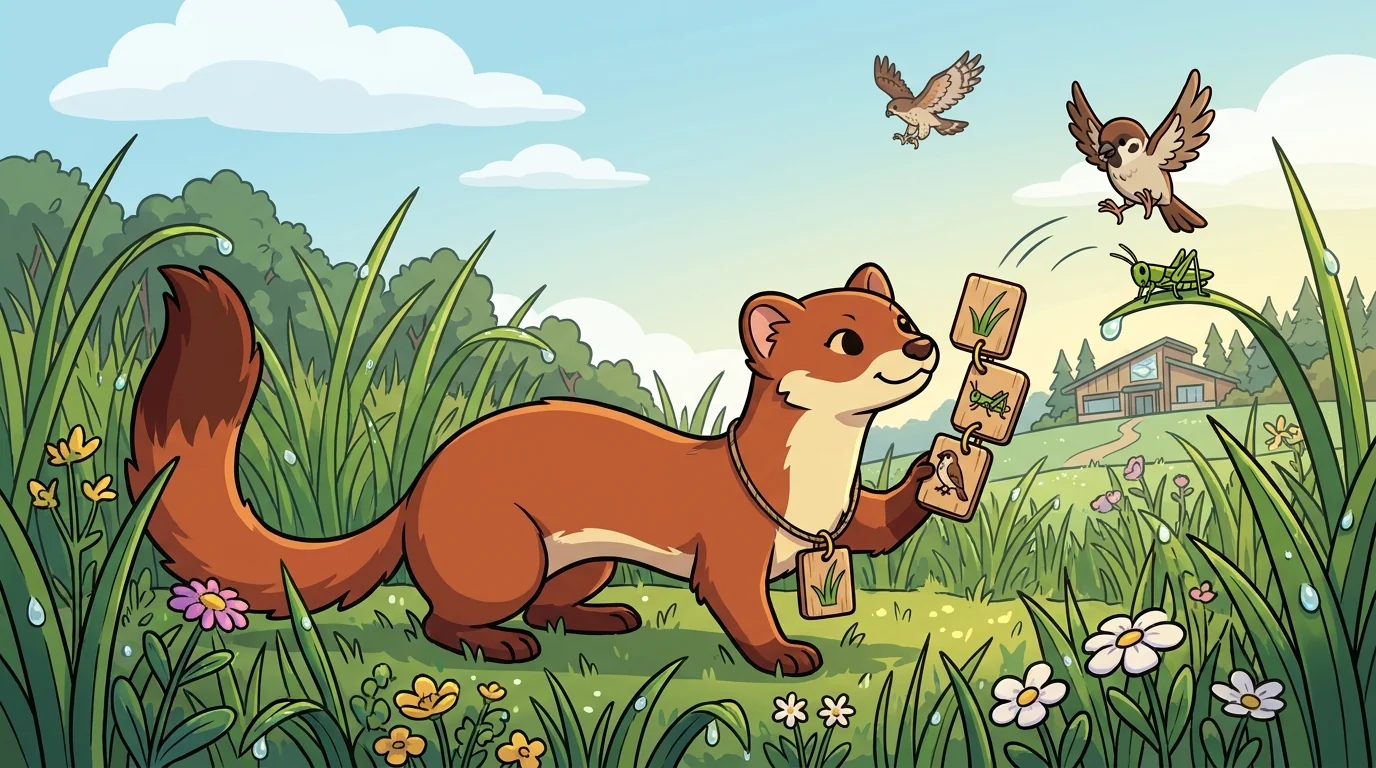
The meadow behind the nature center was still wet with dew when Chain crouched low over a single blade of grass. She was a long, slender marten, russet and cream, and she moved the way a question moves — quick-eyed, patient, leaning in. Around her neck hung a cord of tiny wooden cards, each one no bigger than a stamp, each painted with one living thing: a grass blade, a grasshopper, a sparrow, a hawk. The cards were joined by small brass rings.
A grasshopper clung to the blade in front of her. She lifted the sparrow card from her cord — and, because the cards were joined, the grasshopper card rose with it, and the grass card rose after that. She tilted her head. Overhead, a real sparrow dropped, snatched the real grasshopper, and beat away toward the treeline where a hawk was circling. Chain watched the whole line pull taut in the air, the way her cards pulled taut on the cord. She smiled to herself. Sunlight had gone into the grass. The grass had gone into the grasshopper. And now it was climbing, link by link, toward the hawk. She let the cord settle back against her chest, feeling each little card knock gently into the next.
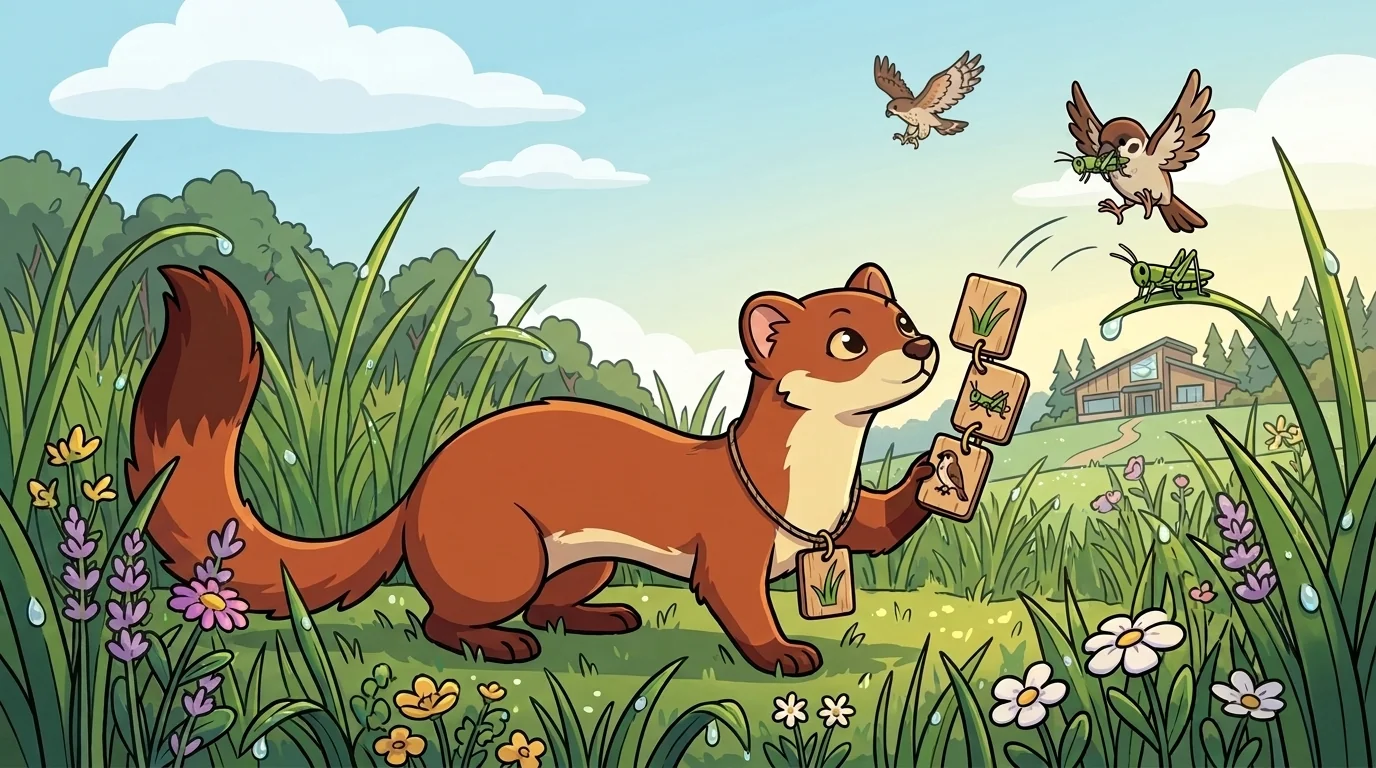
Chain had learned to feel that pull long before she could name it. Her family, back in their village, made chains — real ones, hand-carved from wood, brass-ringed, hung out for festivals or strung into pendants and long counting-beads. As a small kit she had sat at her grandmother's elbow while the old marten shaped one ring to fit the next, and the next, testing each join by tugging.
"Pull here," her grandmother would say, and hand her the finished loop.
Chain would pull on the top link, and the whole chain would lift — every link, all the way to the bottom.
"Now take one out from the middle," her grandmother said once, "and see what holds."
Chain had worked a lower link free. The chain fell into two dead pieces in her paws. Everything above the gap had nothing left to hang from. She had stared at it a long while, and something quiet had turned over inside her. There was no top of a chain, no bottom that mattered less. Take away any link and the ones above it simply had nowhere to stand.
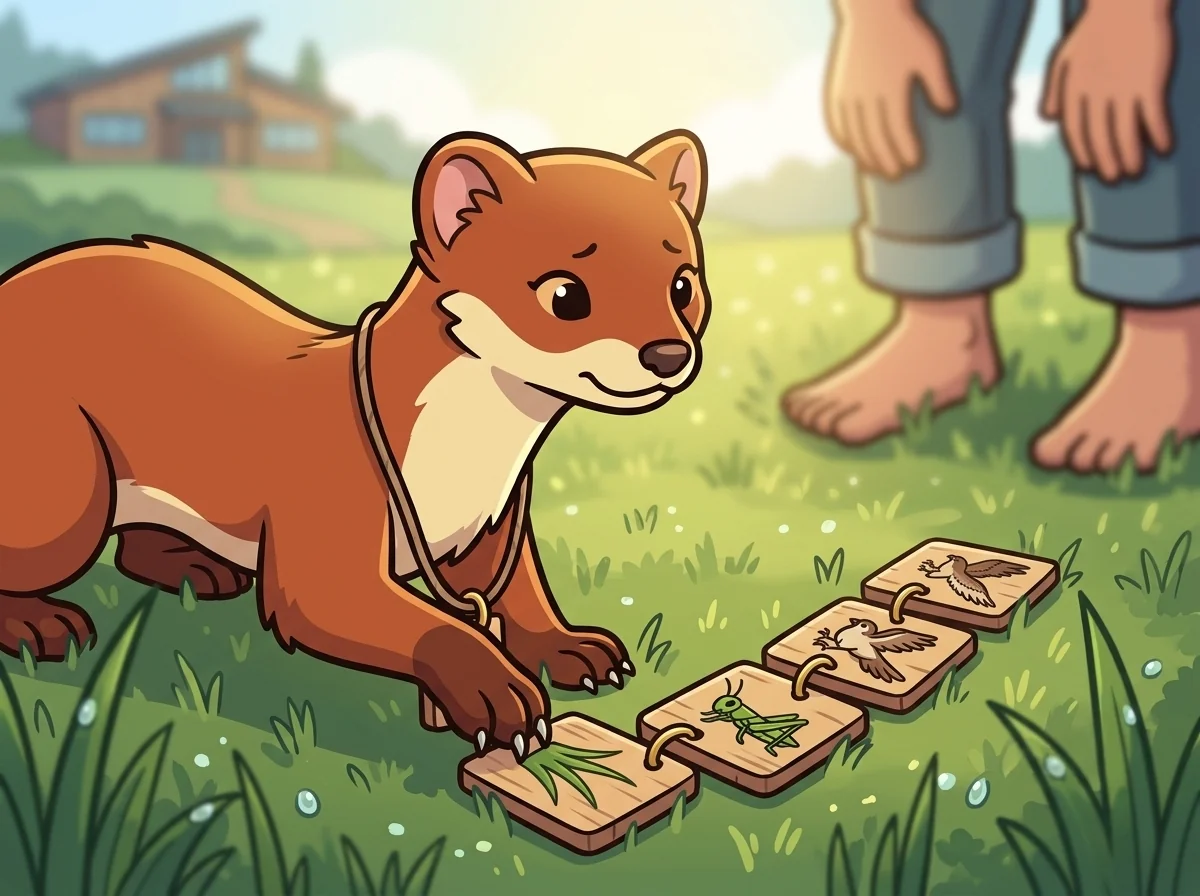
She was grown when she followed the river-path up to the nature center on the ridge. The old caretaker, Terra, met her at the meadow's edge, and instead of asking her name, Terra pointed at a hawk far up in the blue and asked what held it there.
Chain unhooked her cord and laid the cards out flat in the grass, bottom to top: grass, grasshopper, sparrow, hawk. She touched each in turn as the line climbed.
"Sunlight goes into the grass," she said. "The grass into the grasshopper, the grasshopper into the sparrow, the sparrow into the hawk. Only a little of it makes the next jump — most slips away as warmth. That is why the line is short." She rested one claw on the very bottom card. "And nothing up here stands without this. Take the grass away, and the hawk has nowhere to stand."
Terra was quiet for a moment, then said only, "Then you should stay."
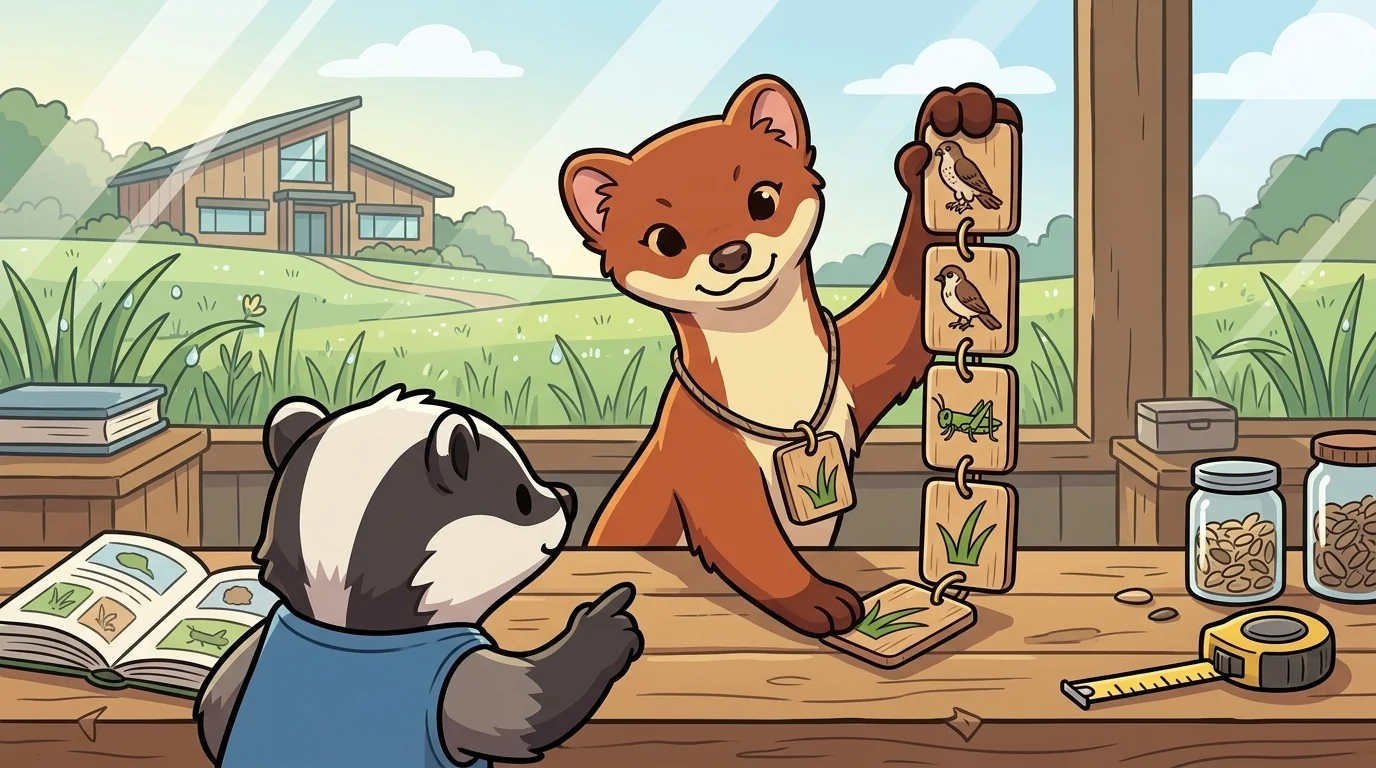
Now, on the first morning with a new group, Chain always begins the same way. She lays her cards on the workbench in a standing column — grass at the base, grasshopper, then sparrow, then hawk at the crown — and lets a curious kid come close.
One morning it was a badger named Pel, who jabbed a claw at the top card. "So the hawk's the boss," Pel said. "The strongest one wins, right?"
Chain didn't flinch, and she didn't scold. She lifted the whole column gently by the hawk card, and the sparrow rose, and the grasshopper rose, and the grass rose with them all.
"Watch what's really carrying whom," she said. "The hawk isn't strong because it's on top. The hawk is only there because the grass caught the sunlight, and the grasshopper carried it up, and the sparrow carried it higher. Pull the grass out—" she slid the bottom card free, and every card above it dropped to the bench "—and there's no boss left at all."
Pel stared at the little heap. "So the grass is holding everything."
"The grass is holding everything," Chain agreed. "It's not the least. It's the foundation. When you catch yourself calling one of them the winner, that's just an old story leaking in. Slide it back to who-carries-the-warmth-to-whom, and you'll see the meadow the way it actually is." She set the cards standing again, and Pel reached out and, very carefully, tugged the top to watch the whole line lift.
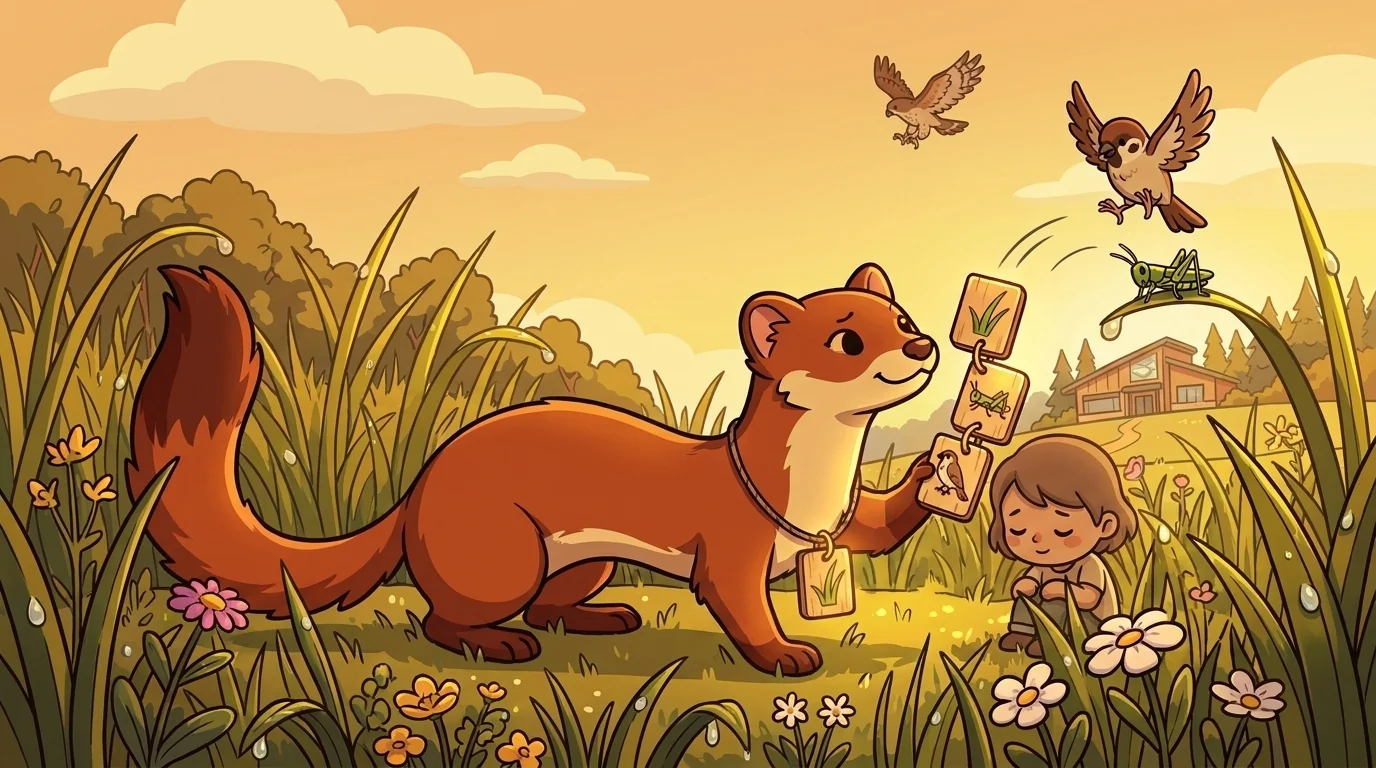
Later, when the group had gone and the light had turned gold across the meadow, a small quiet kid stayed behind and asked Chain if all this tracing was hard.
"It isn't hard," Chain said. She let her cord swing loose so the cards caught the low sun and knocked softly together. "You just follow the warmth up from the grass, one link at a time. The bottom holds the top. That's all."
The kid nodded slowly, and Chain noticed the way the small shoulders came down, unclenched, easy at last. Out in the meadow a sparrow lifted, and a grasshopper stayed, and the grass stood bright and steady under all of it — and Chain felt that same steadiness settle warm in her own chest, the calm of knowing that nothing up high stands alone, and that even the smallest thing at the bottom is quietly holding the whole world up.
The EcoSphere ensemble
Chain is part of EcoSphere's distributed-narrative cast. Each character embodies a different curricular primitive; together they teach the full subject.