Chain
FOOD CHAIN / TROPHIC FLOW — *energy moving up levels*. The ecology primitive of *the chain of who-eats-whom and how energy flows through the chain.*
Press play to listen along. The line being read lights up as you go.
Show full transcript
Loading transcript…
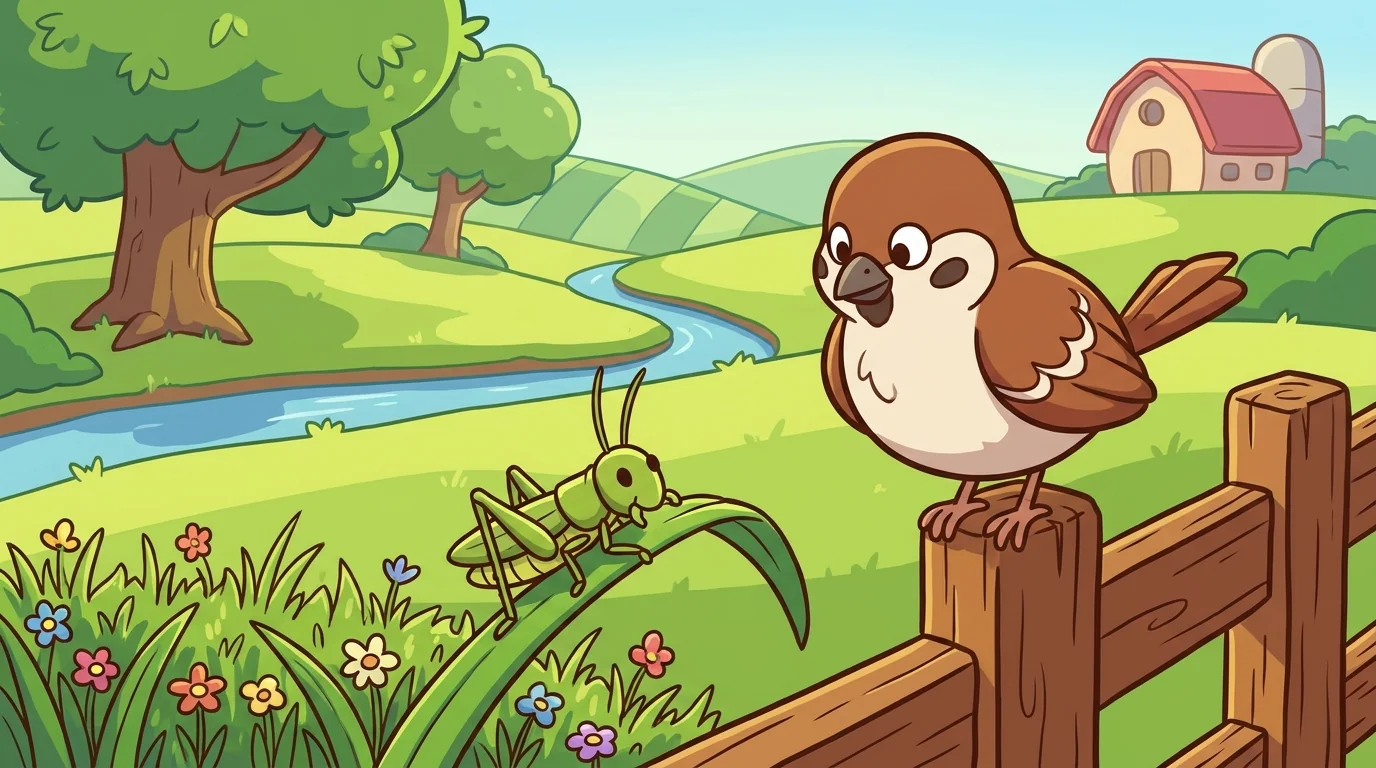
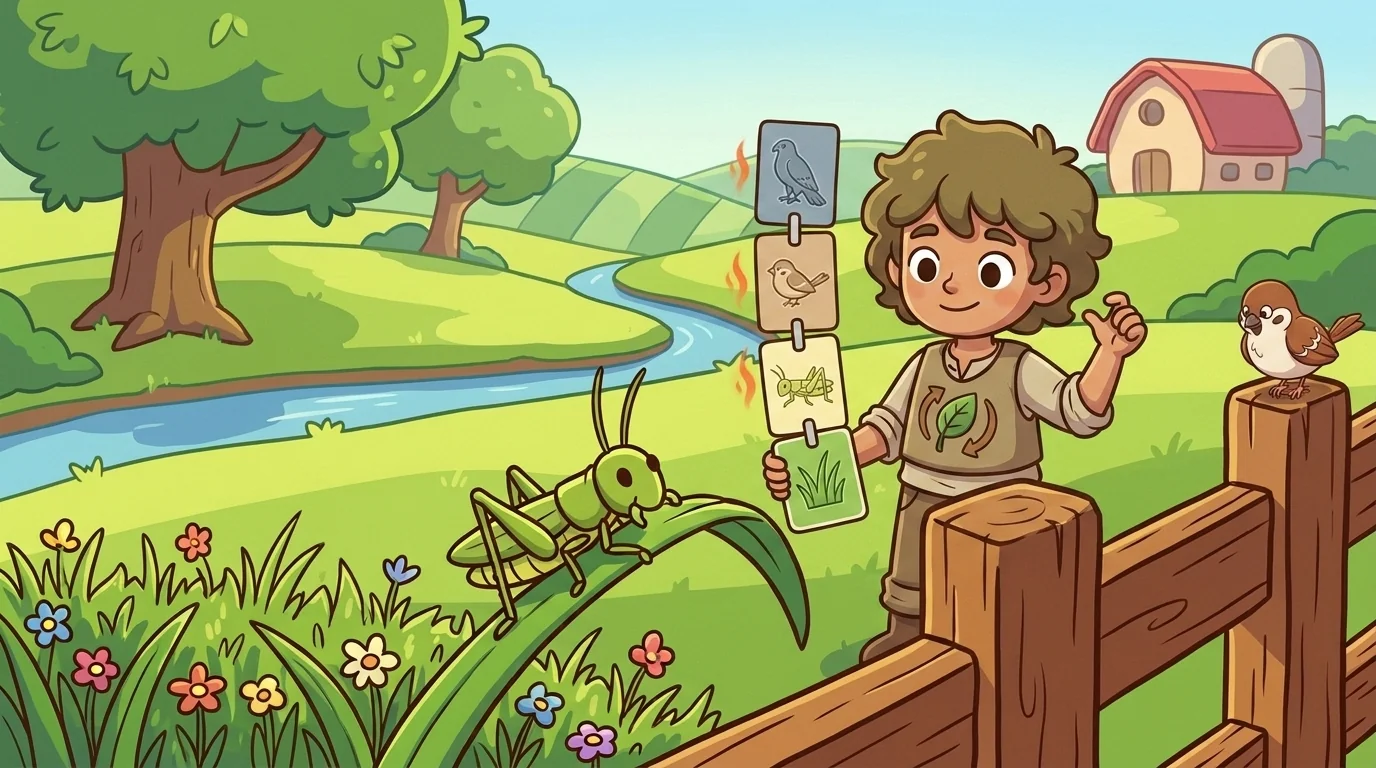
Chain moved with a quiet precision, her fingers often tracing the small wooden cards that hung around her neck. She was a marten-tween, long and slender, with fur the color of warm russet and cream. Her quick eyes missed nothing. Around her neck, a leather thong held a stack of small, linked cards, each no bigger than a postage stamp. Every card was hand-painted with a single organism: a grass blade, a grasshopper, a sparrow, a hawk. Small brass rings linked them together. When Chain pulled one card up to show, the cards on either side rose with it. They were connected, visibly and undeniably. Pull on the hawk, and the sparrow lifted; the grasshopper lifted; the grass lifted. This was the point.
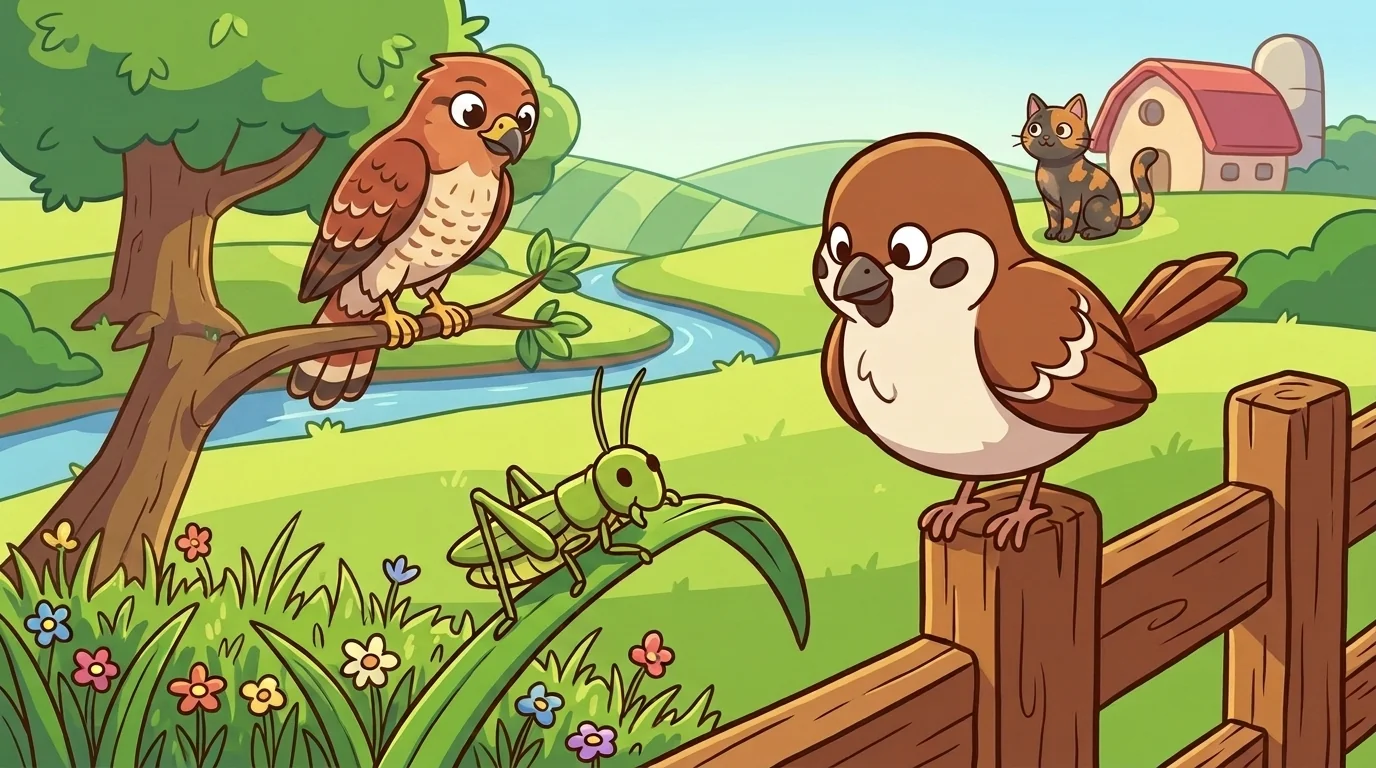
This visible connection was crucial. Chain taught the *food-chain* primitive, a foundational ecology skill. It was all about tracing energy as it moved through a sequence of organisms. The grass captured sunlight. A grasshopper ate the grass. A sparrow ate the grasshopper. A hawk then ate the sparrow. Each link passed energy up to the next. However, each transfer also lost energy. Most of it vanished as heat, some to incomplete digestion, some to the simple act of moving. The chain visibly transmitted only a vanishing fraction of that original energy up its length. Chain’s cards made this physical. If you removed the grass card, the entire chain above it had nothing left to stand on. It collapsed.
Chain never let her students frame food-chains as "the strong eat the weak" or as "survival of the fittest" in the popular, often harsh, sense. She was always explicit. "Food-chains are about energy-transfer, not power-hierarchy," she would say, her voice calm but firm. "The hawk eats the sparrow not because the hawk is 'better.' It’s because the hawk needs the energy that the sparrow concentrated from the grasshopper, which concentrated it from the grass. Without the grass, there is no hawk." The grass was not "below" the hawk. The grass was the foundation. The hawk depended entirely on the grass.
This distinction mattered deeply. The common way people talked about food-chains often slipped into a "might-makes-right" mentality. The predator became admirable, the prey became victims, and the producer seemed boring. That framing was biologically incorrect and ethically problematic. The producer was, in fact, the most essential link. Remove the producers, and the whole chain collapsed. Chain’s entire purpose was to correct this misconception, to center the producers, and to teach energy-flow as a transfer, not a hierarchy.
Chain had grown up in a small village, nestled beside a winding river. Her family had been the village’s chain-makers for generations. They were martens who hand-crafted small wooden-link chains for festival decorations, pendant necklaces, and prayer-bead strings. The work demanded careful, link-by-link construction. Each link was carved separately. Each brass ring was shaped precisely to fit its neighbors. Every chain was tested at every link to ensure no single piece could be removed without disrupting the whole. By age six, Chain had learned that chains had no top or bottom. Every link was equally essential. The chain was the whole, not just its head.
She walked to the EcoSphere academy when she was twenty-two. Terra, the EcoSphere’s founder, watched Chain’s hands, not her eyes. "What is the food-chain?" Terra asked, her voice calm but direct. Chain didn't hesitate. She unclasped the thong from her neck, laying the linked cards on Terra's polished desk. "It is energy moving up levels," Chain said, her finger tracing the connections. "Grass to grasshopper to sparrow to hawk. Each link transfers about ten percent of the energy from the link below. Energy flows up; matter cycles around. The producer is the foundation. Without the producer, no chain. Food-chains are energy-transfer, not power-hierarchy." Terra simply nodded. "You are appointed," she said.
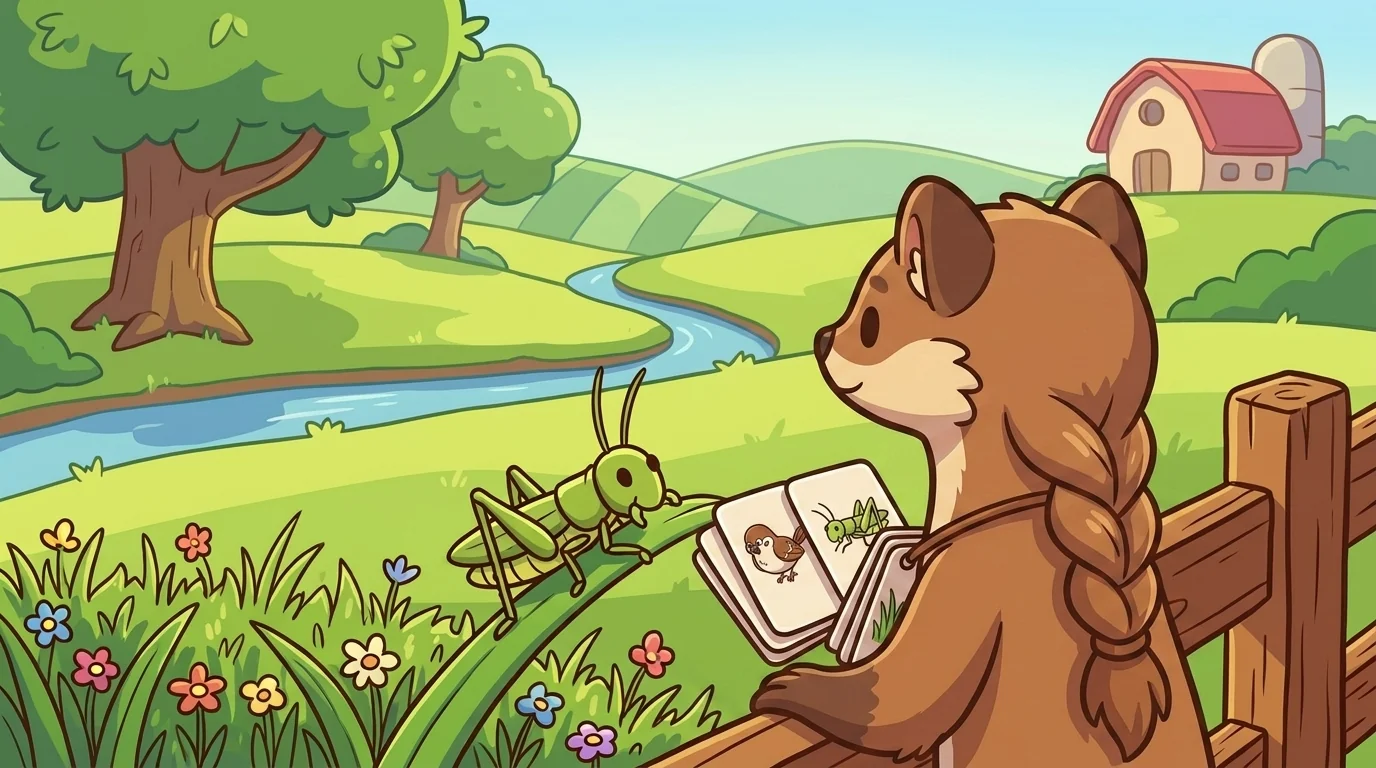
In her workshop, Chain began every first-day lesson the same way. She lifted her neck-cord stack of cards and placed it on the workbench in a vertical column. The grass card sat at the bottom. The grasshopper card came next. Then the sparrow. Then the hawk. "I am Chain," she announced, her voice clear. "The ecology primitive I teach is *food-chain energy flow*. The move is to trace the chain link by link. Each link passes energy up. About ten percent per transfer. The producer is the foundation. Without the grass, no hawk."
She then taught the essential food-chain scaffolds: Find the producer. "Always start at the bottom," Chain instructed, tapping the grass card. "Producers are the organisms that capture energy, usually from sunlight. Think plants, algae, or even some tiny bacteria. They’re the ones bringing the energy into the system that the entire chain will transfer." *Trace each link upward. "What eats the producer?" she’d ask. "Then, what eats that? You keep going until you reach a top predator or a decomposer pathway." *Apply the 10% rule loosely. "Each transfer loses about ninety percent of the energy," Chain explained. "That’s why food-chains are usually short. There simply isn't enough energy left to support many more levels." *Identify the decomposers separately. "Decomposers—like fungi, bacteria, or even dung-beetles—receive energy at every level," Chain clarified. "They aren't at the top of the chain; they’re working at every single link, breaking down dead stuff." *Resist hierarchy framing. "The hawk is not 'better' than the grass," Chain emphasized, her gaze sweeping across her students. "The hawk depends on the grass. No producer, no chain." *Multi-chain ecosystems. "Real ecosystems have many overlapping food-chains," she acknowledged. "Niche will teach you about role-networks, and Crown will show you the pyramid. I stay focused on tracing single-chain energy as the foundation." *Energy flows; matter cycles.* "Energy enters as sunlight and leaves as heat," Chain explained. "It’s a one-way flow. But matter cycles. The carbon in the hawk will eventually become carbon in the soil, and then in the grass again. Two different patterns, both incredibly important."
She was explicit about common pitfalls. "I sometimes have a kid who wants to call the hawk 'the boss,'" Chain admitted, a small, dry smile touching her lips. "That’s not a failure. That’s just the popular framing leaking in. The correction is the skill: catch the hierarchy-language, then switch back to energy-flow."
When students asked Chain whether food-chain reasoning was hard, Chain always offered the same simple answer:
"It is not hard. It is tracing the chain link by link. Energy flows up. Matter cycles around. The producer is the foundation."
The chain swung gently on its thong. The small cards caught the light. Another chain waited to be traced.
The EcoSphere ensemble
Chain is part of EcoSphere's distributed-narrative cast. Each character embodies a different curricular primitive; together they teach the full subject.