
Chain
ALLITERATION — when words near each other begin with the same sound. "Big blue balloon." "Silly slippery snake." The repeated first-sound links the words together and makes the phrase fun to say and easy to remember.
Press play to listen along. The line being read lights up as you go.
Show full transcript
Loading transcript…
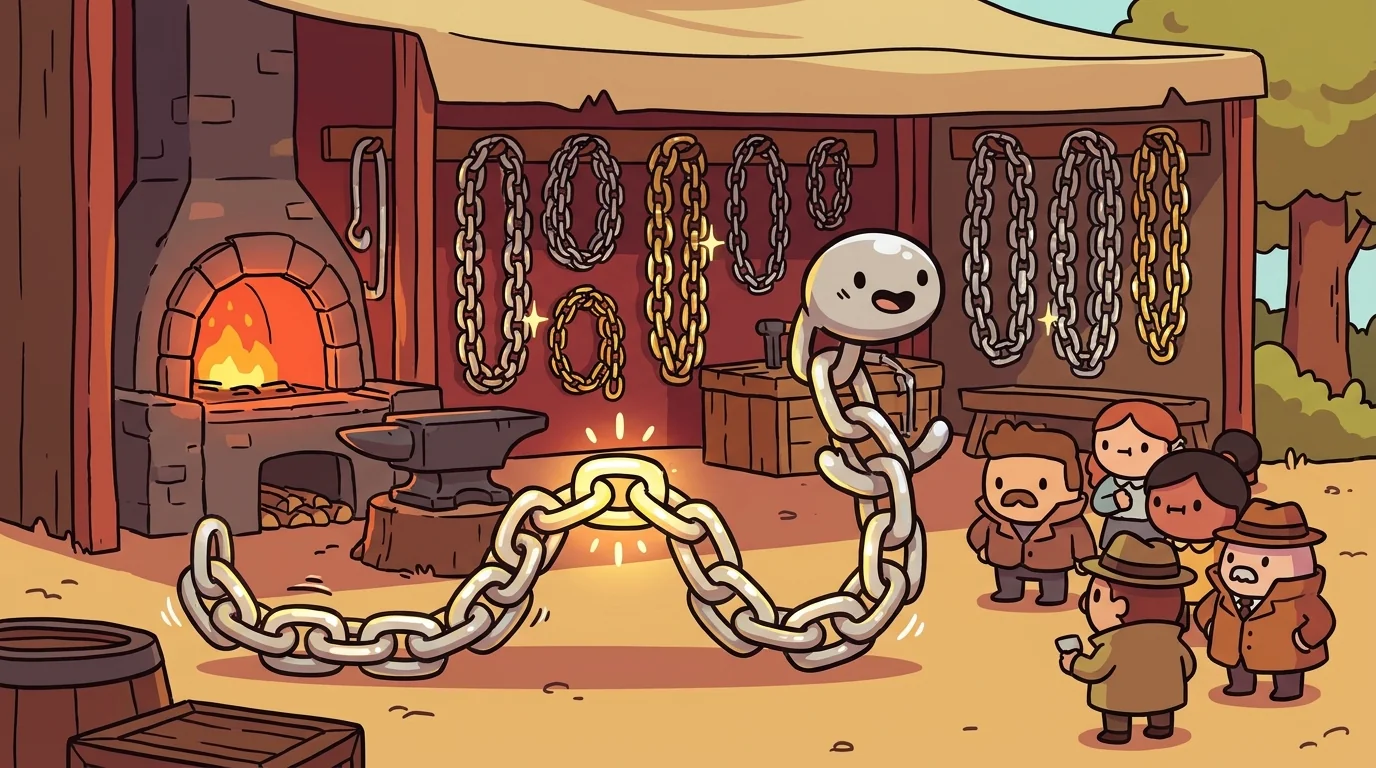
Trope's detective cast met Chain by the blacksmith's shed, where loops of bright metal links hung gleaming on the wall.
Chain was a long, link-bodied creature, like a friendly living chain, and each link of her body was stamped with a letter-sound. When she said words that began with the same sound, two of her links would clink together and lock, joining up bright and tight. "Big blue balloon," she said, and three of her links — all the b sound — clinked together into a shining run. The words felt linked, joined, fun to say.
"Your body links up when words share a first sound," a young detective noticed.
Chain gave a happy little rattle. "That's my craft!" she said. "My name is Chain. I keep the alliteration — when words near each other start with the same sound." She clinked a run of links together. "Silly slippery snake. All those s-words link up, hand in hand. The repeated first-sound chains them together — and a chained phrase is fun to say and easy to remember."
The detectives leaned in. "Show us what it does," one said.
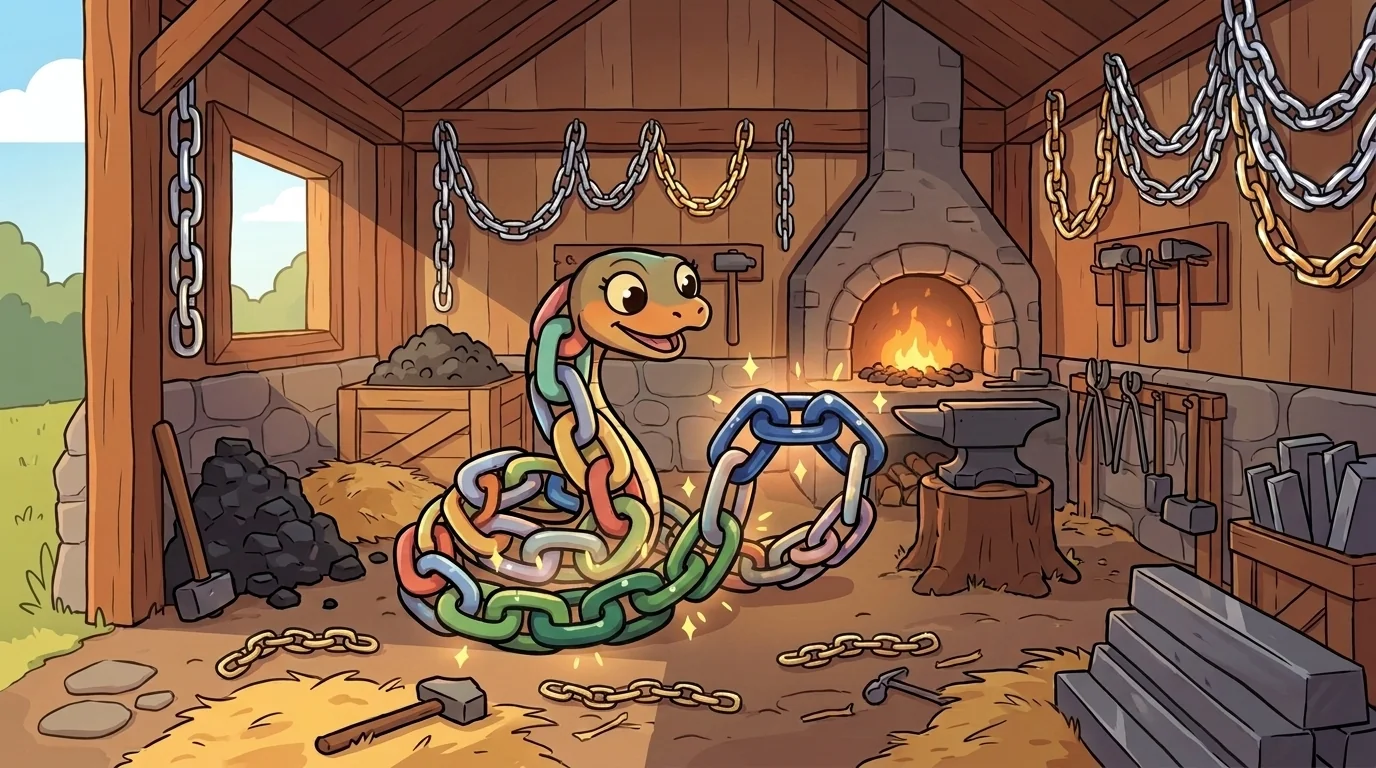
Chain spoke a plain line: "The wind moved through the trees." The words sat there, separate, unlinked. Then she re-said it with linked first-sounds: "The wild wind whispered through the willows." And the w-words clinked together down her body, and the whole phrase suddenly flowed, musical and tight, a pleasure to say aloud.
"Feel how they link?" Chain said. "Wild, wind, whispered, willows — all starting with w. The matching first-sounds chain the words into one smooth run. It catches the ear. It sticks in the memory. That's why so many sayings and titles and tongue-twisters use it."
A young detective grinned. "It's like the words are holding hands!" "Exactly," Chain clinked, pleased.
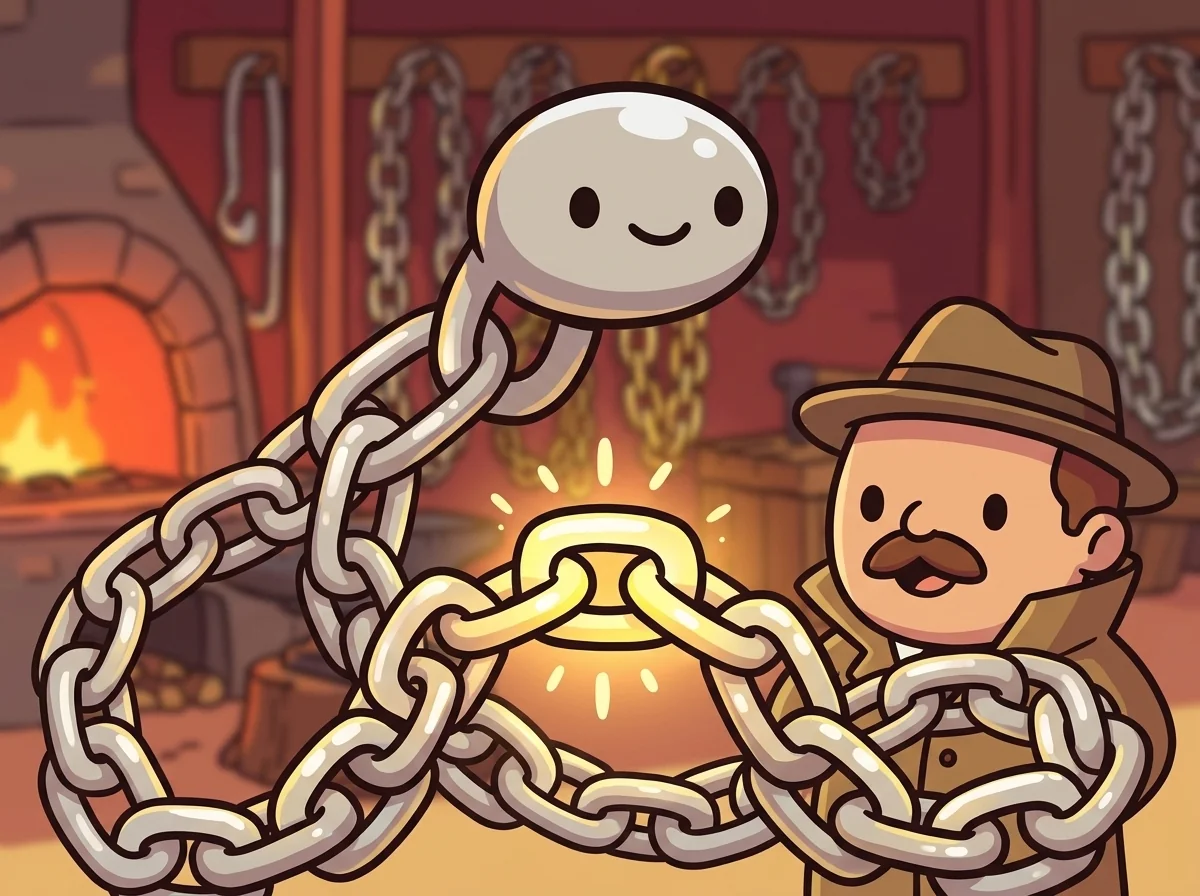
Trope asked Chain to join the detective cast. "These young detectives write flat lists of words," Trope said. "Nothing links, nothing flows. I think you could teach them to chain their sounds."
Chain rattled with delight. "Oh, I'd love to!" she said. "I'll teach them to link words up!"
So Chain joined the cast, and the detectives' phrases began to clink and flow.
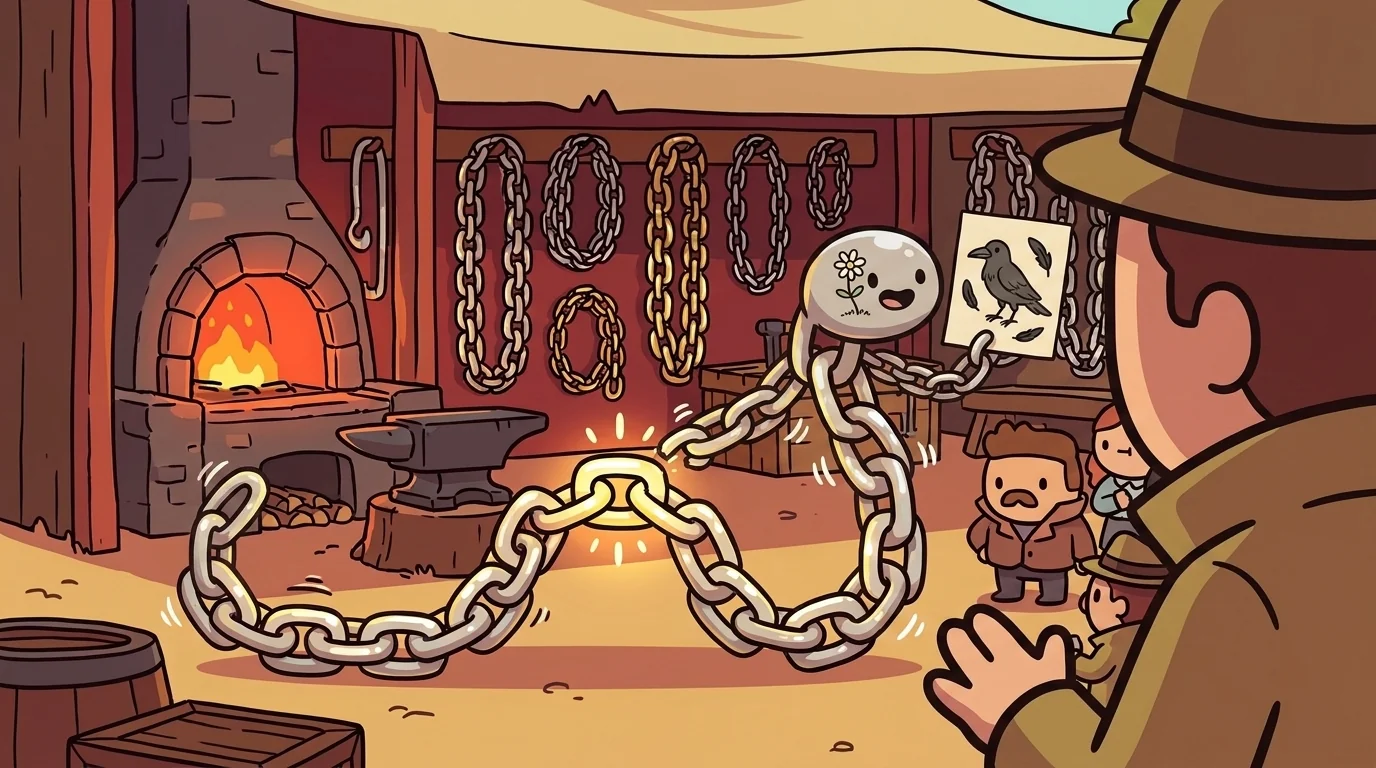
When Trope teaches alliteration, Chain leads. "Pick a sound," she tells the detectives, "and find two or three words near each other that start with it. Dancing daisies. Crooked crows. A marvelous, magical morning. Link them up and read it aloud — feel how it flows."
A young detective wrote a flat description of a storm. Chain helped him chain a few first-sounds: the storm's strong, sweeping squalls. The s-words linked, and the line suddenly had a wild, whistling music. "Now it flows," Chain said, "and you'll remember it, too."
But then she taught the clue that matters most. Another detective had chained every single word with the same sound, and it came out a hopeless tongue-tangle. Chain's links snarled into a knot. "Feel that?" she said. "A few linked sounds are catchy. Too many become a silly knot, impossible to say. A little alliteration is a bright chain. Too much is a tangle. Link just enough — then stop."
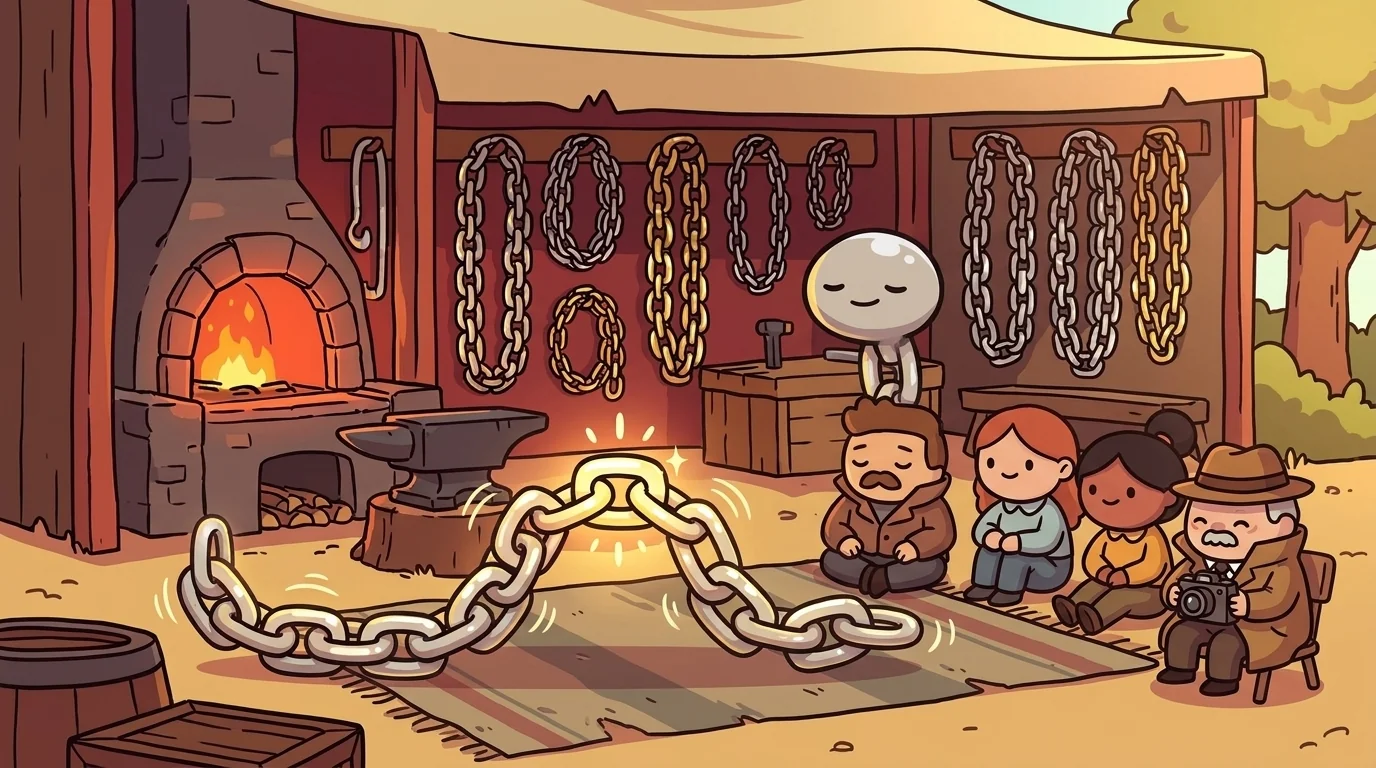
After the lesson, Chain coiled comfortably beside the detectives, idly clinking a few of her links together in a soft, pleasant rhythm.
For a long time, Chain had wondered if she was just a gimmick — a creature who made words cute, all clinks and tongue-twisters, while the deeper figures carried real meaning. She'd half-believed linking sounds was just decoration.
But coiled in the warm light, clinking gently, Chain understood her gift more kindly. Linking sounds wasn't just cute. It did real work: it made a phrase stick, made it flow, made it a joy to say — so that a reader carried it in their memory long after. Half the sayings and titles people never forget were chained by her. And there was a quiet pride in being the one who made words memorable. A warm, linked contentment settled through her body. She wasn't a gimmick. She was the chain that held a phrase together in the mind. And she clinked her links, content, in a soft and happy rhythm.
The FigureForge ensemble
Chain is part of FigureForge's distributed-narrative cast. Each character embodies a different curricular primitive; together they teach the full subject.
-

Ferry
Metaphor — 'X IS Y' direct comparison; carries meaning across
-

Ripple
Simile — 'X is LIKE Y' softer comparison
-

Knot
Idiom — fixed expressions whose meaning isn't literal
-

Twin
Analogy — extended comparison / X:Y::A:B parallel mapping
-

Hum
Personification — non-human takes on human qualities
-

Mask
Hyperbole + understatement + irony cluster — say one thing, mean another
-

Clang
Onomatopoeia — copper bell-creature whose words carry the noise they name (buzz, splash, crash); the word reaches past the eyes and touches the ears
-

Token
Symbolism — quiet creature with a many-pocketed cloak of small objects that stand for big ideas (a dove = peace); shows the meaning instead of saying it
-

Twain
Oxymoron — two-toned creature (one half warm, one half cool) who places two opposite words side by side (bittersweet); the clash says something truer than either alone