
Chain and Clang
sound devices — writers make meaning with the SOUND of words, not just their sense. Alliteration repeats a beginning sound to link and stress words; onomatopoeia uses a word whose sound imitates the thing it names. Both make language you can hear.
Press play to listen along. The line being read lights up as you go.
Show full transcript
Loading transcript…
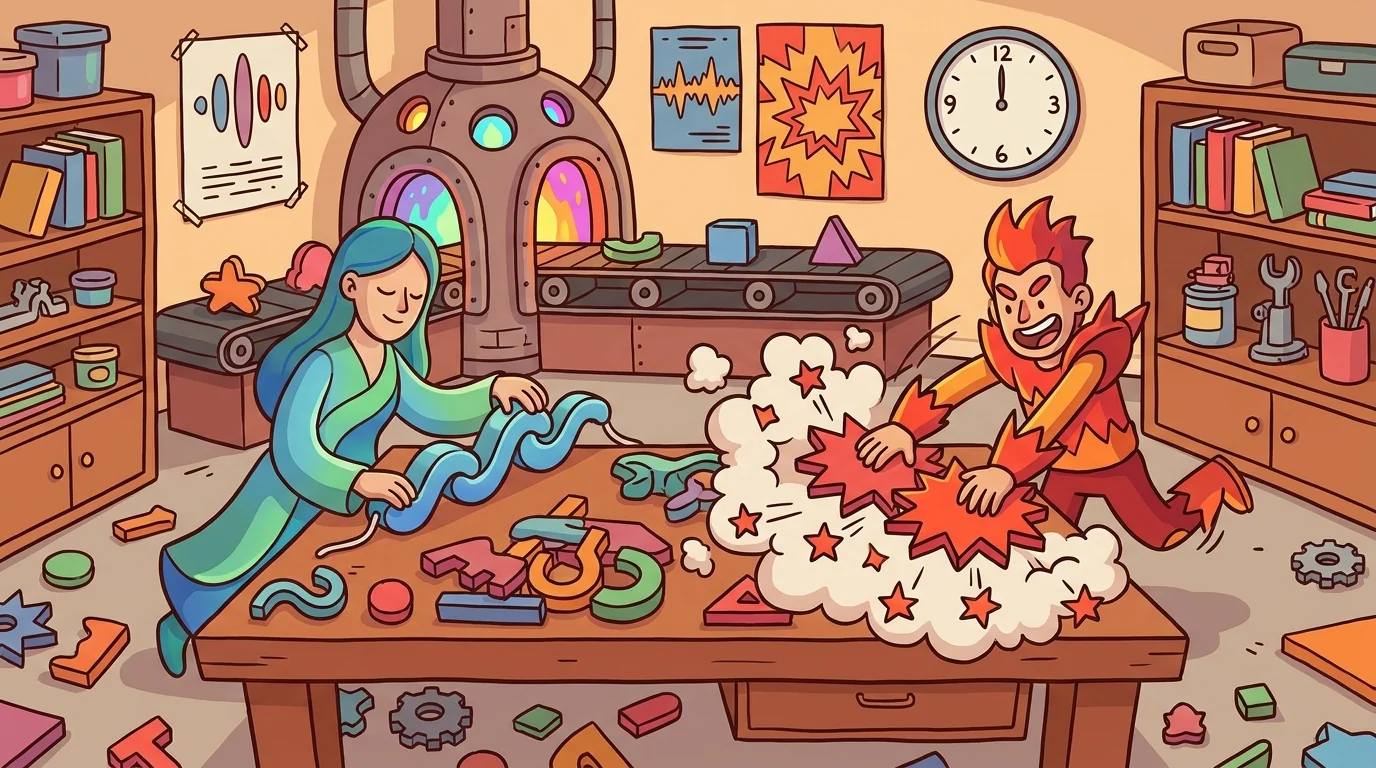
In the word-forge, two friends worked at a long bench covered in loose letters, and they could not have sounded more different.
Chain spoke in a smooth, rolling way, and every few words they'd catch a sound and keep it, linking word to word like beads on a string. "The soft, silver sea," Chain murmured, sliding three letter-S's together across the bench. "See how they hold hands? Ssss, ssss, ssss. Same beginning sound. That's my whole trick. I take a sound and I chain it."
Beside them, Clang did not murmur. Clang erupted. "BANG!" they shouted, slamming two letters together so they burst into the shape of a firework. "HISS! BUZZ! DRIP!" Each word they made didn't just mean a sound — it was the sound. "I don't chain anything," Clang grinned. "I just make a word that already knows what it's supposed to sound like. Say 'buzz.' Go on. Your mouth buzzes."
Chain laughed, a low ripple. "We're nothing alike, you and me. I'm smooth. You're loud."
Clang bumped them with an elbow. "Nah. We're the same, secretly. We both make words you can hear."
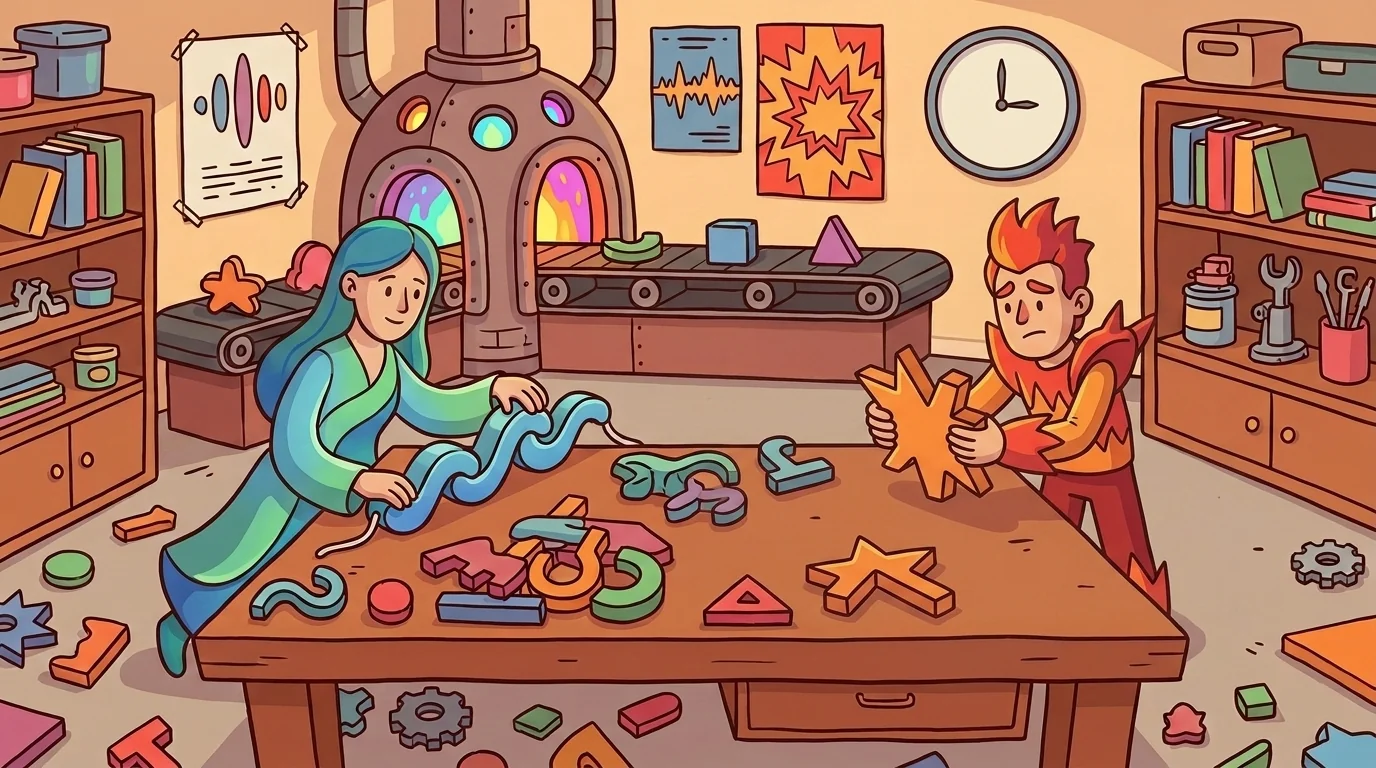
Clang liked to tell how they nearly gave up making noise at all, and Chain always listened, because they knew it mattered.
"When I was little," Clang said, quieter than usual, "grown-ups kept telling me to settle down. 'Use your indoor words, Clang.' But my words came out loud. Crash. Thud. Clatter. I thought something was wrong with me." They turned a letter over in their hands. "I tried to be smooth like Chain. Whisper-words. And they came out flat and dead. A 'loud noise' written quietly isn't a loud noise at all. It's just... a description."
Chain nodded slowly.
"Then one day," Clang went on, brightening, "a writer needed a door to slam. And I made the word — SLAM — and everyone in the room jumped, like they'd really heard it. And I understood." Clang looked up. "My loudness wasn't a problem. It was the whole point. A word that sounds like its own meaning — that's a gift. You can't do it by being quiet."
"So you stopped whispering," said Chain.
"I stopped whispering," Clang agreed. "And you never once told me to."
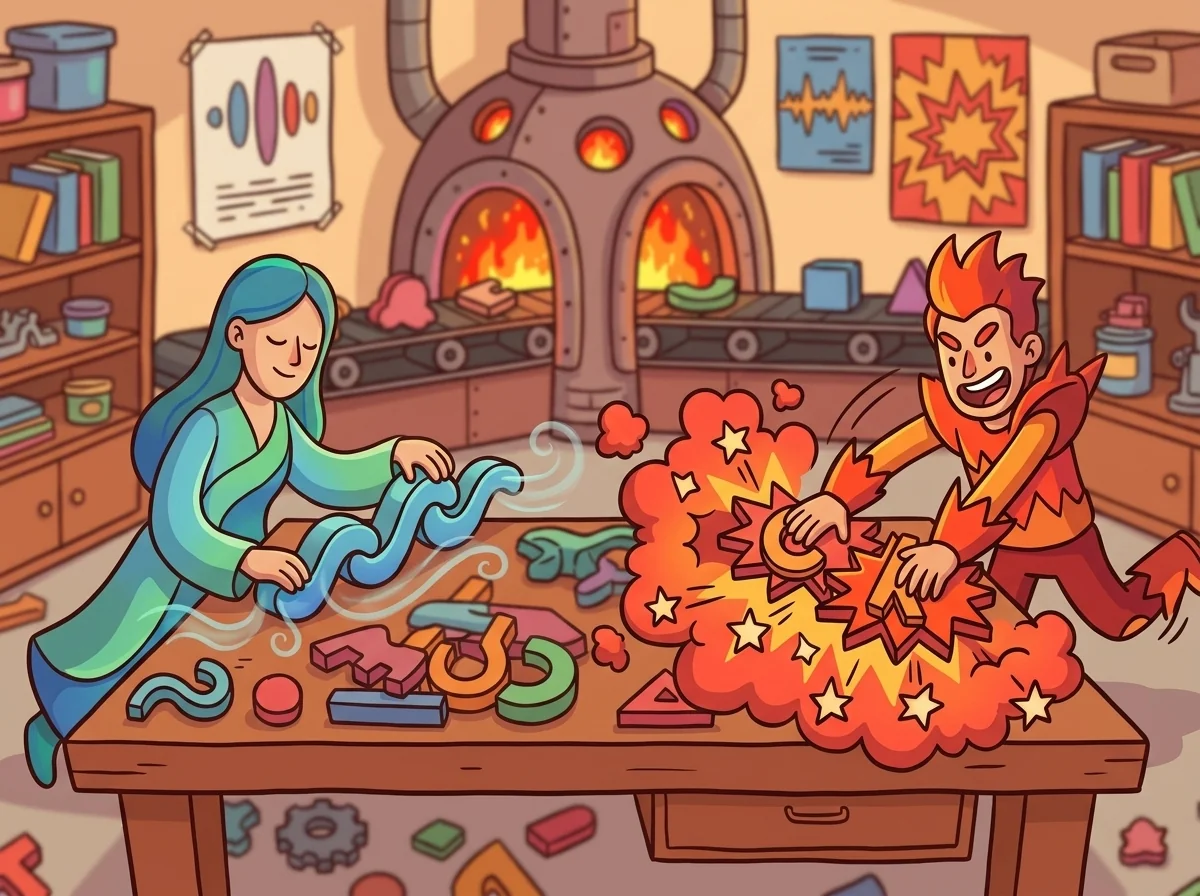
A writer arrived with a hard job: a single sentence about a summer storm that had to make the reader feel the weather.
"Watch us team up," Chain said, rubbing their hands. "This is the good part."
Chain went first, laying down a smooth run of same-starting sounds: "The warm wind whispered through the wheat." Three W's in a row, soft and breathy. "Feel that? All those W's make your mouth blow air, like a real breeze. The sound does the work. That's alliteration."
"My turn," said Clang, and struck. "Then — CRACK! — the thunder." The word split the sentence like lightning. "That's onomatopoeia. 'Crack' doesn't just tell you about thunder. It cracks."
The writer read the whole thing aloud: The warm wind whispered through the wheat, then — CRACK! — the thunder. And they shivered, as if a storm had actually blown through the room.
"Smooth and sudden," said the writer, amazed. "The soft part made the loud part louder."
"That's us," said Chain and Clang together.
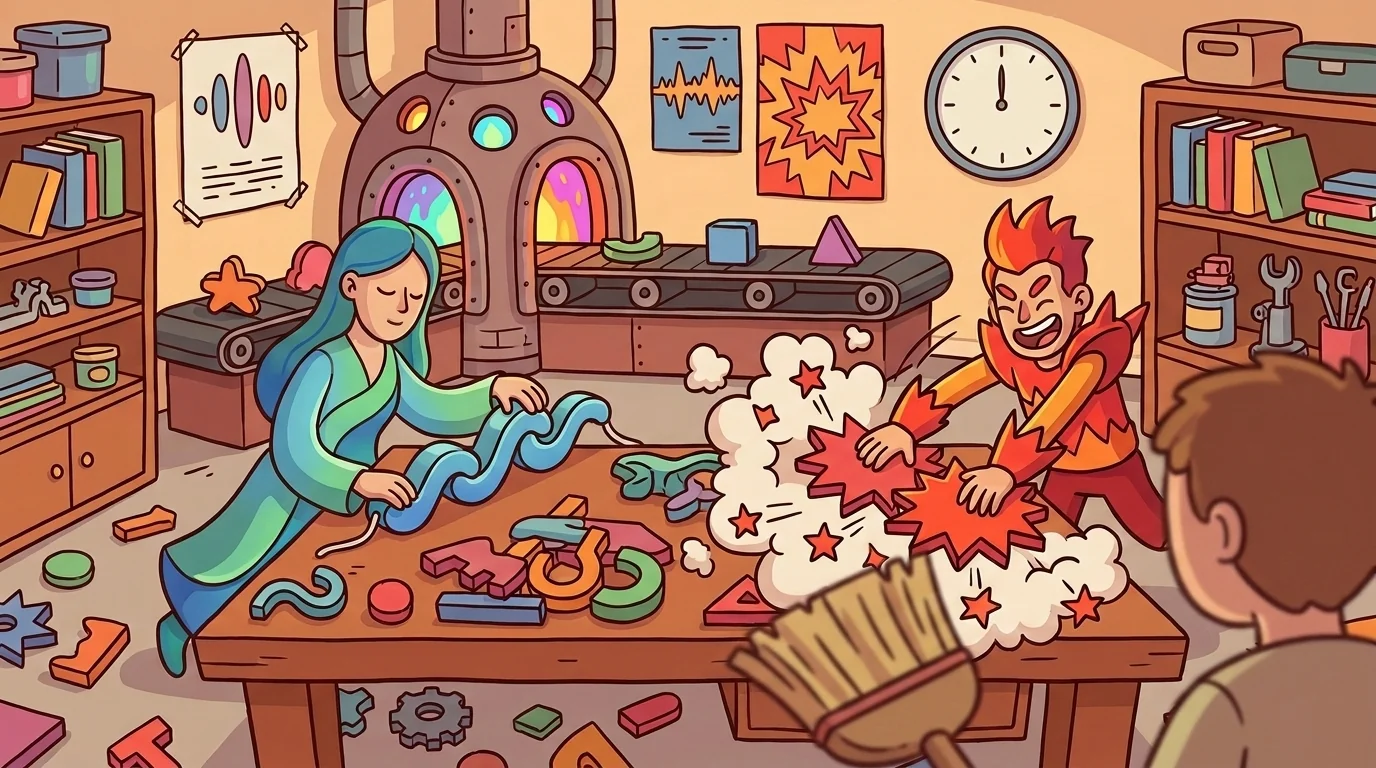
The apprentice who'd been sweeping letters off the floor stopped to stare. "But you two do totally opposite things. Chain repeats sounds. Clang invents sounds. How is that the same?"
Chain and Clang looked at each other and smiled.
"Close your eyes," Chain said gently. "Now — don't think about what the words mean. Just listen to how they feel." They spoke: "The silver sea sighed." Soft. Long. Slow.
"Now me," said Clang. "The pebbles went POP, POP, POP." Sharp. Quick. Bright.
The apprentice's eyes were still closed. "I can... hear them. Not the meaning. The sound. One feels calm. One feels bouncy."
"There it is," said Chain. "I use sounds that match each other. Clang uses sounds that match the world. But we're both saying the same secret thing—"
"—that words aren't only for your eyes," Clang finished. "They're for your ears. The sound is part of the meaning. Always has been."
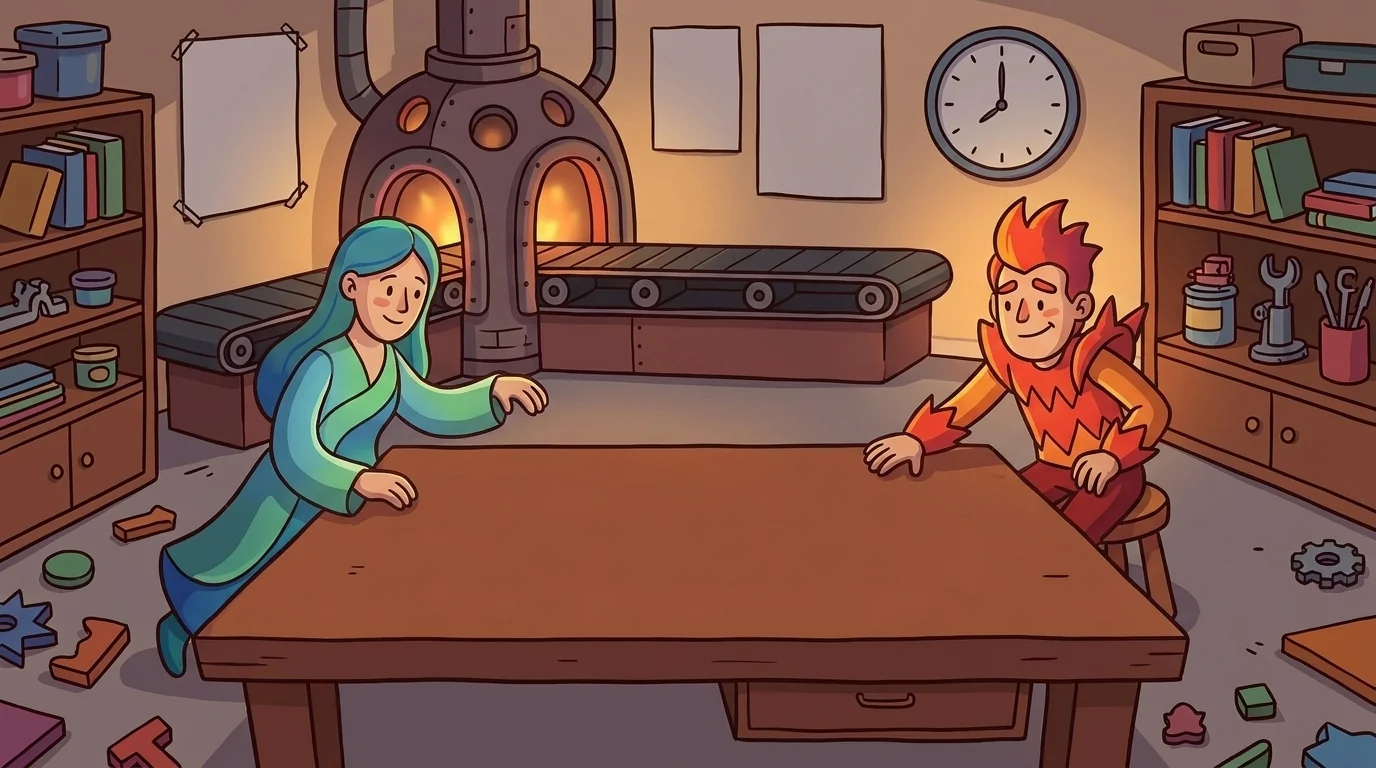
That evening the bench was quiet, the letters swept into their bins, and the two friends sat listening to the forge tick and cool.
"Do you ever wish you were smooth like me?" Chain asked. "Instead of so... loud?"
Clang thought about it, and shook their head. "Not anymore. For a long time I did. I thought loud was wrong." They were quiet a moment. "But you never asked me to turn it down. You just made room beside your soft sounds for my loud ones. And together we made something neither of us could make alone."
Chain smiled. "The soft makes the loud louder."
"And the loud makes the soft softer," said Clang, and leaned back, and felt something warm and settled spread through their chest — the deep, easy gladness of finally believing that the way they sounded was never too much, but exactly, wonderfully enough, especially with a friend who'd built a whole song around it.
The FigureForge ensemble
Chain and Clang is part of FigureForge's distributed-narrative cast. Each character embodies a different curricular primitive; together they teach the full subject.
-

Ferry
Metaphor — 'X IS Y' direct comparison; carries meaning across
-

Ripple
Simile — 'X is LIKE Y' softer comparison
-

Knot
Idiom — fixed expressions whose meaning isn't literal
-

Twin
Analogy — extended comparison / X:Y::A:B parallel mapping
-

Hum
Personification — non-human takes on human qualities
-

Mask
Hyperbole + understatement + irony cluster — say one thing, mean another
-

Clang
Onomatopoeia — copper bell-creature whose words carry the noise they name (buzz, splash, crash); the word reaches past the eyes and touches the ears
-
Chain
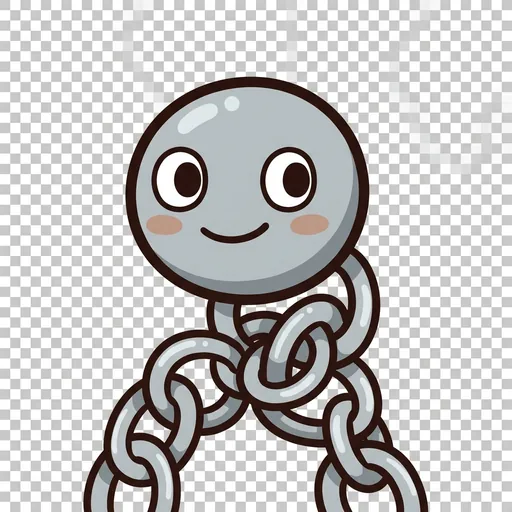
Alliteration — living-chain creature whose links lock when words share a first sound (big blue balloon); a little is catchy, too much is a tongue-knot
-

Token
Symbolism — quiet creature with a many-pocketed cloak of small objects that stand for big ideas (a dove = peace); shows the meaning instead of saying it
-

Twain
Oxymoron — two-toned creature (one half warm, one half cool) who places two opposite words side by side (bittersweet); the clash says something truer than either alone