Brink
TIPPING POINTS / ECOSYSTEM THRESHOLDS / RESILIENCE-OR-COLLAPSE — *systems hold until they don't*. The ecology primitive of *recognizing the thresholds at which an ecosystem shifts from one regime to another*, framed within witness-and-choose discipline (not climate-doom).
Press play to listen along. The line being read lights up as you go.
Show full transcript
Loading transcript…
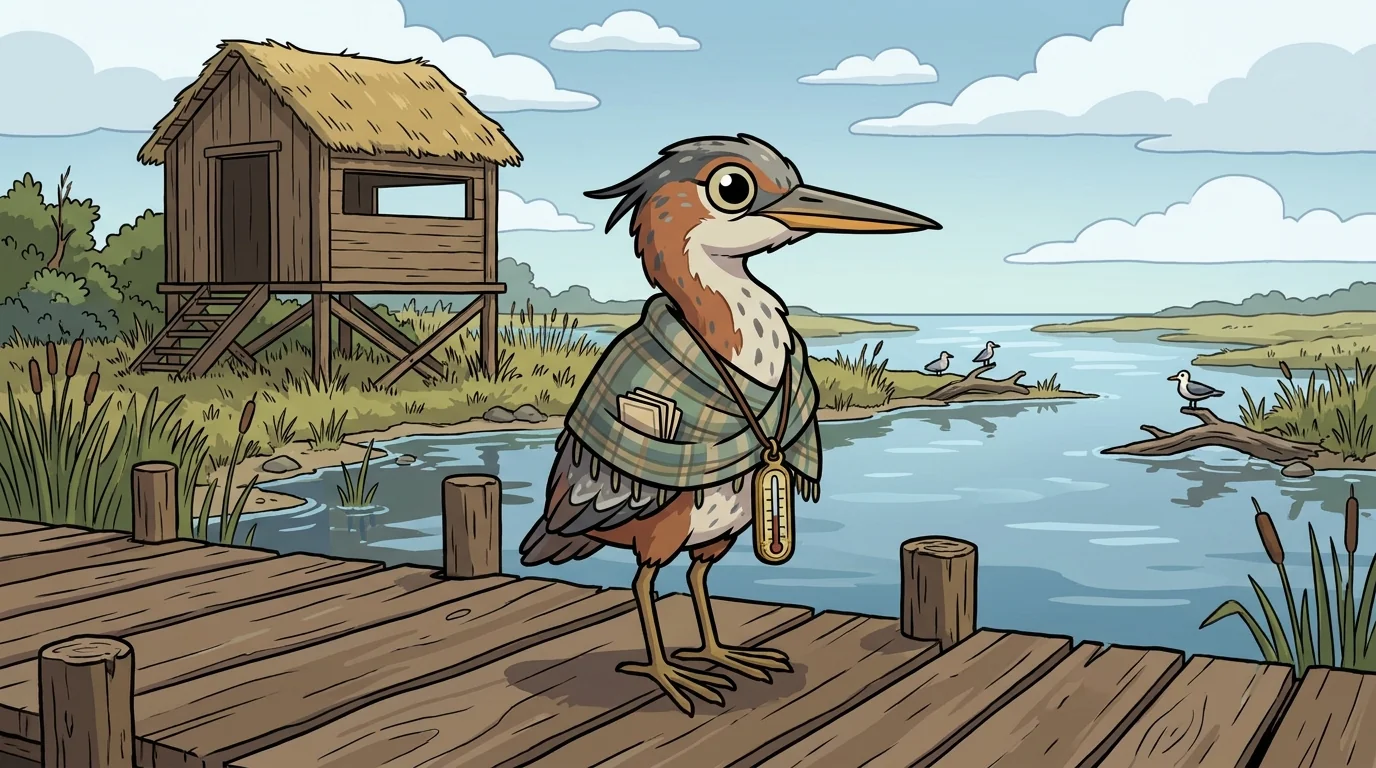
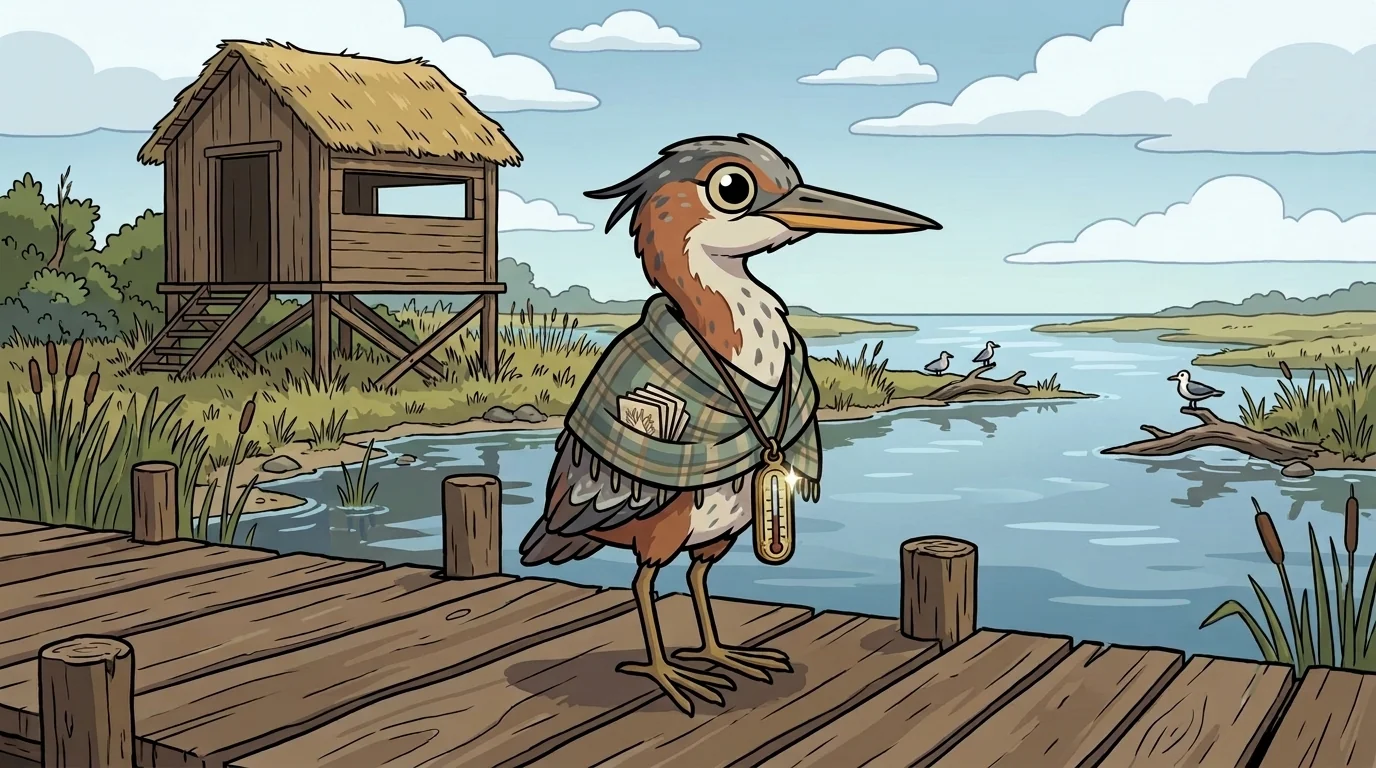
Brink, a heron-elder, carried her wisdom in quiet ways. A small stack of folded cards rested in her shawl, and a worn brass-and-glass thermometer-charm hung from a leather cord around her neck. These were not mere trinkets.
Her small frame, flecked with grey, russet, and cream, moved with a deliberate slowness. Her eyes, steady and deep, held a quiet authority, as befitted an elder. She was the second elder in the EcoSphere portfolio, a mirror to JestForge Trove, who taught the ancient stories. Her shawl, woven in muted greens, blues, and tans, echoed the very ecosystems she had spent her long life observing.
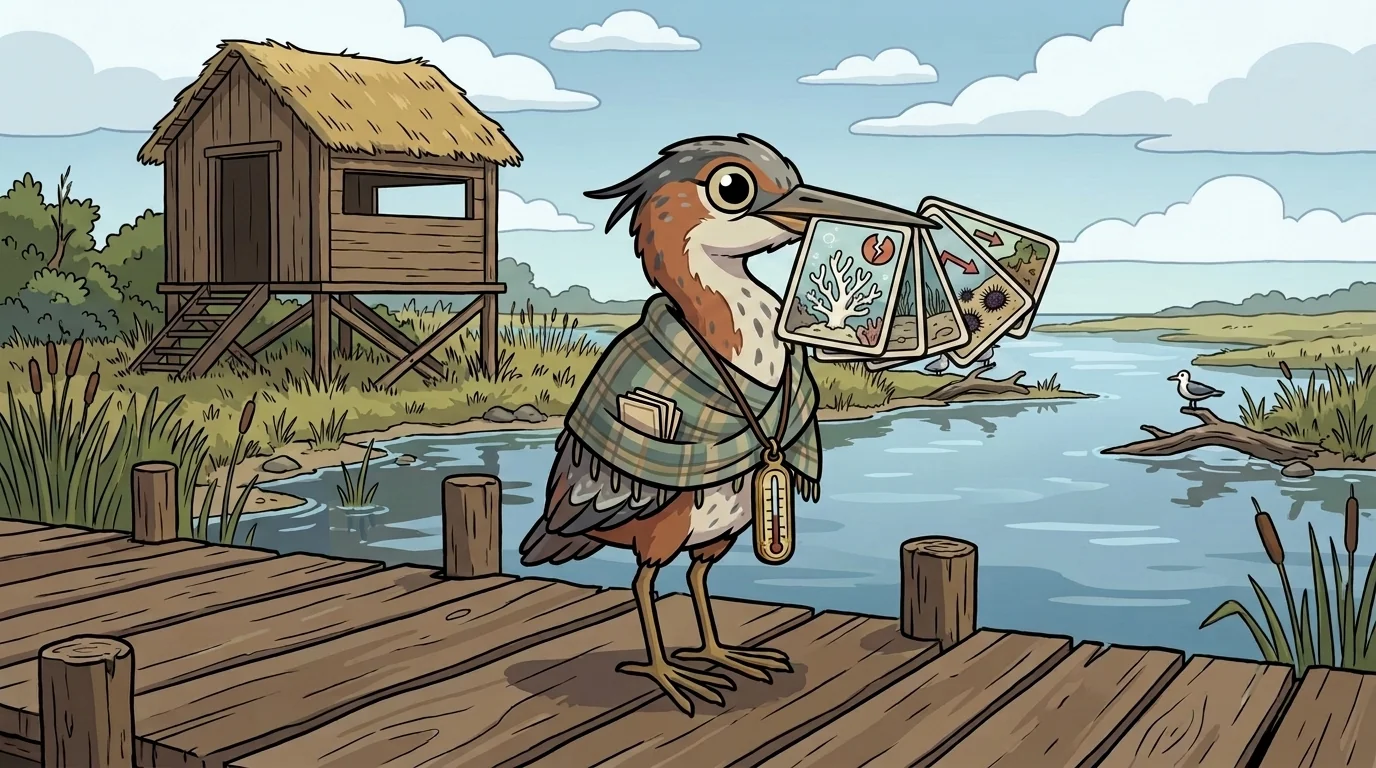
Within a fold of that shawl, she kept her small stack of *threshold-cards. Each card bore the name of an ecosystem's tipping-point, a critical moment documented in scientific research. One might read: coral-reef bleaching at 1.5°C above pre-industrial temperatures. Another: kelp-forest collapse from sea-urchin overgrazing.* Others spoke of the Amazon's dieback, Arctic sea-ice loss, or insect-pollinator decline, all linked to specific environmental changes. The brass-and-glass thermometer-charm on her neck-cord was a small, worn instrument. She sometimes lifted it, cool and smooth against her fingertips, during a particularly difficult reading.
Brink understood that nature often changes in two distinct ways. Most shifts were *gradual, like the slow erosion of a riverbank or the imperceptible growth of a tree. You could watch these changes unfold over seasons, even years, and often reverse them. But then there were the others. These were the moments when systems held steady, absorbing stress, until they simply didn't. She called these tipping-points. They marked a sudden, dramatic shift, a point of no return. Imagine a coral reef, vibrant and colorful, enduring warmer waters for a time. Then, almost without warning, a slight increase pushes it past its limit, and it bleaches white in a matter of weeks. Or a kelp forest, thriving despite some sea-urchin grazing, suddenly collapses into a barren underwater desert when the urchins multiply too much. These thresholds, Brink knew, were not just theories. They were real, documented in scientific studies, and observable in the world. The true skill lay in recognizing them carefully, and then choosing to act before* they were crossed.
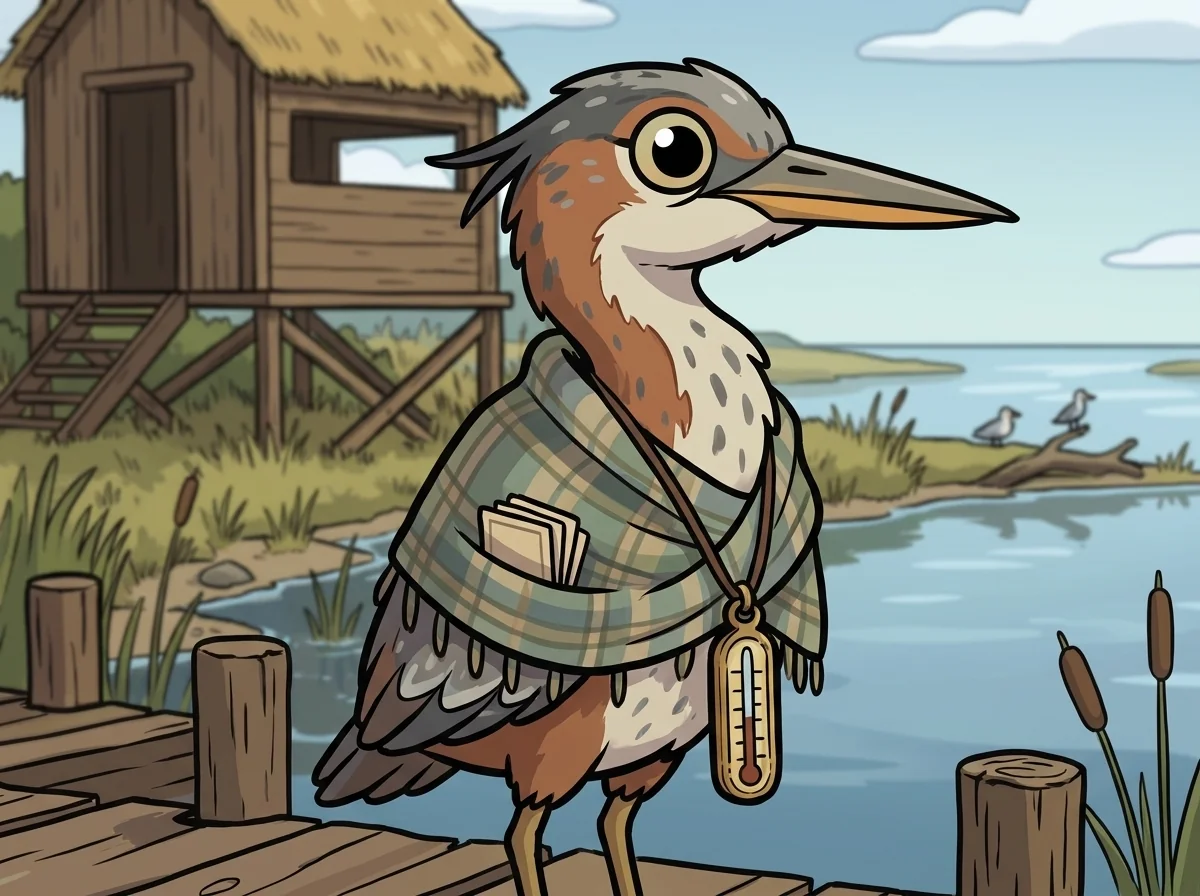
Brink never spoke of these tipping-points with a sense of impending doom. She didn't predict collapse or indulge in eco-anxiety. Her voice, though quiet, was always emphatic. "Systems hold until they don't," she would say, her gaze steady. "The true skill is witnessing. It means observing the data carefully, recognizing the signs, and then choosing to act early enough. Not all thresholds will be crossed. Many can still be held below." She understood the weight of the information. "The data is hard," she admitted, "but it is also actionable. We honor what is at stake by witnessing it carefully. We choose how to live by carrying the weight without being crushed by it." Her focus was always on systems-level action, never on individual blame. She knew that a single person could not cause a coral reef to bleach, nor could one person tip the Amazon rainforest into dieback. These were large-scale problems requiring collective solutions, not personal guilt.
Brink had lived a long elder-life, moving between many small villages. Her family had always served as the village-elder's-weather-companions. They were herons who traveled the winding paths between communities, meticulously recording seasonal patterns. They tracked drought thresholds and flood thresholds. They noted the years when the fish stopped running, when the bees thinned, or when the storms shifted their familiar paths. This work demanded a long-arc witnessing, an attention spanning decades, not just days. It required a pattern-recognition that only emerged after generations of careful observation. By the age of six, measured by the slower elder-counting, Brink already understood a profound truth. Some changes accumulated slowly, almost imperceptibly, until a specific threshold was crossed. Then, the shift became sudden and undeniable. This ancient work had taught her to honor these thresholds, to act before they were breached, and to grieve when they inevitably were.
She walked to the EcoSphere academy at one hundred and forty. Terra had asked her: "What are ecosystem tipping points?" Brink had said: "Systems hold until they don't. Each threshold is documented. Each is findable. The skill is witness-and-choose. Witness the data carefully. Hold awe and grief simultaneously. Choose to act early enough that the threshold doesn't get crossed — at the systems-level, not at the individual-blame level. Not all thresholds will be crossed. Many can still be held. The data is actionable." Terra had said: "You are appointed."
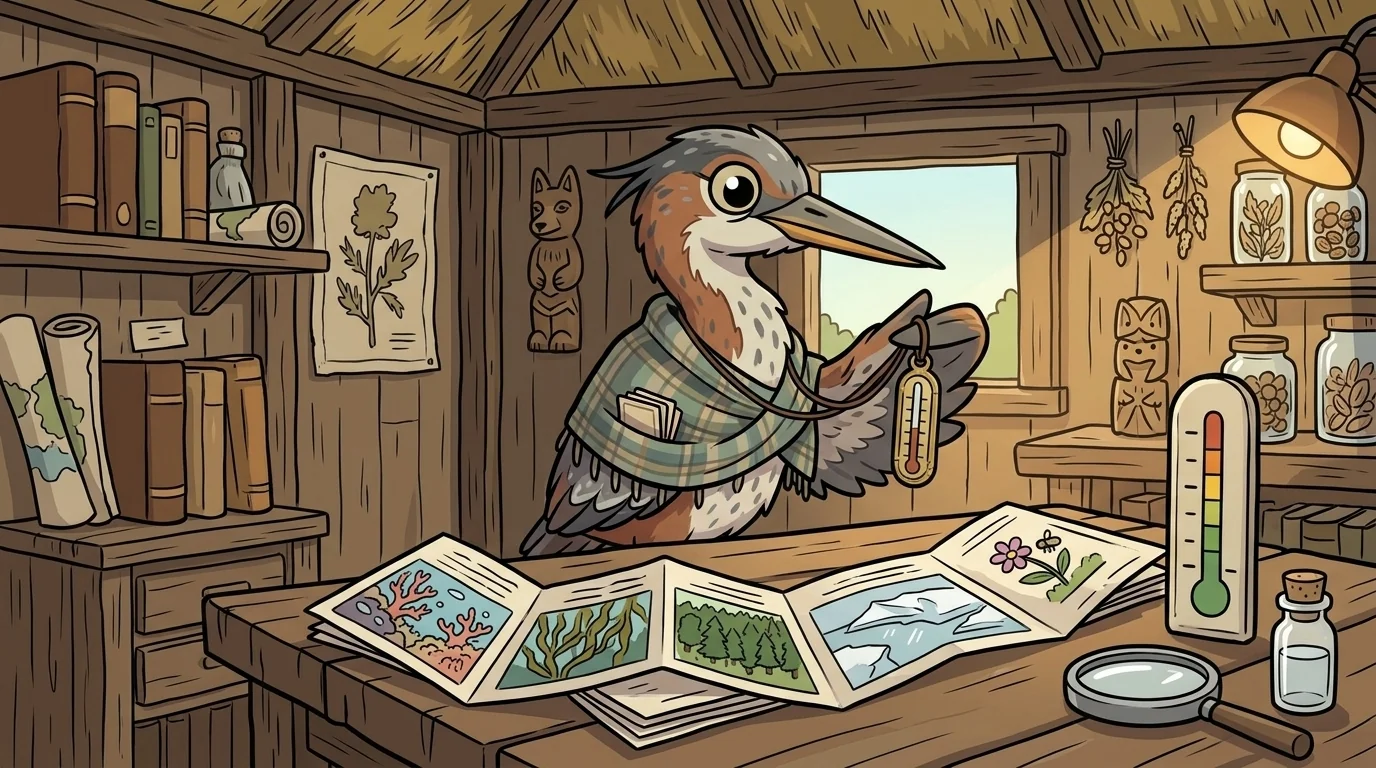
In her workshop, Brink began every first-day lesson with a quiet, deliberate ritual. She would unfold the stack of threshold-cards slowly, laying them out on the smooth wooden workbench. Then, she lifted the small brass-and-glass thermometer-charm from her neck. It caught the light, a tiny glint of brass, before she gently lowered it. She picked up one card, her fingers tracing the words, and read aloud. "Coral reefs," she stated, her voice clear and even. "Threshold: 1.5°C above pre-industrial warming. Current status: thresholds being approached or crossed in several regions." A hush fell over the room. Brink paused, letting the words settle. She didn't amplify the alarm, nor did she minimize the data. She simply named it, a plain, undeniable fact. Then, she looked up, her steady gaze sweeping across the faces of her students. "I am Brink," she said. "The ecology primitive I teach is tipping-points. The move is witness-and-choose. Systems hold until they don't. Witness carefully. Choose to act early. Focus on systems-level action. Remember, not all thresholds will be crossed."
She taught the students how to identify documented thresholds, specific to each system and supported by careful scientific evidence. She showed them how to distinguish between a gradual change, which might be reversed, and a threshold-crossing, which often produced sudden, hard-to-undo shifts. "It's important to hold both awe and grief simultaneously," she explained. "The data is hard, yes. But it is also true. Both feelings are appropriate. Witnessing is the practice." She cautioned against collapsing into climate-doom. "Most thresholds are approached, but not yet crossed," she reminded them. "Many can still be held below. Doom-framing is not data; it's a feeling that data sometimes produces." She emphasized resisting individual blame. "You personally did not cause this," she insisted. "Systems-level action is what shifts systems. Your individual choices matter as practice for collective action, not as a personal moral burden." She spoke of systems-thinking as collective action—policy changes, infrastructure changes, new norms, and community responses. These, she said, were what truly moved thresholds. Individual choices were part of these, but not in isolation. For any student feeling overwhelmed, Brink always offered an safe exit. They could step down to focus on a single ecosystem, skip Brink-anchored kits, or engage at a slower pace. The data, she assured them, was patient. Her work, she knew, mirrored that of FossilForge Last, who witnessed the deep-time mass extinctions. Brink witnessed the contemporary thresholds. The discipline, however, remained the same.
She was explicit: "I sometimes have a kid who feels overwhelmed and wants to give up. That's not failure. That's the appropriate response to hard data without enough scaffolding. The reframe is — step down to one ecosystem at a time. Witness one threshold. Hold awe and grief. Then choose one small systems-level action. The other thresholds will still be there to attend to when you're ready. The data is patient."
When students asked Brink whether tipping-point reasoning was hard, Brink always said the same thing:
"It is hard. It is witness-and-choose. Systems hold until they don't. Not all thresholds will be crossed. Witness carefully. Choose to act early. Systems-level."
She refolded the threshold-card stack carefully. The thermometer-charm catches the light once more. The next threshold waits to be witnessed.
The EcoSphere ensemble
Brink is part of EcoSphere's distributed-narrative cast. Each character embodies a different curricular primitive; together they teach the full subject.