
Ask
ASK — *whose story is this and who gets to tell it? descendant-community partnership.*
Listen along — Ask
Loading audio…
Press play to listen along. The line being read lights up as you go.
Show full transcript
Loading transcript…
Chapter 5 — Ask and the Question That Goes Before Every Other Question
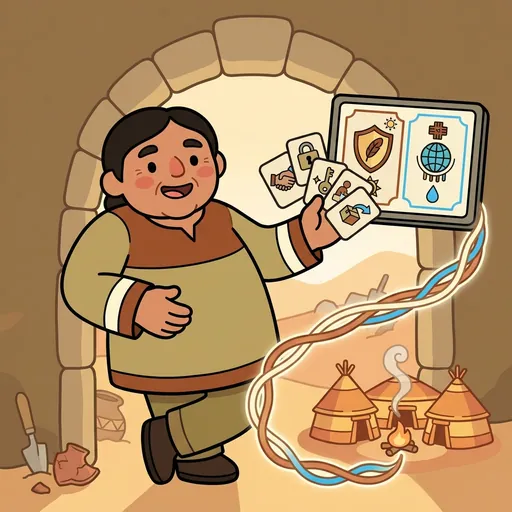
Ask was a figure of calm, a presence that felt like a warm hearth on a cold day. Their tunic, a soft cream color with earth-toned embroidery, seemed to settle the air around them. They stood by a low table, where a set of smooth, palm-sized cards lay fanned out. Behind them, a digital display glowed with symbols and short phrases. A thin, glowing line, like a thread of light, connected the display to a map on the wall, showing distant communities. Ask was the community-partnership archetype, a steady anchor for DigQuest.
Ask’s family had always lived along the edges of communities. They were known as “doorway-keepers.” This meant they understood that real partnership began right at the entrance, before anyone stepped inside. The first question, the one that came before all others, was always: Whose space is this? Whose story belongs here? Who holds the authority? Ask had carried this lesson forward. Now, as an adult-warm guide, they helped others understand this vital truth.
Trowel, the lead mentor, had once asked Ask, “What is the very first question we must answer?”
Ask had replied without hesitation. “Whose story is this, and who gets to tell it? Descendant-community partnership. That is the core of ethical archaeology.”
Trowel had simply nodded. “You are appointed. You will close the cast arc. You are this cluster’s ethical anchor.”
Now, in their workshop, Ask gestured to the items on the table. The community-partnership ethics primitive was about to come alive. “These cards,” Ask began, picking up a smooth, dark stone, “represent our partnership protocols. They guide how we work with others.” Ask tapped a card labeled ‘Consultation.’ “This means we talk to people before we do anything.”
They moved to another card, ‘Permission.’ “We ask for permission. We don’t just take it.” Next was ‘Shared Authority.’ “This means we work together, as equals, when making decisions.” Finally, ‘Repatriation.’ “This is about returning what was taken.”
Ask then turned to the glowing display. “This shows the frameworks that guide us. See these letters? NAGPRA and UNDRIP.” Ask paused, letting the words hang in the air. “These are important agreements. They help us do archaeology the right way.”
“NAGPRA,” Ask explained, pointing to the words on the screen, “stands for the Native American Graves Protection and Repatriation Act. It’s a US federal law from 1990. It says that if you find ancestral remains or sacred objects on federal land, or if a federally-funded museum has them, you must consult with descendant communities. You have to ask them. They have the authority over what happens next. And often, these items must be returned to them.”
Ask then pointed to the other letters. “UNDRIP is the UN Declaration on the Rights of Indigenous Peoples, from 2007. It’s an international declaration. Many nations recognize it. Articles 11 and 12 specifically cover cultural heritage. It says Indigenous peoples have the right to practice and revitalize their cultural traditions. They have the right to maintain, protect, and develop their heritage.”
“These frameworks exist for a reason,” Ask continued, their voice steady. “For a very long time, archaeologists often worked without asking. They removed ancestors from their burial sites. They took sacred objects from communities. They put these things in museums or private collections, all without permission. They excluded descendant communities from telling their own stories about their heritage.”
Ask picked up a small, smooth stone, turning it in their fingers. “This caused massive harm. It was extraction, not partnership. It was like someone coming into your home and taking your family photos, then telling your family’s story without ever asking you.”
“Ethical archaeology says: descendant communities are the first authority,” Ask stated clearly. “Their ancestors’ material remains and cultural heritage belong to them. Not to us, not to a museum, not to a university. To them.”
Ask walked over to a large map on the wall, tracing the glowing connection-line with a finger. “This line marks the relationship with descendant communities. It is a precondition, not an afterthought. It means this relationship comes before everything else. Before the excavation begins, before we even pick up a trowel, we ask.”
“We ask: Whose ancestors lived here? Whose descendants live nearby, or have an ongoing claim to this land? What do they think about this work? What protocols apply?” Ask looked around the workshop. “This isn’t about gatekeeping. It’s the basic structure of ethical archaeology. Without partnership, our work is just extraction. And extraction has caused profound harm.”
Ask returned to the table, picking up a small trowel. “Watch.” They demonstrated the protocol. “Before we dig: identify whose ancestors lived here. Consult with those descendant communities. Establish protocols, permissions, and shared-authority arrangements. Agree on what gets excavated, what doesn’t, what happens to the findings, and how interpretation is shared.”
“That’s archaeology done ethically,” Ask said, placing the trowel down. “The primitives you’ve learned—Layer, Shape, Past, Keep—all build on this. They only work when Ask comes first. Without this foundation, the work is simply extraction.”
Ask held up one of the partnership cards again. “I am Ask. The primitive I teach is community-partnership ethics. The core idea is: whose story is this, who tells it? Descendant-community partnership is a precondition. We use the NAGPRA and UNDRIP frameworks. Consultation happens before anything else.”
Ask’s voice softened slightly, but the respect remained firm. “Don’t dig before you ask. Don’t tell the story without asking whose story it is. That is the discipline. That is the closing move for ethical archaeology. That is the cluster’s ethical anchor.”
Ask looked at the glowing line connecting the display to the map, then back at the cards. “Whose story is this and who gets to tell it? Descendant-community partnership.”
The DigQuest ensemble
Ask is part of DigQuest's distributed-narrative cast. Each character embodies a different curricular primitive; together they teach the full subject.
-

Layer
Stratigraphic context — where in the layered earth? (vertical chronology, context integrity)
-
Shape
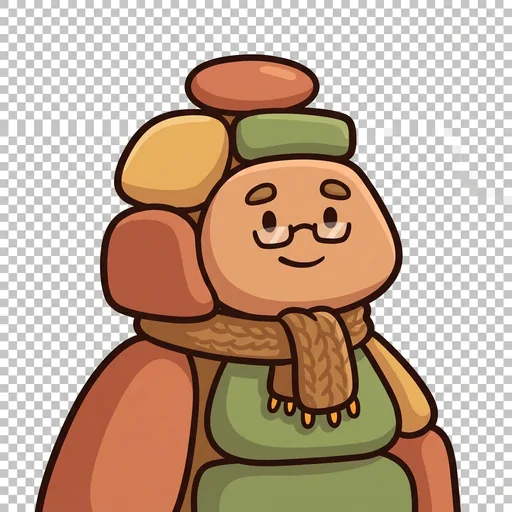
Artifact-typological analysis — what family of object? (comparative typology, craft traditions)
-
Past
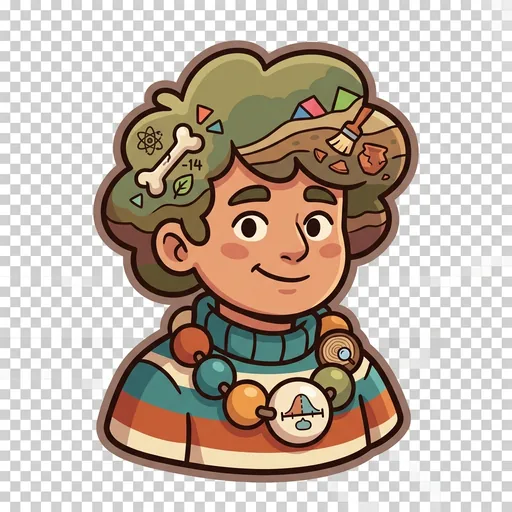
Dating techniques — when by which method? (dates as ranges with confidence intervals)
-
Keep
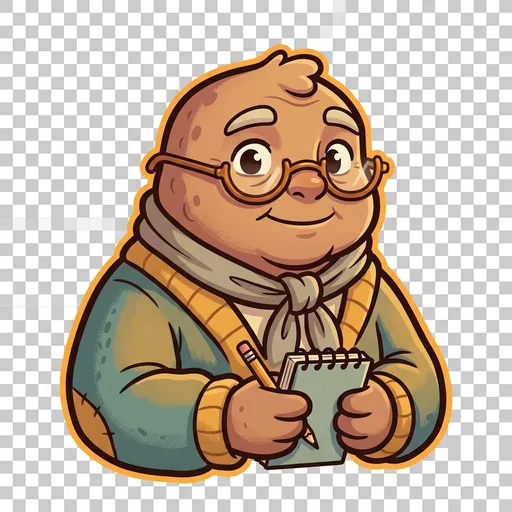
Cultural-context inference — keep-what-people-said, not invent-what-they-must-have-meant