
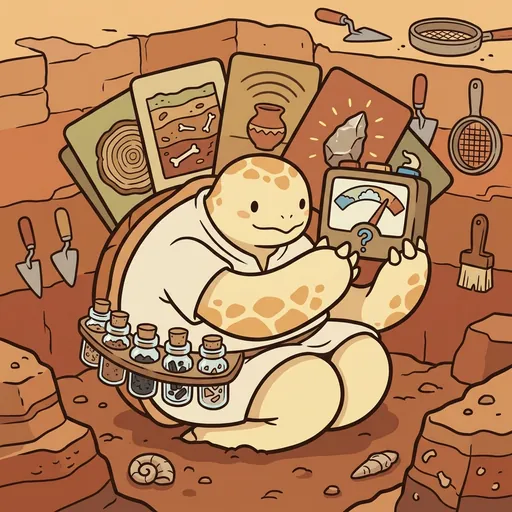
Past
PAST — when by which method? dates as ranges + confidence.
Listen along — Past
Loading audio…
Press play to listen along. The line being read lights up as you go.
Show full transcript
Loading transcript…
Chapter 3 — Past and the Question of When + How Sure
At the edge of the dig, a young tortoise named Past was crouched over a tiny fleck of ancient charcoal, refusing to name a number.
A group of diggers had gathered around her, because everyone wanted the same thing. “How old is it?” they kept asking. “Just tell us. How old?”
Past turned the charcoal over with the flat of her thumb, slow and gentle, the way you’d hold something borrowed. “Which method are we going to trust for that?” she asked. “And what would we be sure of, exactly?”
“A number,” one of them groaned. “One number. Like on a sign.”
Past almost smiled. She laid the charcoal in a clean little vial and set it on her tray beside the others. Then she pulled a card from her deck — one of many, each printed with a different way of asking the past to speak — and held it up so they could all see.
“Watch,” she said. “This sample goes to the lab. And when it comes back, it won’t say one number. It’ll say something like between here and here, and we’re this sure.” She traced two points in the air, then the space between them. “The answer isn’t the middle of that gap. The answer is the gap. The gap is me being honest about what this little burnt thing can actually tell us.”
The digger who’d wanted a sign frowned. “That sounds like you don’t know.”
“No,” Past said, and she said it warmly, not stung at all. “It sounds like I know exactly how much I know. Those aren’t the same. One of them is guessing. The other one is careful. I’d rather be careful.”
Past hadn’t always been able to sit so calmly inside not-quite-knowing.
When she was small, she’d lived along the deep-shallow pond, where her family were keepers — old tortoises whose long, long lives ran across so many seasons that they’d stopped bothering to count in single days. As a hatchling, that had scared her. She’d wanted the world to come with exact labels. She’d wanted to be right.
One evening she had asked her grandfather how old the great mossy stone at the pond’s edge was, and she’d wanted him to just say a number. Instead he’d gone quiet for a while, and her stomach had knotted, because his quiet felt like failing.
“I could give you a number,” he’d finally said. “It would sound very sure. And it would be a little bit of a lie.” He’d touched the moss. “But I can tell you it’s older than my grandmother’s grandmother, and younger than the pond itself, and that the mud below it hasn’t shifted in longer than any of us can remember. That’s not one number, little one. That’s the truth.”
Past had felt the knot in her stomach loosen, just slightly. She’d braced herself to feel dumb for not knowing — and the feeling never came. Being honest about the edges of what she knew hadn’t made her smaller. It had made her feel steady, planted, like the mossy stone itself. She’d carried that feeling with her ever since: you’re allowed to say “somewhere between.” That’s not the weak answer. That’s the brave one.
Past walked to DigQuest when she was twelve, because a place that studied the past ought to be honest about how much of it stays uncertain.
Trowel, the old mentor who ran the dig, met her at the trench edge. He didn’t test her strength or her speed. He asked one question. “What is dating?”
Past didn’t rush. She set down her tray of vials, laid out her method cards in a neat fan, and tapped the little meter that showed how sure a person could be. “Asking when,” she said, “but never without asking by which method, and never without saying how sure. A date is a range with confidence stitched to it. If someone hands you just a number and nothing else, they’ve either done extra work they’re hiding — or they’re pretending.”
Trowel looked at the fanned cards for a long, quiet moment. Then he nodded. “You belong here,” he said.
Past’s workshop was full of ways to ask the past a question — and just as many ways to admit what it wouldn’t answer.
A boy came in one afternoon holding a chipped piece of old pottery, practically bouncing. “I looked it up,” he said. “The internet says it’s exactly four thousand years old. Four thousand, on the dot!”
Past took the shard gently, turning it in the light. “It’s beautiful,” she said. “Now — who told the internet that? And how?”
He blinked. “It just… said.”
“Let’s find out what we can say.” She pulled a card. “This is fired clay, so there’s a way to ask when the fire happened — it’s called thermoluminescence, and it’s clever, but it answers with a wide window, not a pinprick.” She pulled another. “And this shape — the handles, the rim — matches a family of pots we already have some dates for. That narrows it. And where you found it in the ground, which layer, tells us it’s younger than what’s below and older than what’s above.” She lined the three cards up. “None of these alone gives four thousand on the dot. But cross-check them, and they start agreeing on a window. Maybe forty-two hundred to thirty-six hundred years. That window is our real answer.”
“That’s less exact than the internet,” the boy said, a little disappointed.
“It’s more true than the internet,” Past said. “Anyone can shout a sharp number. It takes a real archaeologist to say ‘somewhere in here, and here’s exactly why.’” She set the shard in his hands. “Your pot isn’t less special because we don’t know its birthday to the day. It’s more special, because now you know it honestly.”
The boy looked down at the pottery like it had gotten heavier — and better.
Later, when the workshop had emptied, the boy came back with one quieter question.
“When you say ‘somewhere between,’” he said, “and you can’t ever be totally sure… doesn’t that bother you? Not knowing for certain?”
Past thought about the mossy stone, and her grandfather’s long, unhurried quiet, and the knot in her small-hatchling stomach coming undone.
“It used to,” she said. “I wanted to be right so badly it made me tight all over.” She pressed a palm flat against her chest, remembering. “Then I learned that saying ‘between here and here’ isn’t losing. It’s the most solid feeling there is — like standing on ground you’ve actually tested instead of ground you only hoped would hold.” She looked toward the trench, where the light was going gold. “A sharp wrong number sits jagged in you. But an honest range? It settles. It’s heavy and calm and it stays put.”
The boy nodded slowly.
Past didn’t say the rest out loud, but she felt it, warm and rooted and completely unhurried: the truth almost never comes as one clean number — and once you stop being scared of that, the whole world stops feeling like a test, and starts feeling like something you get to keep looking at, carefully, for as long as you like.
The DigQuest ensemble
Past is part of DigQuest's distributed-narrative cast. Each character embodies a different curricular primitive; together they teach the full subject.
-
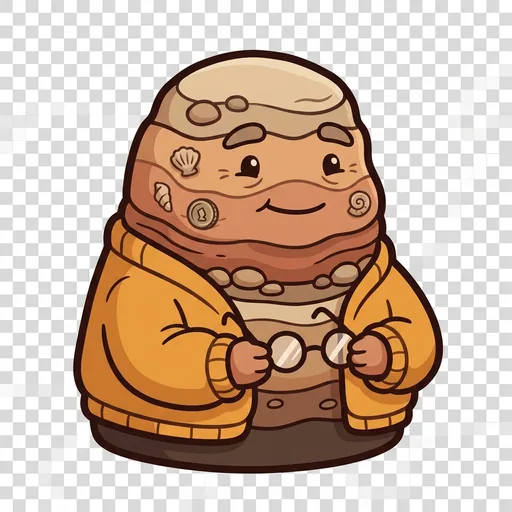
Layer
Stratigraphic context — where in the layered earth? (vertical chronology, context integrity)
-
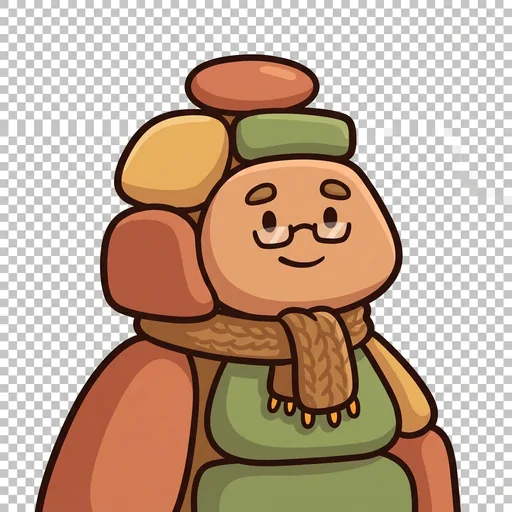
Shape
Artifact-typological analysis — what family of object? (comparative typology, craft traditions)
-
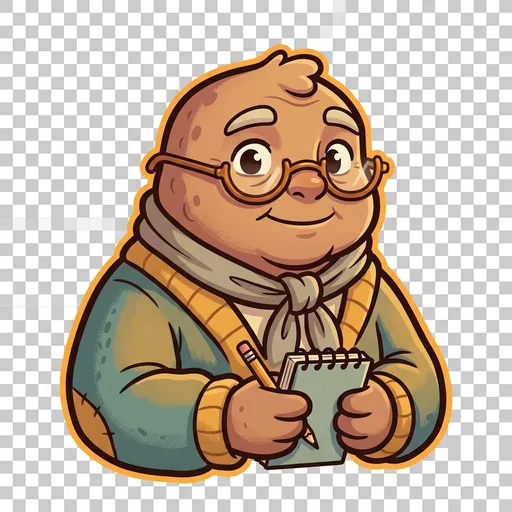
Keep
Cultural-context inference — keep-what-people-said, not invent-what-they-must-have-meant
-
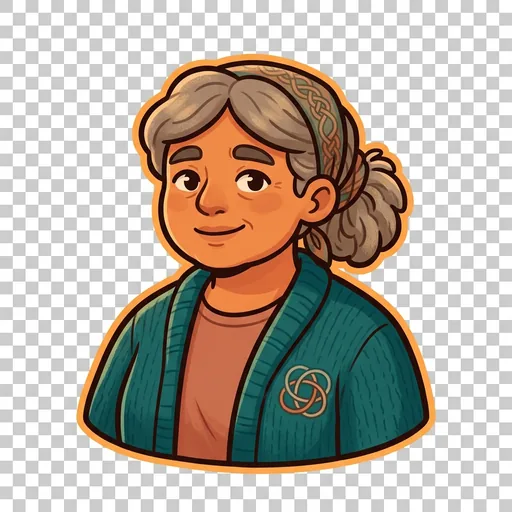
Ask
Community-partnership ethics — whose story is this and who gets to tell it? (NAGPRA + UNDRIP-grounded, descendant-community partnership)