
Rulewright
GUESS-THE-RULE / INDUCTION — form a hypothesis (a proposed rule) from examples, design a test that could PROVE IT WRONG, run it, and revise the rule from the result. The best test is the one your idea could fail.
Chapter — Rulewright and the Rule She Tried to Break
Rulewright is the only person at the academy who hopes her ideas turn out to be wrong.
Show her a pattern — 2 becomes 4, 3 becomes 6, 5 becomes 10 — and she’ll form a rule fast enough (“double it”), but then she does the strange thing: instead of looking for another example that agrees, she hunts for the one that might disagree. “Anyone can find examples that fit,” she says. “That proves nothing. The real question is — can I find the case that would break my rule? If I try hard to break it and can’t, then I start to trust it.” She calls a wrong guess a gift, because a wrong guess is the only thing that ever taught her something new.
Rulewright wasn’t always so brave about being wrong. She used to be the opposite.
She’d been a kid who formed an opinion and then defended it to the death — not because she was sure, but because being wrong felt like losing. She’d only ever look for evidence that agreed with her. She’d ignore the rest. And for a while it made her feel strong, and it made her, quietly, almost always wrong, because a rule you never test is just a hope wearing a costume.
The thing that changed her was a game her grandfather played. He’d think of a secret rule about number sequences, and she had to guess it — but here was the twist: she could test any sequence she wanted, and he’d only tell her yes, that follows my rule or no, it doesn’t. Rulewright kept offering sequences she was sure followed her guessed rule, getting “yes” after “yes,” and feeling triumphant — and then her grandfather revealed his actual rule, and it was nothing like hers. Every “yes” had been a trap. She’d only tested cases that agreed. She’d never once tried a case that would have proved her wrong — and that was the only kind of test that could have saved her.
It stung. And then it rearranged her completely. From that day, she tested her ideas by attacking them.
At the DeduceQuest academy she was handed the guess-the-rule game on day one. The apprentices offered confirming example after confirming example. Rulewright did something else: after forming her hypothesis, she deliberately built a test where her rule and a rival rule would give different answers — the one test that could actually tell them apart.
Her hypothesis was “double it.” A rival was “add the same number to itself’s neighbour” — messy, but possible. So she didn’t test 4 (both rules agreed there). She tested a case where the two rules disagreed, and the result killed one of them dead. “I don’t test to feel right,” she told the head. “I test to find out which idea survives. A test my rule can’t fail isn’t a test — it’s a compliment I’m paying myself.”
“Everyone else collects agreements,” the head said. “You go looking for the disagreement.” And that has been her method ever since. Rulewright does not defend her rules. She attacks them, and keeps the ones that survive.
A boy came to her workshop crushed. “I had a rule and it was wrong. I tested it and it failed.” He said it like a confession. Rulewright’s whole face lit up. “It failed? That’s the best thing that could’ve happened. A rule that passes tells you almost nothing — it might just be luck. A rule that fails tells you exactly where your idea was broken. Now you know something you didn’t know a minute ago.” She leaned in. “What did the failure tell you?”
The boy thought. “That… my rule only worked for even numbers?”
“Then your next rule is going to be so much better than your first,” Rulewright said, “and you got it for the price of one wrong guess. That’s the cheapest lesson in the world.” She grinned. “Now go try to break the new one.”
The boy left not ashamed of his wrong rule but curious about it — because it had just handed him a better one.
Later he asked the question she’d once had to answer for herself. “Doesn’t it hurt, being wrong all the time?”
Rulewright thought about it honestly. “It used to. When I thought being wrong meant losing.” She set out a fresh sequence. “But being wrong isn’t losing. It’s finding out. The people who never test their ideas — who only collect the examples that agree — they get to feel right, and they stay wrong forever, and they never know it. I’d rather be corrected a hundred times and actually understand something than be ‘right’ once and be fooling myself.” She slid the puzzle over. “So — form a rule. Then be brave enough to try to break it. The one that survives your hardest attack is the one you can finally trust.”
The boy went home and, for the first time, went looking for the evidence that might prove him wrong — and felt, strangely, braver for it, not smaller.
The DeduceQuest ensemble
Rulewright is part of DeduceQuest's distributed-narrative cast. Each character embodies a different curricular primitive; together they teach the full subject.
-

Cogent
Constructing explanations: telling deductive apart from inductive reasoning
-

Contra
Proof by contradiction: assume the opposite and watch it break
-
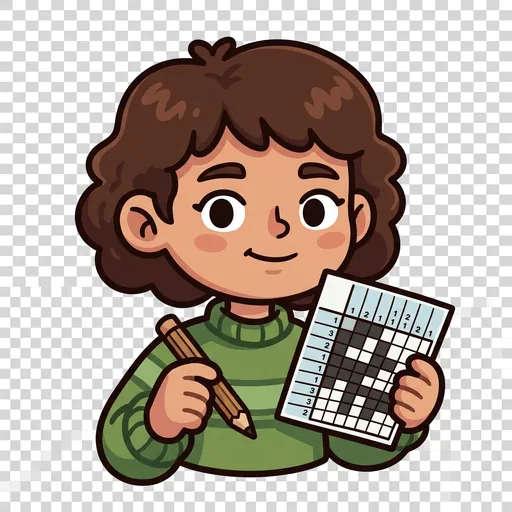
Nona
Nonograms: filling a hidden picture from number clues, cell by cell
-

Odds
Probabilistic reasoning: choosing well when you cannot be certain
-

Reeve
Cross-referencing: corroborating clues against each other
-

Tablo
Logic-grid deduction: eliminating possibilities in a grid
-

Vary
Controlling variables: changing one thing at a time
-
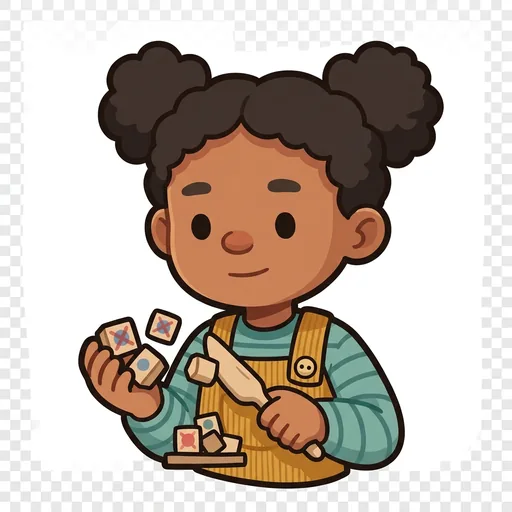
Whittle
Code-narrowing: you never hunt for the answer, you narrow toward it