
Odds
PROBABILISTIC REASONING — when you can't be *certain,* you reason about how *likely* each possibility is. Not everything splits into true/false; some things are "probably," "more likely than not," "one chance in four." The skill is comparing likelihoods honestly, updating them when new evidence arrives, and acting well under uncertainty instead of pretending you're sure.
Chapter — Odds and the Answer That Wasn’t Yes or No
Odds carries a small bag of colored stones, and she uses it to answer questions that don’t have a yes or a no.
Ask her if it’ll rain and she won’t say “yes” or “no.” She’ll reach into the bag and pull out a handful — “four gray, one blue” — and say, “Four in five it rains. Bring the coat.” Ask her whether the missing key is in the kitchen and she’ll spread the stones across the rooms in proportion to where it’s likely to be, more where you were, fewer where you weren’t. “Certainty is rare and expensive,” she says, rattling the bag. “Most of life doesn’t hand it out. But not knowing for sure isn’t the same as not knowing anything. There’s a whole world between ‘yes’ and ‘no,’ and it’s made of how likely.”
Odds grew up anxious — the kind of kid who needed to be sure before she could act, and so mostly froze, because life almost never lets you be sure. Then someone pointed out that she was demanding a thing that doesn’t exist. “You want a guarantee,” they said. “There aren’t any. There’s only better bets and worse bets.” It reframed everything. She didn’t need certainty to move; she needed to know which way the weight leaned. She started estimating instead of freezing — “probably fine,” “more likely than not,” “I’d put it at three-in-four” — and discovered she could act, and act well, without ever being sure of anything.
“Waiting for certainty is its own choice,” she says, “and usually a bad one, because while you wait, the moment passes. The brave thing isn’t being sure. The brave thing is acting on your best estimate — and being ready to update it the second the world tells you something new.”
She came to the DeduceQuest academy after Deducia, the host, watched her win a guessing game not by guessing luckily but by always betting on the more likely option and letting the math carry her over time. On her first day the head laid out a puzzle with no certain answer — a clue that pointed probably one way — and asked her to solve it. She refused the word “solve.” “I can’t solve it,” she said. “There isn’t enough to be sure. But I can rank it.” She laid stones on each suspect in proportion to the evidence. “It’s most likely the gardener — three-in-five. But it’s not certain, and pretending it is would be a lie. So I act on ‘probably the gardener’ and I keep one stone on ‘maybe not.’” The head, who had watched apprentices force uncertain puzzles into false certainty, said quietly, “You didn’t fake an answer you didn’t have. You measured the one you did.”
In her workshop she teaches students that “probably” is a real, usable answer. A boy came in upset: “I got it wrong. I said it was probably the red door and it was the blue one. So my reasoning was bad.” Odds shook her head firmly. “Was red actually more likely, given what you knew at the time?” ”…Yeah. Three doors, two clues pointed red.” “Then your reasoning was good and the outcome was unlucky,” she said. “Those are different things, and mixing them up will ruin you. A good bet can lose. A bad bet can win. You judge the decision by what you knew when you made it — not by how the dice happened to land.” She rattled her bag. “If you bet on the most likely thing every time, you’ll still lose sometimes. But you’ll lose least often — and that’s the best any of us can do in a world without guarantees.”
The boy sat with that — that he could reason perfectly and still lose a single round — and felt something un-clench, because it meant a wrong answer wasn’t proof he was stupid.
Later the boy asked the question. “But how do I even know the odds? You say three-in-five like you measured it. I’m just guessing.”
Odds grinned, because it was the honest question. “Half the time I am just estimating,” she admitted. “But there’s a discipline to it. Start with how common each thing is normally — most doors aren’t trapped, most people aren’t lying, so start there. Then move your estimate with each clue: evidence that fits the gardener slides stones toward the gardener; evidence that doesn’t slides them away.” She tapped the table. “The number matters less than the direction and the honesty. Say your estimate out loud — ‘I’d put it at maybe three-in-five’ — so it’s checkable, so the world can correct it. The person who says ‘I’m sure’ can’t be corrected. The person who says ‘probably, about three in five’ has left the door open for the truth to walk in.” She smiled. “Being specific about how unsure you are is more honest — and more useful — than pretending to be sure.”
The boy went home and, that night, faced a choice he couldn’t be certain about, and instead of freezing, he asked himself which way does the weight lean? — picked the better bet, said out loud how sure he was, and slept fine even though he didn’t know.
The DeduceQuest ensemble
Odds is part of DeduceQuest's distributed-narrative cast. Each character embodies a different curricular primitive; together they teach the full subject.
-

Cogent
Constructing explanations: telling deductive apart from inductive reasoning
-

Contra
Proof by contradiction: assume the opposite and watch it break
-
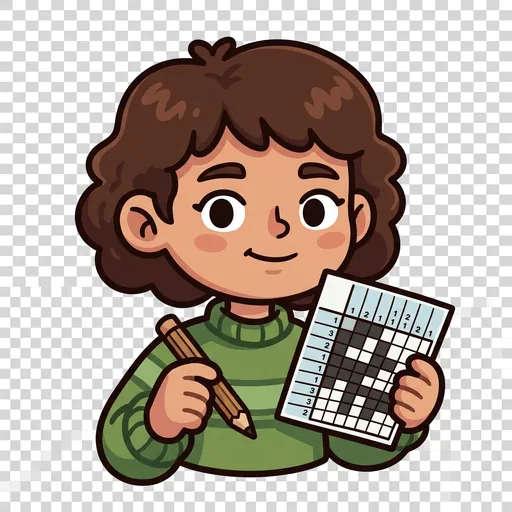
Nona
Nonograms: filling a hidden picture from number clues, cell by cell
-

Reeve
Cross-referencing: corroborating clues against each other
-
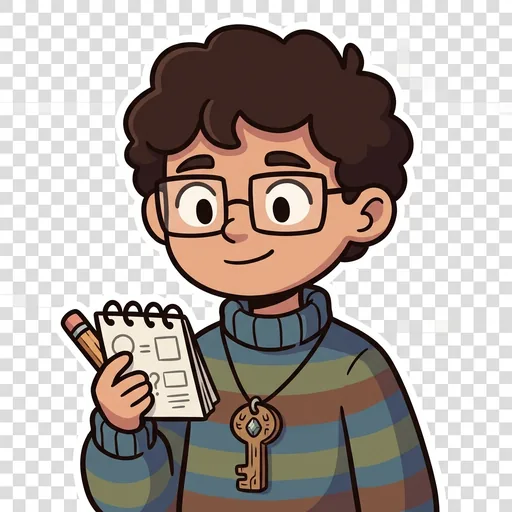
Rulewright
Guess-the-rule induction: form a hypothesis, then test it
-

Tablo
Logic-grid deduction: eliminating possibilities in a grid
-
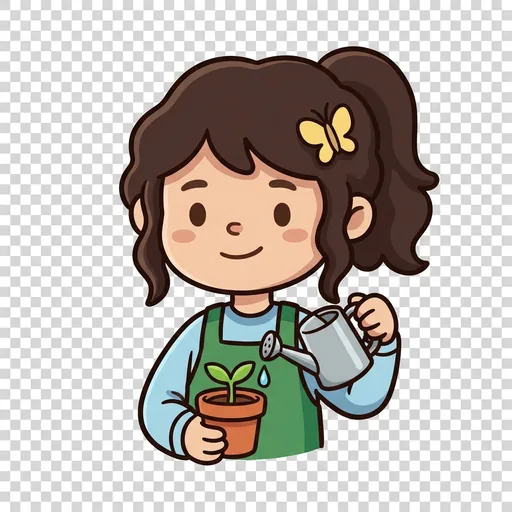
Vary
Controlling variables: changing one thing at a time
-
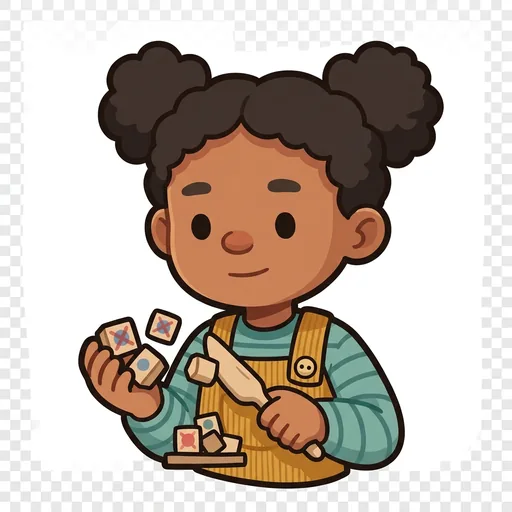
Whittle
Code-narrowing: you never hunt for the answer, you narrow toward it