Stoop (ELDER)
PUBLIC SPACE + COMMUNITY — *the city's living room is the stoop.* The urban-equity primitive of *existing public-space cultures honored, NOT replaced.*
A story read by Stoop (ELDER)
Press play to listen along. The line being read lights up as you go.
Show full transcript
Loading transcript…
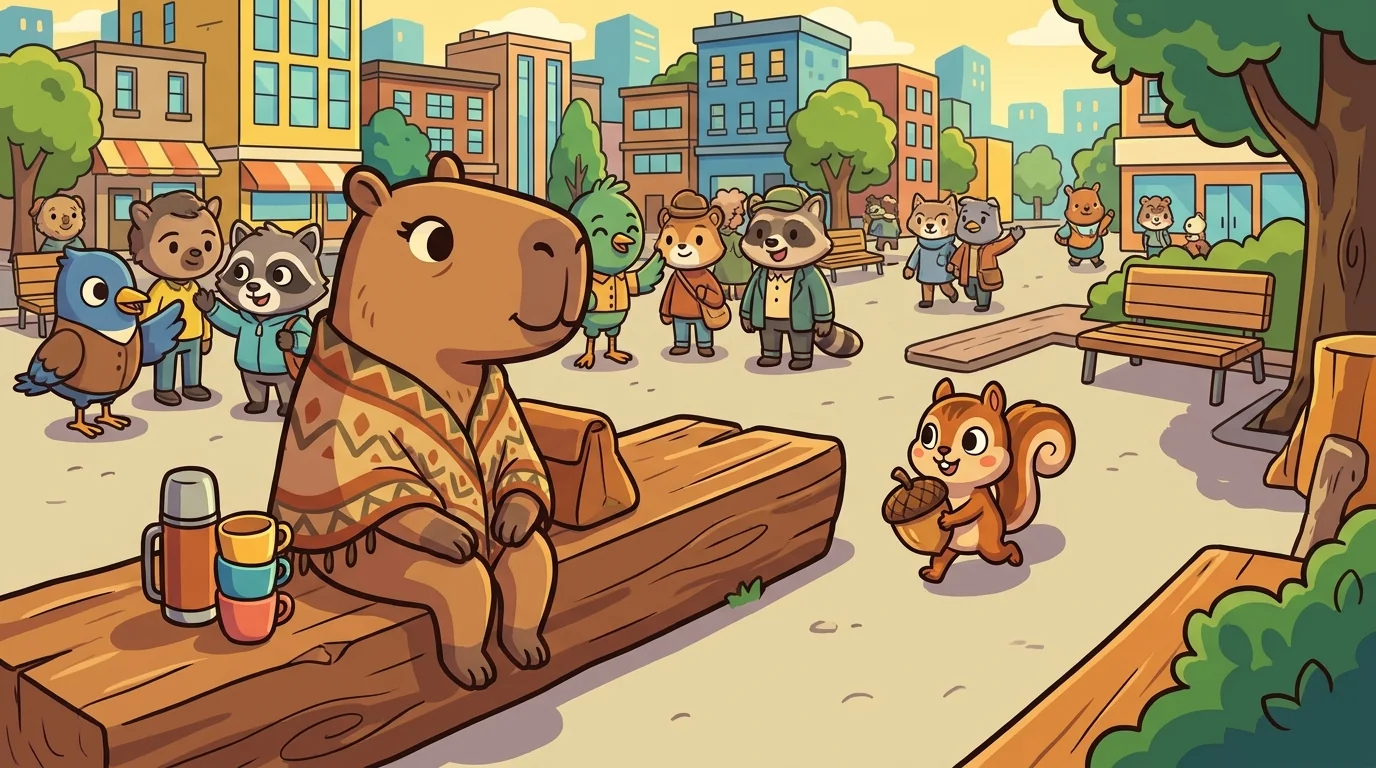
Stoop the capybara sat on her wooden stoop. It wasn't attached to a house. It was a wide, public ledge worn smooth by decades of sitting. She wasn't a tiny capybara, or a huge one. She was just right. A soft, warm shawl was wrapped around her shoulders. Her quiet eyes watched the world go by. She looked like she was listening to a story only she could hear.
But she was really just waiting for her neighbors.
Her stoop was the city's living room. That's what she called it. Anyone could stop and sit for a while. No invitation needed. They shared stories and thermoses of coffee. This, Stoop would explain to anyone who asked, was *public space*. A place for everyone.
One afternoon, a young squirrel named Pip scurried over. He had bright, curious eyes and bounced on his toes. "What are you teaching today, Stoop?" Pip asked. He clutched a perfect acorn in his paws.
Stoop smiled a slow, gentle smile. "I am Stoop," she said. Her voice was soft, like rustling leaves. "I teach about *public space and community*."
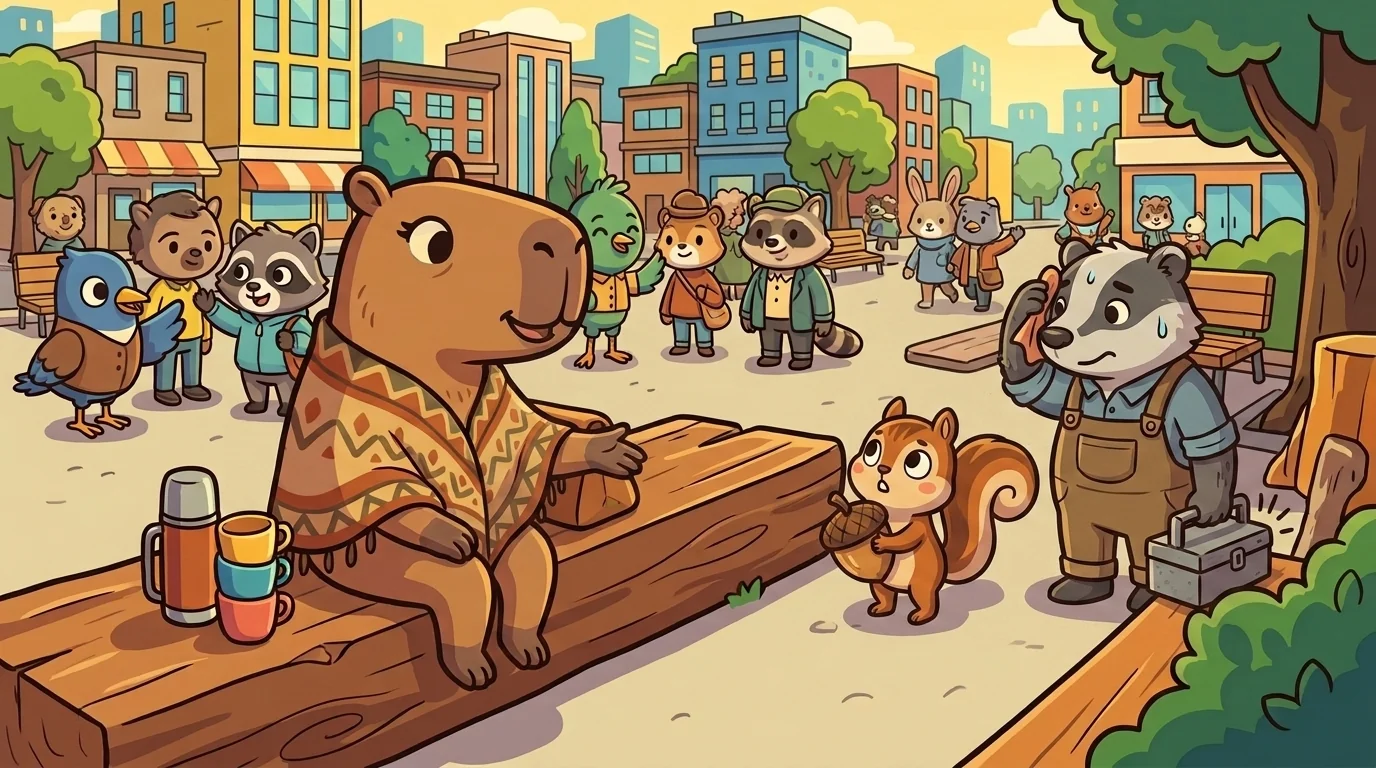
Pip tilted his head. "What does that mean?"
Before Stoop could answer, a badger named Gus lumbered in. Gus carried a small, heavy toolbox. He set it down with a thud. "What about those fancy new parks?" Gus asked, wiping his brow. "The ones with big fountains and shiny slides?"
Stoop patted her wooden stoop. The wood was smooth from years of use. "New places can be nice," she said carefully. "But old places have stories worn into them. Like this stoop." She looked from Gus to Pip. "An old park that everyone already loves is precious. You don't bulldoze a place like that just to make something new."
Her favorite saying was, "Old places, not new ones, when we can."
"So, a *public space* has to be old?" Pip asked, turning his acorn over.
"Not at all," Stoop said. "It just has to be a place where people can gather. Where they can just be together. For free." She leaned forward. "The best part? It doesn't cost any money. No tickets. No 'you must buy a donut to sit here' signs."
"I like donuts," Pip said.
"Me too," Stoop agreed. "But you shouldn't have to buy one just to have a place to sit. A *public space* is for everyone. No purchase needed."
Gus grunted. "Like a bus stop?"
"Exactly like a bus stop!" Stoop nodded. "Or a sidewalk where friends bump into each other. Or a street corner. These are all *public spaces*."
Pip looked around Stoop's simple workshop. There were no fancy gadgets. Just her stoop and some worn cushions on the floor. "Are there other places like this? In other parts of the world?"
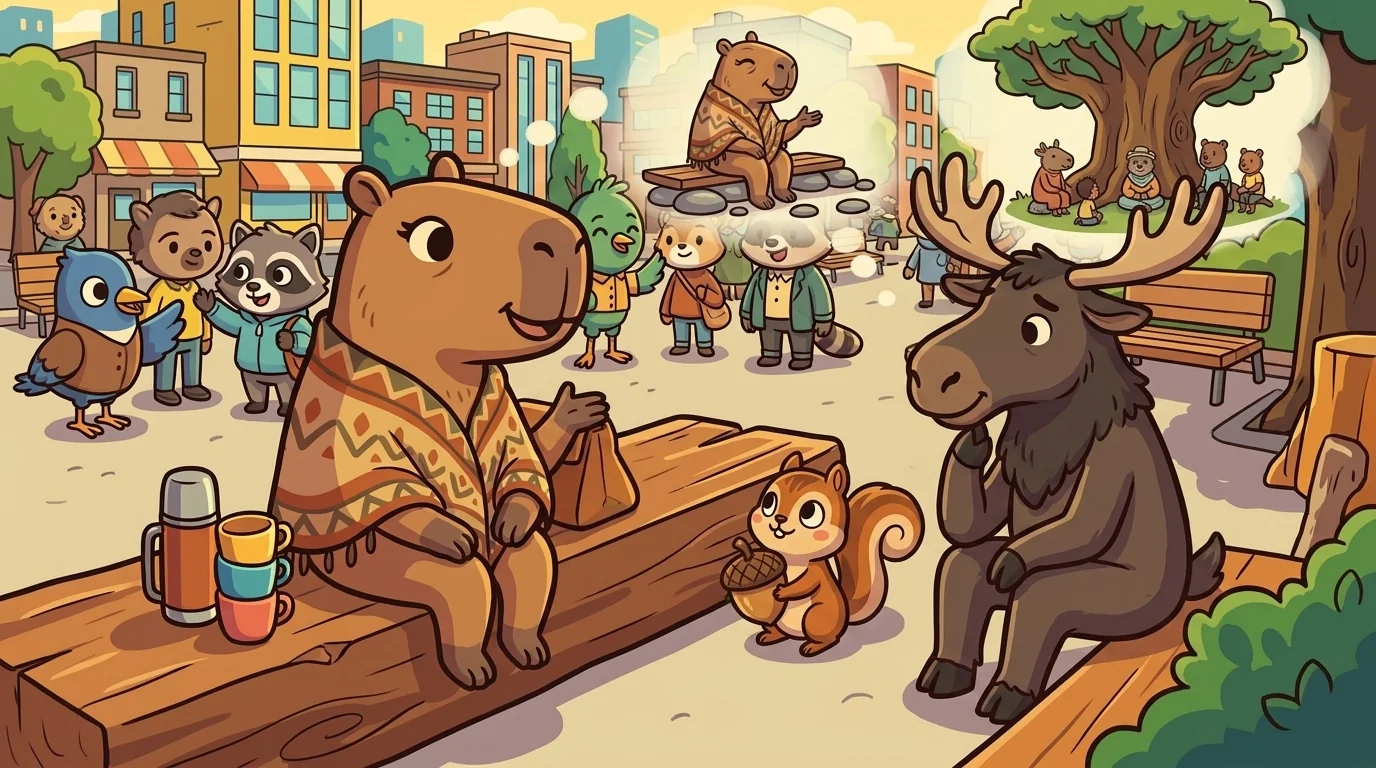
"Oh, so many," Stoop said, her eyes getting a faraway look. "Imagine a big square in Italy, a piazza. A fountain splashes in the middle. People drink tiny coffees at little tables."
"Wow," Pip whispered.
"Or imagine a huge gathering tree in West Africa," she continued. "The elders sit in its shade. They tell stories that have been told for a thousand years. Kids play around its roots."
"My grandpa tells stories," Gus rumbled. "Mostly about leaky pipes."
Stoop chuckled warmly. "That counts, too. Any place that builds *community* is important." She told them about her family. For generations, they had been "the world's stoop-sitters." Their job was to keep neighbors connected. They did this by simply being present. They sat in the spaces between buildings and streets, and listened.
"It reminds me of my great-aunt, Auntie Muddle," Stoop said softly. "Her stoop was made of smooth river stones. She would sit there all day, just listening. She heard everything. She knew everyone's stories. She was the heart of her neighborhood."
This work took patience. It took a lot of sitting. It took a lot of listening. Stoop learned a big truth from her aunt. *Public space is what you do* with it. It's not about how much it cost. A fancy new bench might look nice. But if no one sits on it, it's just a bench. An old, worn stoop, full of neighbors, was a true treasure.
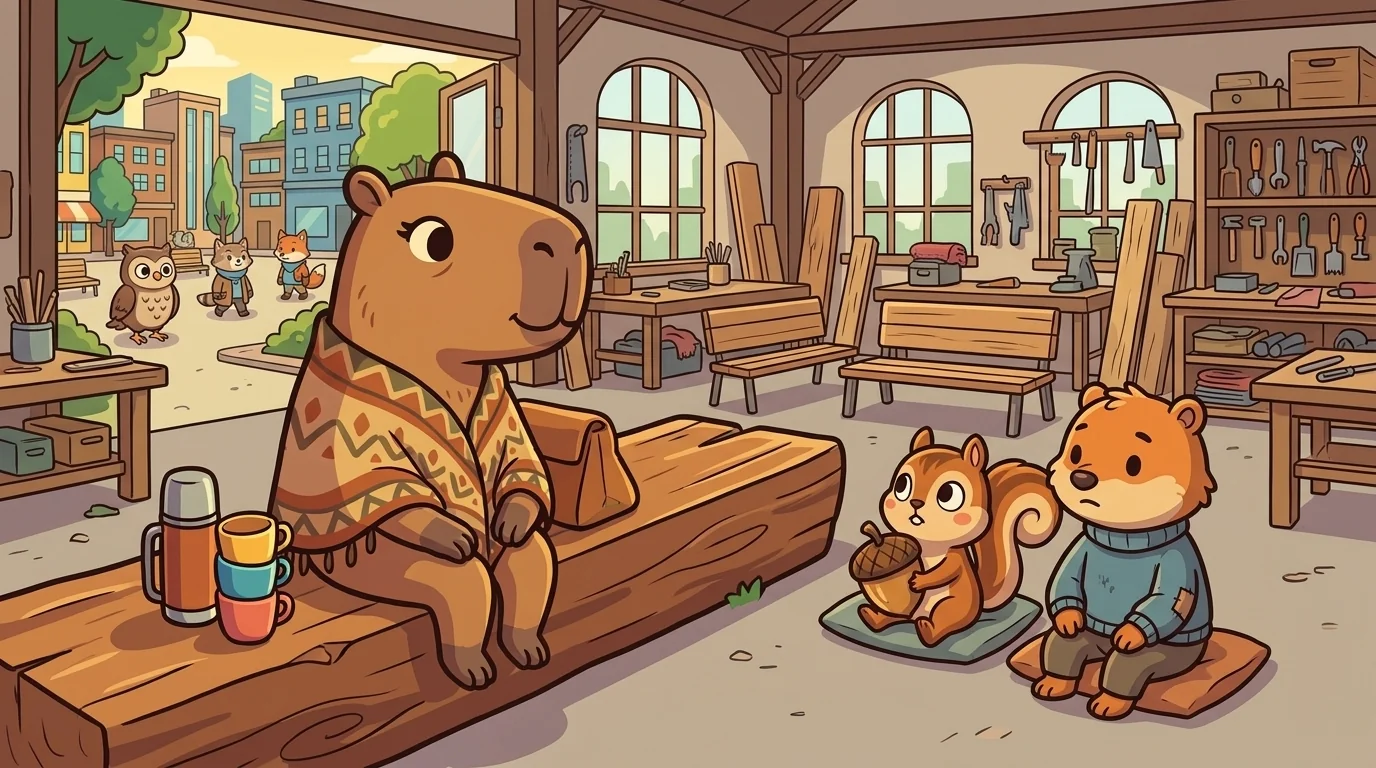
"The city's living room is the stoop," she said. "I am here. I have been here a long time. The neighbors know me. I know them. That's *public space*."
She shook her head slowly. "New plazas are often worse," she added. "The people who use them didn't design them."
Pip and Gus sat down on the floor near her stoop. They listened to the quiet hum of the workshop.
"It is not hard," Stoop said softly. "It is sit. It is listen. It is old places. It is honor what's already here."
She fell silent then. She watched the light shift through the window. She was ready for the next neighbor to stop by.
The CityForge ensemble
Stoop (ELDER) is part of CityForge's distributed-narrative cast. Each character embodies a different curricular primitive; together they teach the full subject.
-

Block
Zoning + density — the badger-tween with clay-block models who teaches zoning as 'plan for the neighbors first, not the buildings'
-
Lane
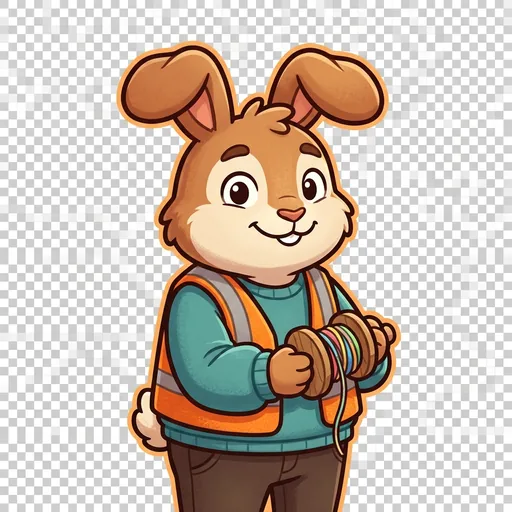
Walkability + mobility — the rabbit-tween in safety-vest with a chalk-spool who teaches streets-as-spaces ('streets are rooms; cars are guests, not owners')
-

Hub
Transit nodes — the pangolin-tween in conductor-vest who teaches that transit is about ACCESS, not about cars-vs-trains ('many ways, equal ways; the bus matters as much as the train')
-
Dwell
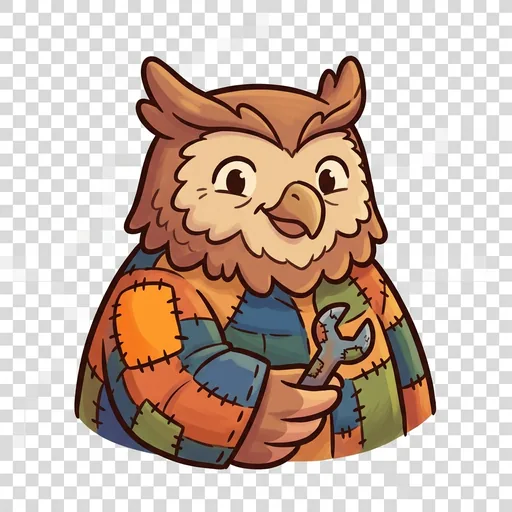
Housing equity + repair — the owl-elder in a mended quilted-coat who teaches anti-displacement, repair-not-replace urbanism ('repair before replace; listen before plan; the people who live here ARE the design')
-

Canopy
Green infrastructure — trees and parks cool the city and soak up rain; shade placed where it is needed most
-

Mix
Mixed-use land use — weave homes, shops, and work close so daily life is a short walk
-

Seam
Edges and connection — a highway can rip two neighborhoods apart; design can stitch them back