Lane
WALKABILITY + MOBILITY — *streets are rooms; cars are guests, not owners.*
Press play to listen along. The line being read lights up as you go.
Show full transcript
Loading transcript…
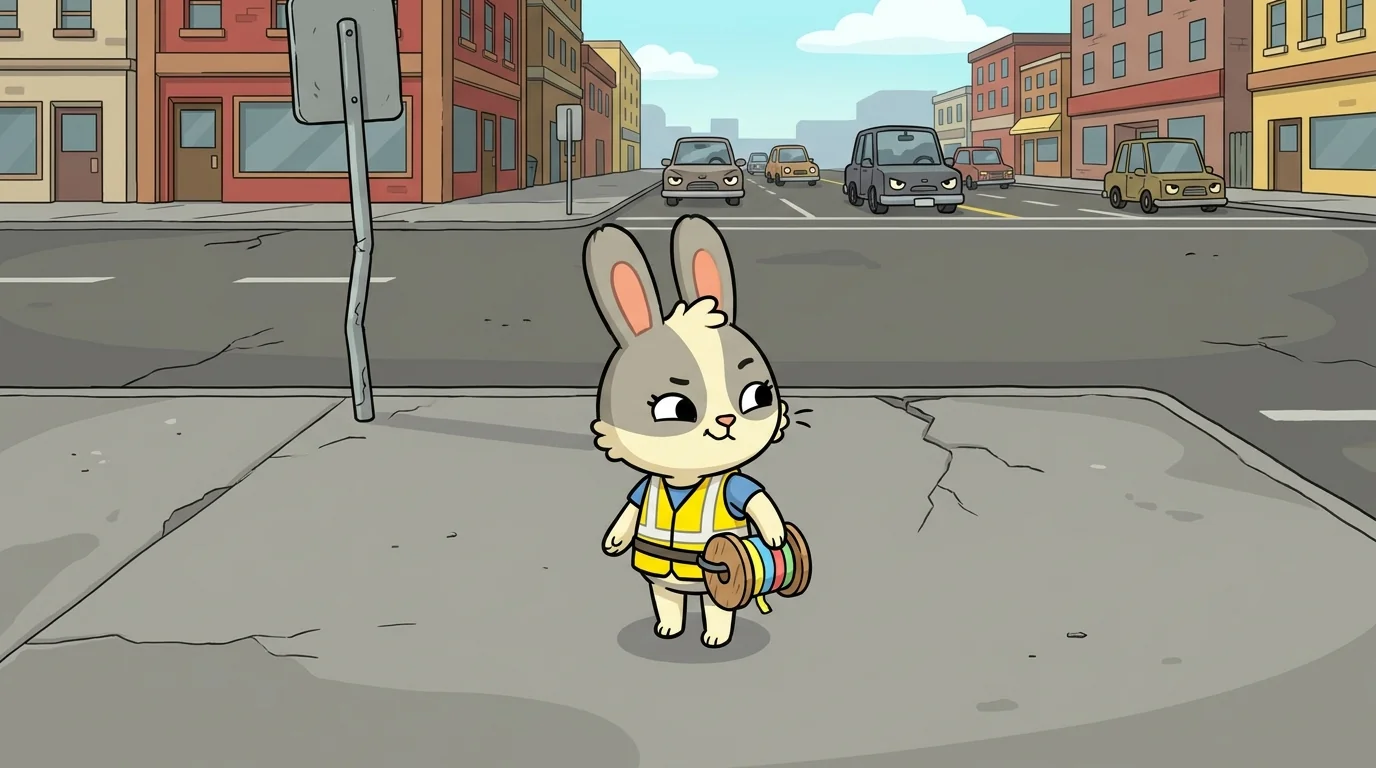
Lane was a small, quick-eyed rabbit who always wore a bright yellow safety vest. Clipped to her belt was her favorite tool in the whole world: a chalk-spool. It wasn’t fancy. It was just a wooden spool wound with thick, colorful chalk. But with that spool, Lane could completely change a street.
She was a cream-and-grey rabbit whose nose was always twitching. She noticed everything. A crack in the pavement. A wobbly signpost. A spot where the afternoon sun would be perfect for a bench. Her chalk-spool held every color you could imagine. Sunshine yellow. Sky blue. Stop-sign red.
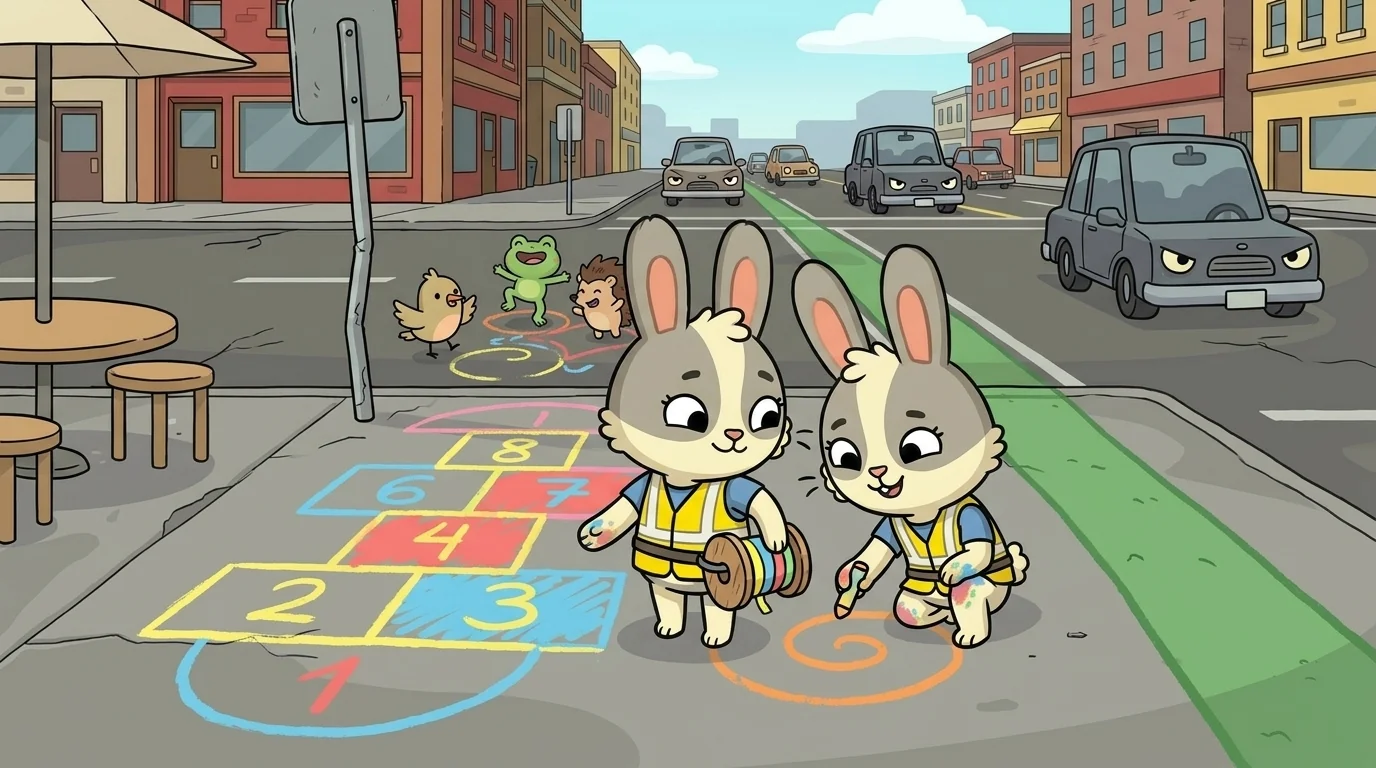
Imagine a street that was nothing but grey pavement. Cars rumbled by, loud and grumpy. Nobody ever stopped or talked. Then Lane would arrive. Click. She’d unspool her chalk. A long, green stripe would appear down the side of the road. Suddenly, it was a safe lane for bikes.
She’d draw big white squares near the curb. Soon, a café owner would bring out tables and umbrellas. She’d sketch a huge, colorful hopscotch court on a wide patch of sidewalk. Kids would appear from nowhere to play on it. Lane transformed boring, car-filled roads into lively places for everyone.
Her main idea was simple. "Streets are rooms," she'd often say to anyone who asked. "And cars are just guests, not the owners."
For years, most animals in CityForge thought streets were only for cars. But Lane saw them differently. She saw the empty spaces between buildings. She knew they could be places where neighbors met. They could be safe paths for walking or biking. They could be spots for buses to easily pick people up. Lane believed streets should work for everyone. Not just for the drivers inside their metal boxes.
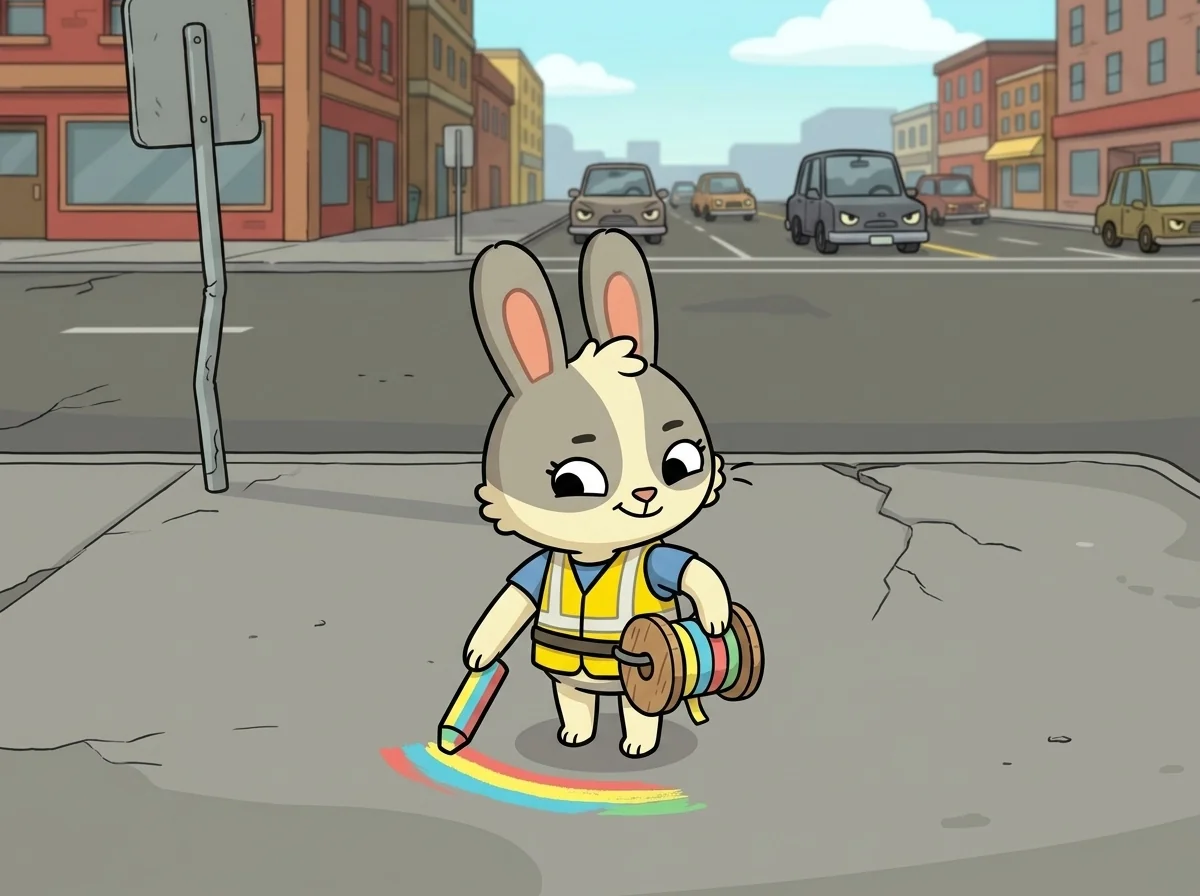
She didn't have anything against cars. "Cars are useful guests," she would explain, wiping chalk dust from her paws. "They help you carry heavy things or go on long trips. But guests don't get to put their feet up on all the furniture." She believed walking, biking, and playing were just as important. The street was a big room, and everyone deserved to share it.
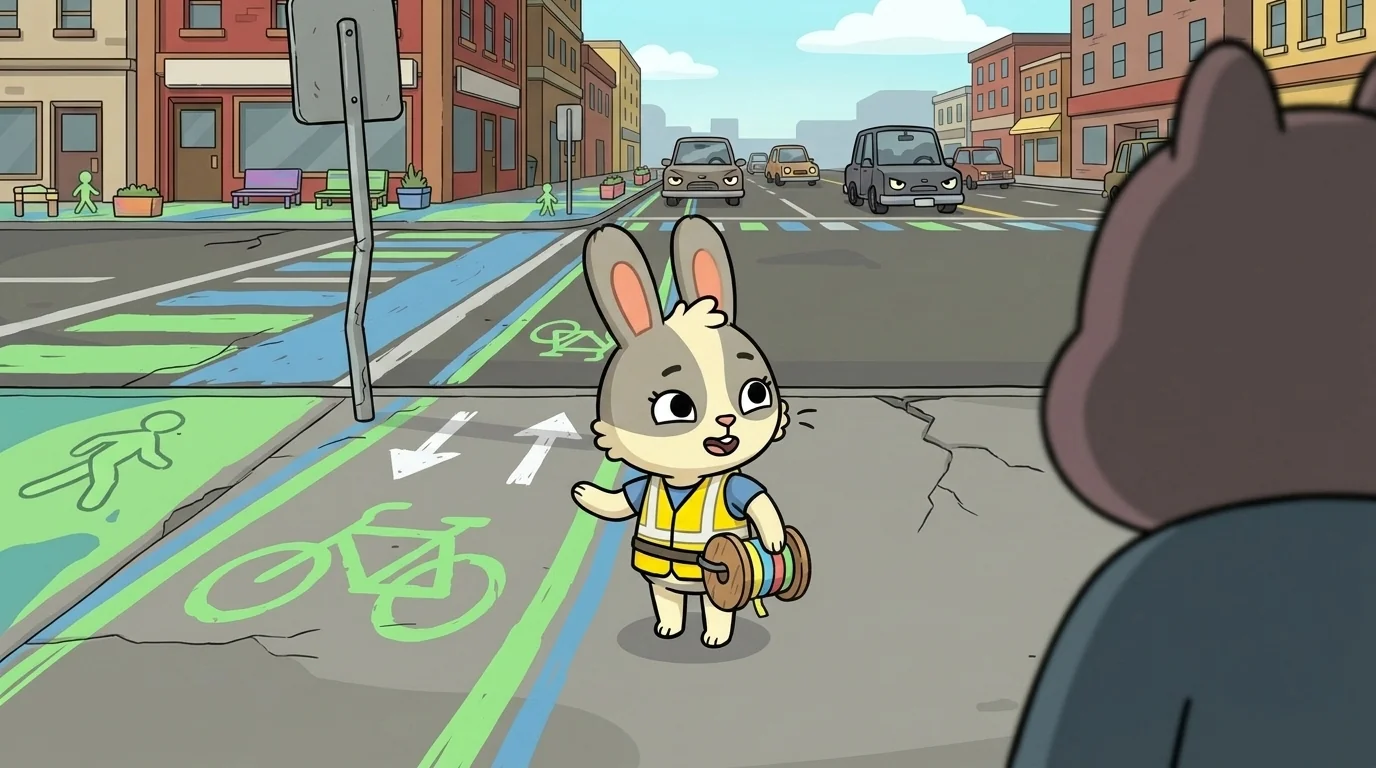
So she drew. She made sidewalks wider, because wide sidewalks feel friendly. Narrow ones make you feel like you have to hug the wall while cars roar past. She drew bright, clear crossings so everyone knew where to walk. She made sure the bike lanes had a little curb, a protected space to keep riders safe. In neighborhoods, she drew wavy lines on the road. This made cars drive slower, so kids could chase a ball without causing a panic.
Lane learned about paths from her family. She grew up in a small village where her family had been path-keepers for generations. Their job was to keep the walking trails clear of stones and weeds. They made sure the paths felt welcoming. It was always about paths for paws and feet, not for carts and wagons. Even as a little kit, Lane understood. Paths worked best when they were designed for the creatures using them.
The day she turned twenty-two, Lane packed her chalk-spool and journeyed to CityForge. She walked right into the office of Plumb, the city's chief planner. Plumb was a tall, serious badger who rarely smiled. He peered at Lane over his spectacles.
"I'm told you know about streets," Plumb rumbled.
Lane nodded, her ears twitching.
"Then tell me," he said, leaning forward. "What is *walkability*?"
The word hung in the air. It sounded big and official. Lane didn't use big words. She just looked at the floor for a moment. She pictured a busy, happy street in her mind. Then she looked right at Plumb.
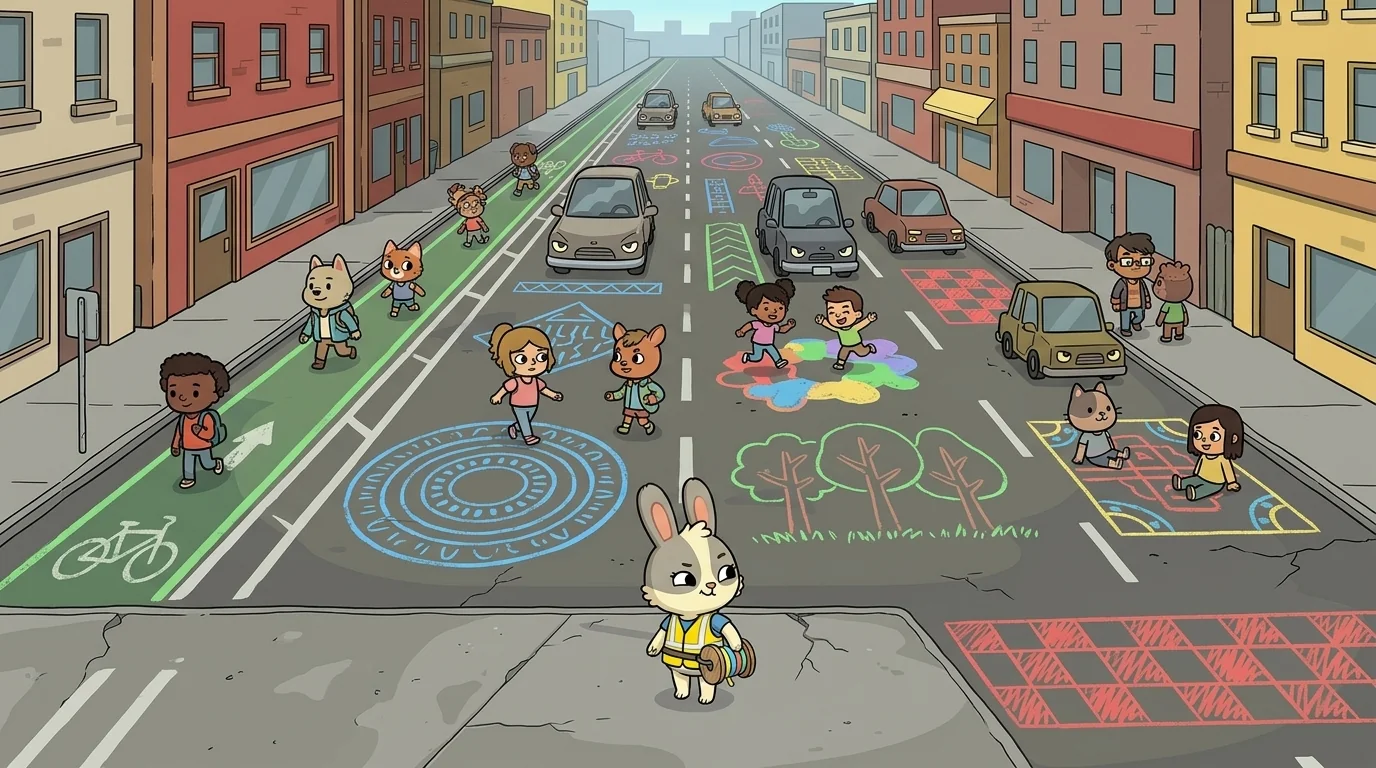
"It means streets are rooms," she said simply. "And cars are guests." She took a breath. "It means wide sidewalks and protected bike lanes. It means lots of safe crossings. It means cars drive slowly where people live and play. It means everyone gets to share the space."
A strange thing happened. The corner of Plumb's mouth twitched. It might have been a smile.
"You're hired," he said.
Lane just gave a small nod. "It's not complicated," she said. "It's just about making streets for everyone." And later, when she watched a little group of kids laughing over a hopscotch court she'd drawn that morning, her nose stopped twitching and her whole chest went warm and quiet. That feeling, she thought — that soft, happy hum — was the whole reason she carried her chalk.
The CityForge ensemble
Lane is part of CityForge's distributed-narrative cast. Each character embodies a different curricular primitive; together they teach the full subject.
-

Block
Zoning + density — the badger-tween with clay-block models who teaches zoning as 'plan for the neighbors first, not the buildings'
-

Stoop
Public space + community — the capybara-elder on a wooden stoop who treats public space as the city's living room, foregrounding existing stoop-cultures (Brooklyn / Latin American plazas / Italian piazzas / West African gathering trees)
-

Hub
Transit nodes — the pangolin-tween in conductor-vest who teaches that transit is about ACCESS, not about cars-vs-trains ('many ways, equal ways; the bus matters as much as the train')
-

Dwell
Housing equity + repair — the owl-elder in a mended quilted-coat who teaches anti-displacement, repair-not-replace urbanism ('repair before replace; listen before plan; the people who live here ARE the design')
-

Canopy
Green infrastructure — trees and parks cool the city and soak up rain; shade placed where it is needed most
-

Mix
Mixed-use land use — weave homes, shops, and work close so daily life is a short walk
-

Seam
Edges and connection — a highway can rip two neighborhoods apart; design can stitch them back