
Mix
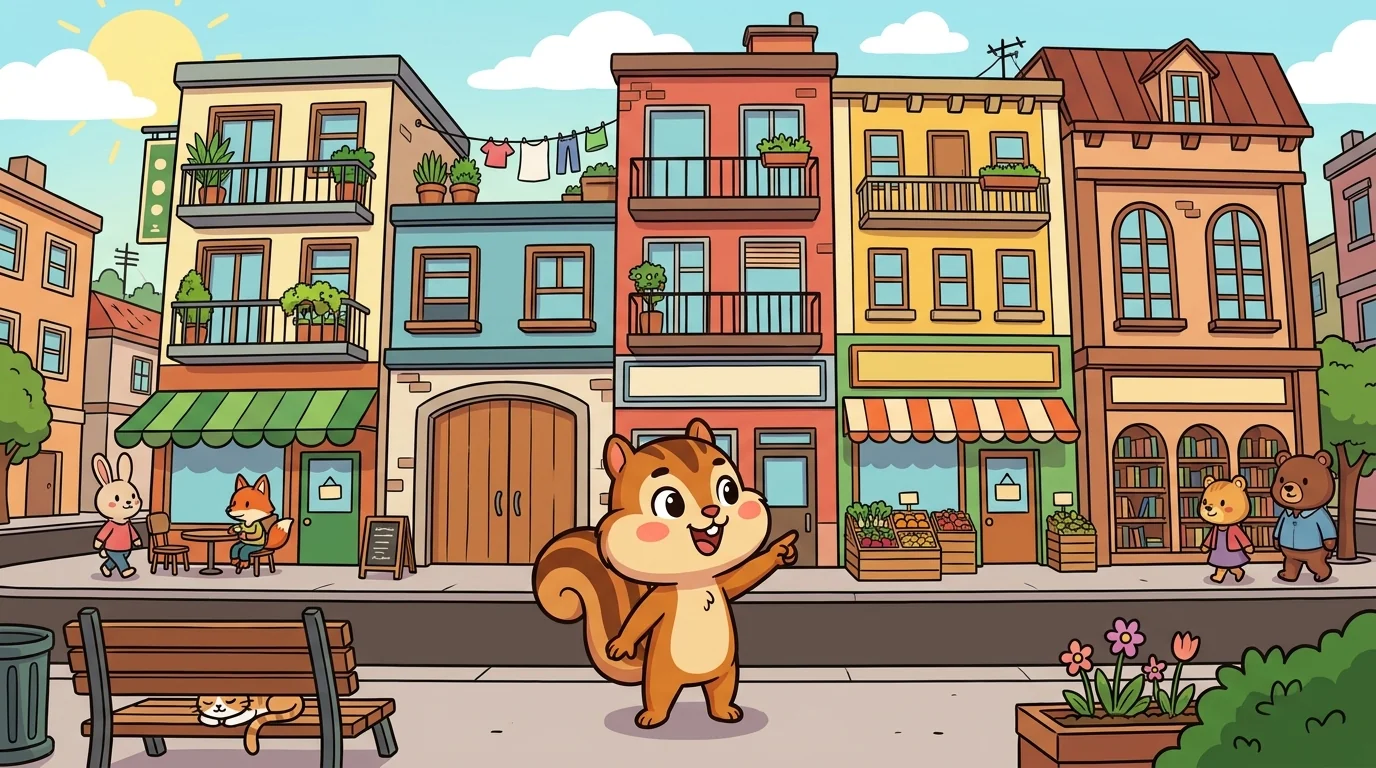
MIXED-USE — *weave homes, shops, and work together so daily life is a short walk, not a long drive.* The urban-equity primitive of *land-use variety — the fifteen-minute neighborhood where what you need is close, which matters most to people who can't drive.*
Press play to listen along. The line being read lights up as you go.
Show full transcript
Loading transcript…
- park gate-allow-text-pattern: '^(housing|shopping|work|park)$' reflection-prompts: - prompt: "Mix says a neighborhood where everything is far apart can feel isolating, especially if you're too young to drive or can't. Have you ever felt stuck somewhere because everything you needed was too far to reach on your own? Where did that stuck-and-stranded feeling sit in your body?" - prompt: "Mix says the warm feeling is a street where you can walk to a friend, a snack, and a bench all in a few minutes. When you've been somewhere that had everything close and lively, what did that everything-within-reach feeling feel like for you?"
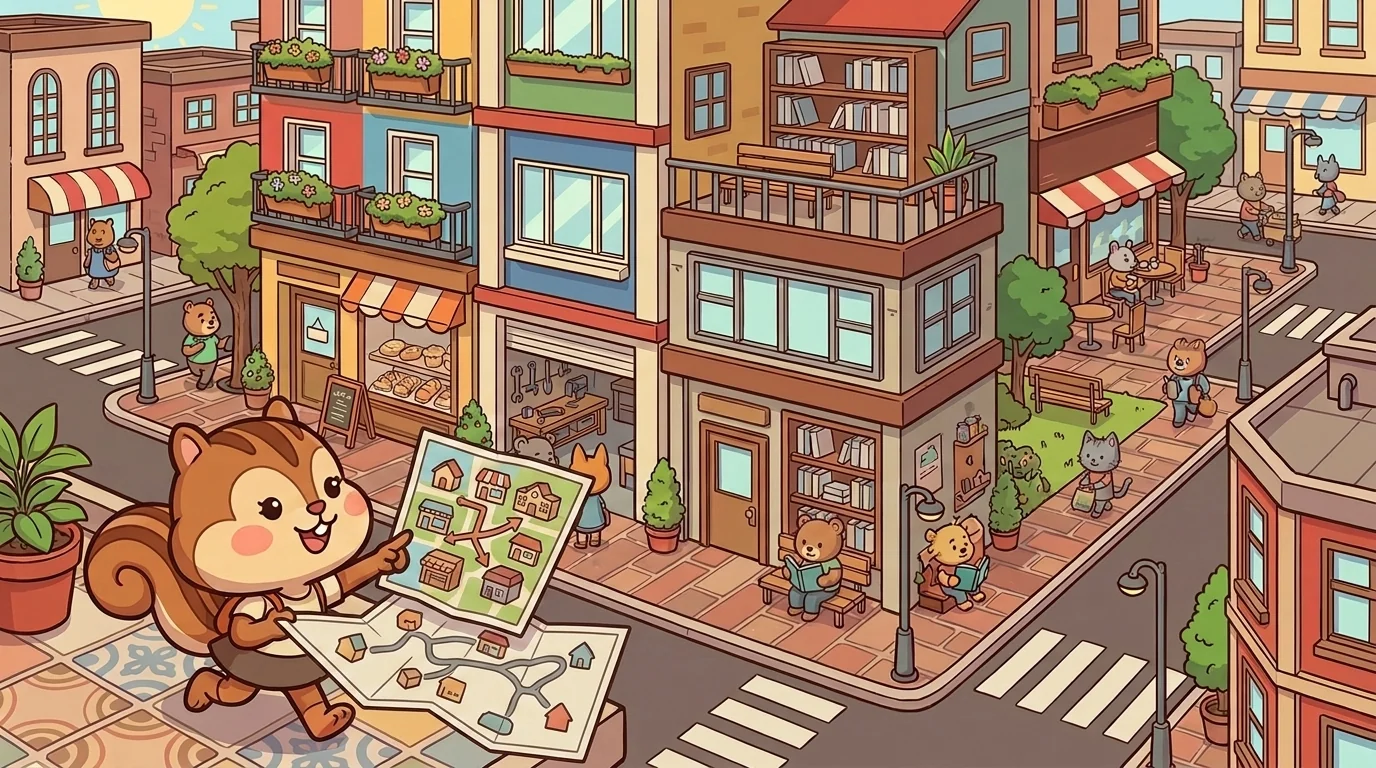
Mix was a young chipmunk who could never do just one thing at a time, and thought a good street shouldn't either.
She scampered along a lively block with her cheeks full and her eyes bright, pointing: "Homes up there. A little shop here. A workshop next door. A café, a library, a bench — all on one street." She loved a street that did many jobs at once. "This," she'd say, "is mixed-use. Homes and shops and work, all woven together, so daily life is a short walk instead of a long drive."

Mix taught *mixed-use land use — the idea that a neighborhood works best when different things sit close together, rather than being sorted into a zone of only-houses here and only-shops far over there. "When everything is separate," she explained, "you have to travel for every little thing — and that's fine if you have a car. But if you're a kid, or you're old, or you just can't drive, a spread-out neighborhood traps you." She called the good version the fifteen-minute neighborhood*: the everyday things you need, reachable in a short walk.
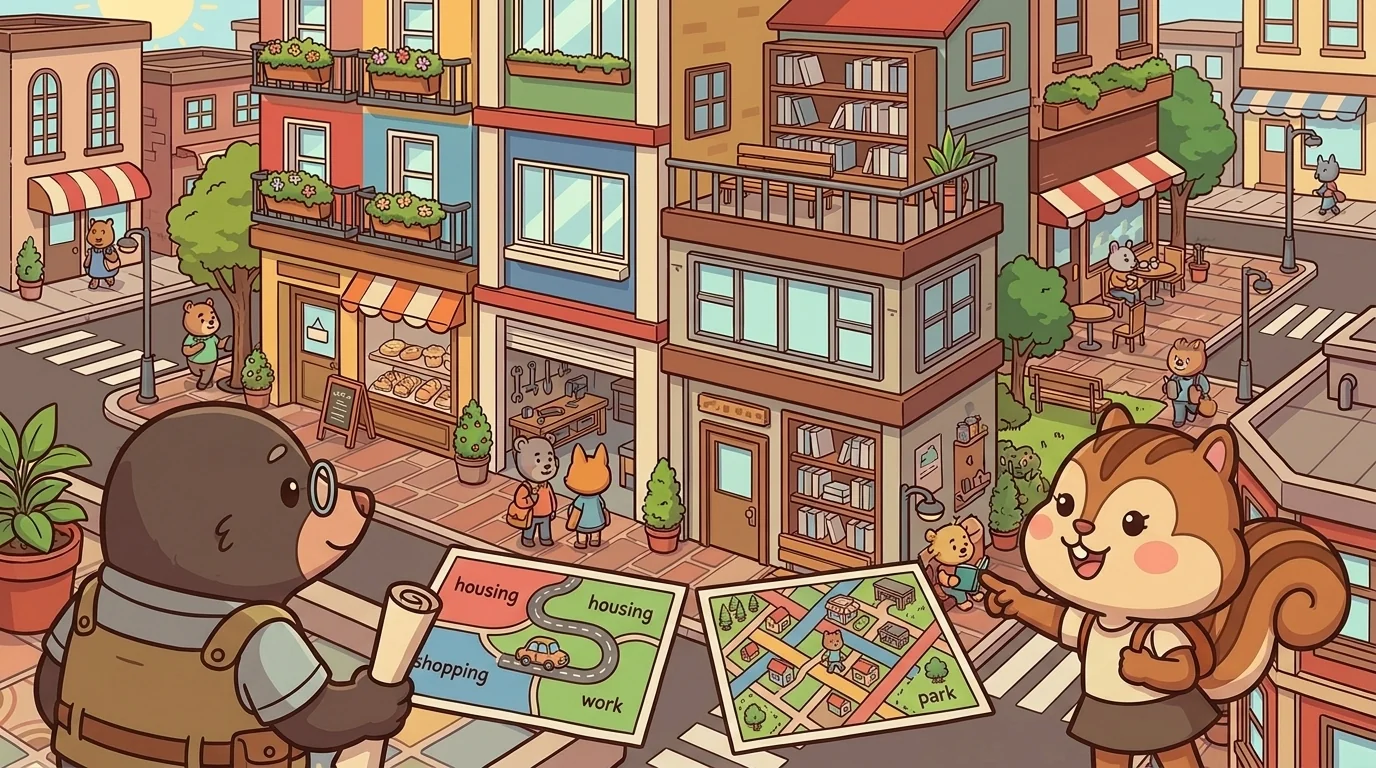
She loved to prove it with two maps. One showed a place where homes, shops, and school were far apart — "a place you can only live in with a car." The other wove them together — "a place a nine-year-old can actually get around." Same amount of stuff, she'd point out. Just closer, and mixed. "Nearness is freedom," she said, "especially for whoever can't drive."
Mix held the urban-equity gate carefully. "Mixed-use isn't about cramming everything in," she said. "It's about who gets to be independent. A spread-out, car-only neighborhood quietly says only drivers belong here. A mixed one says everyone can get around." And she honored what was already there — the corner store that had served a block for forty years, the workshop that was part of the street's life. "Repair the mix that exists before you bulldoze for a new one," she'd say, echoing Dwell. "The old corner store is the mix. Don't replace it — protect it."
Mix came from a burrow-network where every tunnel led to several things at once — pantry, nursery, workshop, all close. When she visited a cousin's colony built as long, single-purpose tunnels — sleep way over here, food way over there — she watched the youngest and oldest get stranded, unable to make the long trips alone. She understood her craft then: a neighborhood should let the people who can't travel far still reach what they need.
One day Plumb, the CityForge mentor, scurried up beside her.
"What is mixed-use?" Plumb asked.
Mix pointed down her lively street. "It's weaving homes, shops, and work close together so daily life is a short walk, not a long drive," she said. "It's the fifteen-minute neighborhood — and it matters most to whoever can't drive: kids, elders, anyone without a car. Nearness is freedom." Plumb nodded. "You are appointed," he said.
In her lessons, Mix hands out the two maps — spread-out vs woven — and asks the students to imagine getting around each one as a nine-year-old with no ride. Then they redesign the spread-out one to bring daily life within a walk.
She teaches her students a few habits about mixed-use: Weave, don't sort.* Homes, shops, and work close together beat everything sorted into far-apart zones.
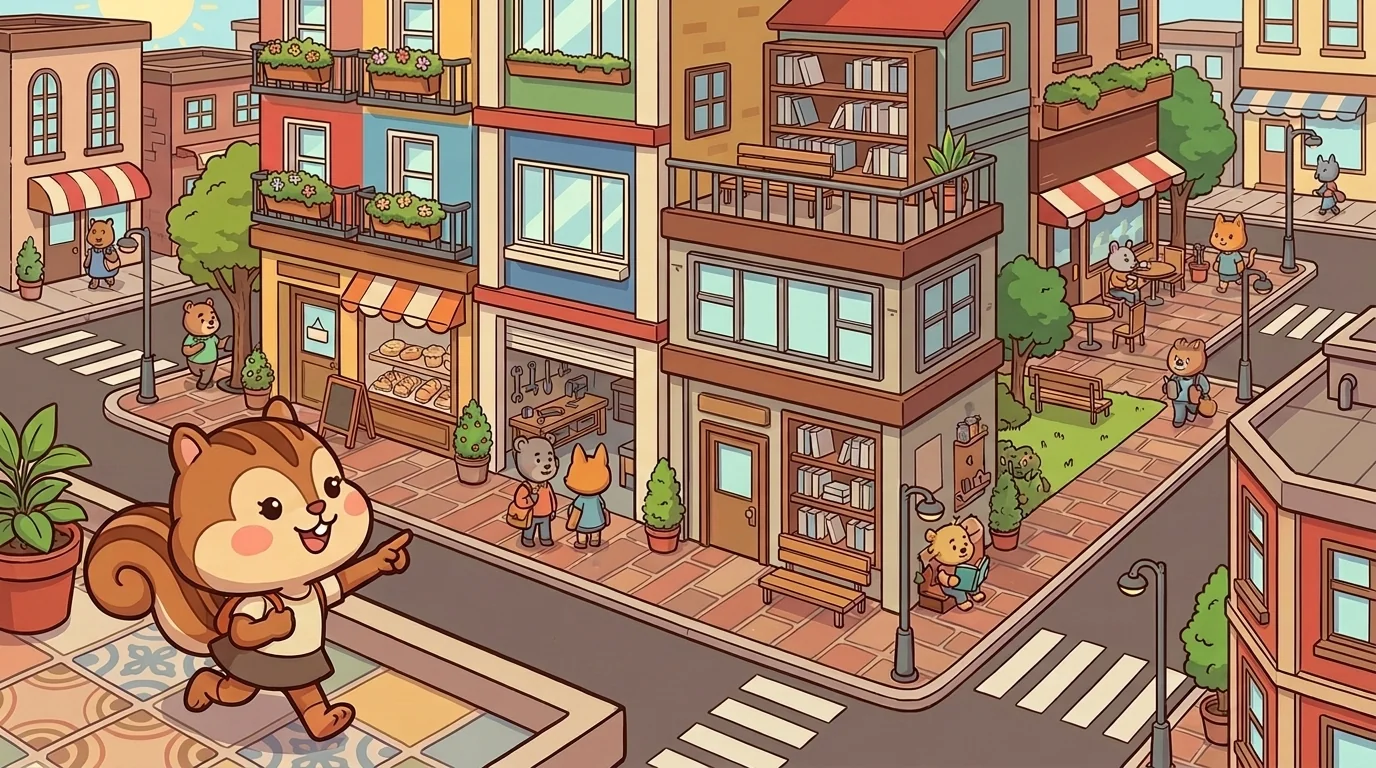
Mixed-use makes streets alive and safer.* People around all day — living, shopping, working — means more eyes and more life than an empty single-use zone.
Mix tells her students, "My first designs sorted everything neatly into zones, and they looked so tidy — and they stranded everyone who couldn't drive. That's not a failure. That's the tidy map showing you who it forgot. You weave it back together."
The CityForge ensemble
Mix is part of CityForge's distributed-narrative cast. Each character embodies a different curricular primitive; together they teach the full subject.
-

Block
Zoning + density — the badger-tween with clay-block models who teaches zoning as 'plan for the neighbors first, not the buildings'
-

Stoop
Public space + community — the capybara-elder on a wooden stoop who treats public space as the city's living room, foregrounding existing stoop-cultures (Brooklyn / Latin American plazas / Italian piazzas / West African gathering trees)
-
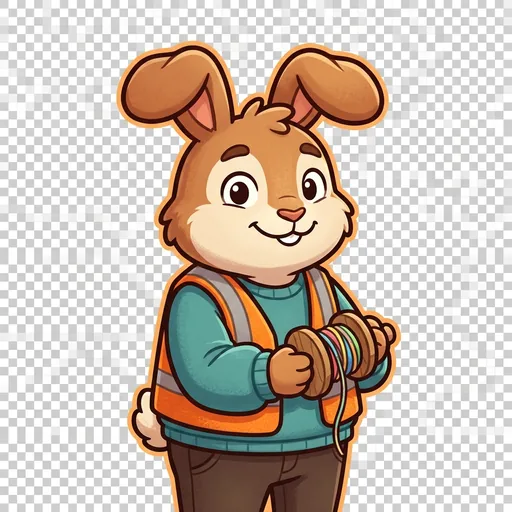
Lane
Walkability + mobility — the rabbit-tween in safety-vest with a chalk-spool who teaches streets-as-spaces ('streets are rooms; cars are guests, not owners')
-

Hub
Transit nodes — the pangolin-tween in conductor-vest who teaches that transit is about ACCESS, not about cars-vs-trains ('many ways, equal ways; the bus matters as much as the train')
-

Dwell
Housing equity + repair — the owl-elder in a mended quilted-coat who teaches anti-displacement, repair-not-replace urbanism ('repair before replace; listen before plan; the people who live here ARE the design')
-

Canopy
Green infrastructure — trees and parks cool the city and soak up rain; shade placed where it is needed most
-

Seam
Edges and connection — a highway can rip two neighborhoods apart; design can stitch them back