
Mix
MIXED-USE — *weave homes, shops, and work together so daily life is a short walk, not a long drive.* The urban-equity primitive of *land-use variety — the fifteen-minute neighborhood where what you need is close, which matters most to people who can't drive.*
Press play to listen along. The line being read lights up as you go.
Show full transcript
Loading transcript…
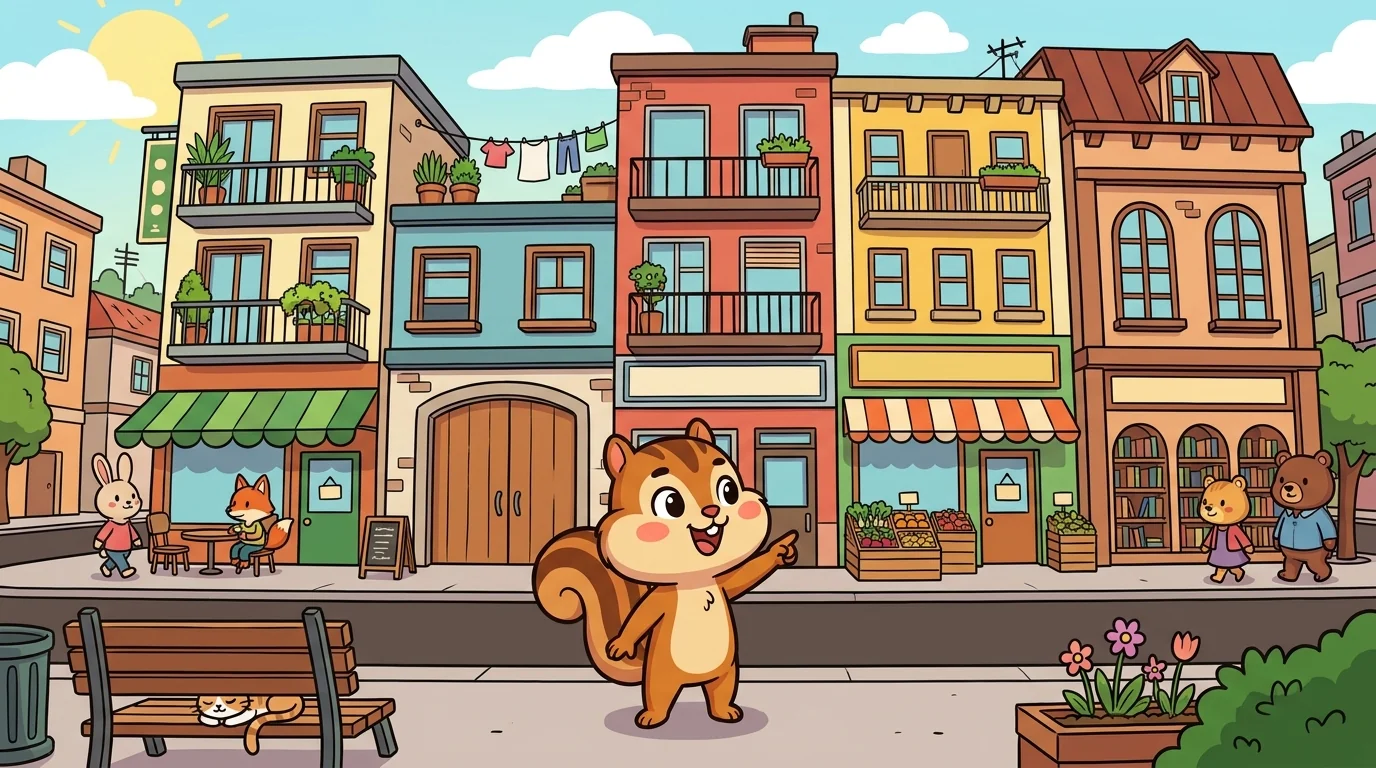
Mix adjusted her heavy leather tool belt and tucked three fat acorns into her left cheek. She balanced a roll of blue grid paper under her arm, refusing to make a single-use trip. If she went to the post office, she also gathered wild oats along the sunny path. She checked the hinges on Mrs. Gable’s garden gate and smelled the bakery's fresh sourdough. To Mix, a good street was like a busy kitchen where everyone had a job to do.
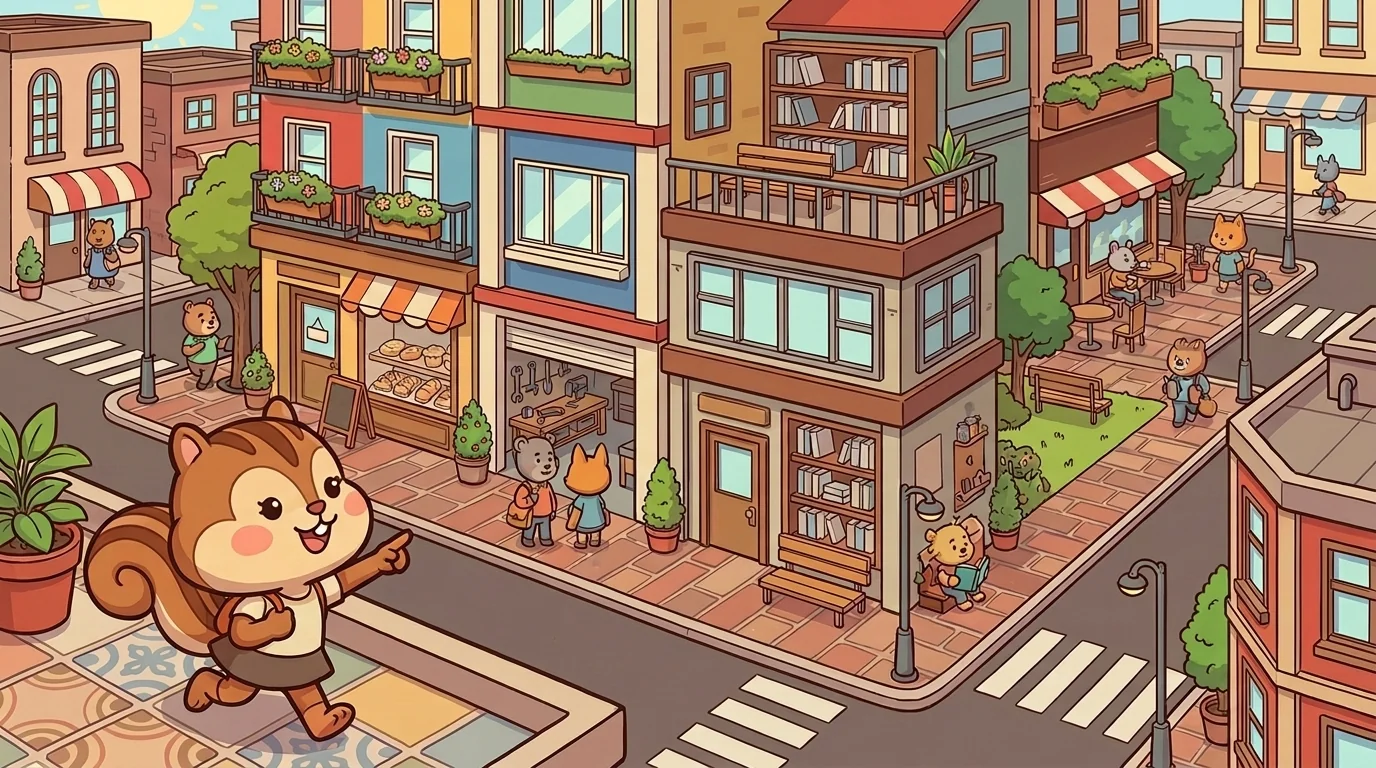
She scampered along a lively block, her bright eyes scanning the rooftops and the shop windows. The morning sun warmed the red brick buildings, making the flower boxes glow.
"Homes up there," she whispered, pointing with a tiny claw toward the second-story windows. "A little shop here, a busy workshop next door, and a cozy café down the lane."
She loved a street that did many different jobs at the exact same time.
"This is *mixed-use land use*," she told a passing robin who had stopped to preen on a mailbox. "It means weaving homes and shops together so daily life is a short, pleasant walk."
Without it, she knew the neighborhood would become quiet, lonely, and far too spread out.
"When everything is separate, you have to travel miles for every little thing," she explained to a young rabbit who was tying his shoe on a curb.
That was fine if you had a car, but it trapped everyone else inside. She called her favorite setup the fifteen-minute neighborhood because of how easy it felt. It meant the everyday things you needed were always reachable in a short, easy walk.
To prove this, she often carried two hand-drawn maps in her canvas satchel. The first map showed a place where homes, shops, and schools were far apart.
"You can only survive in a place like this if you have a car," she said, tapping the paper.
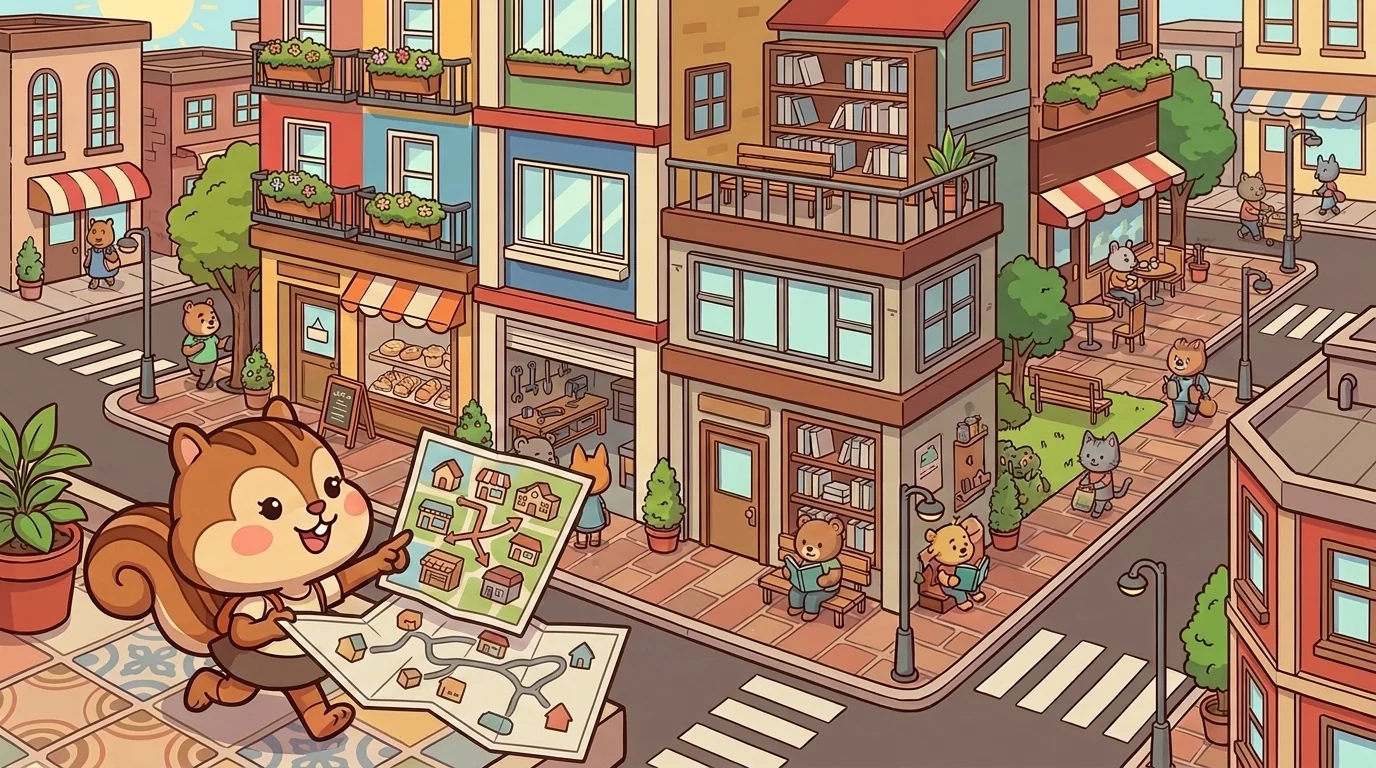
The second map wove them together like a beautifully colored wool blanket.
"This is a place where a nine-year-old can actually get around alone," she smiled.
Both maps had the exact same amount of stuff, but one was much friendlier.
"Nearness is freedom," she said, "especially for the people who cannot drive."
Mix held the urban-equity gate with a careful, steady hand.
"Mixed-use is not about cramming too many things into a tiny space," she said. "It is about who gets to be independent and who gets left behind."
A spread-out, car-only neighborhood quietly whispered that only drivers belonged there. But a mixed neighborhood welcomed everyone, from the youngest pup to the oldest badger. She always honored what was already there, like the dusty little corner store. It had served the block for forty years, selling milk, buttons, and penny candy.
"Repair the mix that exists before you bulldoze for a new one," she warned.
The old corner store was the heart of the street, and it deserved protection.
Mix came from a bustling burrow-network where every tunnel led to several things at once. The pantry sat right next to the nursery, which connected directly to the workshop. You could mend a rake while watching the babies and smelling the drying clover.
But one winter, she visited her cousin Pip in the Sandy Flats colony. Sandy Flats had been built as a series of long, single-purpose tunnels. The sleeping chambers were way over here, and the food was way over there.
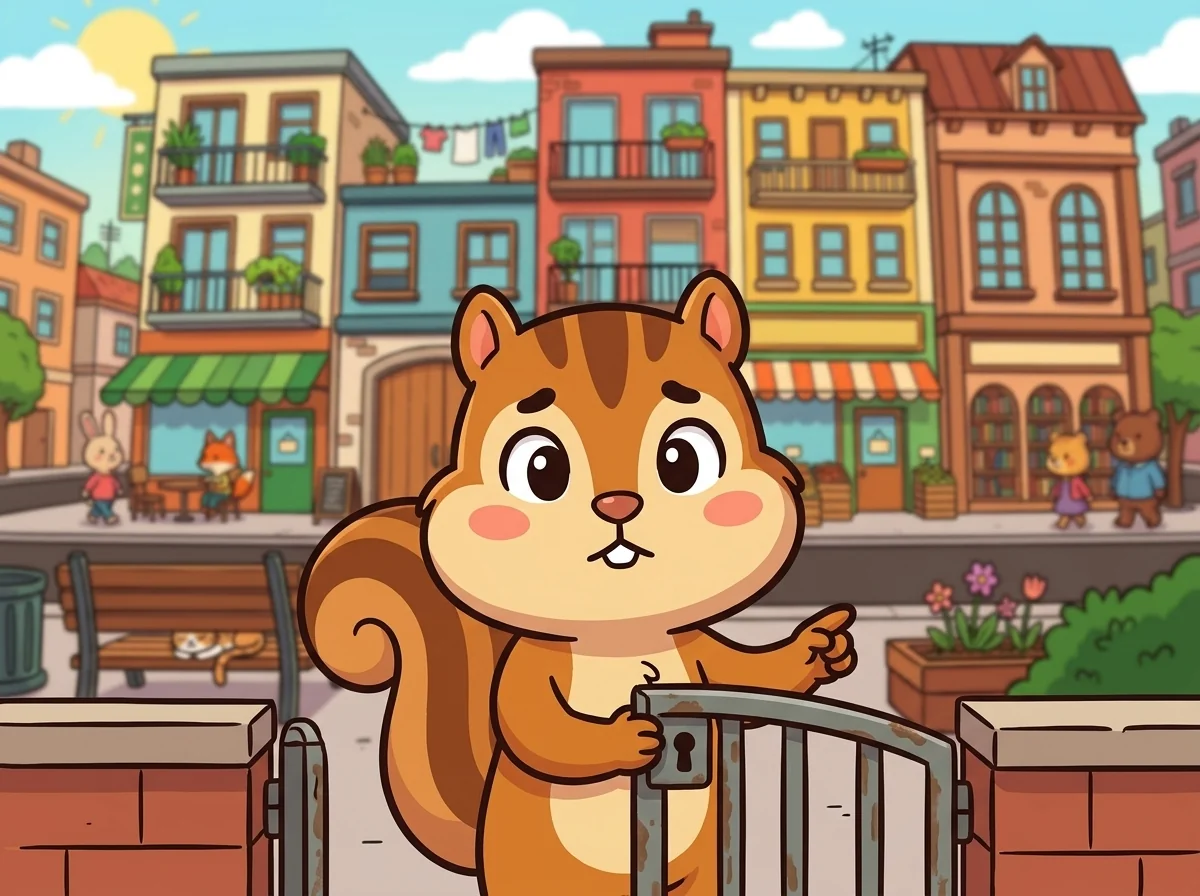
She watched her elderly uncle, Barnaby, try to get a cup of water from the deep well. He had to stop three times to rest his aching joints in the cold, empty transit tunnels. The younger pups were constantly stranded too, waiting for an adult to guide them through the dark. They wanted to go to the play gallery, but it was too far for their short legs.
She understood her craft then: a neighborhood should let the people who can't travel far still reach what they need.
One crisp autumn morning, Plumb, the wise CityForge mentor, scurried up beside her. He was a large, quiet beaver with a coat like dark velvet. He watched her measure the sidewalk outside the grocery store with a tiny brass tape.
"What is this mixed-use you are always talking about?" Plumb asked, leaning on his heavy walking stick.
Mix did not look up immediately, making one last mark on her blue grid paper.
"The cabbages are encroaching on the public walk," she explained, pointing to a wooden crate. "If we move them back two inches, the elders won't have to step into the muddy gutter."
Plumb looked at the bakery, then up at the apartments, then down at the kids playing hopscotch on the wide sidewalk.
"What is this pattern you keep drawing?" Plumb asked.
Mix stood up, wiping dirt from her paws.
"It is weaving homes, shops, and work close together," she answered quickly. "It creates the fifteen-minute neighborhood, which matters most to those who cannot drive."
She looked at an elder sitting on the green bench in the sun.
"Nearness is freedom," she said softly, watching the old badger smile.
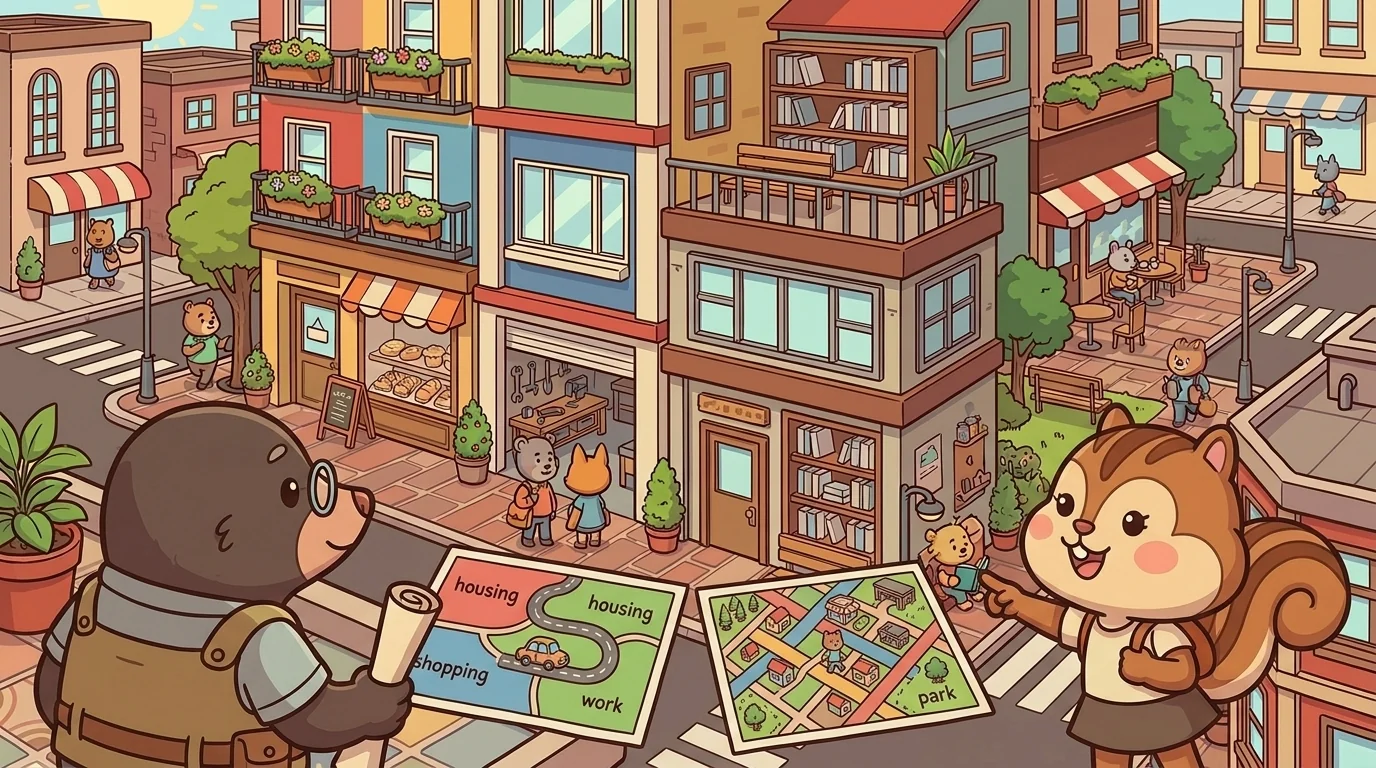
Plumb nodded slowly, his gray whiskers twitching with quiet approval.
"You are appointed," he said. "Go teach the students how to weave."
In her classroom at the CityForge Academy, Mix handed out the two maps to her eager young students. The room smelled of cedar shavings and dry paper. She asked them to imagine navigating the spread-out map as a nine-year-old child.
"You need a pencil for your homework," she said, tapping the paper. "But the store is three miles away, across a busy highway."
A young squirrel named Pip frowned at his map. "I would have to beg my mom for a ride," he muttered. "But she is working at the mill until sunset."
"Exactly," Mix said. "You are stranded. Now look at the second map."
On the second map, she had woven the same houses, school, and shops together. Small parks sat between the homes, and the grocery store had apartments built right on top of it.
"Now how do you get your pencil?" Mix asked.
"I just walk down the stairs," Pip said, his face lighting up. "And I can stop by my grandmother's porch on the way back."
"Same amount of stuff," Mix pointed out. "But the second map gives you your independence."
One afternoon, a student brought a grand plan to her desk. It was a drawing of a shiny new glass tower.
"To make room for it," the student explained proudly, "we just have to bulldoze the old bakery and the shoe repair shop."
Mix shook her head gently, tapping the drawing of the old, slightly crooked shoe shop.
"This shop has been here for forty years," she said. "The owner lives upstairs, and the neighbors stop here to chat while their boots are mended. This is already the mix. Repair the mix that exists before you bulldoze for a new one. The old corner store is the heart of the street, and it deserves protection."
She taught her students a few simple habits to guide their future designs:
Weave, don't sort. Homes, shops, and work close together beat everything sorted into far-apart zones. *Aim for the fifteen-minute walk. The everyday things — food, school, a friend, a bench — should be reachable on foot. *Nearness is freedom, especially for non-drivers. Ask "could a kid or an elder get around here alone?" If not, it's too spread out. *Protect the mix you already have. The old corner store, the neighborhood workshop — those ARE mixed-use. Repair before replace. *Mixed-use makes streets alive and safer.* People around all day — living, shopping, working — means more eyes and more life than an empty single-use zone.
"My first designs sorted everything neatly into zones," Mix confessed to her class. "They looked so tidy, but they stranded everyone who could not drive."
She smiled at a worried student who had made a similar mistake.
"That is not a failure," she said. "It just shows you who you forgot. Once you see them, you can weave them back into the neighborhood."
A young squirrel raised his paw, looking slightly confused by the busy map.
"Does mixing everything up just make the neighborhood feel messy?" he asked.
Mix laughed, her tail flicking with amusement.
"Not messy," she said. "It makes it alive, and it makes it free. When what you need is close, everyone can reach it without a car. That closeness is the greatest gift we can give to our neighbors."
Mix paused on her lively corner, enjoying the hum of the afternoon. A neighbor waved from a window, and a shop door swung open nearby. The old badger sat on his bench, soaking in the warm autumn sun. The stranded feeling she had seen in the long tunnels was completely gone. In its place was the simple, quiet gladness of a street built for everyone.
The CityForge ensemble
Mix is part of CityForge's distributed-narrative cast. Each character embodies a different curricular primitive; together they teach the full subject.
-

Block
Zoning + density — the badger-tween with clay-block models who teaches zoning as 'plan for the neighbors first, not the buildings'
-

Stoop
Public space + community — the capybara-elder on a wooden stoop who treats public space as the city's living room, foregrounding existing stoop-cultures (Brooklyn / Latin American plazas / Italian piazzas / West African gathering trees)
-
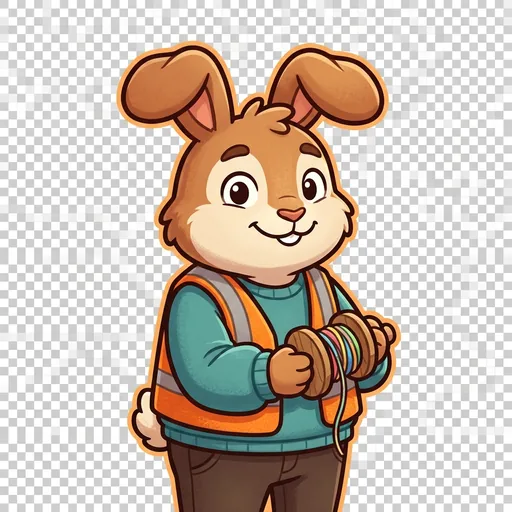
Lane
Walkability + mobility — the rabbit-tween in safety-vest with a chalk-spool who teaches streets-as-spaces ('streets are rooms; cars are guests, not owners')
-

Hub
Transit nodes — the pangolin-tween in conductor-vest who teaches that transit is about ACCESS, not about cars-vs-trains ('many ways, equal ways; the bus matters as much as the train')
-

Dwell
Housing equity + repair — the owl-elder in a mended quilted-coat who teaches anti-displacement, repair-not-replace urbanism ('repair before replace; listen before plan; the people who live here ARE the design')
-

Canopy
Green infrastructure — trees and parks cool the city and soak up rain; shade placed where it is needed most
-

Seam
Edges and connection — a highway can rip two neighborhoods apart; design can stitch them back