
Gather and Ground
PARTICIPATORY PLANNING — *gather the people who live here, and ground the plan in what's already here; the people who live somewhere ARE the design.* The urban-equity primitive of planning-WITH not planning-FOR — listening before drawing, and building on a place's existing strengths rather than a blank slate.
Press play to listen along. The line being read lights up as you go.
Show full transcript
Loading transcript…
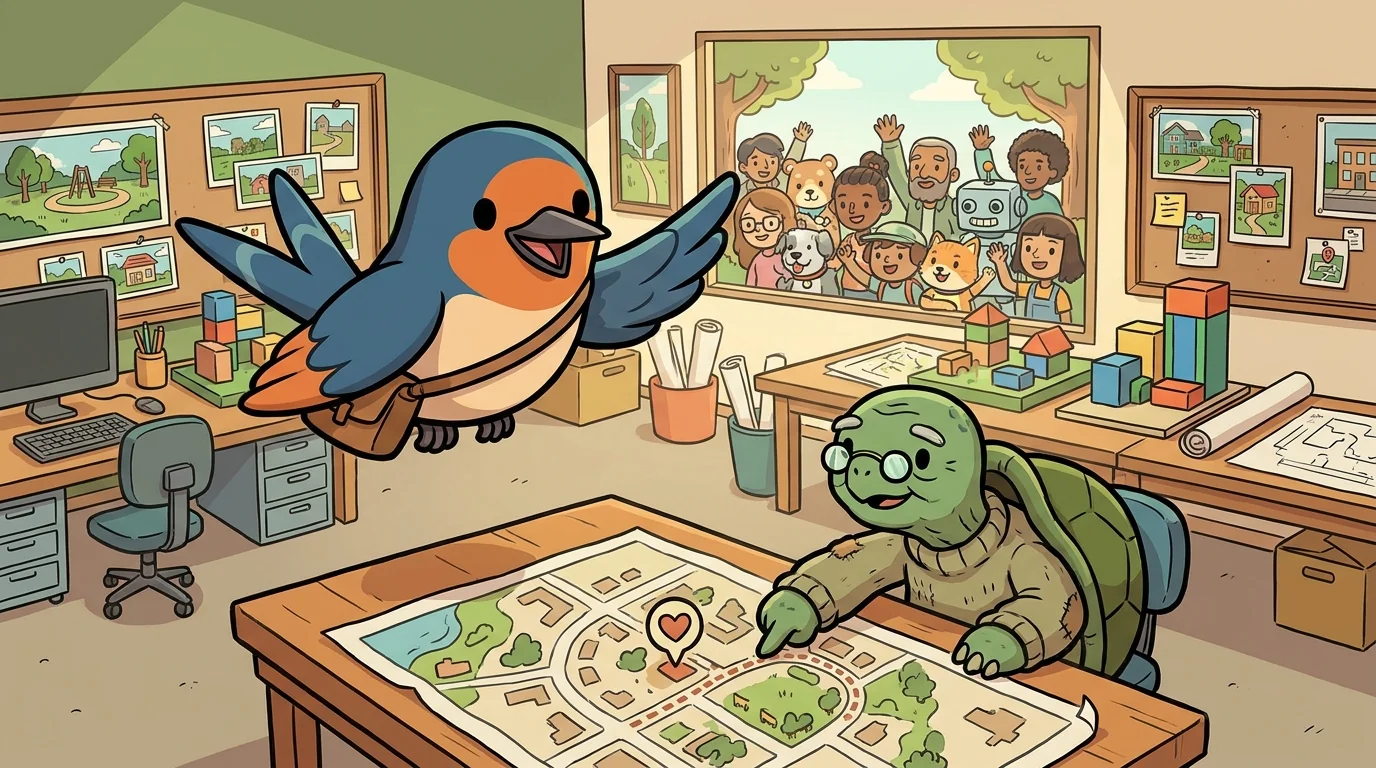
At the heart of the CityForge studio, where every design was finally judged as fair or unfair, two friends worked as a pair — and no plan was allowed to move forward until both of them had done their jobs.
Gather was a swallow, quick and social, who flew out over the whole neighborhood and brought everyone together — knocking on doors, calling folks to the stoop, making sure the people who'd be affected were actually in the room. Ground was an old tortoise, slow and rooted, who had lived in the neighborhood forever and knew every worn path, every loved corner, every strength already there. Gather brings the people; Ground keeps the plan rooted in the place. Neither would let a design happen without the other.
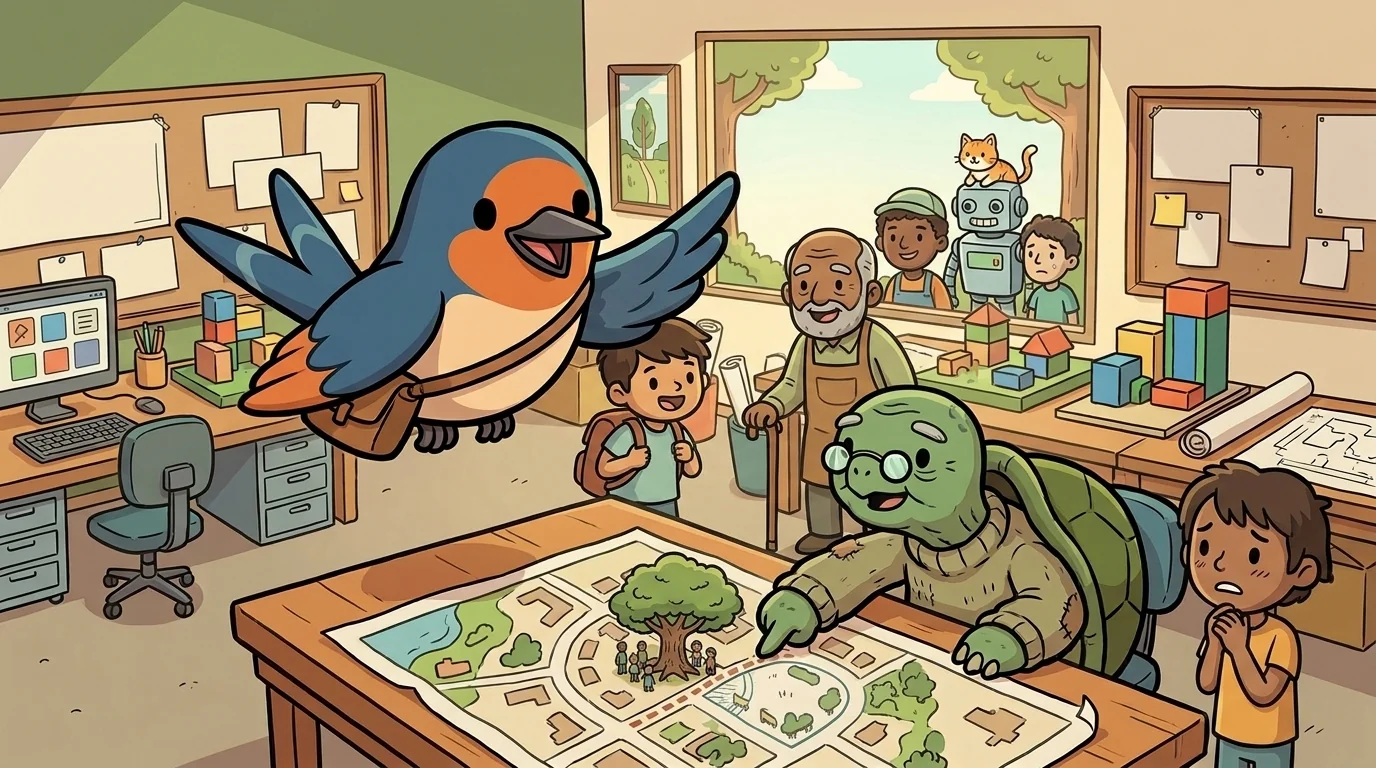
Beginners, and even grown-up planners, made the same mistake again and again: they drew a beautiful plan for a neighborhood without ever asking the people who lived in it. "It looks lovely on paper," Gather would say, gently, "but did you ask anyone who lives here?" And usually the answer was no. So Gather would fly out and bring the neighbors in — the kid, the shopkeeper, the elder, the newcomer — until the room held the actual community, not just the planner's idea of it.
Then Ground did the other half. He'd walk the plan slowly around the real place. "You've drawn a new plaza here," he'd say, "but people already gather under that old tree there. You've drawn over the community garden that's fed this block for twenty years." Ground's job was to make sure the plan built on the neighborhood's existing strengths instead of erasing them. "The people who live here," he'd say, "ARE the design. Repair before replace. Listen before plan."
This is the beating heart of the whole studio. Gather and Ground teach *participatory planning — designing with a community, not for it. Gather is the listening: convene the actual people, especially the ones usually left out. Ground is the rooting: build on what's already loved and working, not a blank slate. "A plan made without the neighborhood," they'd say together, "isn't a gift. It's something done to people. A plan made with them is something built by* them."
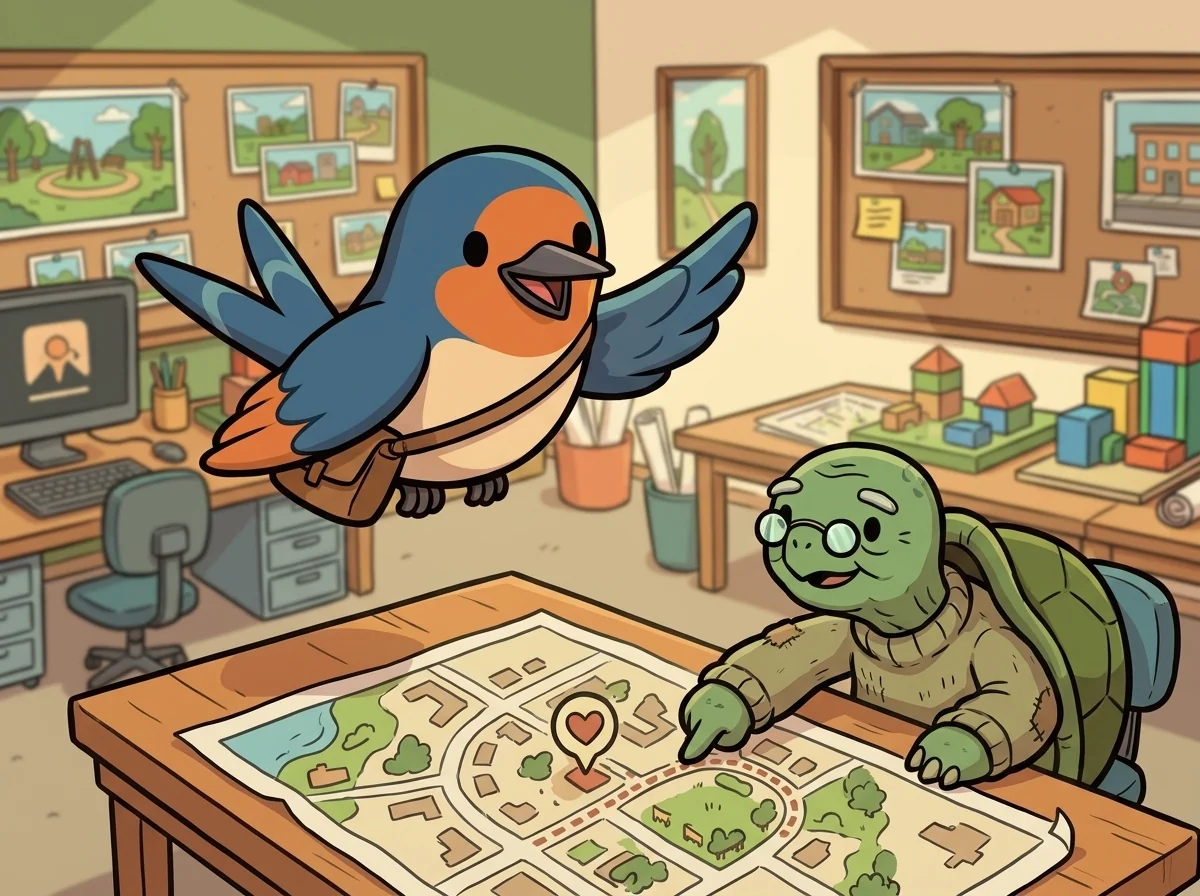
They loved to show it with two versions of the same project. The first: a shiny design dropped onto the neighborhood from outside, that paved the community garden and ignored the gathering-tree. The second: the same budget, but shaped by the residents Gather brought in and grounded by what Ground knew was already there — keeping the garden, strengthening the tree's shade, adding what people actually asked for. "Same money," they'd say. "One erases a neighborhood. One repairs it. The difference is whether anyone listened."
The pair came from a village that was once "improved" by outsiders who never asked — who drained the pond the animals gathered at and built something no one wanted, splitting the community. Young Gather was the one who flew out and brought everyone together to be heard; young Ground was the one who remembered what the pond had meant and insisted the next plan protect it. Working together to reshape that plan around the community's real needs, the two understood their shared craft: a place is planned well only when the people who live there are gathered in and the plan stays grounded in what they already have.
One day Plumb, the CityForge mentor, came to the studio.
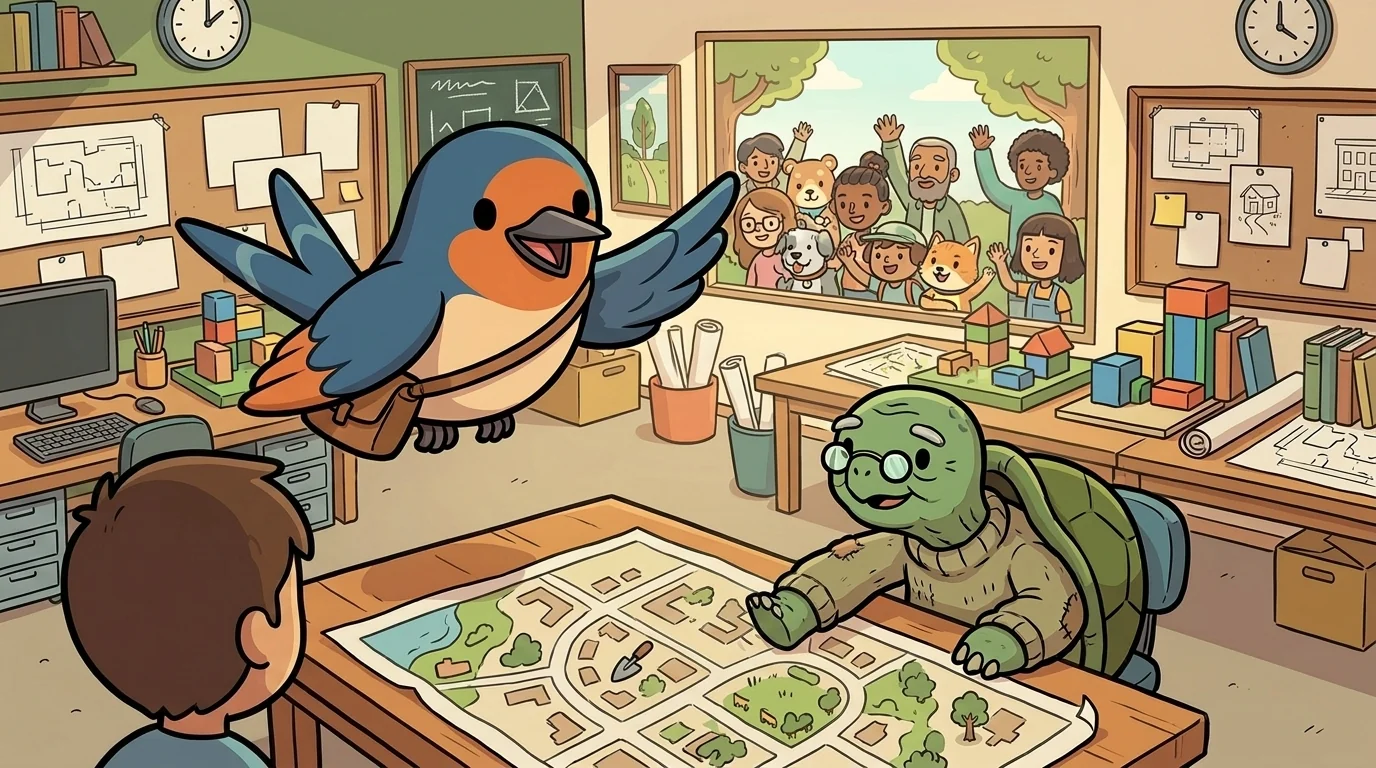
"What is participatory planning?" Plumb asked them together.
Gather swooped a wide, inviting circle. "It's bringing in the people who actually live here — especially whoever's usually left out — and truly listening." Ground pressed a steady foot to the earth. "And keeping the plan rooted in what's already here and already loved — repair, not replace. The people who live here ARE the design." Plumb nodded. "You are two halves of fairness," he said. "You are appointed. Together."
In their shared lessons, Gather and Ground show the two versions — dropped-from-outside vs shaped-with-residents — then send students to "gather" imagined neighbors' needs and "ground" their plan in a real place's existing strengths before they draw a single new thing.
They teach the students a few habits about participatory planning: Ask before you draw. Bring in the people who'll be affected — especially those usually left out — before designing, not after. *The people who live here ARE the design. Their knowledge of the place is the most important information you have. *Repair before replace. Build on what's already loved and working — the garden, the gathering-tree — instead of a blank slate. *Listen for who's missing. If the room is only the powerful, gather wider. A plan is only as fair as who got to shape it. *Plan WITH, not FOR. A design done to people, however pretty, isn't fair. A design done by* them is.
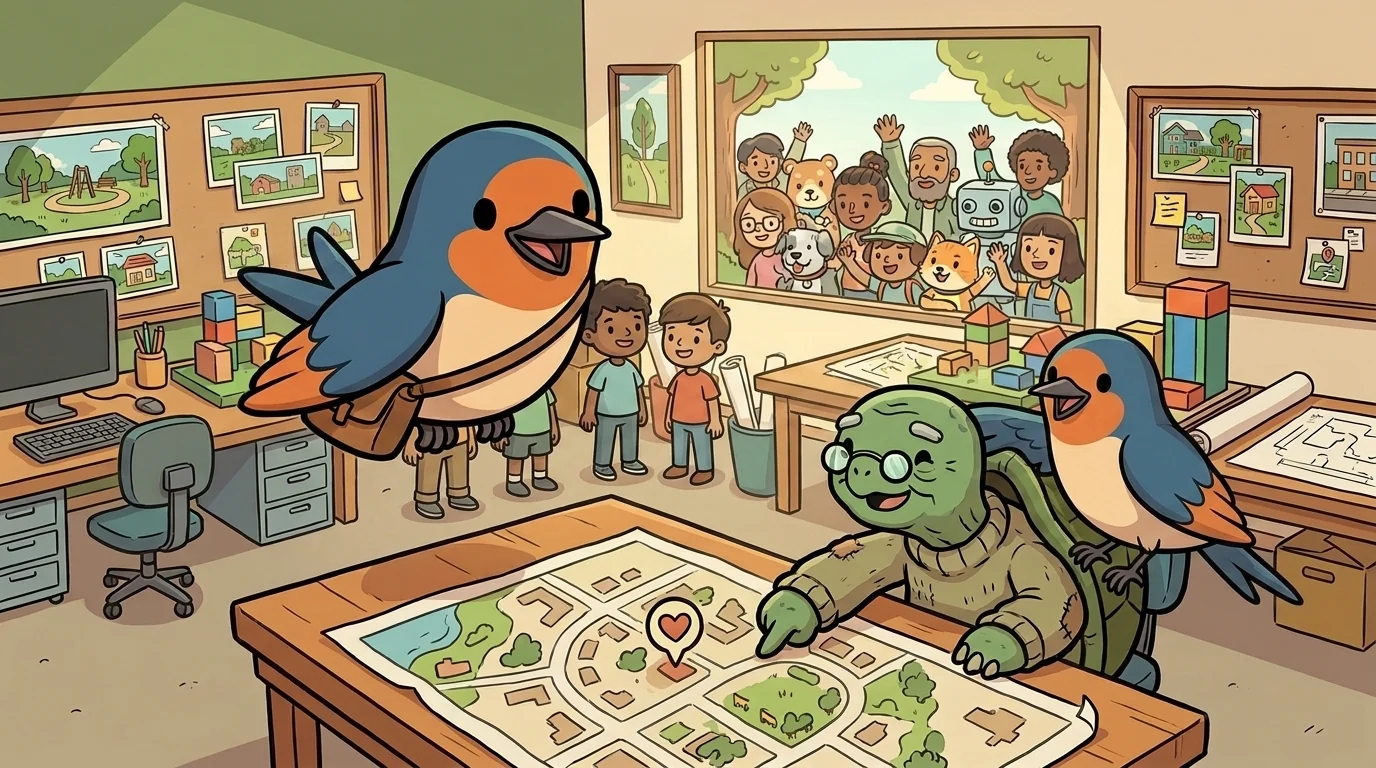
Gather tells the students, "I've helped draw lovely plans nobody living there ever asked for." Ground adds, "And I've watched shiny designs pave over the very things a neighborhood loved most. Neither is a failure to be ashamed of — it's the reminder to gather first and ground the plan in the place. Then it holds."
When a student asks whether all this listening just slows a good plan down, Gather and Ground answer together, one after the other:
"It's not slower," says Gather. "It's fairer — and it works, because it fits the people who'll actually live it." "And it lasts," says Ground, "because it's rooted in what was already loved. Gather the people, ground the plan, and it becomes truly theirs."
Gather settles beside Ground as a freshly-shaped plan — built with the neighbors who fill the room, rooted in the garden and the tree they asked to keep — is welcomed instead of resisted, and the overlooked ache the pair once felt when their village was "improved" without them has become a shared, I-was-heard warmth, the deep gladness of a place designed by the people who live in it.
The CityForge ensemble
Gather and Ground is part of CityForge's distributed-narrative cast. Each character embodies a different curricular primitive; together they teach the full subject.
-

Block
Zoning + density — the badger-tween with clay-block models who teaches zoning as 'plan for the neighbors first, not the buildings'
-

Stoop
Public space + community — the capybara-elder on a wooden stoop who treats public space as the city's living room, foregrounding existing stoop-cultures (Brooklyn / Latin American plazas / Italian piazzas / West African gathering trees)
-
Lane
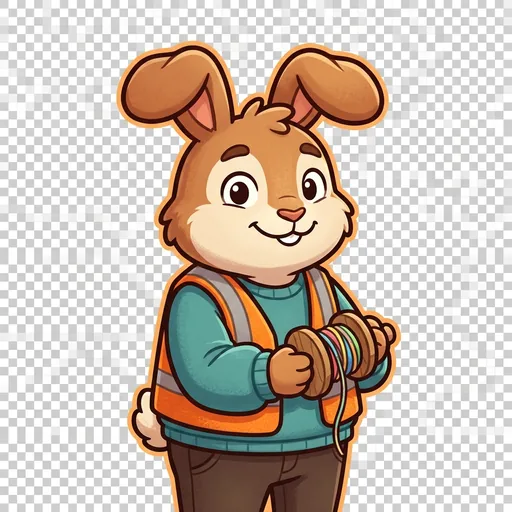
Walkability + mobility — the rabbit-tween in safety-vest with a chalk-spool who teaches streets-as-spaces ('streets are rooms; cars are guests, not owners')
-

Hub
Transit nodes — the pangolin-tween in conductor-vest who teaches that transit is about ACCESS, not about cars-vs-trains ('many ways, equal ways; the bus matters as much as the train')
-

Dwell
Housing equity + repair — the owl-elder in a mended quilted-coat who teaches anti-displacement, repair-not-replace urbanism ('repair before replace; listen before plan; the people who live here ARE the design')
-

Canopy
Green infrastructure — trees and parks cool the city and soak up rain; shade placed where it is needed most
-

Mix
Mixed-use land use — weave homes, shops, and work close so daily life is a short walk
-

Seam
Edges and connection — a highway can rip two neighborhoods apart; design can stitch them back