DigQuest

Become an archaeologist. Read the layers of a dig site to work out what's older, then analyze what you find to reason out who made it — and treat every culture's story with respect.

Level 1

For grown-ups — progress report →A private, on-device snapshot mapped to the skill areas practiced. Export a CSV or print — nothing leaves this device.

Excavation Grid

A dig site is layered like a cake: the deeper you go, the older it is. Uncover a stratified site, then use the Law of Superposition to figure out which finds are older and put a site's story in order — predict first, then check.

Which is older?Two finds, two layers — predict which one is older, then reveal the layers. Order the storyPut the finds from oldest to newest by their layer. Read the contextWhen is a deeper find not older? Spot disturbed layers.

Artifact Lab

An artifact is a clue. Look at what it's made of, how it was made, and where it was found — then reason out which culture made it, roughly when, and what it was for. We keep what people said about their things; we don't make up what they must have meant.

What was it for?Use the evidence to reason out an artifact's use. Who made it?Match features to the civilization that made them. How do we date it?Pick the dating method the evidence supports.

Concepts — choose a kit

Each kit is a short round of questions with hints when you need them. Your progress stays on this device.

Kit 1: Introduction to Archaeology & the Historical Record Foundations · grades gr4-5 · 25 questions Kit 2: Ancient Mesopotamia & Egypt Ancient civilizations · grades gr4-5 · 25 questions Kit 3: Ancient Greece & Rome Ancient civilizations · grades gr5-6 · 25 questions Kit 4: Archaeological Methods & Evidence Analysis Methods & dating · grades gr5-6 · 25 questions Kit 5: Ancient Americas: Maya, Aztec, Inca Ancient civilizations · grades gr6-7 · 25 questions Kit 6: Ancient Asia & Africa: China, India, West Africa Ancient civilizations · grades gr6-7 · 25 questions Kit 7: Artifact Analysis & Cultural Interpretation Artifact analysis · grades gr7-8 · 25 questions Kit 8: Capstone: Civilizations Compared & Legacy Putting it together · grades gr7-8 · 25 questions Kit 9: Archaeological Methods Methods & dating · grades 4-8 · 25 questions Kit 10: Ancient Civilizations Ancient civilizations · grades 4-8 · 25 questions Kit 11: Paleontology and Fossils Methods & dating · grades 4-8 · 25 questions Kit 12: Dating Techniques and Stratigraphy Methods & dating · grades 4-8 · 25 questions Kit 13: Cross-Topic Connections Putting it together · grades 5-6 · 25 questions Kit 14: Real-World Applications Putting it together · grades 6-7 · 25 questions Kit 15: Misconceptions & Reasoning Putting it together · grades 6-7 · 25 questions Kit 16: Advanced Synthesis Putting it together · grades 7-8 · 25 questions 🔄 Mixed practice — revisit what you've learned A short round that shuffles questions from the kits you've played, brought back when they're ready to review. Great for making it stick.
Real people, real descendants

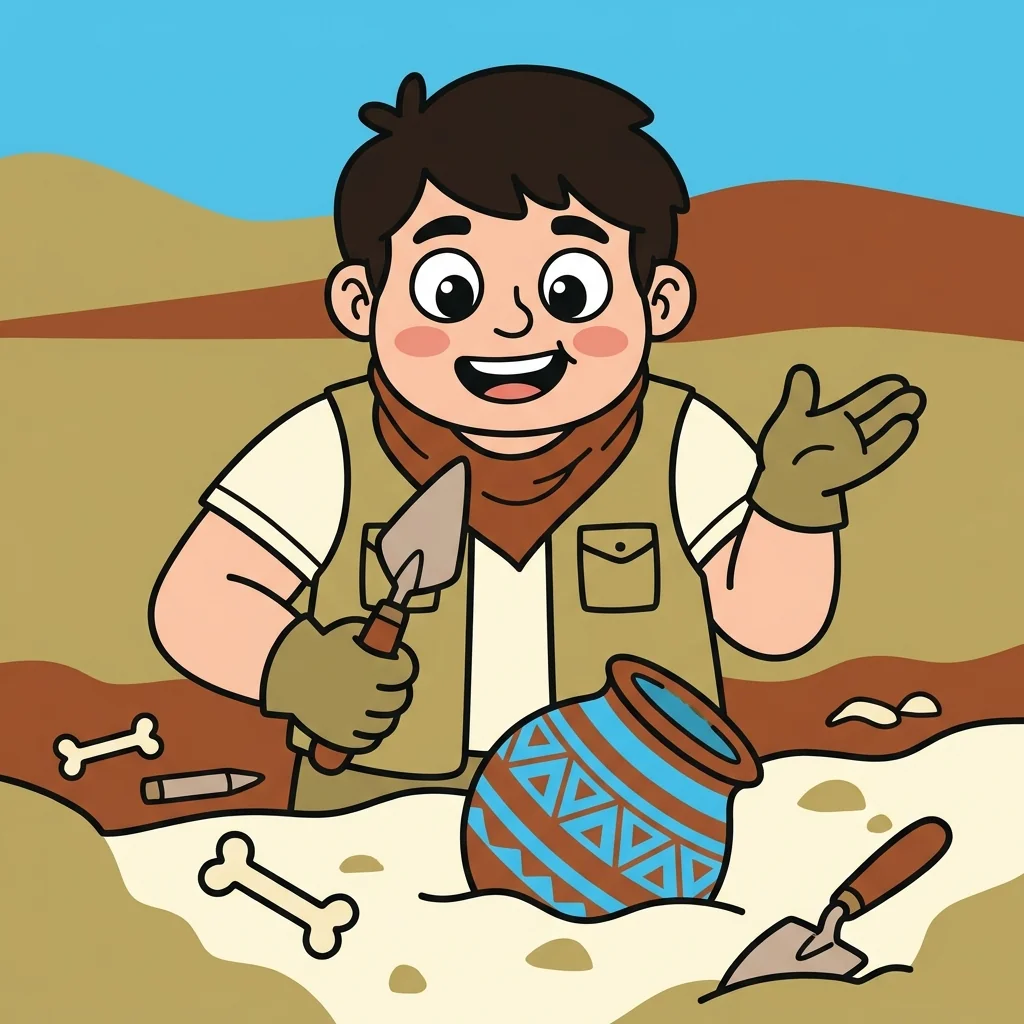
The civilizations you'll study — from Mesopotamia and Egypt to the Maya, and many more — have living descendants today, and many of their sites are still sacred. Real archaeologists work in partnership with those communities, who have authority over their ancestors and belongings. DigQuest studies the past with respect for the present: no treasure-hunting, no "finders keepers", and no guessing about what things meant when the people themselves can tell us.

DigQuest mascot

Meet the cast — the characters who teach this

Each one stands for an idea you’ll practice. Tap a character to read their illustrated story and hear their audio drama.

Explore all the stories →

Kids also liked

Privacy & how it works