
Straight
THE STRAIGHT MAN — the calm, serious partner who reacts normally so the funny one stands out. The straight man doesn't tell the joke; he sets it up, plays it real, and lets the absurdity bounce off his sensible reactions. Comedy needs someone to be normal.
Press play to listen along. The line being read lights up as you go.
Show full transcript
Loading transcript…
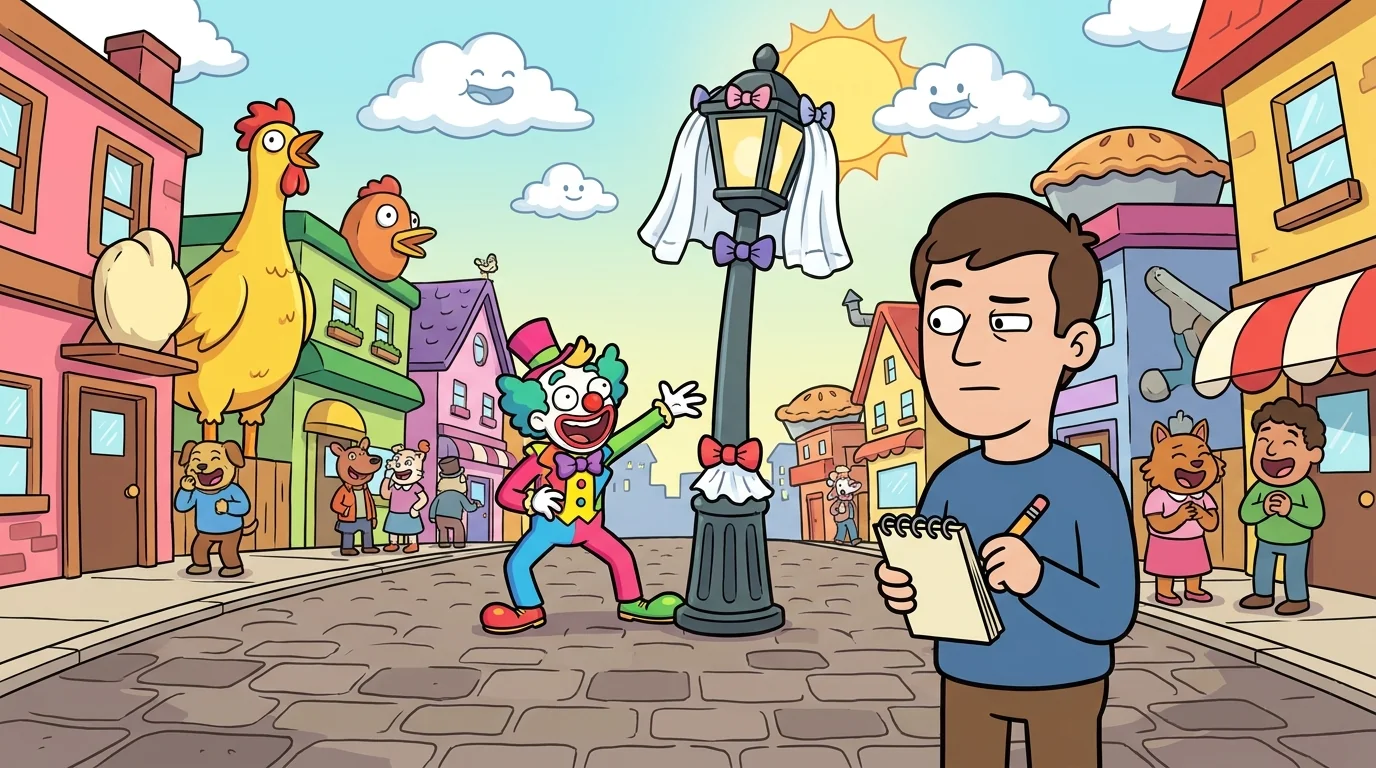
In Laughtonia, where everyone scrambled to be the funniest, Straight had a strange and quiet job: he was the one who stayed normal.
He never told the jokes. Instead, he stood beside whoever did — calm, sensible, reacting the way a regular person would — and somehow that made the funny one ten times funnier. When a wild comic announced they'd married a lamppost, Straight would simply raise one eyebrow and ask, evenly, "And how is the lamppost?" — and the whole bit would soar, because his ordinary reaction gave the absurdity something solid to bounce off.
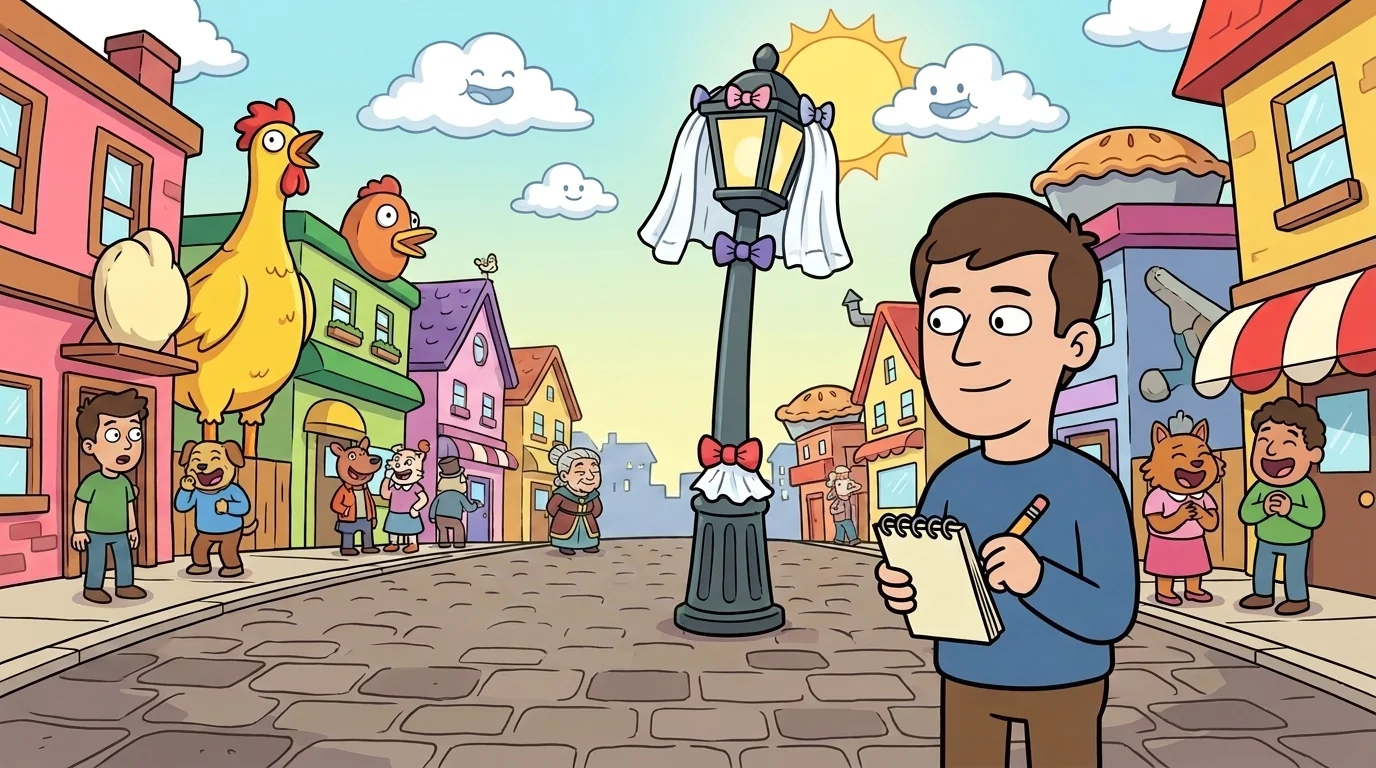
"You didn't say anything funny — but the joke landed because of you," a young comic realized.
"That's the job nobody wants and everybody needs," Straight said, calm and warm. "My name is Straight. I keep the straight man — the sensible partner who sets up the funny one and reacts like a normal person." He almost smiled. "I don't tell the joke. I make room for it. The wilder my partner gets, the more normal I stay — and the gap between us is where the laugh lives."
Mirth, the guild master, nodded approvingly. "Show them what happens with two wild ones," she said.
Straight demonstrated. He paired two zany comics together, both going big, both being silly at once — and the bit collapsed into noise. No one knew where to look; the absurdity had nothing to push against. Then Straight stepped in as the calm one beside a single zany partner. The partner got wilder; Straight got more reasonable, asking sensible questions in a sea of nonsense. And the bit sang. "See?" Straight said. "If everyone's funny, no one is. The silly needs someone normal to bounce off. I'm the wall the ball bounces back from. Without the wall, the ball just rolls away."
The young comic's eyes widened. "So being the normal one is actually a job — an important one!"
"The most overlooked job in Laughtonia," Straight said. "And one of the most important. A duo needs a goofball and a straight man. I make my partner shine."
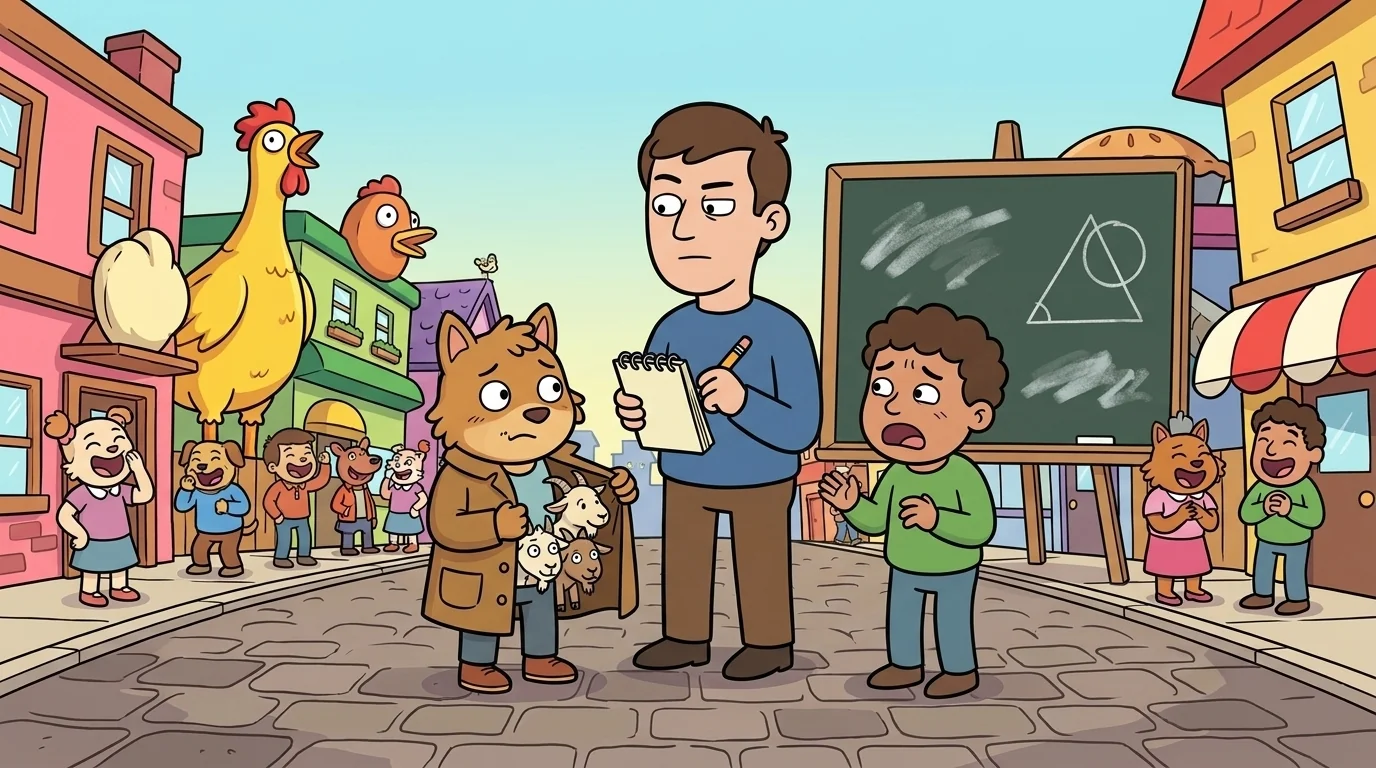
Mirth asked Straight to teach in the guild. "Everyone wants to be the joker; no one wants to set up," she said. "Would you teach them the power of normal?"
Straight agreed, calm as ever. When he teaches, he gives one steady rule: "When you work with a funny partner, you don't have to be funny too — you have to be real. React the way a normal person would. Ask the sensible question. Stay grounded while they get wild. Your calm is the setup, the contrast, the wall. The straighter you play it, the more they shine — and a good straight man is just as essential as the star."
Two young comics tried it: one declared he was secretly three goats in a coat; the other, instead of also being silly, just asked, with great concern, "Are the goats getting enough to eat?" The guild howled. "That's a straight man," Straight said warmly. "You didn't steal the laugh — you built it. The goats were funnier because you took them seriously."
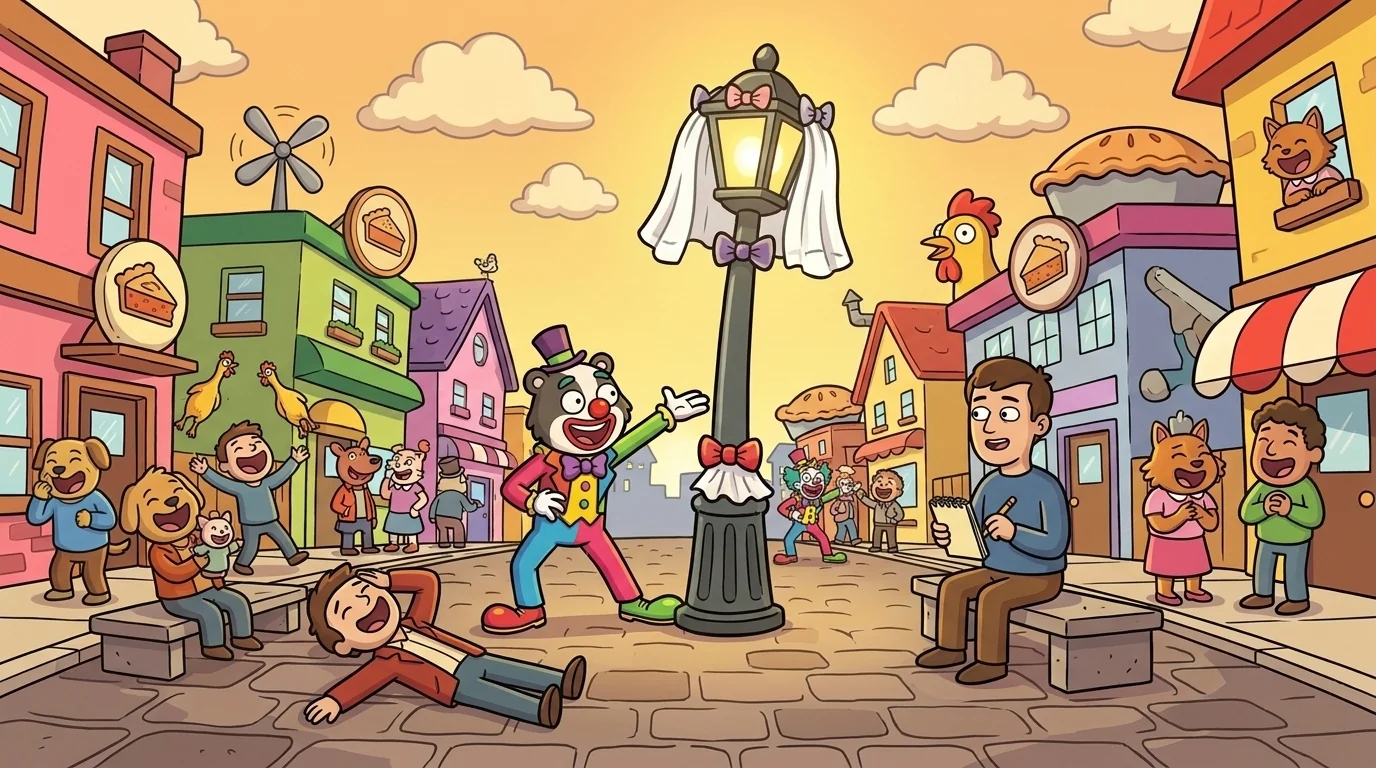
After the lesson, Straight sat with the young comics in the easy evening, calm and content, watching the others practice their wild bits.
For a long time, Straight had quietly ached at never being the funny one — at standing beside the stars while the laughs went to them, wondering if the calm supporting role meant he just wasn't good enough to be the joker.
But sitting in the gold Laughtonia light, watching comic after comic shine because someone had played it straight for them, Straight understood his worth at last. The laugh that went to his partner was a laugh he had built — with his calm, his timing, his sensible question, his steady wall. Being the straight man wasn't being less funny. It was being the foundation the funny stood on. The star couldn't shine without him, and he knew it now, deep and sure. A warm, grounded contentment settled through him. He wasn't the one who wasn't good enough. He was the one who made everyone else good enough. And he asked, of no one in particular, in his calm and even voice, "And how is the lamppost?" — and the whole guild fell over laughing.
The WitQuest ensemble
Straight is part of WitQuest's distributed-narrative cast. Each character embodies a different curricular primitive; together they teach the full subject.
-

Quirk
Puns and double-meanings
-

Knot
Riddles (compressed-info puzzles where you decode the answer from constrained clues)
-

Switch
Anagrams (rearranging letters to form a different word — "listen" → "silent")
-

Lilt
Idioms and figurative language (phrases whose literal meaning ≠ their actual meaning — "raining cats and dogs")
-

Hop
Lateral thinking (finding a non-obvious angle on a problem; sidestepping the assumed framing)
-
Trip
The rule of three (two beats set a pattern; the third breaks it — the break is the laugh)
-
Dry
Deadpan delivery (saying something ridiculous with a calm, serious face — the flat delivery is the joke)
-
Boomerang
The callback (bringing back an earlier joke later, when it's half-forgotten — funnier the second time)
-
Topper
The topper / escalation (capping a joke with an even bigger one, raising the stakes each time)