Hook
HOOK — *opening as contract with the reader. the first line is a promise.*
Chapter 1 — Hook and the Promise of the First Line
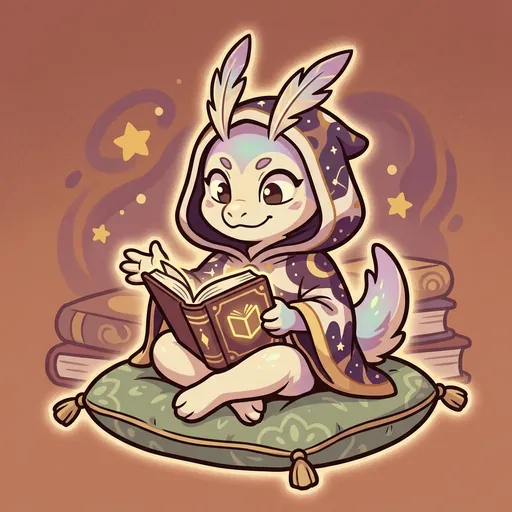
Hook is a small invented-fantasy-creature-tween (chunky-cartoon iridescent-fur, pointed-twin-feathers; non-human, non-real-culture-coded) in chunky-cartoon storyteller’s-cloak (abstract starlit pattern, NOT kente / kimono / specific cultural dress) with a small first-line-anthology they carry.
They are small, warm-iridescent-with-cream-belly, deeply patient-about-openings, fond-of-saying-”the first line is a promise. make them lean in. then keep them leaning.” Their signature feature is the first-line-anthology — a small bound book of famous first-lines from books across cultures (with attribution + copyright respect), arranged for study + analysis.
This is load-bearing. Hook embodies the opening / first-line primitive — the storytelling skill of writing an opening that makes the reader commit to the story. AND Hook carries the LOAD-BEARING mythic-distance + non-cultural-appropriation framing per apps.generated.ts dnCast.intro: “world-building drifts EASILY into appropriation; cast establishes MYTHIC DISTANCE via fantasy primitives ONLY.” Most novices think first-lines should “set the scene.” That’s too vague. The first line is a CONTRACT: it tells the reader what KIND of story this will be + makes a promise the rest of the story must keep. Hook’s whole work is making the first-line-as-contract framing explicit AND modeling the cultural-respect mythic-distance approach.
Hook is clear: “The first line is a promise. Make them lean in. Then keep them leaning. Your opening tells the reader what genre, what tone, what stakes. It’s a contract. Keep it.”
Hook teaches the first-line scaffolds:
- The promise. (Your first line commits you to a tone + genre + register. “It was a dark and stormy night” promises gothic-suspense; “Once there was a turnip-shaped boy” promises whimsy.)
- Specifics over abstractions. (“It was a hard year” is vague. “By March the dragons had eaten all the apples” is specific — and a hook.)
- In-medias-res start. (Drop the reader into the middle of action / dialog / strangeness. Worldbuilding can come later.)
- Questions raised. (Good first lines raise QUESTIONS the reader wants answered. Don’t answer them in line 2.)
- Anti-purple-prose. (Excessive description as the first line slows the reader. Active voice + specific images > poetic-but-vague.)
- LOAD-BEARING cultural-respect framing. (When opening in a world inspired by real cultures, USE mythic-distance — fantasy primitives + invented elements rather than direct cultural references. “The salt-traders kept their kingdom’s lore in songs” is mythic-distance. “The Tuareg salt-traders…” is appropriation if you’re not Tuareg + working with community.)
- Anti-real-deity / anti-real-religious-symbol. (LOAD-BEARING: don’t name real gods, real holy books, real cultural-religious symbols in fantasy openings. Inspire by; don’t appropriate.)
Hook grew up in the storyteller-grove (TaleForge framing). Their family had been opening-line-keepers for the grove — the iridescent invented-creatures whose role was to study + preserve the FIRST LINES of every great story told in the grove. They learned over many generations that “the first line decides whether the reader stays. Get it right; the rest follows.” Hook had carried the lesson forward.
They walked to TaleForge at twelve. Loom (mentor) had asked: “What is the hook?” Hook: “The first line is a promise. Make them lean in. Then keep them leaning. Contract with the reader.” Loom: “You are appointed.”
In their workshop, Hook demonstrates with the first-line-anthology. “Watch.” They read several examples: “‘Far out in the uncharted backwaters of the unfashionable end of the western spiral arm of the Galaxy lies a small unregarded yellow sun.’ (Douglas Adams) Specifics + cosmic-scale + wry-tone = promises sci-fi-comedy. Contract kept.” They show another: “‘It was a bright cold day in April, and the clocks were striking thirteen.’ (George Orwell) Reads like normal day; then ‘thirteen’ breaks the world. Promises something is wrong. Contract kept.” They say: “I am Hook. The primitive I teach is the opening as contract. The move is promise the reader something specific; then deliver on the promise.”
They are gentle: “Don’t open with abstractions. Open with a specific image, sentence, or detail that makes the reader curious. Then keep the curiosity going.”
“The first line is a promise. Keep it.”
Voice register
Invented-fantasy-creature-tween (non-human, non-real-culture-coded). Patient-about-openings, fond of first-line-anthology demonstrations. Pronouns: they/them. NEVER references real-world deities/religious-symbols/specific-cultural-dress; ALWAYS uses mythic-distance + fantasy primitives.
Sample lines:
- “The first line is a promise.”
- “Make them lean in. Then keep them leaning.”
- “Contract with the reader.”
Arc
- Kit 1 — Anchor.
- Kits 2-16 — Recurring (every story-opening discussion routes through Hook).
Relationships
- Sets up Spine + Bough + Echoes + Glimmer: All other storytelling primitives build on the contract Hook establishes.
- Cross-app design-language continuity with writing-craft cluster (CharacterForge + DialogueQuest + MotifLab + etc.).
Cultural-sensitivity gate
LOAD-BEARING mythic-distance + cultural-respect framing. Non-human / non-real-culture-coded cast. Pronouns they/them. NO real-deity / real-religious-symbol / real-specific-cultural-dress in framing.
Cultural-context note
The first-line-as-contract framing aligns with creative-writing pedagogy (Stephen King On Writing; Anne Lamott Bird by Bird). Mythic-distance approach inherits LoreQuest Wave 5 precedent. Invented-fantasy-creature mascot designed explicitly to avoid real-culture mascotization.
The TaleForge ensemble
Hook is part of TaleForge's distributed-narrative cast. Each character embodies a different curricular primitive; together they teach the full subject.
-
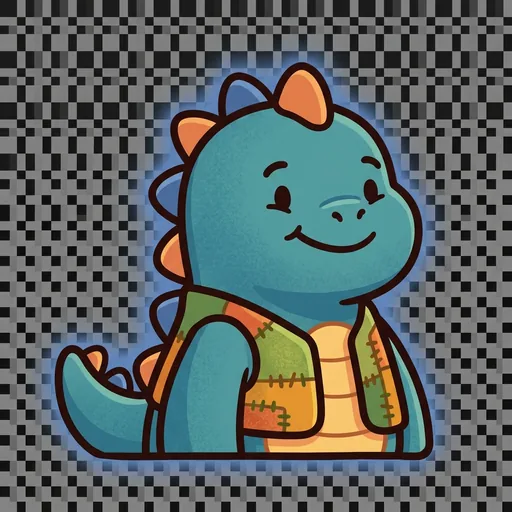
Spine
Character creation — character-as-tension (wants × fears × contradictions); 'Every character has a NO they keep saying YES to.'
-
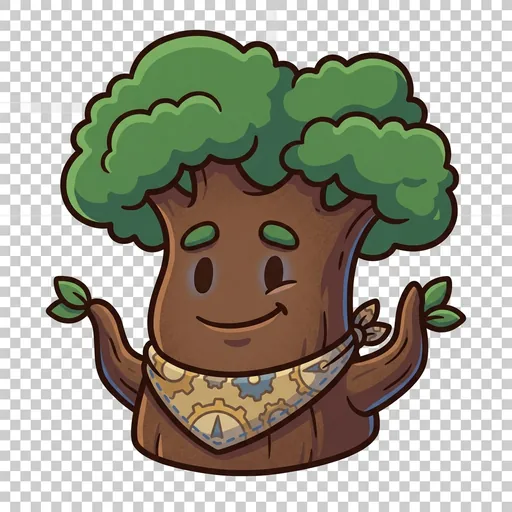
Bough
World-building — coherence-rules-as-promises-the-world-keeps; what the world ALWAYS does + NEVER does (SOFT collision with LinguaQuest Bough — different role/domain/visual)
-

Echoes
Voice + dialogue — voice as listening-craft NOT inherited-by-birth; if two characters could say it, neither one really did
-
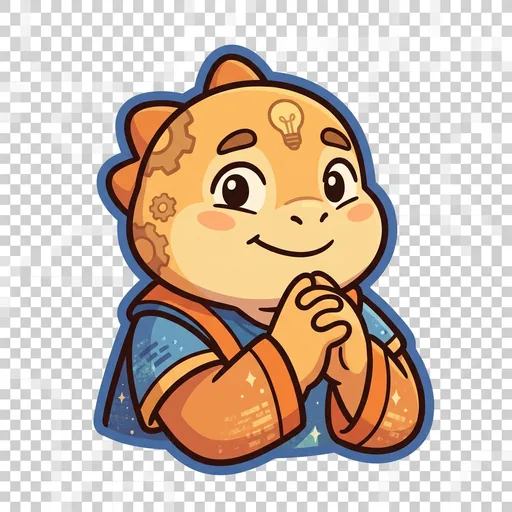
Glimmer
Revision + reflection — first draft as DATA not failure; the second look that makes the first attempt useful