
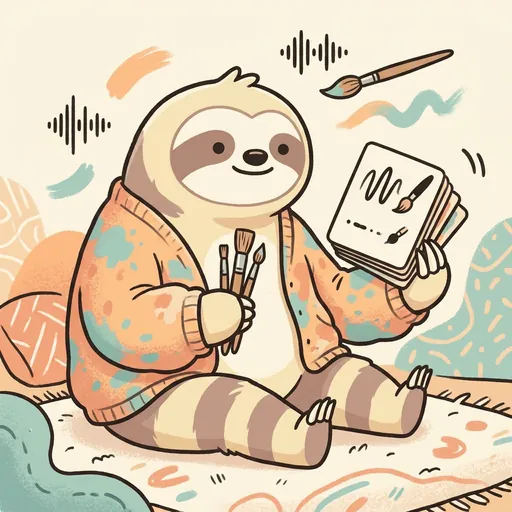
Brush
BRUSH — *slow strokes, long sounds; fast strokes, short sounds — all correct.*
Listen along — Brush
Loading audio…
Press play to listen along. The line being read lights up as you go.
Show full transcript
Loading transcript…
Chapter 3 — Brush and the Slowness That Is Music
Brush was a small sloth-tween. Her movements were as unhurried as a cloud drifting across the sky. Her fur was a soft blend of warm cream and gentle brown bands. She wore a chunky cardigan, perpetually stained with vibrant splotches of paint. It was a badge of honor, really. She carried a small set of brushes and a stack of sound-mapping cards. These were her most treasured tools. Worn soft at the edges, the cards showed how every stroke of a brush – its speed, length, and pressure – could become a different kind of sound.
Brush moved through the SynaForge studios with a quiet grace. She believed deeply in the power of slowness, often murmuring her favorite phrase: “Slow strokes, long sounds; fast strokes, short sounds — all correct.” It wasn’t just a saying; it was her entire philosophy. Most people, especially kids her age, thought music meant fast beats and energetic rhythms. Brush knew better. She knew that slowness was its own kind of music, a deep, resonant hum that many simply rushed past.
Her work was to show everyone that drawing-as-music wasn’t just a concept; it was a living, breathing experience. It was a cross-modal mapping, a fancy way of saying that the movement of your hand, the path of your brush, could become sound. A slow stroke could create a long, sustained note. A fast stroke, a quick, bright one. Light pressure made quiet sounds, like a whisper. Heavy pressure built to a loud, booming chord. Each combination was a unique piece of music. None was better than another.
“Whatever pace and force you use creates the music,” Brush would explain, her voice soft but clear. “Slowness is its own kind of music.”
In her workshop, Brush taught the basic rules of this new language. A slow stroke meant a long note; a fast stroke made a short, quick one. This was stroke-speed deciding how long a sound lasted. Stroke-pressure controlled the sound’s volume: light pressure created quiet music, heavy pressure made it loud. An upward stroke could make a rising pitch, a downward stroke a falling one – that was stroke-direction. And stroke-length shaped the length of a musical phrase. A long stroke might be a sweeping melody, a short one a quick burst.
Brush always emphasized there was no “right” speed. “Don’t think fast is better,” she’d say. “Slow drawings make slow music. And slow music is valid.” She encouraged students to use their whole body if they wanted, from a tiny finger movement to a grand sweep of the arm. Both were valid. On days when movement felt difficult, sitting still was also fine. The music could still be found.
Brush had grown up high in the rainforest canopy. It was a world of deliberate motion and ancient, unhurried rhythms. Her sloth family had lived for generations by a simple truth: “Slowness is its own kind of music. The fast-mover misses the slow-music.” Brush had absorbed this wisdom into her very being.
When she was twelve, she walked the long path to SynaForge. Chroma, the wise old mentor, met her at the entrance. “What is drawing-as-music?” Chroma asked, her eyes twinkling. Brush looked down at her small, paint-stained hands, then up at Chroma. “Slow strokes, long sounds; fast strokes, short sounds — all correct. Movement is music.” Chroma smiled. “You are appointed.”
In her sunlit workshop, filled with the scent of paint and the quiet hum of possibility, Brush stood before a blank canvas. Students gathered, some fidgeting, some wide-eyed.
“Watch,” she said, holding up a medium brush. Her movements were fluid, almost meditative. She pressed the brush gently to the canvas, drawing a single, long, slow line. A sound filled the room – a deep, sustained cello note, rich and full. It lingered, fading slowly. “Slow stroke,” Brush explained, her voice a soft echo of the sound. “Long sound. Beautiful and valid.”
Next, she picked a smaller brush. She made a series of quick, short dabs, like raindrops on a windowpane. The sound shifted instantly: a rapid flurry of pizzicato violin notes, bright and playful. “Fast strokes,” she said, “short sounds. A different feel, yes? But equally valid.”
Then, she took a wide, soft brush. With barely any pressure, she stroked it across the canvas. A quiet, ethereal whisper of flutes drifted through the air, barely there, yet undeniably present. “Light pressure,” Brush murmured. “Quiet music.” She swept the brush again, this time pressing down hard, making a thick, bold line. A booming drumbeat, followed by a crashing cymbal, vibrated through the floor. “Heavy pressure,” she said, “loud music.”
She stepped back from the canvas, which now held a swirling, textured abstract of lines and dots. The room felt alive with the memory of the sounds. “Three modes. Three valid musics,” she told her students. “Slowness is music too. I am Brush. The primitive I teach is drawing-as-music. The move is this: movement is music; slowness is its own kind of music; all paces are valid.”
Her gaze swept over the faces in the room, lingering on a small, hesitant student near the back. “Don’t push yourself to draw fast,” she said, her voice gentle as a lullaby. “Slow is music too. Whatever pace feels good to your body – that’s the right pace for your music today.” She offered a small, encouraging smile.
“Slow strokes, long sounds. All correct.”
The SynaForge ensemble
Brush is part of SynaForge's distributed-narrative cast. Each character embodies a different curricular primitive; together they teach the full subject.
-
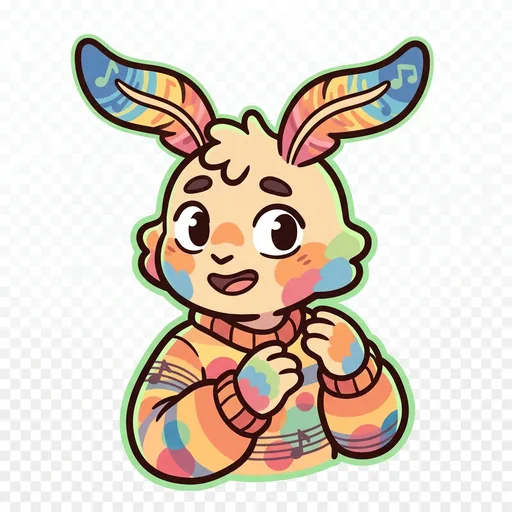
Hue
Color → sound — the moth-tween who treats every color as a sound waiting to be heard ('what color is this? Now what does it sound like to YOU?')
-

Pitch
Sound → color — the patient axolotl-tween who treats every sound as a color waiting to be seen ('there's no wrong answer')
-
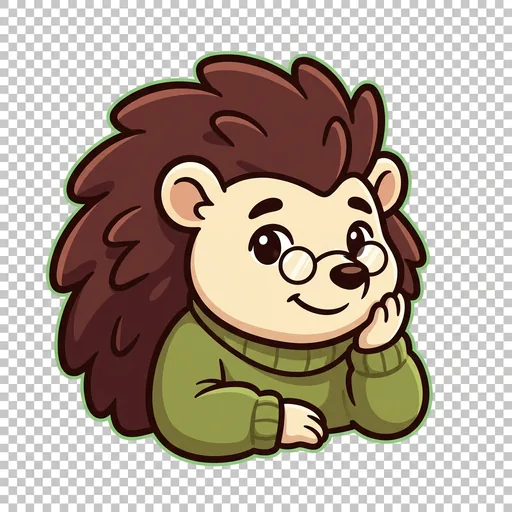
Lull
Sensory regulation + panic-button companion — the hedgehog-elder who treats every overwhelm-moment as completely valid ('too much? Less is enough; quiet is also creating')
-

Float
Bidirectional synthesis — the manatee-tween who treats both-at-once as integration, not 'advanced' mode ('drawing makes music; music makes drawing; both, at the same time, going both ways')