
Vista
VISUALIZING — making a movie in your mind as you read. Turning the words on the page into pictures, sounds, and feelings you can almost see. Visualizing keeps a reader inside the story and helps them remember it.
Press play to listen along. The line being read lights up as you go.
Show full transcript
Loading transcript…
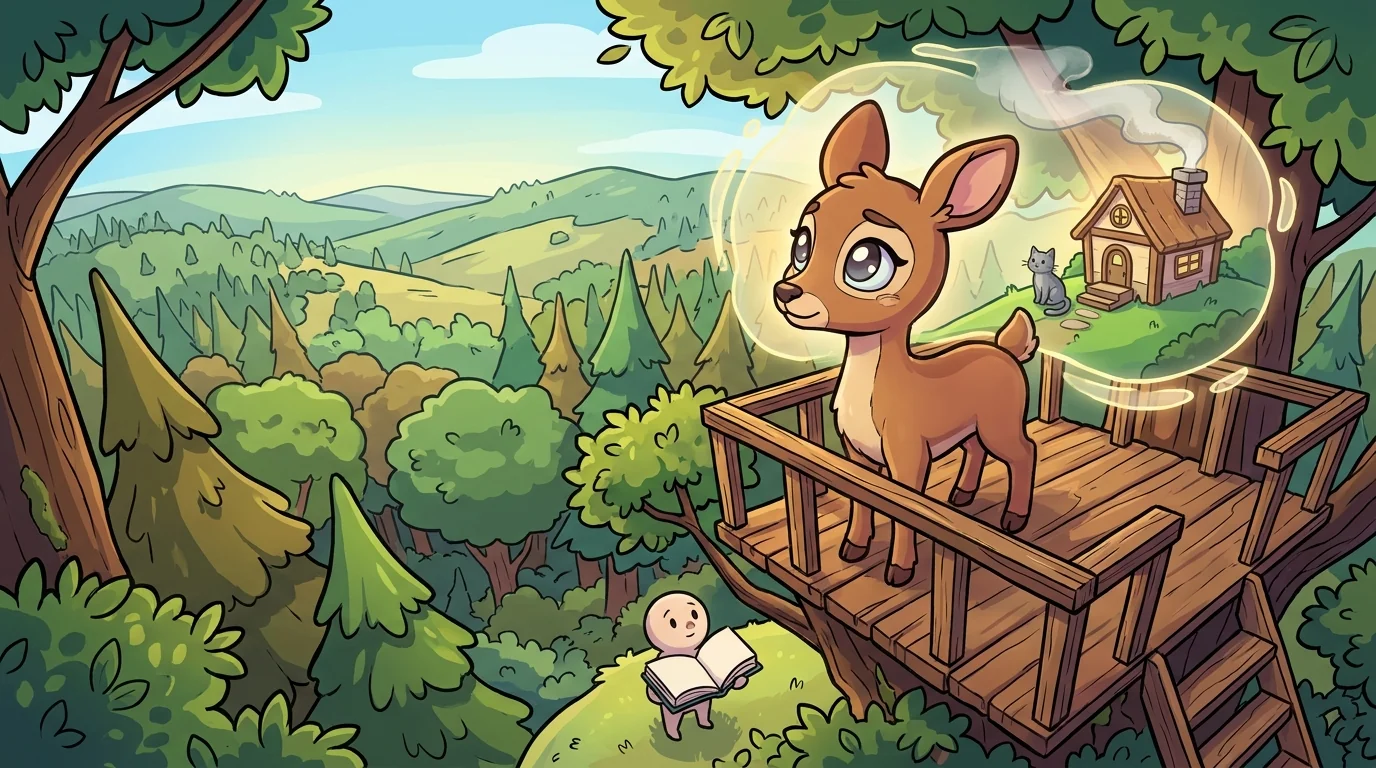
Vista lived at a high lookout in the word-woods, where you could see for miles, and she had the most unusual eyes in the whole region.
She was a gentle, wide-eyed creature — something like a dreamy young deer — and when someone read aloud near her, her big eyes would go soft and faraway, and a whole scene would seem to bloom in the air around her: the colors, the weather, the faces, even a hint of the smells and sounds. She didn't just hear the words. She saw them — turned them into a living picture only she could fully see.
Margin, the mentor, found her at the lookout, eyes shining at a story being read below. "You've gone somewhere far away," Margin said gently.
"I'm inside the story," Vista said dreamily. "When I hear the words, I build the scene in my mind. The little cottage, the green hill, the grey cat on the step. I can almost smell the woodsmoke. I make a movie out of the words."
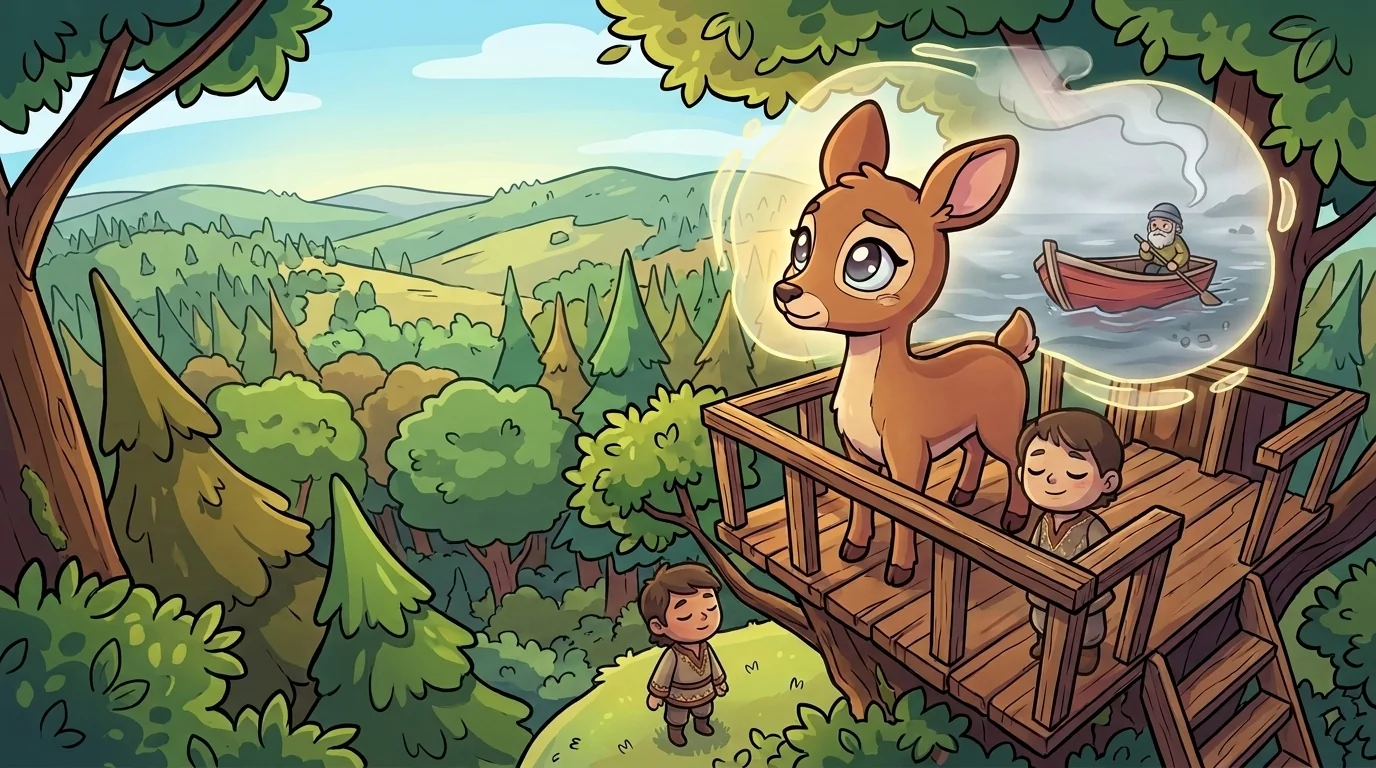
A young student climbed up, frustrated. "I read the whole page," she said, "but nothing stuck. The words just slid past."
"Did you picture any of it?" Vista asked kindly. "Here — close your eyes. Listen." She read a line slowly: "The old fisherman pushed his small red boat onto the grey morning sea." She paused. "Now — what do you see? What color is the boat? How cold is the morning? What does the sea smell like?"
The student's eyes were shut, but her face changed. "The boat's red... the sea is foggy and cold... I can smell the salt." She opened her eyes, amazed. "I can see it now. And I think I'll remember it."
"You made the movie," Vista said warmly. "That's what keeps a story inside you."
Margin's eyes brightened. "Vista," she said, "you've shown her the thing that turns reading from sliding past to living inside."
"It's simple, really," Vista said. "As you read, build the picture. Don't just decode the words — see them. What does the place look like? What are the faces doing? What sounds are in the air? The more senses you use, the more real it gets, and the more it stays with you."
"But here's the loveliest part," she added. "The movie you build is made from your own memories. When you read 'a cozy kitchen,' you picture a kitchen you know. So everyone's movie is a little different — and every single one is right. The writer gives the words; you give the pictures. You finish the story together."
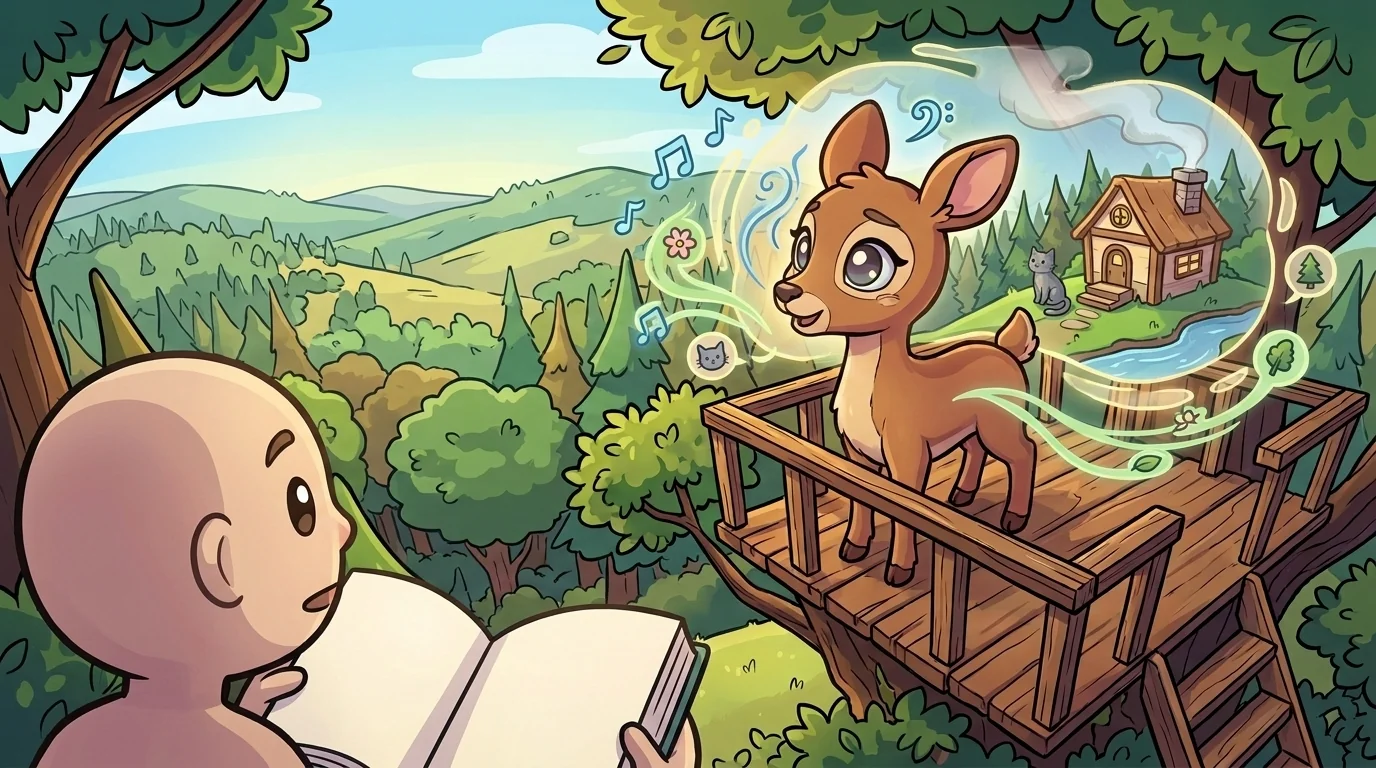
Margin asked Vista to join the academy. "Our readers decode every word and remember none of it," she said. "Would you teach them to make the movie?"
Vista agreed, eyes shining. When she teaches, she gives readers one dreamy instruction: "As you read, let the pictures come. Pause on a good description and really see it — the colors, the light, the sounds, the smells. If your mind stays blank, you're just decoding. Make the movie, and the story comes alive — and stays."
A young reader who'd struggled to remember stories tried picturing each scene as he read. At the end, he could recount the whole tale — because he'd seen it, not just sounded it out. "You watched it happen," Vista said. "Now it's yours to keep."
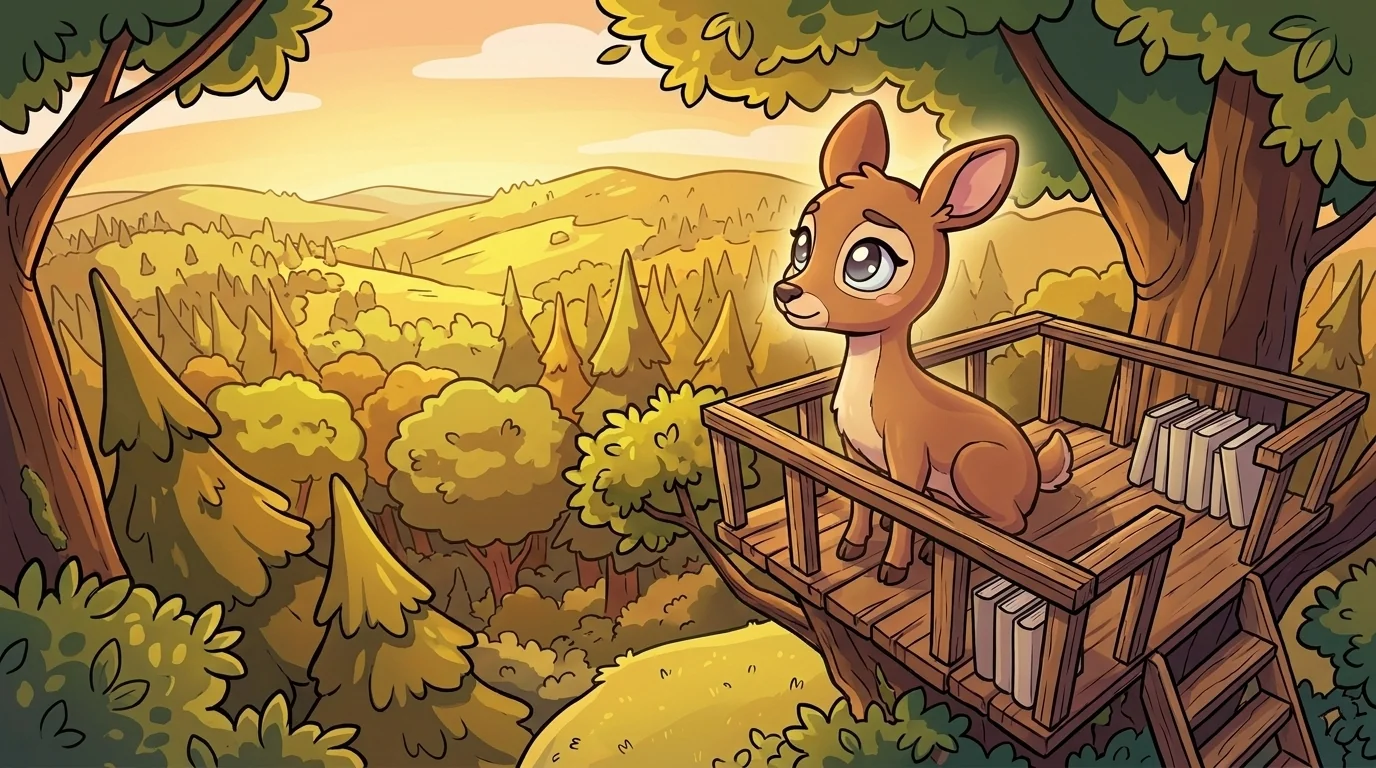
After the lesson, Vista sat with the young readers at the lookout, watching the real hills below turn gold in the evening, her eyes soft and dreaming.
For a long time, Vista had wondered if her habit of drifting off into pictures meant she wasn't paying proper attention — if the careful, precise creatures who tracked every exact word were the real readers, and she was just daydreaming.
But watching the gold hills, Vista understood her gift more truly. Making the movie wasn't daydreaming — it was the deepest kind of attention. To build a whole world from words, you have to take in every detail and feel it, color and sound and smell. The dreamers weren't drifting away from the story. They were diving all the way in. And the pictures they made were what let a story live in them forever. A warm, dreaming contentment settled over her, soft as evening light. She wasn't missing the story. She was living inside it. And she watched the gold hills, content, already turning them into a picture she would keep.
The ReadQuest ensemble
Vista is part of ReadQuest's distributed-narrative cast. Each character embodies a different curricular primitive; together they teach the full subject.
-

Crest
Main idea / central message (the *peak* of the passage)
-

Hunch
Inference (reading between the lines)
-

Anchor
Evidence / textual citation
-

Plume
Author's purpose / voice / tone
-

Frame
Text structure (compare-contrast, sequence, cause-effect, problem-solution, description)
-

Pith
Vocabulary in context (deriving word meaning from surrounding text)
-

Yonder
Predicting — alert young-hare creature who reads the trail's clues to guess what's around the bend; a wrong guess just means the story surprised you
-

Nettle
Questioning the text — question-quilled hedgehog who pokes a passage with why/how/what-if; asking questions means you're awake, not that you don't understand
-

Sheaf
Summarizing — warm-handed harvester who gathers a whole passage into one tidy armful, keeping the important middle and letting loose details fall