
Uniqueness Una
PROOF OF UNIQUENESS — to prove there is exactly one thing with a property, you suppose there are two, then show the two must actually be identical. If "both" are forced to be the very same thing, then there was only ever one. Existence says at least one; uniqueness says at most one.
Press play to listen along. The line being read lights up as you go.
Show full transcript
Loading transcript…
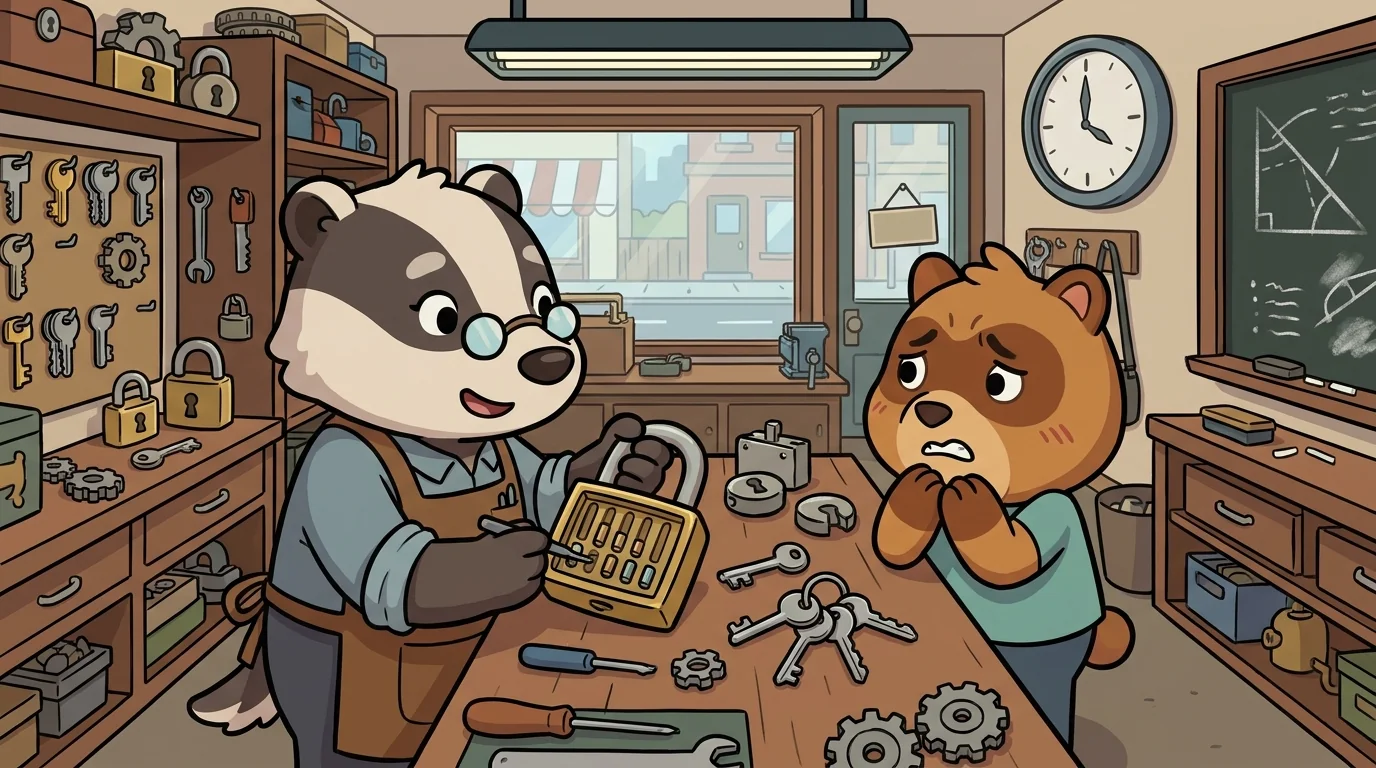
Before Uniqueness Una taught at the ProofQuest academy, she was a locksmith for twenty-three years.
Una was a careful, soft-spoken badger, and her specialty was the rarest kind of lock — the sort with exactly one key in all the world. People would come to her terrified they'd had a copy made in secret, that somewhere a second key existed that could open their door. And Una had a particular way of putting their fears to rest. She would take the lock apart, study its every tumbler, and prove to them — not promise, prove — that any key which opened it must be cut in precisely one way. There could not be two different keys. Any key that worked was forced to be a copy of the same one.
A worried client named Marlow once watched her work.
"But how can you be sure there's only one key?" Marlow fretted. "Maybe someone made a different one that also opens it."
"Let's suppose they did," Una said calmly, laying out her tools. "Suppose there are two different keys, and both open this lock. Now — watch — I'll show you that any key opening this lock must have this notch here, and that groove there, and so on, every single cut forced by the tumblers. Both your imagined keys must have all of them. But if both keys have exactly the same cuts... then they aren't two keys at all. They're the same key. So there was only ever one." She handed Marlow the single key. "Your second key can't exist. I just made it turn into the first one."
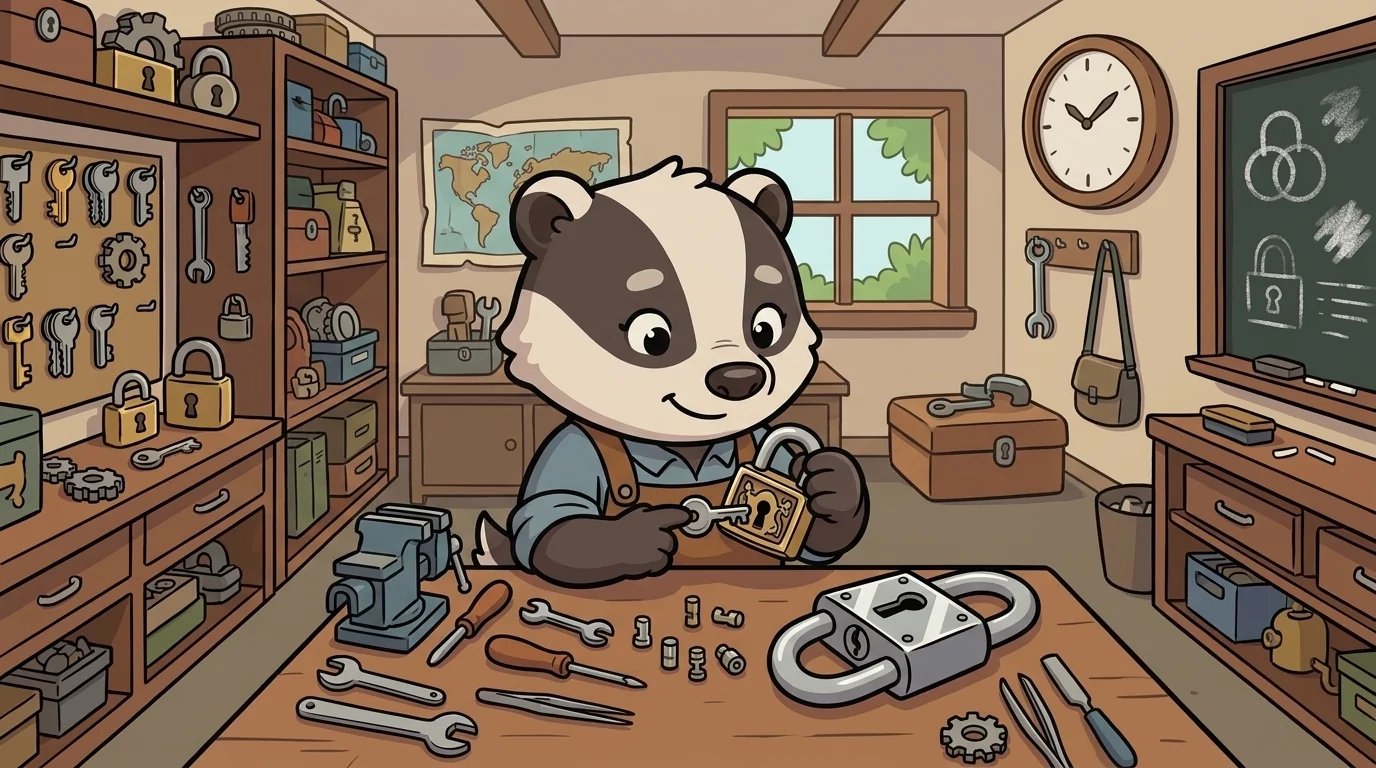
Una had been proving things one-of-a-kind since she was small.
She'd grown up in a den crowded with belongings, in a family that was forever worried about duplicates and impostors — was this the real heirloom or a copy, was that the true map or a forgery? The worry never ended, because they kept trying to prove uniqueness the impossible way: by checking every object in the whole world to make sure no second one existed. You can never finish a search like that.
Then her aunt, the den's quiet thinker, showed her a better way.
"Don't go hunting the whole world for a second one, little badger," her aunt said. "You'll search forever. Instead — suppose there's a second one. Give it whatever properties it would have to have. And then show that those properties force it to be exactly the same as the first. If your imagined second one is squeezed into being identical to the first, then it was never really a second one at all. You've proved there's only one — without searching anywhere."
Little Una tried it on the family's prized heirloom, and felt something click into place in her mind like a tumbler in a lock. You didn't prove one-of-a-kind by exhausting the world. You proved it by imagining the rival and watching it collapse into the original. It was the most elegant trick she'd ever learned, and it made the endless worry finally stop.
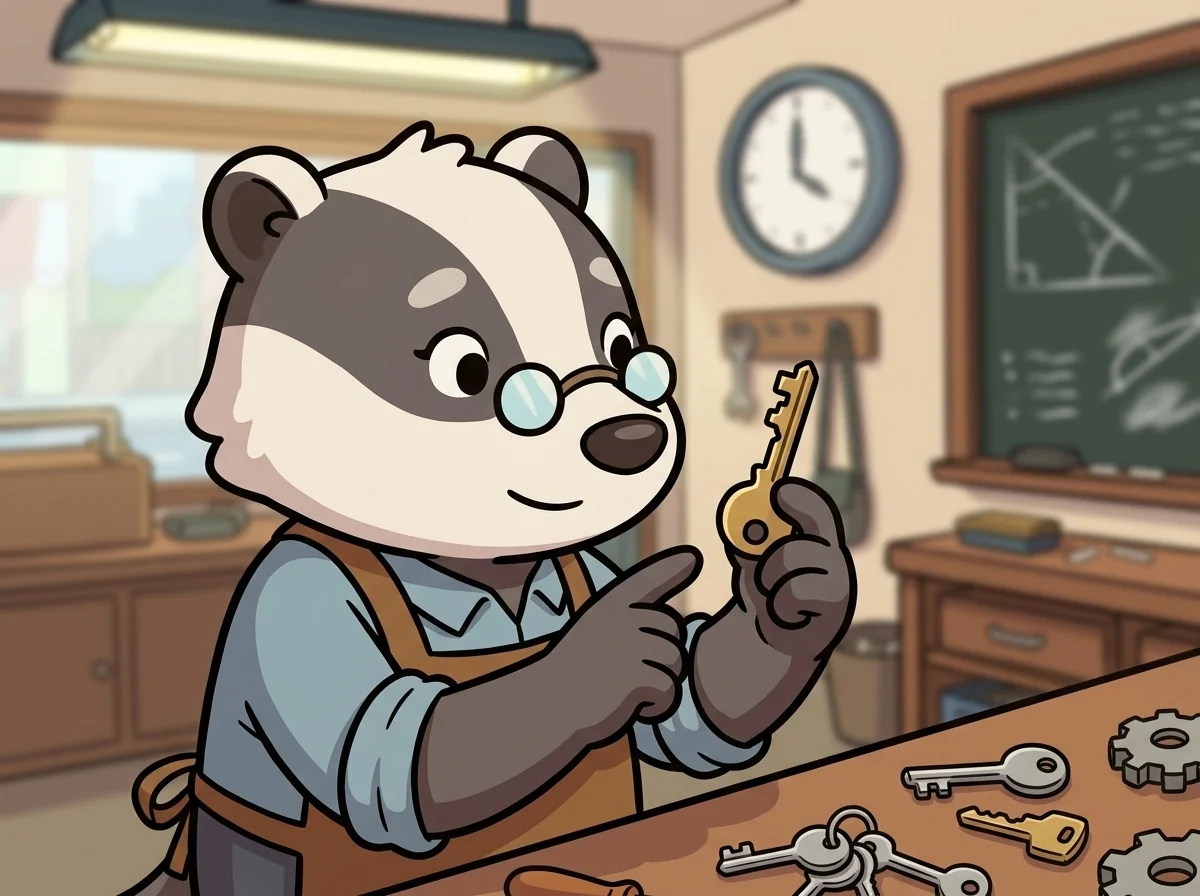
When she was grown, a mathematician from the ProofQuest academy brought her a stubborn old lock, watched Una prove its key unique, and knew she belonged at the academy.
"What is a proof of uniqueness?" the mathematician asked.
"It's how you prove there's exactly one," Una said, turning a key in her fingers. "Existence proofs show there's at least one — that something with the property exists. But that's only half of 'exactly one.' Uniqueness shows there's at most one. And the way you do it is lovely: you suppose there are two — call them both 'the thing' — and then you prove they must be equal. Once your two are forced to be identical, they collapse into a single one. Two became one. So there was only ever one." She set the key down. "You never have to search the world. You just have to show a second one can't be different from the first."
"And existence and uniqueness together?" the mathematician asked.
"Together they say exactly one," Una said. "At least one, and at most one. The strongest kind of 'there is.'"
The mathematician offered her the post, and Una accepted, locking her shop for the last time with its one and only key.
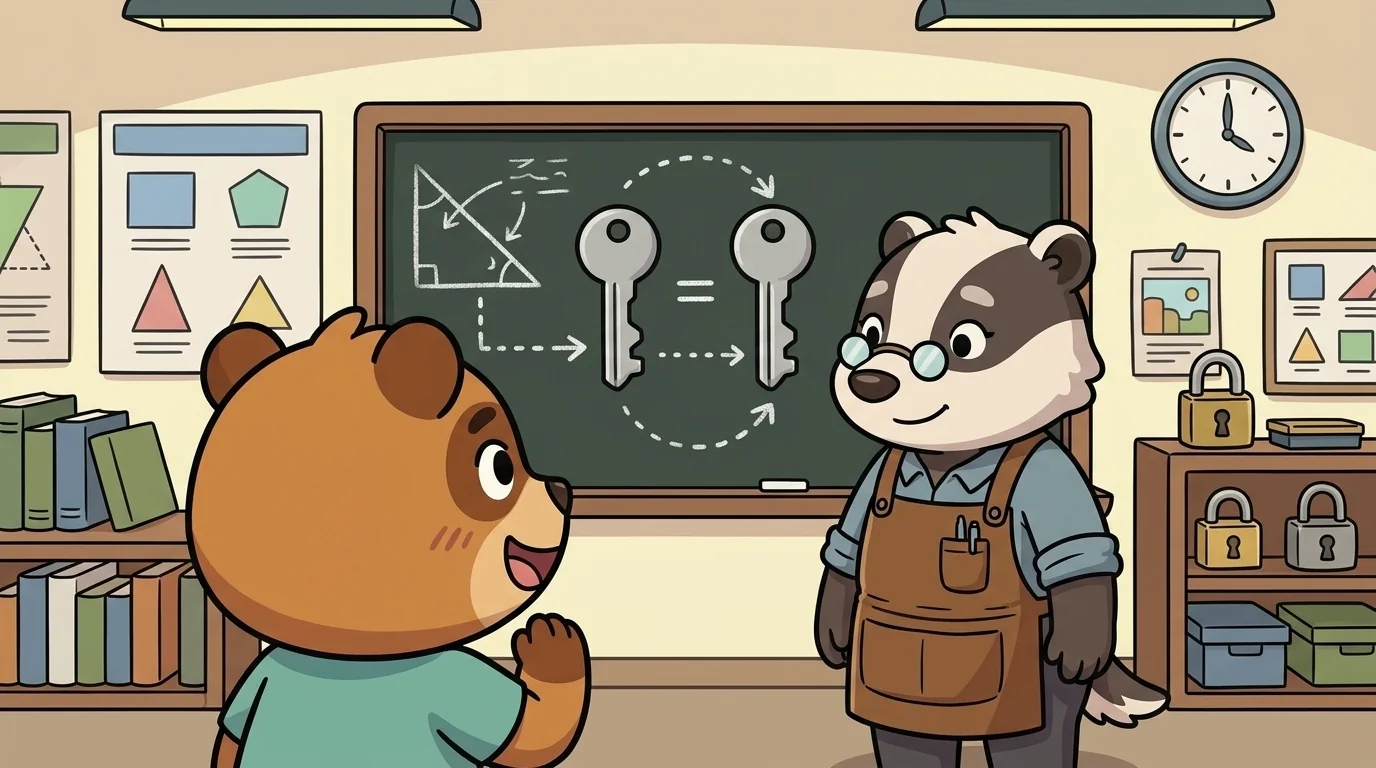
Una's favourite thing to teach was the comfort hiding inside the proof.
A skeptical student named Pell once challenged her. "I don't see the point," he said. "Why does it matter if there's one solution or two? An answer's an answer."
"Let me show you why it's beautiful," Una said. She wrote a small puzzle on the board — a riddle with a hidden number. "Solve it."
Pell worked it out. "The number is nine."
"Are you sure that's the only answer?" Una asked. "Or might there be another number that also works, lurking out there?"
Pell hesitated. "I... don't know. Maybe there's another."
"Then let's prove there isn't," Una said gently. "Suppose there were two numbers that both solved it. Call them both 'the answer.'" She walked him through it, step by step, until the two supposed answers were forced, line by line, to be equal. "See? Any second answer is squeezed into being the first one. There's exactly one. Now — how does it feel, knowing your nine is the answer, not just an answer?"
Pell looked at his work differently. "It feels... safe," he admitted. "Like I'm not going to turn a corner and find a different answer waiting to prove me wrong. Nine is really, truly it."
"That's the gift of uniqueness," Una said. "Not just an answer. The answer. Nothing hiding behind it."
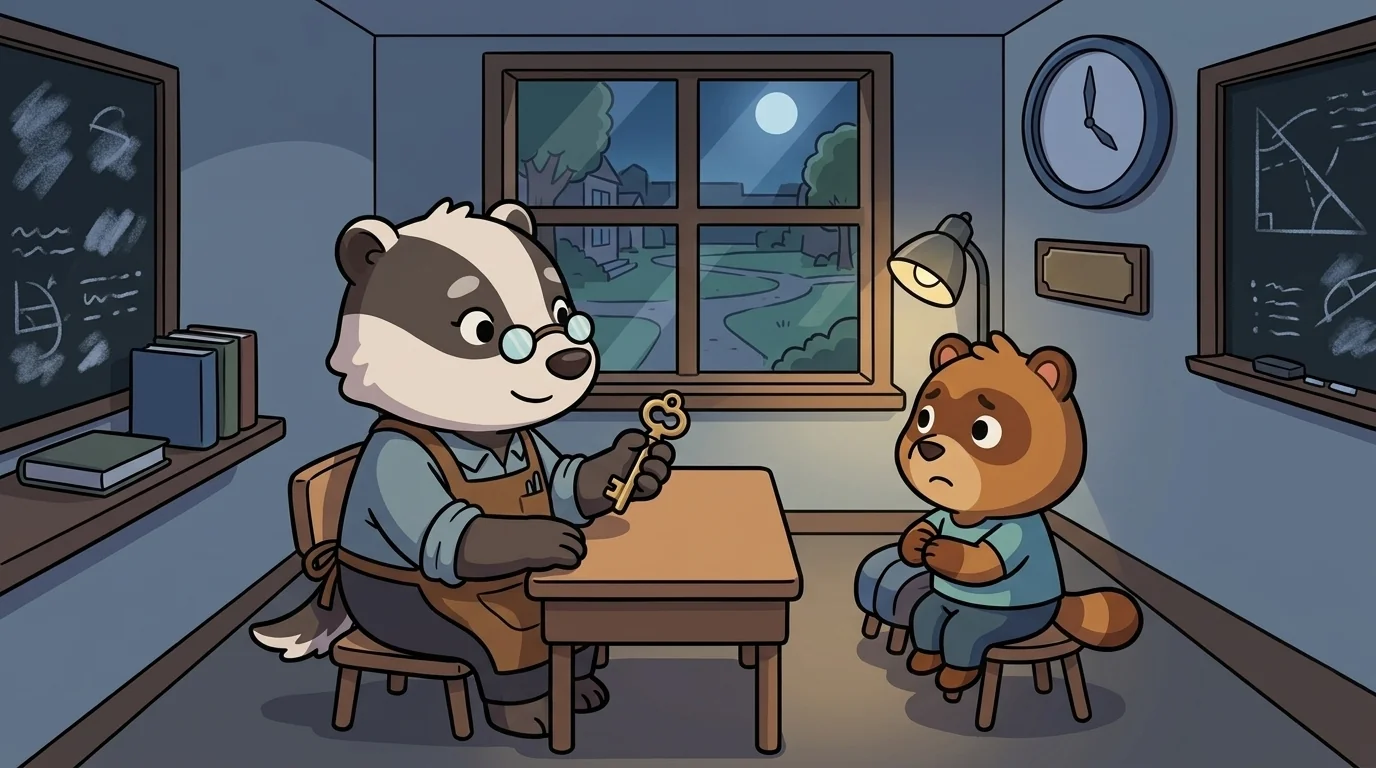
Later, when the academy was still, Una sat in her classroom where a single brass key hung on the wall — the last key she ever cut, the one she'd proved unique.
Marlow, a student now, found her there. "Can I ask you something? Doesn't it ever feel strange, proving things are one-of-a-kind by imagining a copy that doesn't exist? You spend all your time conjuring a second one just to make it disappear."
Una smiled and took down the brass key.
"It used to feel backwards," she said. "Conjuring a rival only to dissolve it. But I came to love what it leaves behind." She turned the key in the lamplight. "When I was small, my family's whole worry was that nothing was truly one-of-a-kind — that everything precious might have a secret copy, an impostor, a replacement waiting. The proof of uniqueness answered that worry forever. Some things are the only one. Not by luck, not until-proven-otherwise, but provably, unshakeably, the single one there is." She closed her paw around the key. "There's a deep comfort in that. To know that a thing — or a person — truly cannot be replaced."
She looked out at the quiet academy grounds.
And as Marlow settled beside her, Una felt the steady warmth she'd carried since that first heirloom in the den — the quiet reassurance of a world where some things are provably irreplaceable, where you can imagine every rival and watch each one fold back into the original, and rest at last in the knowledge that there is, and could only ever be, exactly one.
The ProofQuest ensemble
Uniqueness Una is part of ProofQuest's distributed-narrative cast. Each character embodies a different curricular primitive; together they teach the full subject.
-
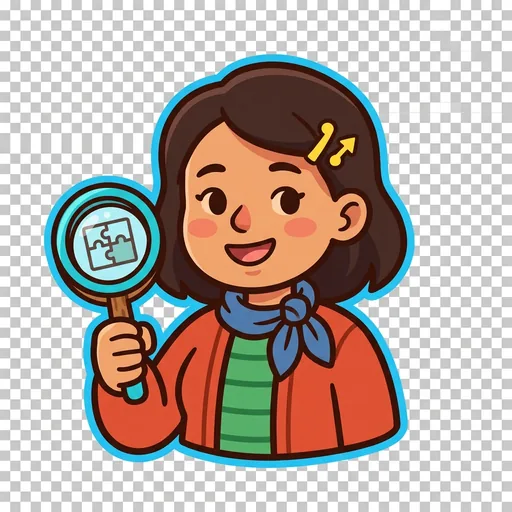
Direct-Proof Dora
Direct proof: assume premises, derive conclusion by straightforward logical steps
-
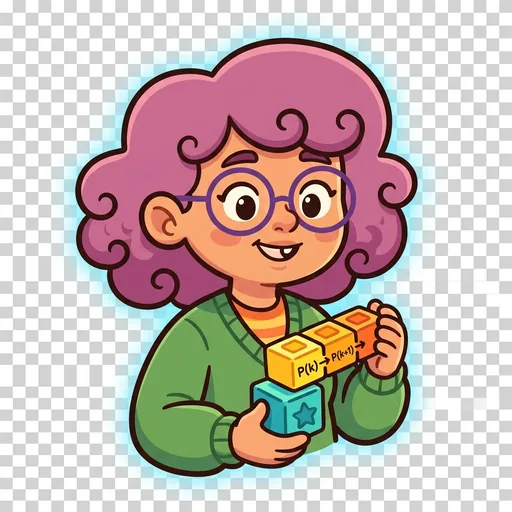
Induction Ida
Weak / standard mathematical induction: base case + inductive step
-

Strong-Induction Sten
Strong induction: base case + assume all prior cases hold
-
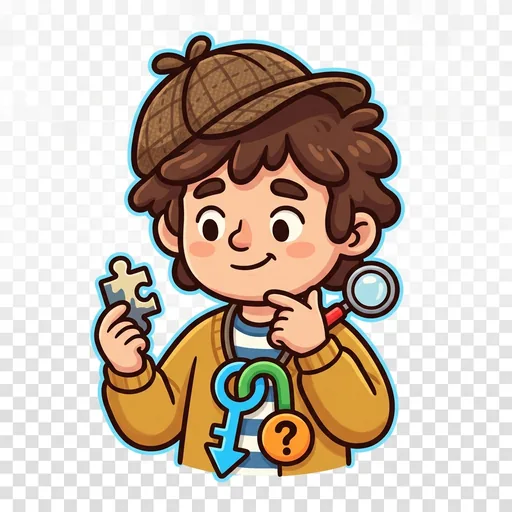
Contradiction Cassius
Proof by contradiction (reductio ad absurdum): assume the negation, derive a contradiction
-
Construction Cole
Proof by construction: prove existence by explicit construction of an example
-

Pigeonhole Perch
Pigeonhole principle: if n+1 items are placed in n bins, at least one bin contains 2+ items
-

Exhaustion Edda
Proof by exhaustion / cases: enumerate every case and verify each
-
Counterexample Cricket
Disproof by counterexample — one exception topples a universal claim
-

Biconditional Bex
Biconditional proof — proving 'if and only if' in both directions
-

QED
Closing-mark mentor — the ∎ at the end of every proof; the gentle voice that names completion + invites the next problem