
Tint
TIMBRE — *the color of a sound.* Timbre is why the same note sounds different on a flute than on a drum than on a voice. It's the sound's "color" or "flavor" — bright or warm, rough or smooth. Choosing the right timbre is like choosing the right color for a painting.
Press play to listen along. The line being read lights up as you go.
Show full transcript
Loading transcript…

- beat-after: 4 prompt: "Tint learns that there's no 'best' tone color — only the right one for the feeling you want. When has there been no single right answer to a creative choice, just the one that fit the mood you were going for?" ---
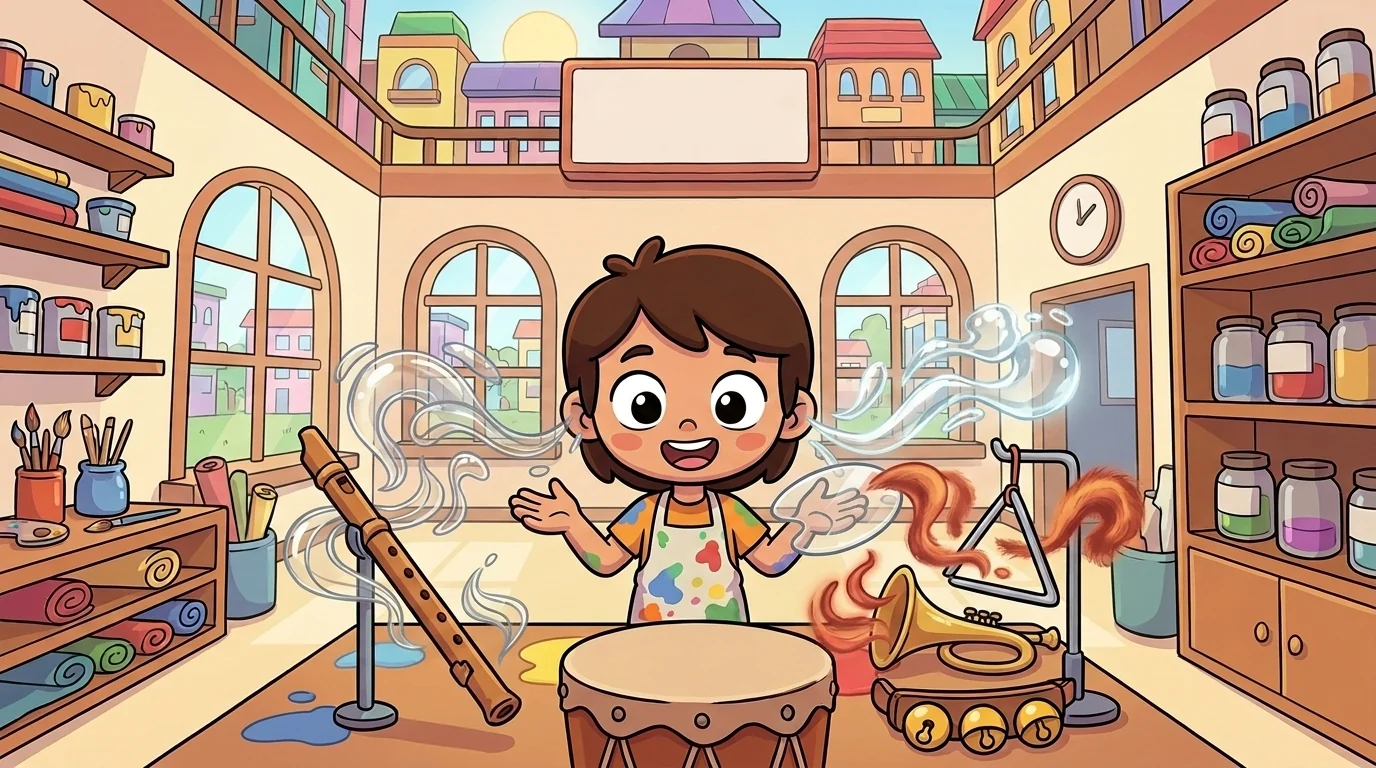
At the MotifLab academy, where a small tune named Trill was the hero of every song, there lived a curious, bright-eyed creature named Tint — and Tint heard sounds the way painters see colors.
When Trill sang his four notes, Tint could keep the notes exactly the same but change their color — making them bright and glassy like a bell, then warm and fuzzy like a low horn, then thin and silvery like a flute. Same notes. Same rhythm. But each color made Trill's little song feel like a completely different mood. Tint wasn't changing what Trill sang. She was changing what it was made of.
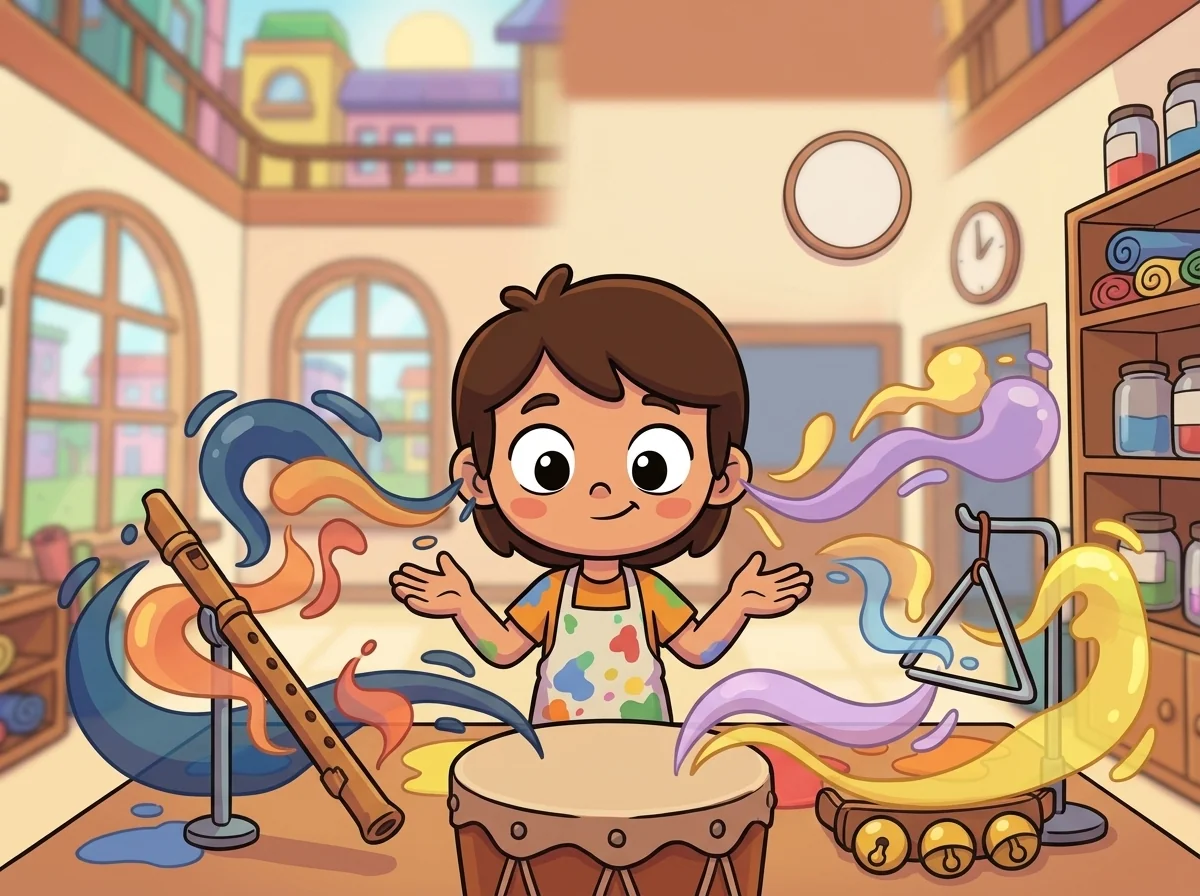
Trill sang his motif. Tint demonstrated: she played it in a harsh, clangy color for a tender, gentle song — and it felt wrong, like a sweet picture painted in angry red. "The color fought the feeling," she said. Then she chose a soft, warm color that matched — and the song glowed, just right. "Timbre isn't about fancy sounds. It's about the color that fits. A lullaby wants a warm, soft color. A march wants a bright, bold one."
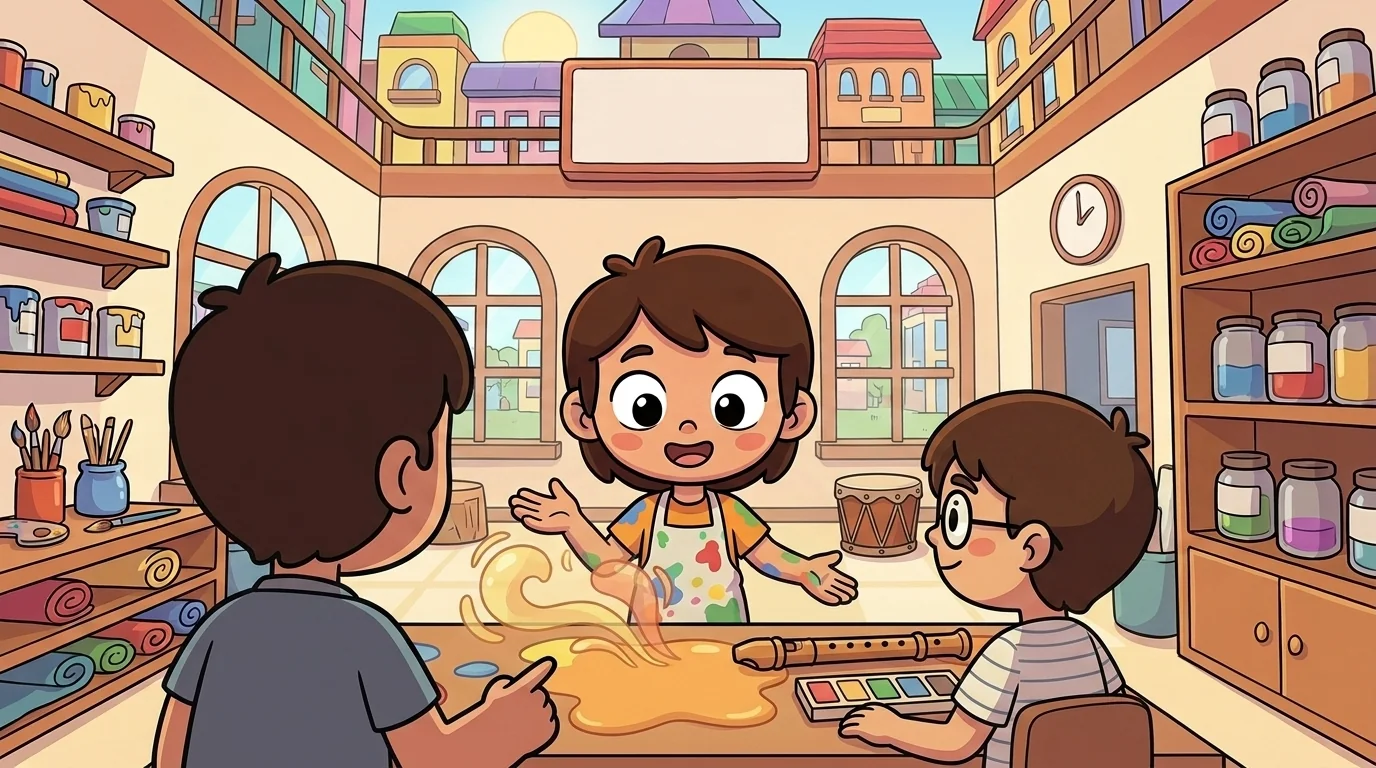
The instructor asked Tint to teach. "The students choose sounds at random," the instructor said. "Their songs feel mismatched. Will you teach them to choose colors?"
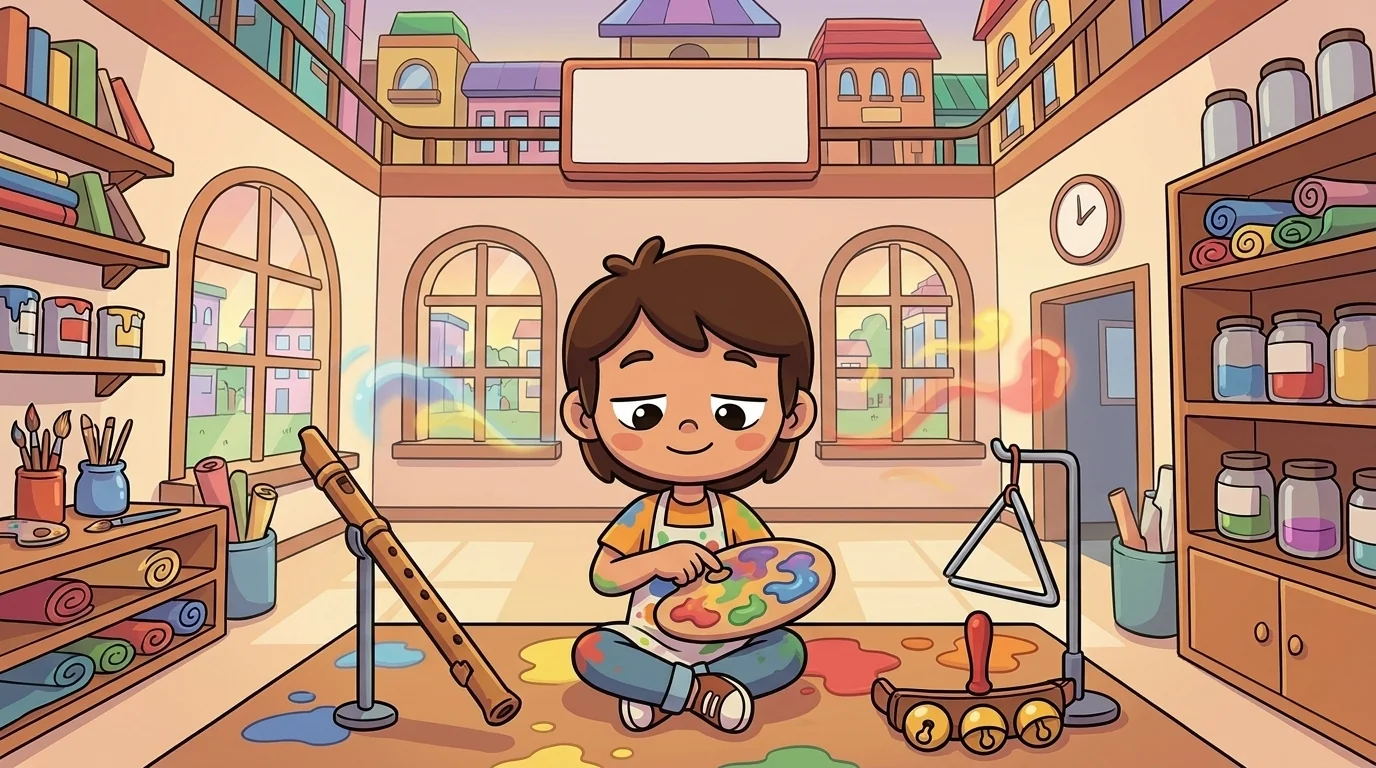
After class, Tint rested with her invisible palette, mixing colors only she could see, the way she daydreamed.
The MotifLab ensemble
Tint is part of MotifLab's distributed-narrative cast. Each character embodies a different curricular primitive; together they teach the full subject.
-

Trill
The motif itself — visual posture shifts as the motif develops, inverts, fragments
-
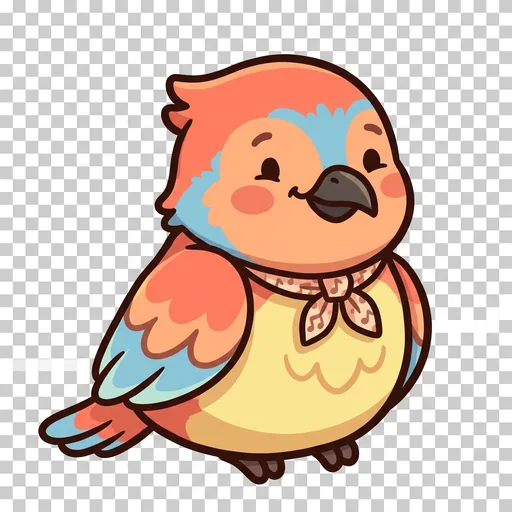
Meld
Harmony — notes that bloom underneath to support the melody
-

Thrum
Bass — the deep low foundation the whole song stands on
-

Clap
Rhythm — the steady beat pattern the song walks on
-

Twine
Counter-melody — a second tune that weaves against the main one
-

Surge
Dynamics — how loud and soft; how a song breathes
-
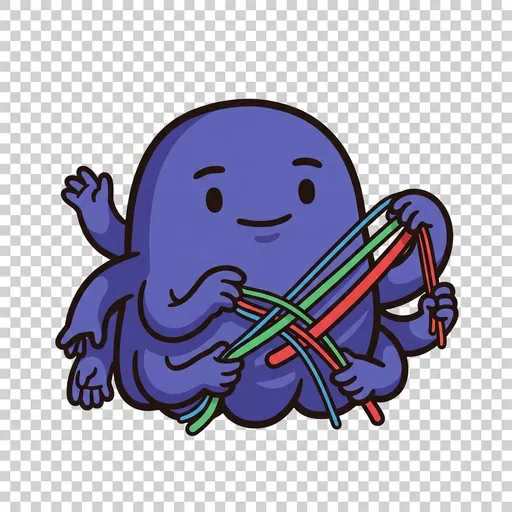
Ply
Texture — how many layers sound at once; thick or thin
-
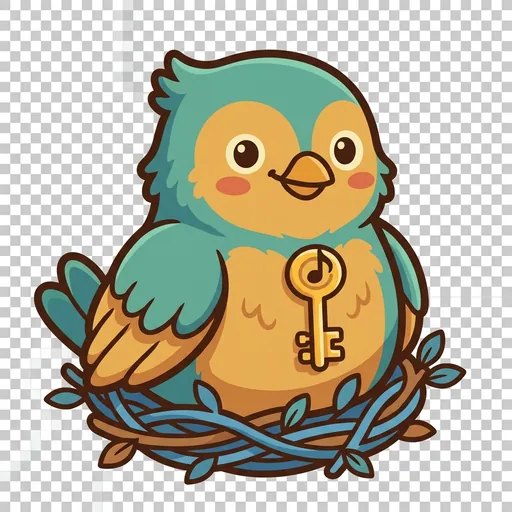
Nest
Key — the home note the song keeps returning to
-
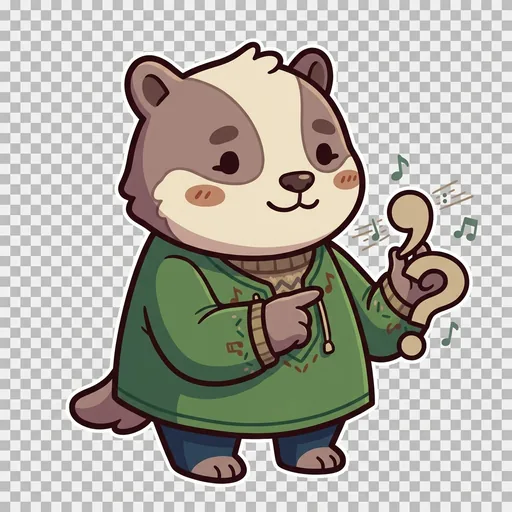
Wend
Cadence — how a phrase comes to rest; the song's punctuation