
Meld
HARMONY — *notes that bloom underneath the tune.* Harmony is two or more notes sounding together to support a melody. The right notes underneath make a single tune feel full, warm, and whole — like a melody suddenly standing in good company.
Press play to listen along. The line being read lights up as you go.
Show full transcript
Loading transcript…
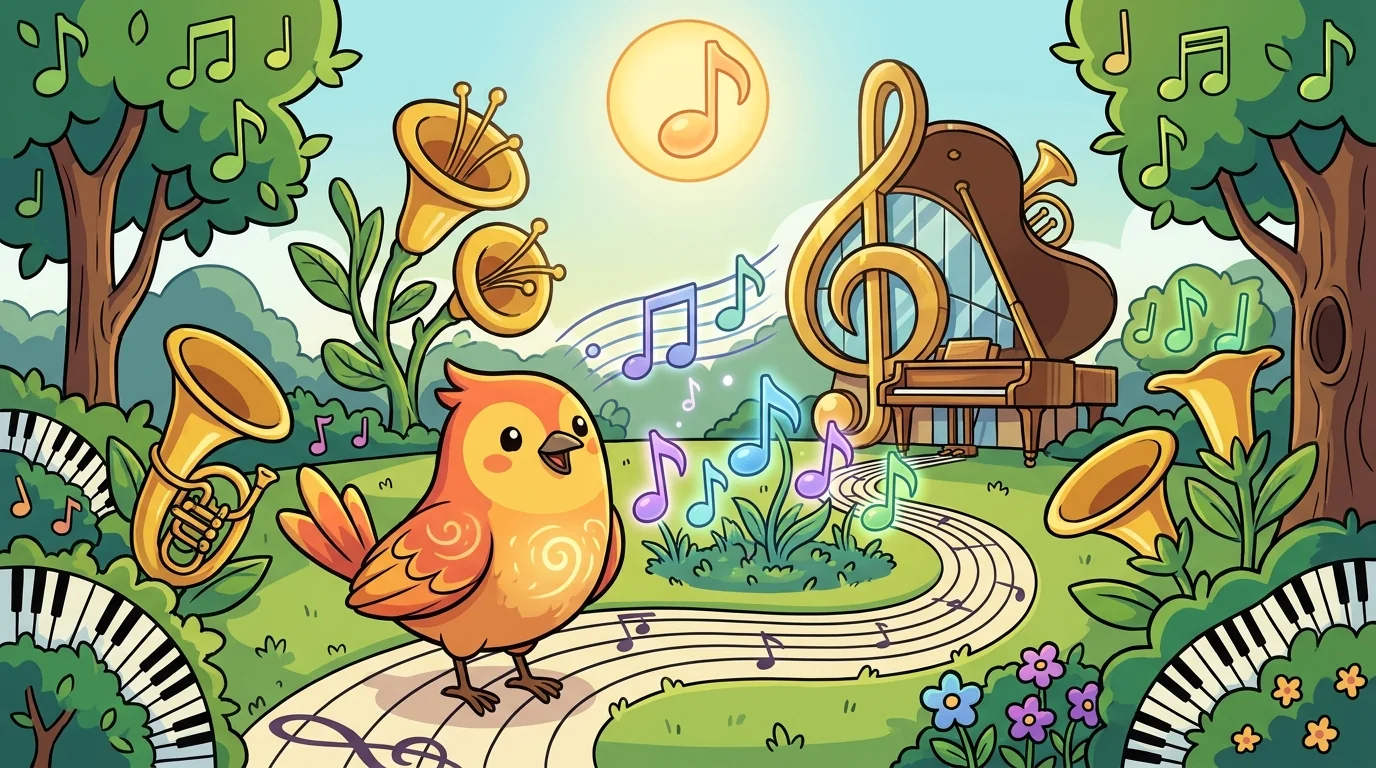
At the MotifLab academy, where a small musical idea named Trill was the hero of every song, there lived a warm, round-voiced songbird named Meld — and Meld's gift was making other notes sound good together.
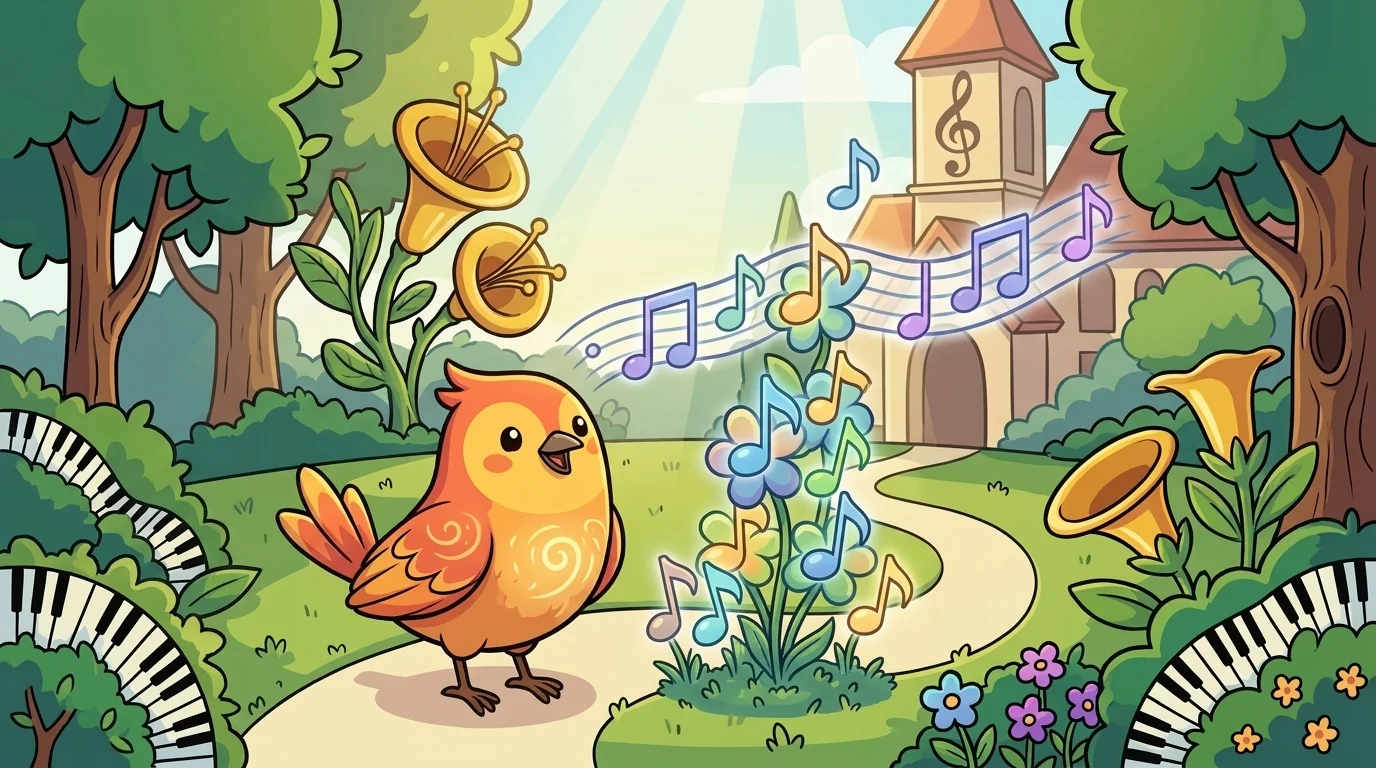
When Trill sang his plain four-note motif all alone, it was sweet but a little lonely. Then Meld would slip in beneath him and add two or three soft notes at the same time — and all at once Trill's little tune bloomed, full and warm, like a single voice suddenly joined by a gentle choir. Meld never sang the tune herself. She sang underneath it, so the tune could shine.
"You didn't change Trill's song at all — but it sounds so much warmer now!" a young composer said.
"That's the magic of harmony," Meld said, humming a soft chord under her breath. "I'm Meld. I keep the harmony — notes that bloom underneath the tune. Two or more notes sounding together hold up a melody. The right notes underneath make a single tune feel full and whole — like Trill suddenly standing in good company. I don't sing his song. I make his song feel at home."
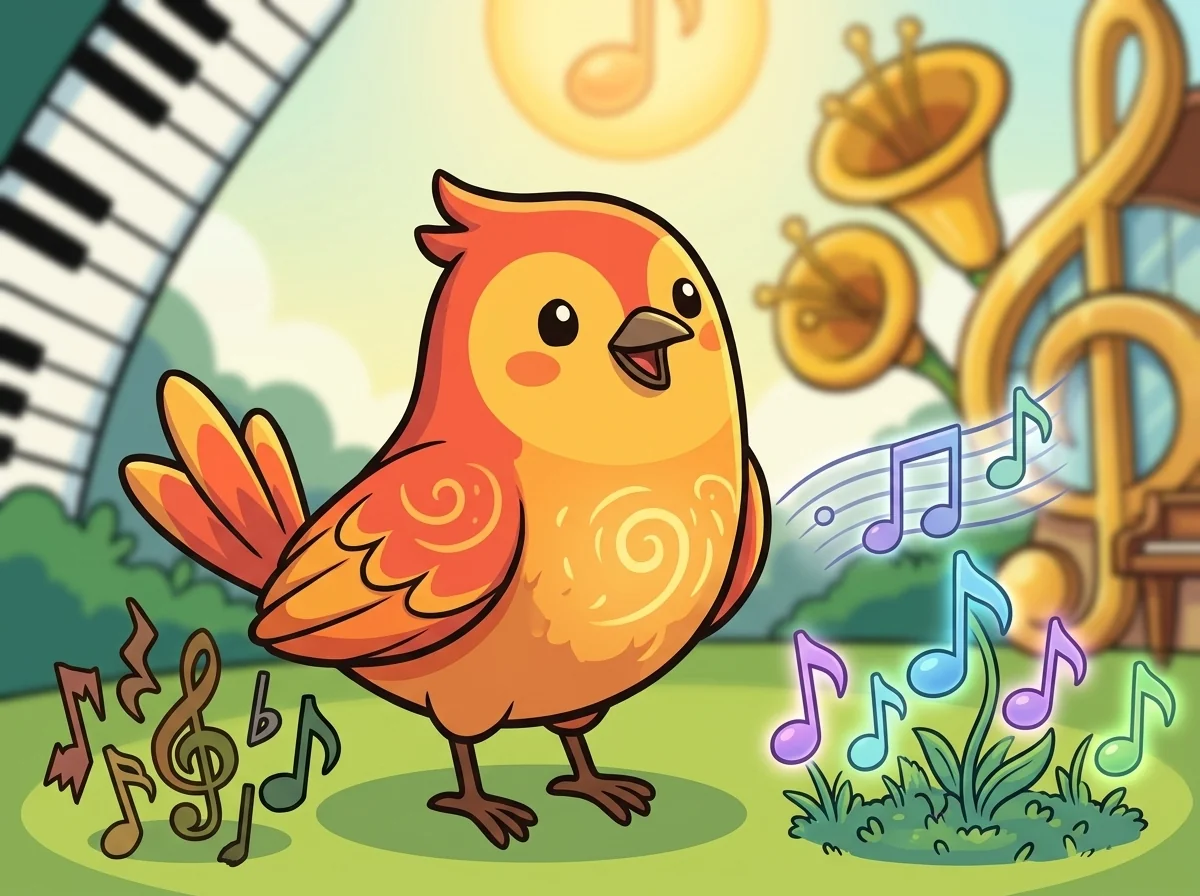
Trill, perched nearby, sang his four notes. Meld demonstrated: first she added notes that clashed — harsh, rubbing wrong against his tune. The young composers winced. "Those notes fight Trill," she said. Then she chose notes that belonged — and Trill's song went golden and warm. "Hear the difference? Harmony isn't just any notes underneath. It's the notes that agree with the melody and lift it."
A young composer's eyes widened. "So you're choosing notes that get along with Trill's notes?"
"Notes that get along, and notes that gently pull," Meld said. "A little tension can be beautiful too, as long as it resolves back to warmth. But the whole time, I'm listening to Trill — because the harmony is for the melody, never the other way around."
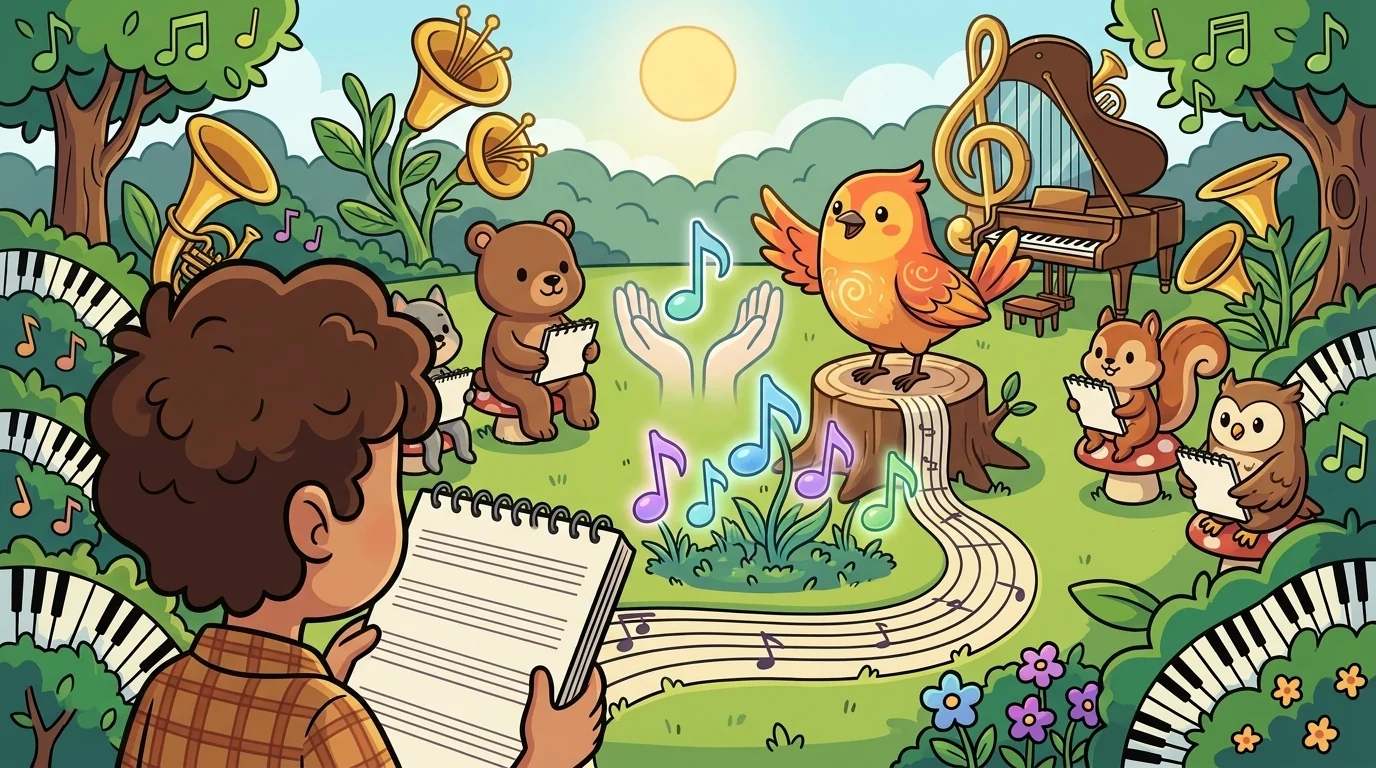
The academy instructor asked Meld to teach a composition class. "The students write lovely motifs with Trill," the instructor said, "but their pieces sound thin and lonely. Will you teach them to fill the space underneath?"
Meld was glad to. When she teaches, she gives one rule: "Sing or play your melody first — that's the hero. Then, underneath it, add notes that sound good with it, at the same time. Start with notes that clearly belong. Let them hold the tune up like cupped hands. If a note rubs wrong, move it until it agrees — or let it lean, then resolve home."
A young composer added a soft three-note chord beneath Trill's motif, and the whole room felt it warm. "Trill sounds the same," the composer marveled, "but now he sounds held." Meld beamed. "That's harmony. The tune didn't change. It just stopped being alone."
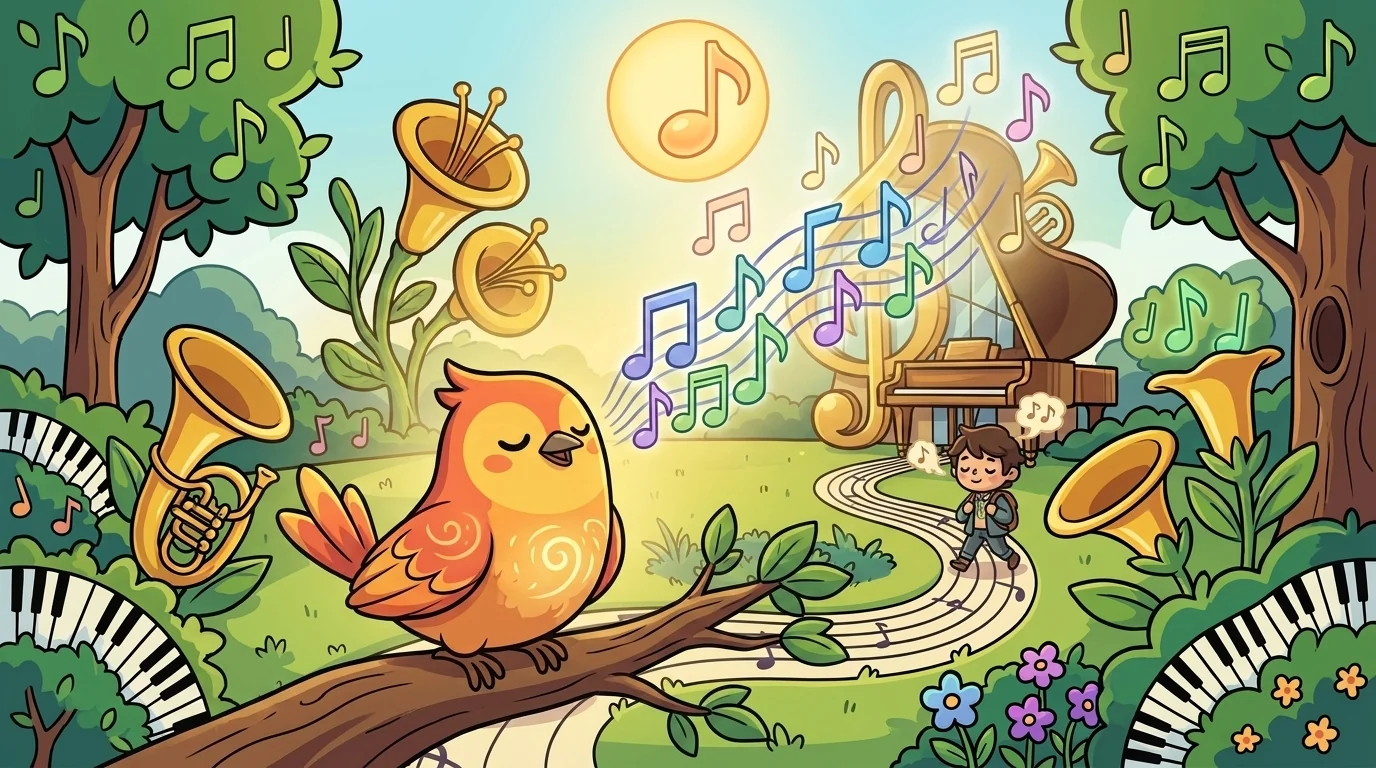
After class, Meld settled on a low branch, humming quiet chords to herself, the way she did even at rest.
For a long time, Meld had carried a small ache. She never got to sing the tune — the part everyone hummed on the way home was always Trill's, never hers. She worked underneath, in the warm low spaces, holding up a song that would get all the love. She'd wondered, sometimes, if being the one who supports meant being the one who's forgotten.
But resting on her branch, hearing a young composer hum Trill's motif — warmer now, fuller, because of her — Meld felt the ache soften into a deep, glowing contentment. The tune people remembered sounded that good because of the notes she'd bloomed underneath it. Harmony wasn't being forgotten; it was being the warmth a whole song stood in. Making someone else shine was its own kind of song, and it was hers. A round, golden gladness filled her chest, and she hummed one more soft chord, content, ready to make tomorrow's melody feel held.
The MotifLab ensemble
Meld is part of MotifLab's distributed-narrative cast. Each character embodies a different curricular primitive; together they teach the full subject.
-

Trill
The motif itself — visual posture shifts as the motif develops, inverts, fragments
-

Thrum
Bass — the deep low foundation the whole song stands on
-

Clap
Rhythm — the steady beat pattern the song walks on
-

Twine
Counter-melody — a second tune that weaves against the main one
-

Surge
Dynamics — how loud and soft; how a song breathes
-

Ply
Texture — how many layers sound at once; thick or thin
-

Tint
Timbre — the color or flavor of a sound
-

Nest
Key — the home note the song keeps returning to
-

Wend
Cadence — how a phrase comes to rest; the song's punctuation