
Circle Circe
rotating mentor — narrates the problem then deliberately disappears
Loading audio…
Press play to listen along. The line being read lights up as you go.
Show full transcript
Loading transcript…
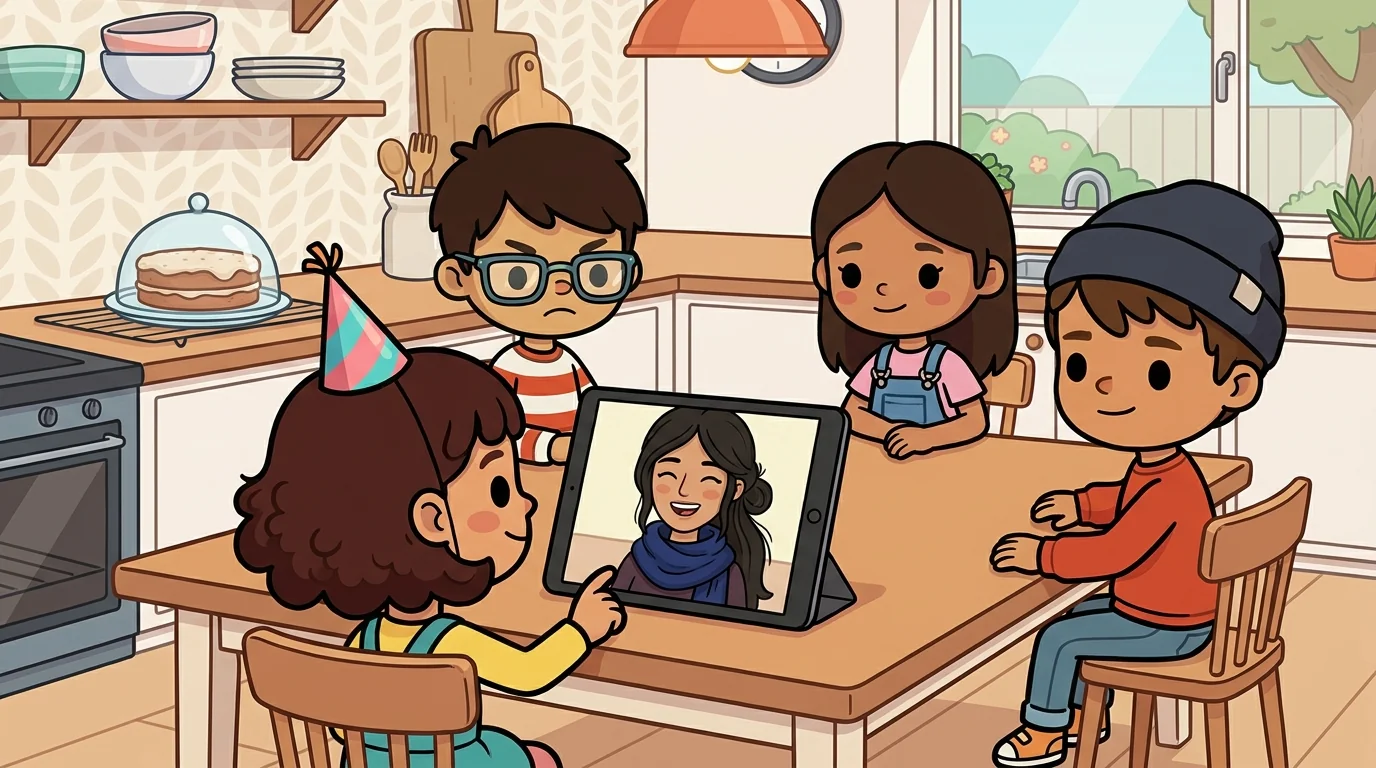
Circle Circe had been studying the art of leaving the room for almost twenty years.
She had not started out good at it. When she was twenty-three and running her first circle — in a community center kitchen in a small town she had moved to that summer — she had stayed in the room the entire ninety minutes. She had asked questions. She had nudged. She had, at one point, written a hint on the chalkboard. The four kids had solved the problem. They had thanked her politely. They had not come back the next week.
She had thought about that for a long time.
The next week, with a different group, she had tried something different. She had introduced the problem. She had told them she was going to step into the kitchen and check on a pot of tea that wasn't actually on the stove. She had walked out. She had stood in the hallway and listened. The four kids had been silent for almost three minutes. Then one of them had said, "Should we just try drawing it?" And another had said, "Sure," and they had started working.
When she had come back twenty minutes later, they had solved the problem.
She had not stayed away long enough yet to understand the difference, but the four kids had come back the next week, and the week after that, and for three years until they aged out of the circle. She had learned, slowly, what the difference was.
The difference was that she had not been in the room.
Tama, who was thirteen now and had been running circles at her own kitchen table for almost two years, had asked Circle Circe about this once.

It had been near the end of a circle, after the four kids — Joon and Mira and Bex and Tama — had solved a problem about handshakes that had taken them most of an hour. The other three had gone home. Tama was alone at the table. Circle Circe was still on the screen, the little timer that usually counted her absence now showing zero.
"Circle," Tama said. "Can I ask you something?"
"Mm."
"How did you learn to go quiet for so long?"
Circle Circe considered. She did not answer right away. She had taught herself, long ago, that whenever a kid asked her a question about how to run a circle, she should treat that question with the seriousness she would give an adult.
"I learned it by ruining a circle when I was younger than you are now," she said. "Well — when I was a little older. Twenty-three. My first one. I stayed in the room the whole time. The kids solved the problem. They never came back. I had to figure out why."
"What was the why?"
"I had stayed in the room. The room wasn't theirs. It was mine. They had solved my problem under my supervision in my room. That's not a circle. That's a tutoring session with extra steps. Kids don't come back to tutoring sessions for fun."
"So you started leaving."
"I started leaving. At first I left for short times. Then longer. Then I figured out how to leave without leaving — how to fade to a dim outline, the way I do now. The fading is the same as leaving. It just means I can come back faster if you need me."
Tama considered.
"Do you ever wish you could just tell us the answer?"
Circle Circe smiled — small, real, very deliberate.
"Sometimes. When the answer is sitting right there and one of you is one good question away from seeing it and the room is going quiet in a frustrated way — yes. Sometimes I want to just tell you. But the wanting passes. The wanting is the part of me that hasn't learned to leave. The wanting is the twenty-three-year-old version of me. She visits sometimes. I let her speak. I do not let her run the circle."
Tama was quiet for a long time.
"I'm thirteen," she said finally. "I want to run circles when I'm older."
"You already do. Today's circle was yours. I was the screen. You were the structure."
"You were on the screen."
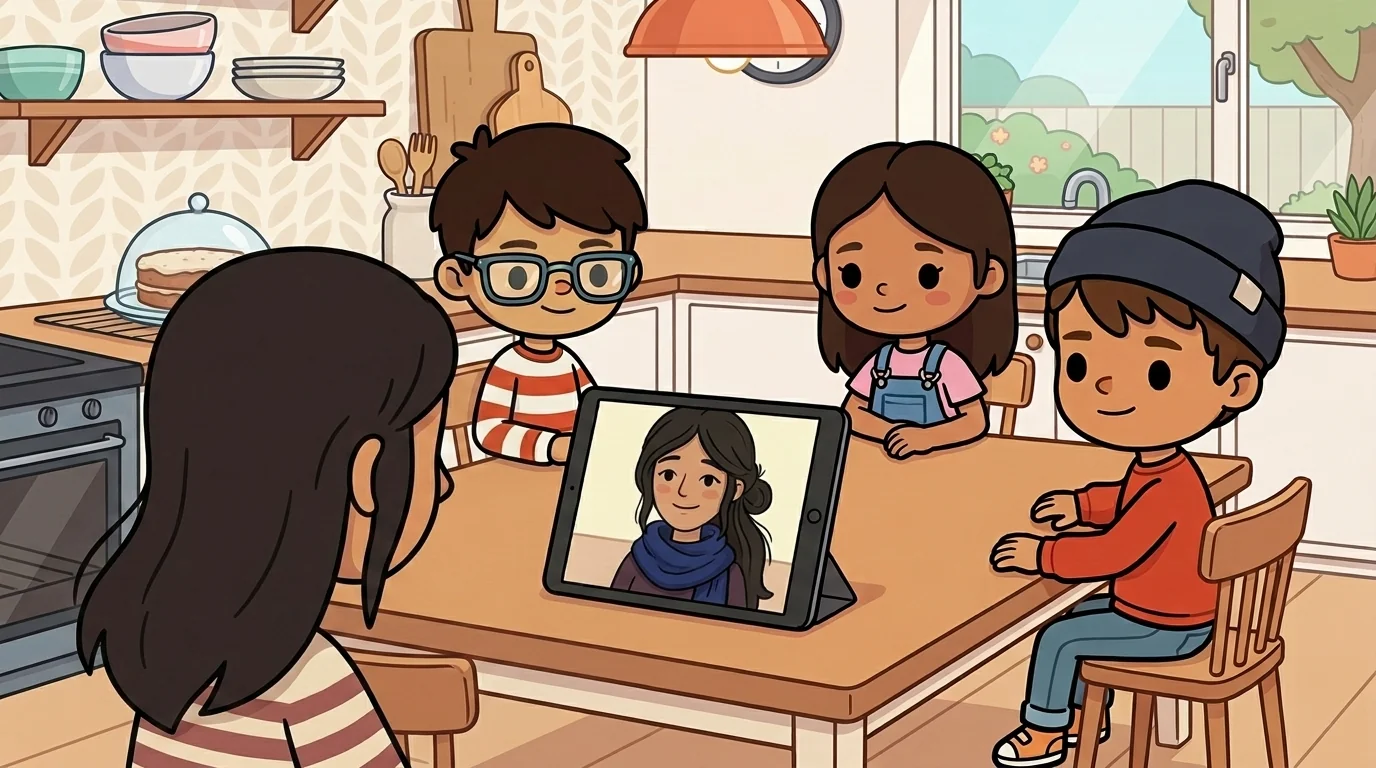
"I was a dim outline on the screen. That's not the same as being in the room. The room was yours."
The thing Circle Circe had learned, after almost twenty years, was that the deepest skill in running a math circle was the skill of identifying the moment when a kid needed her to come back.
There were moments when the circle was working well — when the four kids were talking, drawing, arguing, building on each other — and at those moments her job was to stay faded. There were moments when the circle was working slowly — when there was a long silence, when one kid was struggling but trying, when nobody was speaking but everyone was thinking — and at those moments her job was also to stay faded, because the slowness was the work, and the silence was the work, and her returning would only interrupt the work.
But there were also moments when the circle was breaking — when one kid had gone genuinely silent and was withdrawing, when an argument had become unkind, when the group had drifted into a wrong direction with no internal way back, when somebody was crying — and at those moments her job was to come back, gently, and reset.
The hardest part of her job was knowing which moment was which.
She had not always known. She had returned too quickly many times. She had stayed away too long many times. She had once, when she was thirty, come back into a circle where two kids had been quietly mean to a third for almost ten minutes, and the third kid had been holding back tears, and Circle Circe had not noticed because she had been listening for the wrong signals.
She had thought about that for a long time, too.
She had, after that circle, written down a small list of signals she had not been listening for, and she had taught herself to listen for them. The list had grown over the years. She kept it on a card in her desk drawer at home. The card was almost full now.
She had told only one person about the card — the woman who had trained her, back when she was twenty-two. That woman was retired now. She had told Circle Circe, when she had heard about the card: "Good. That's the job. Keep growing the card."
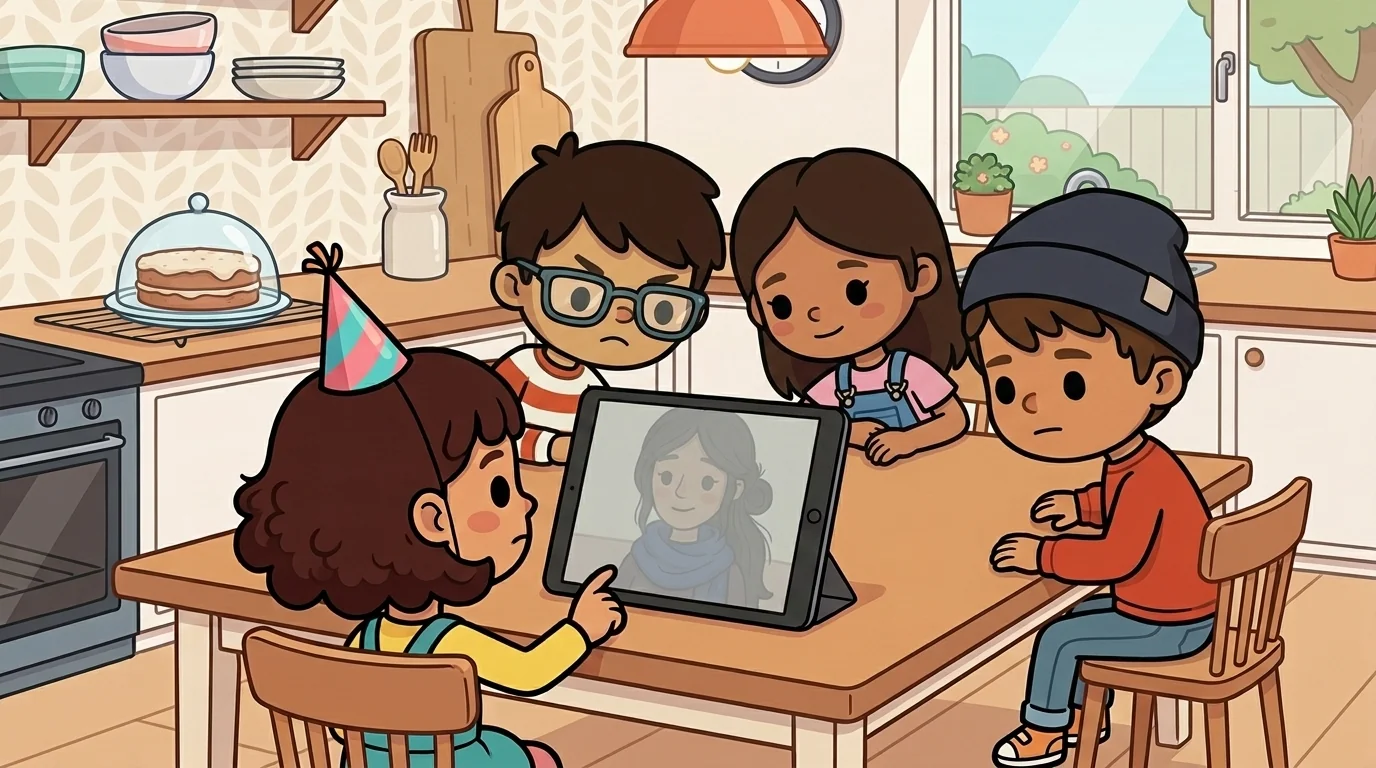
Circle Circe was still growing the card.
She had not yet told Tama about the card. She would, someday. When Tama was older, when Tama had run a circle that broke in a way she did not catch in time, Circle Circe would tell her about the card, and they would compare notes.
That was the lineage.
That was what circles were.
Tama left the kitchen. The cake on the counter was a memory from two years ago now — there had been other cakes, other parties, other circles — but the kitchen was still the same kitchen, and the light coming through the window was the same light, and the iPad was the same iPad.
Circle Circe stayed on the screen for a few seconds after Tama left. Then she faded all the way out, not to a dim outline this time, but completely.
Off-screen, she added a line to her card.
The line said: Listen for the kid who runs the circle. Sometimes she also needs the wait-time you give the others.
She closed the drawer.
The MathCircle ensemble
Circle Circe is part of MathCircle's distributed-narrative cast. Each character embodies a different curricular primitive; together they teach the full subject.
-

Echo Edie
Listener-restater; social-fabric weaver
-

Patty Patient
Wait-time character; gentle anti-pressure presence
-

Tortoise Hare
Dual-voice productive-failure surface; embodies the slow-fast tension
-

Tess Try-Small
Specializing — when a problem's too big, try the smallest version first
-

Gemma General
Generalizing — turning a pattern from a few cases into a rule for all of them
-

Hattie Hunch
Conjecturing — daring to guess boldly, then testing the guess honestly
-

Reva Reverse
Working backwards — starting from the goal and reasoning back to the start
-

Wendy Wonder
Notice-and-wonder — slowing down to observe and ask before rushing to solve
-

Cass Check
Sense-checking — asking whether an answer actually makes sense before trusting it