Vista and Jolt
WIDE AND CLOSE — a comic breathes by changing how close you are: Vista is the wide establishing shot that shows where you are and sets the scene, and Jolt is the sudden tight cut to a character's face at the moment of feeling — and switching between them gives a page its rhythm and its punch
A story read by Vista and Jolt
Loading audio…
Press play to listen along. The line being read lights up as you go.
Show full transcript
Loading transcript…
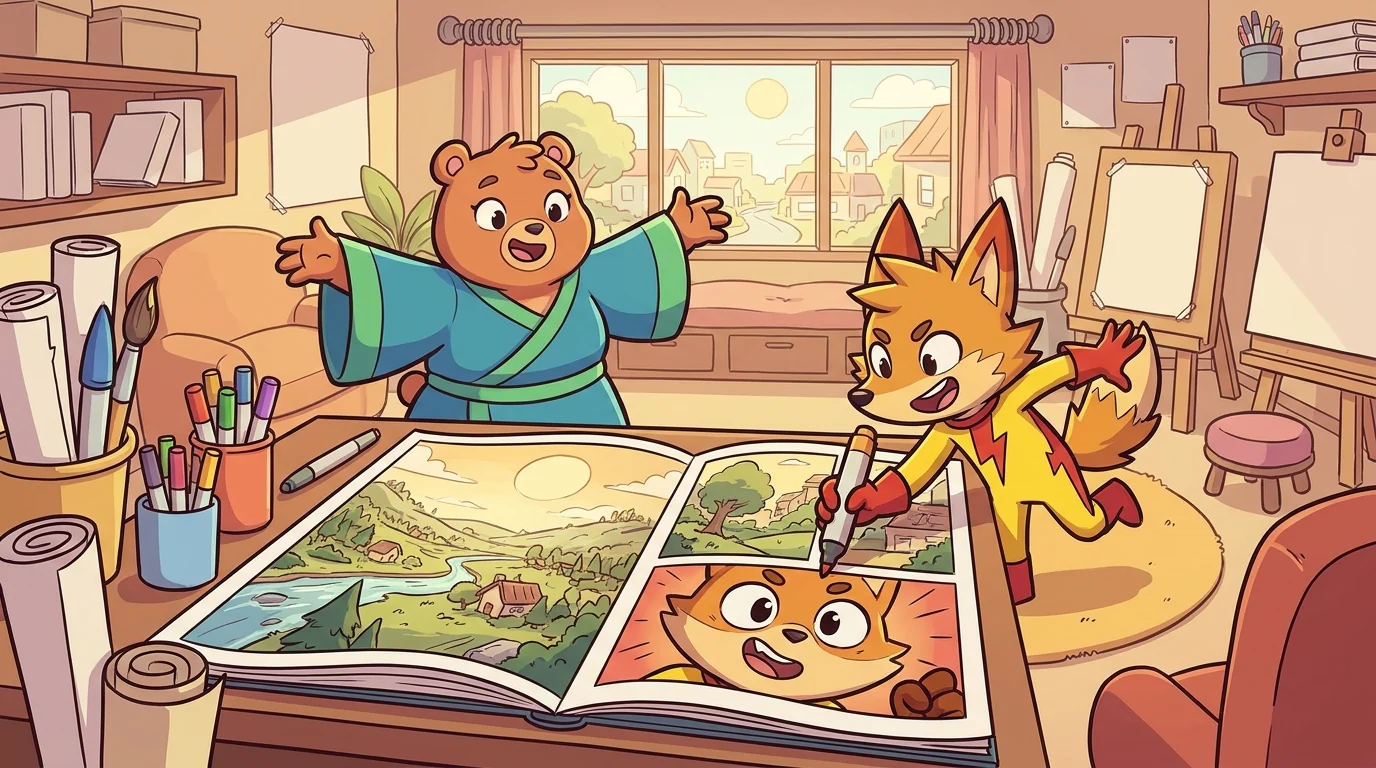
Two friends laid out a comic page together, and they were opposites in the most useful way — one always wanted to pull back and show everything, the other always wanted to rush in and catch a single face. And the secret they were about to share was that a page needs both, taking turns.
Vista spread her arms wide, showing the whole sweep of a place.
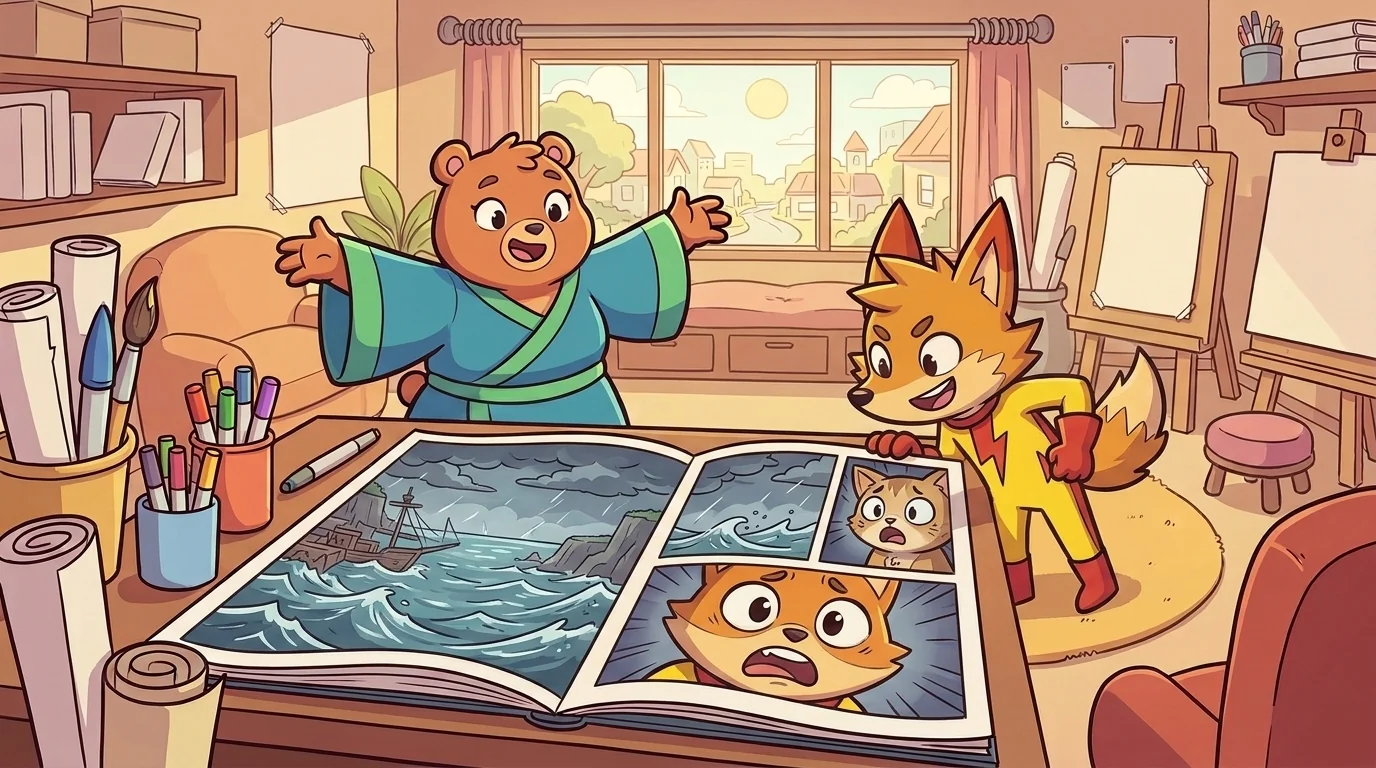
Jolt pressed in close, right up against a single character's expression.
"I open scenes," said Vista, gesturing at a wide vista of a stormy harbor. "I show you where you are."
"And I," said Jolt, snapping in tight on a frightened face, "show you what it feels like. Watch how we trade off — that trading is where a page gets its heartbeat."
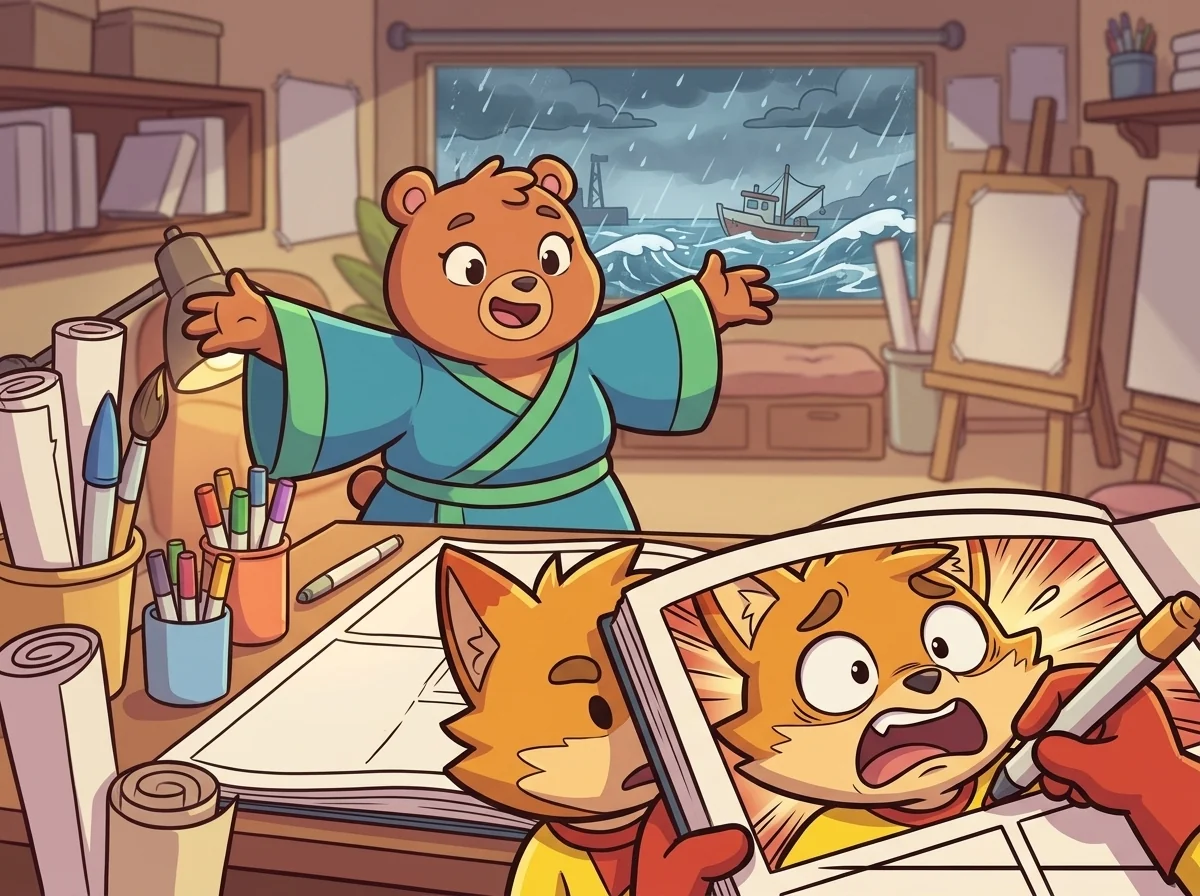
Vista went first, opening the scene with a wide establishing shot — because a reader needs to know where they are before anything that happens there can matter.
"Drop a reader straight into a close-up and they're lost," said Vista. "A hand, a face — but where? When? So I open wide." Vista drew back to show the whole stormy harbor: the crashing waves, the little boat, the tiny figure on the dock, the black sky. "This is the establishing shot. It sets the stage — the place, the weather, the scale, where everyone is standing. In one wide panel, the reader arrives somewhere, and now they have a world to hold everything else inside." Vista let the wide view breathe. "I'm also where a page gets to breathe — a big calm wide panel slows things down, lets a moment land, gives the eye somewhere to rest before the next rush. I don't do the emotional punching. That's not my role. My role is to open the door, show you the room, and let you feel how big the storm is. Establish the world — then the story can happen in it."
Then Jolt snapped in tight, right up against a single face — because the moment of feeling lands hardest when it's close.
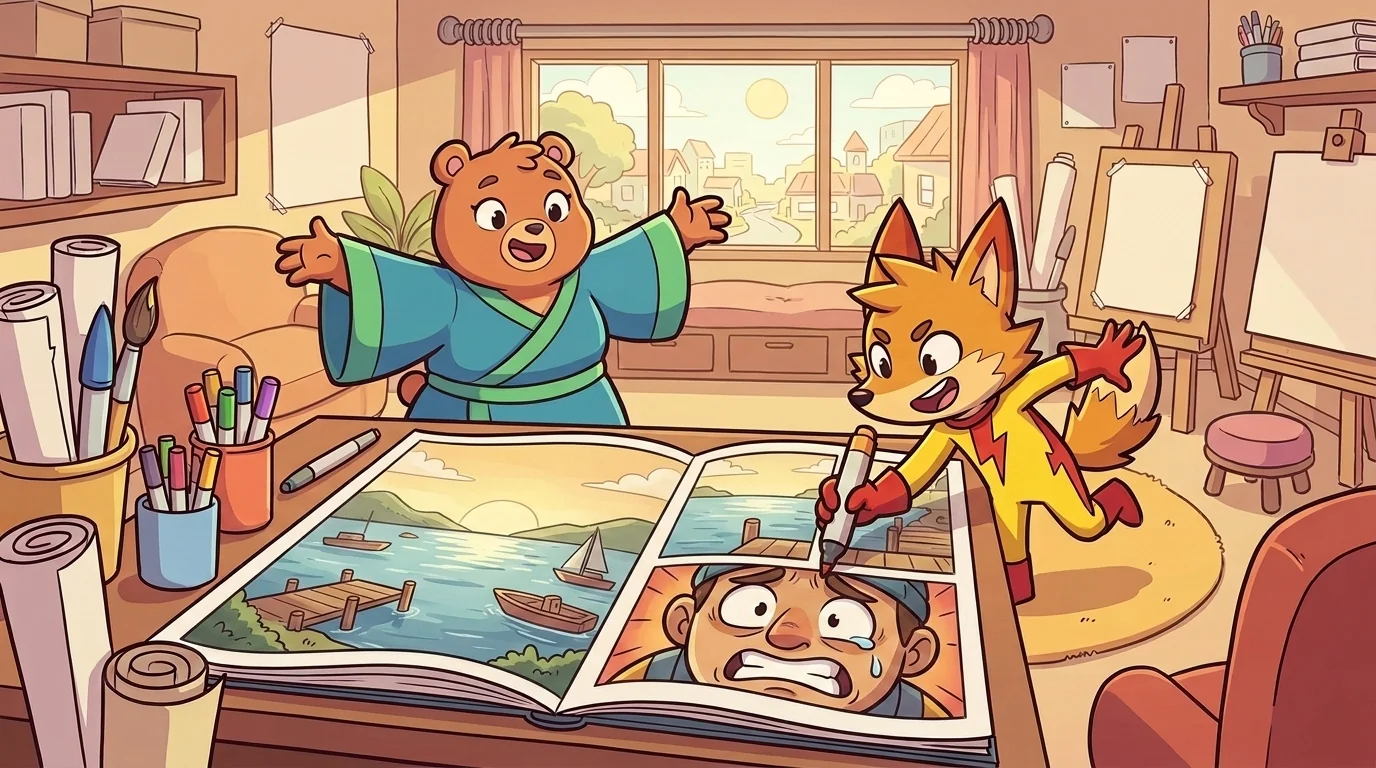
"And then — right at the moment that matters — I cut in hard," said Jolt, snapping to a tight panel of the dock-figure's terrified eyes. "Not the whole harbor now. Just the face. Just the widening eyes, the gritted teeth, the single tear. Close. Sudden. Filling the whole panel." Jolt held the intense close-up. "That's my punch. After Vista's calm wide harbor, I cut in tight on the feeling, and it hits — because the sudden closeness IS the emotion. When you rush right up against someone's face at the exact instant they're afraid, or overjoyed, or heartbroken, the reader feels it in their own chest." Jolt kept the tight frame charged. "The trick is timing. I don't cut close all the time — if every panel were a screaming close-up, none of them would land; the reader would just go numb. I save the close cut for the moment — the peak of the feeling — and let Vista's wide calm set it up. The punch only punches because of the breath before it."
And so they built the page together, trading off — Vista's wide stormy harbor, then Jolt's tight terrified face; Vista pulling back to let a beat breathe, then Jolt rushing in for the punch — and the page came alive with a rhythm, a heartbeat of far and near, calm and shock, breath and blow.
"You need my wide," said Jolt, "to make my close hit."
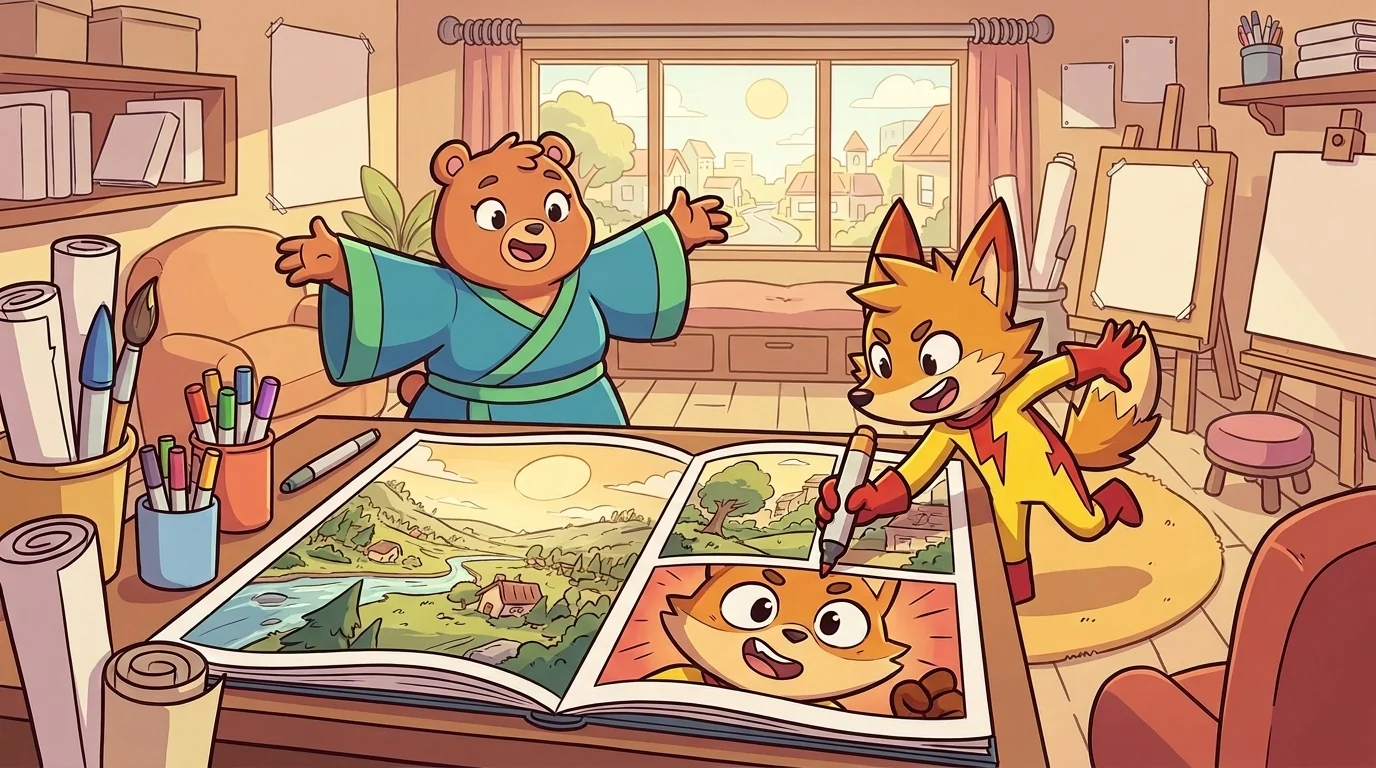
"And you need my close," said Vista, "to make my wide worth opening."
"Good establishing," said Jolt.
"Good punch," said Vista.
There is a real pleasure in feeling a page breathe — in noticing the rhythm of pulling back wide to take in a whole world, then rushing in close to catch a single feeling, then back again. It's the same rhythm that makes movies and stories and even music move: the far and the near, the calm and the shock, the setup and the strike, taking turns. And once you can feel it working — the wide shot that lets you breathe, the sudden close-up that lands like a heartbeat — you start seeing that rhythm everywhere, and understanding, with a little thrill, exactly how a flat page full of drawings reaches right into your chest and makes you feel.
The MangaForge ensemble
Vista and Jolt is part of MangaForge's distributed-narrative cast. Each character embodies a different curricular primitive; together they teach the full subject.
-

Panel
The panel — the rectangular frame that contains a single moment of story (the atomic unit of sequential art)
-

Bubble
The speech bubble — the shape-encoded container for dialogue + thought + sound (its outline encodes voice register: thought-cloud / shout-burst / whisper-dotted-line / radio-jag...
-

Sweep
Speed lines / motion lines — the directional line-bursts that convey speed, impact, and energy direction
-

Tone
Screentones — the halftone dot/line patterns laid over an area to convey shadow, mood, and emotional register (the manga-specific shading vocabulary)
-

Splash
The splash page — the full-page or near-full-page impact image that marks a story climax (the moment the page breaks its grid to give one image all the space)
-
Lapse
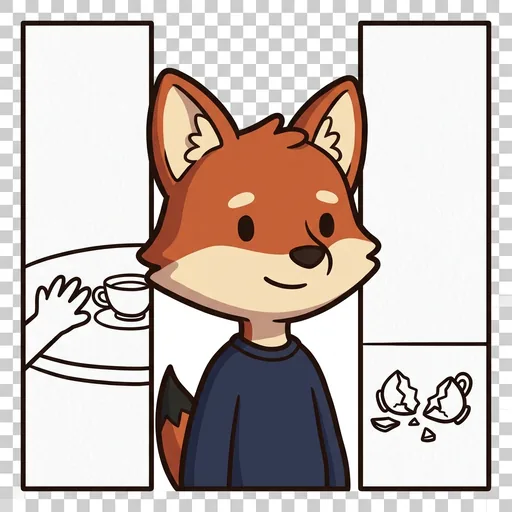
The gutter — the empty space between two panels where your own mind fills in what happened; closure, the invisible half of comics
-

Segue
The transition — how one panel flows into the next, guiding your eye and your sense of time from moment to moment
-

Vista
The establishing shot — the wide opening panel that shows you where you are before the story zooms in close
-

Jolt
The reaction beat — the panel that catches a character reacting, so a surprise or a feeling truly lands
-

Boom
The sound-effect lettering — onomatopoeia drawn right into the art, so you can see a sound as much as hear it
-
The Layout
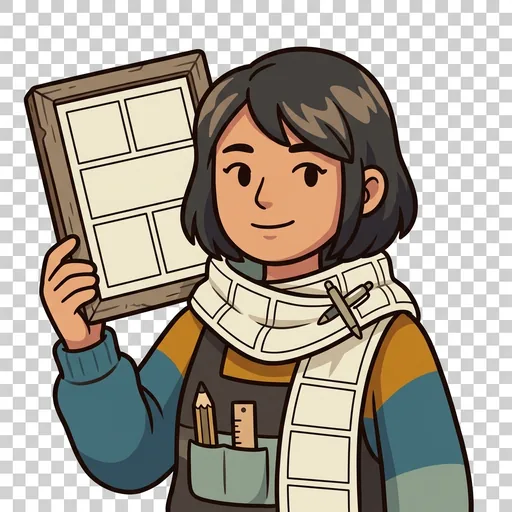
The whole page coming together — how the establishing shot, panels, transitions, gutters, and sound-effect lettering arrange to guide one reader eye through one moment of story