
Panel, Lapse and Segue
BETWEEN THE PANELS — comics tell a story in the spaces you DON'T draw: Panel frames a single frozen moment, Lapse is the gutter — the empty gap between panels where the reader's own mind fills in the motion — and Segue is the type of jump between panels that controls how big a leap the reader makes
A story read by Panel, Lapse and Segue
Loading audio…
Press play to listen along. The line being read lights up as you go.
Show full transcript
Loading transcript…

Three friends sat with a blank comic page — a grid of empty boxes with gaps between them — and they were about to reveal the strangest, best-kept secret in all of comics: that a huge part of the story happens in the parts the artist never draws at all.
Panel framed a single crisp moment inside one box.
Lapse guarded the empty gutters — the little gaps between the boxes.
And Segue decided how far the story would jump from one box to the next.
"People think comics are just pictures in a row," said Panel. "They're not. They're pictures with gaps, and the gaps do half the work. Watch — this is the secret that turns drawings into storytelling."

Panel went first, framing one crisp moment — because a comic is built from frozen instants, each caught in its own box.
"I hold one moment," said Panel, framing it. "Not a movie, not a flow — one single frozen instant, chosen carefully. A boy's foot leaving the ground. A hand reaching for a door. The instant the ball is caught." Panel snapped the frame around a moment. "That's my whole craft: choosing which instant to freeze. Because I can't show everything — I have to pick the one moment that tells the most. The moment just before, or just after, or right at the peak. A good panel is a good choice — the single frozen instant that says more than a dozen dull ones would." Panel set the moment in its box. "But here's what a beginner misses: I can only ever show these separate, frozen moments — one, then another, then another. So how does a story, which flows and moves, get told in a row of frozen stills? That's not my doing. That's the magic of my friend in the gaps."

Then Lapse spread into the empty gutter between two panels — because the space where nothing is drawn is where the reader does the most work of all.
"Look at the gap between two panels," said Lapse. "It's empty. White. Nothing drawn there at all. And yet—" Lapse gestured between a panel of a foot leaving the ground and a panel of the same boy landing across a puddle "—your mind just made him jump. Did the artist draw the jump? No! The artist drew before and after, and left me — the gap — in between. And you, the reader, filled in the leap. All by yourself." Lapse glowed with quiet delight. "That's called closure, and it's the beating heart of comics. The panels give you frozen moments; I give you the space between them; and your own imagination stitches them into motion. The artist never drew the jump — you did, in your head, in the gutter." Lapse held the empty space proudly. "That's why comics feel alive even though they're just stills: because the reader isn't watching. The reader is participating, filling every gap with motion the page never showed. Half the story is happening in you."

And Segue decided how big a leap each gap would ask of the reader — because the kind of jump between panels changes everything.
"I control the size of the jump across Lapse's gap," said Segue. "A tiny jump — the same boy, a heartbeat later, barely moved — asks almost nothing of the reader; the gutter's easy to cross. But a big jump — from the boy's house straight to a spaceship, or from a whisper to years later — asks the reader to leap much farther, and fill in much more." Segue arranged different transitions. "Moment to moment. Action to action. Scene to scene. A jump clear across time and space. Each kind of Segue asks the reader's imagination to do a different amount of work in the gutter." Segue tuned the jumps. "Too small and the story crawls; too big and the reader gets lost and can't bridge the gap. The art is choosing the right leap for each gutter — enough to keep the story moving briskly, never so much that the reader falls into the gap instead of flying across it. I'm the one who decides how far you jump."
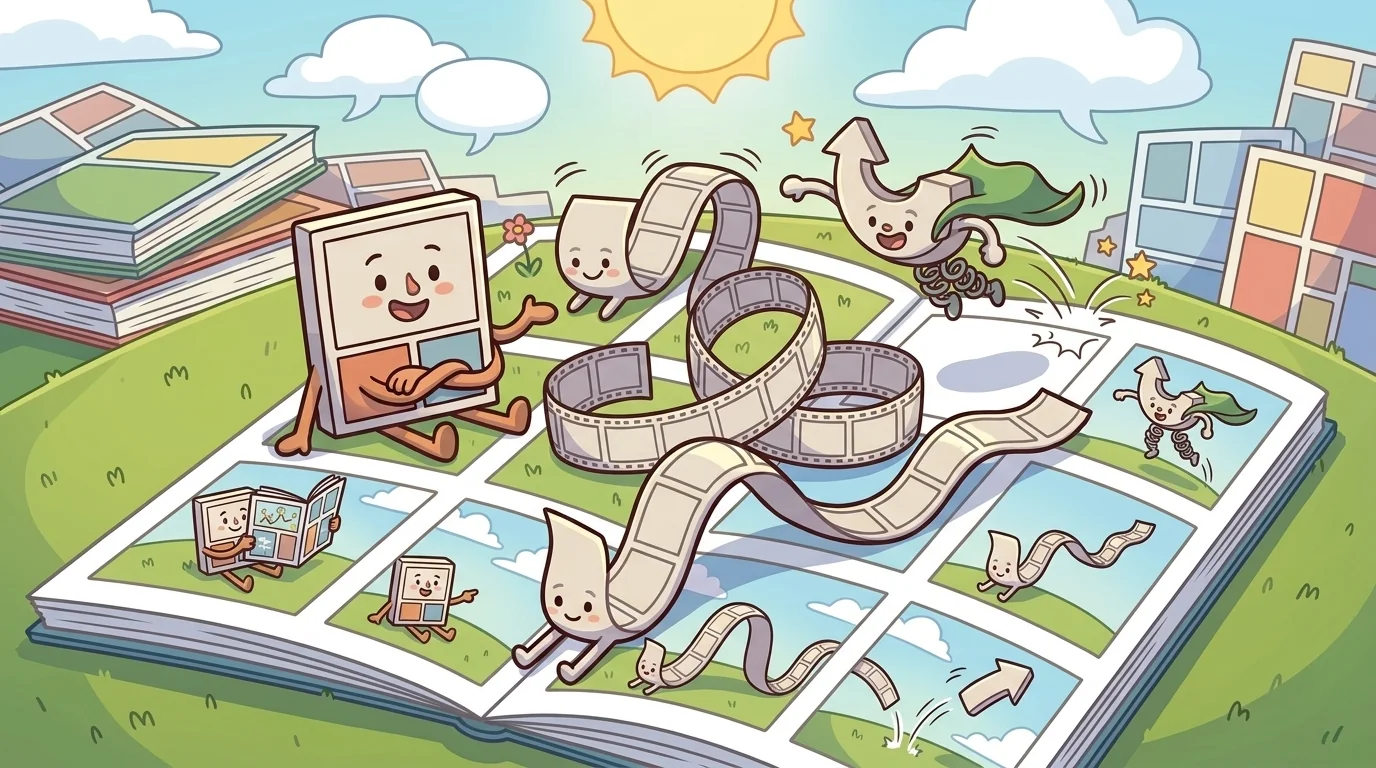
And so the three of them built a story across the page — Panel freezing the key moments, Lapse holding the gaps, Segue sizing the leaps — and the reader's own mind did exactly what it was invited to do: filled every gutter with motion, and turned a grid of stills into a living, moving tale.
"Good moments," said Lapse.
"Good gaps," said Segue.
"Good leaps," said Panel.
There is a genuinely delightful surprise in learning this secret — that when you read a comic, you are doing half the storytelling, filling every empty gutter with motion the artist never drew. It changes how it feels to read one: you realize you're not a spectator but a participant, your imagination invited right into the gaps to make the story move. And there's a warm little pride in that discovery — the realization that a comic isn't finished on the page at all. It's finished in you, in the quiet, invisible, wonderful work your mind does between the panels.
The MangaForge ensemble
Panel, Lapse and Segue is part of MangaForge's distributed-narrative cast. Each character embodies a different curricular primitive; together they teach the full subject.
-

Panel
The panel — the rectangular frame that contains a single moment of story (the atomic unit of sequential art)
-

Bubble
The speech bubble — the shape-encoded container for dialogue + thought + sound (its outline encodes voice register: thought-cloud / shout-burst / whisper-dotted-line / radio-jag...
-

Sweep
Speed lines / motion lines — the directional line-bursts that convey speed, impact, and energy direction
-

Tone
Screentones — the halftone dot/line patterns laid over an area to convey shadow, mood, and emotional register (the manga-specific shading vocabulary)
-

Splash
The splash page — the full-page or near-full-page impact image that marks a story climax (the moment the page breaks its grid to give one image all the space)
-
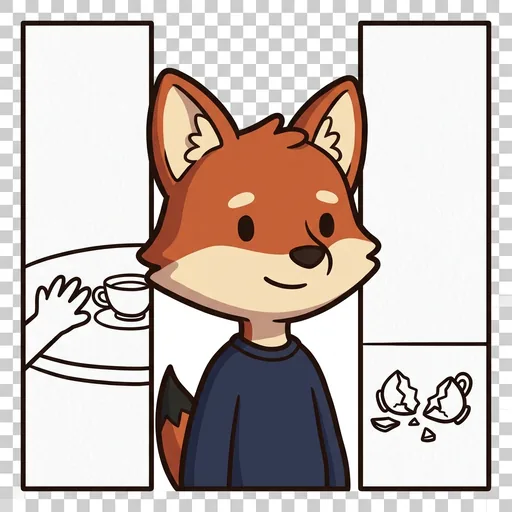
Lapse
The gutter — the empty space between two panels where your own mind fills in what happened; closure, the invisible half of comics
-

Segue
The transition — how one panel flows into the next, guiding your eye and your sense of time from moment to moment
-

Vista
The establishing shot — the wide opening panel that shows you where you are before the story zooms in close
-

Jolt
The reaction beat — the panel that catches a character reacting, so a surprise or a feeling truly lands
-

Boom
The sound-effect lettering — onomatopoeia drawn right into the art, so you can see a sound as much as hear it
-
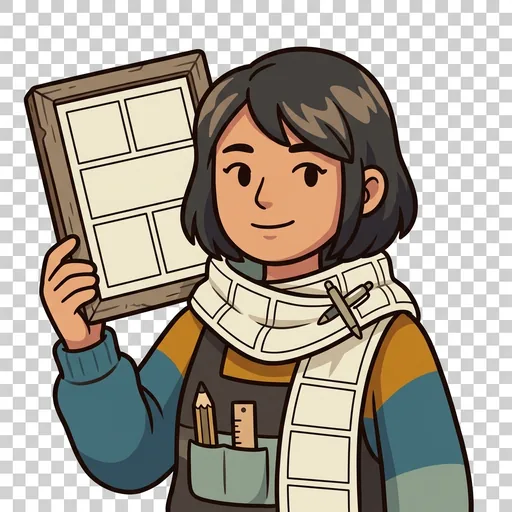
The Layout
The whole page coming together — how the establishing shot, panels, transitions, gutters, and sound-effect lettering arrange to guide one reader eye through one moment of story


