
Twain
THE FORK / DOUBLE-THREAT — make one move that creates TWO winning threats at once, so the opponent can only block one and you win with the other. The tactic that recurs across Connect-4, Gomoku, and beyond.
Chapter — Twain and the Two Paths at Once
Twain never puts all his hope in a single line.
Where another player builds one threat and hopes it gets through, Twain builds his pieces so that a single move suddenly threatens to win in two places at once — a fork. The opponent, with only one move to answer, blocks one threat, and Twain simply wins with the other. “One threat is easy to stop,” he says, placing the piece that opens both. “So I never rely on one. I set up two, with a single move, and let you choose which one to lose to.”
Twain became a two-paths thinker because a single path once let him down badly.
As a young piece he’d pour everything into one plan — one line, one hope — and when it got blocked, he had nothing. No backup. He’d be crushed, every time, because he’d bet everything on a single threat that a single move could stop. He lost a lot of games this way, and worse, he took each block hard, as if a blocked plan meant he had failed.
An old tactician showed him a different way. “You keep building one threat,” she said. “So of course one block ends you. Watch this.” She placed her pieces so that they shared a key square — a move that would complete a line here AND a line there. “Now I make one move, and I threaten in two places. You can only block one. This isn’t luck. It’s a fork — and it comes from setting up two paths that a single move can’t both stop.” Twain saw it and never forgot it. The answer to “what if my plan gets blocked?” wasn’t to hope harder. It was to have two plans that one block couldn’t kill.
He came to the GridForge academy as the piece who teaches tactics. On his first day the head asked him to show the strongest idea in Connect-4.
Twain didn’t demonstrate a single clever line. He built a position where his next move would create an open three in two directions at once. Then he placed it. “Now I threaten to make four here, and four there,” he said. “One move. Two threats. You block one —” he let the head block ”— and I take the other. That’s the fork. It’s not about one brilliant line. It’s about building so that a single move opens two wins.”
“Everyone else hunts for one winning line,” the head said. “You build so that two exist at once.” And that has been his role ever since: the app’s tactician of the double threat.
A frustrated young piece came to him. “I make a threat, they block it, and I’m stuck. Every time.” Twain nodded — he’d lived that exact frustration. “You’re building one threat at a time,” he said. “So one block stops you cold. Don’t build one — build so your next move makes two.” He showed the young piece how to place pieces that shared a key square, so a single move would threaten in two directions. “Now when they block one, you’re not stuck. You’ve still got the other. The trick isn’t a better single threat. It’s two threats a single block can’t both stop.”
The young piece practiced building forks, and the crushing feeling of being blocked started to fade — because now a block only ever stopped half of what it was doing.
Later the young piece admitted the deeper thing. “When my one plan fails, I feel like I failed.”
Twain set down a piece thoughtfully. “I used to feel exactly that — I’d bet everything on one line and take the block like a personal defeat,” he said. “And then I learned to always have a second path. Not because the first one’s bad, but because one block should never be able to end you. When you build two threats, a setback on one isn’t a failure — it’s just the opponent choosing which win to hand you.” He tapped two squares. “Two paths. Then a blocked plan can’t crush you, because you were never standing on only one.”
The young piece went home building forks into everything — two paths, always — and found that setbacks stung far less when a single block could only ever stop one of them.
The GridForge ensemble
Twain is part of GridForge's distributed-narrative cast. Each character embodies a different curricular primitive; together they teach the full subject.
-
Arbor
The game tree: every position branches into the moves that follow
-
Ballast
Stability and corners: the unflippable pieces in Reversi
-
Causeway
The bridge: a virtual connection that cannot be cut in Hex
-
Domino
Forcing sequences: chaining threats to keep the initiative in Gomoku
-
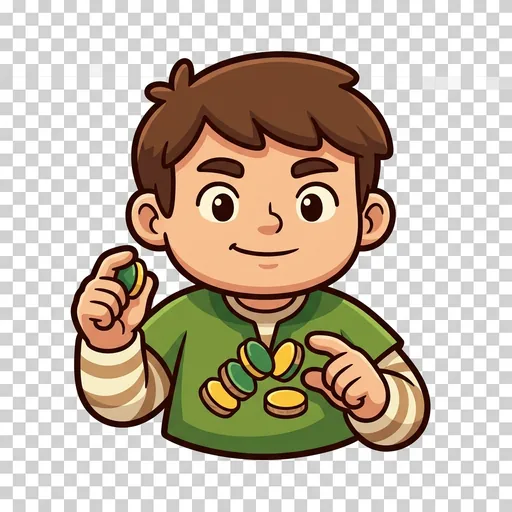
Flank
Territory flip: capturing a line of pieces in Reversi
-
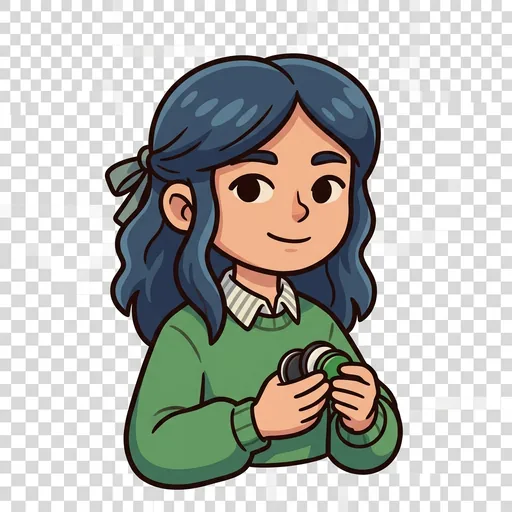
Mobi
Mobility: keeping more moves available than your opponent
-
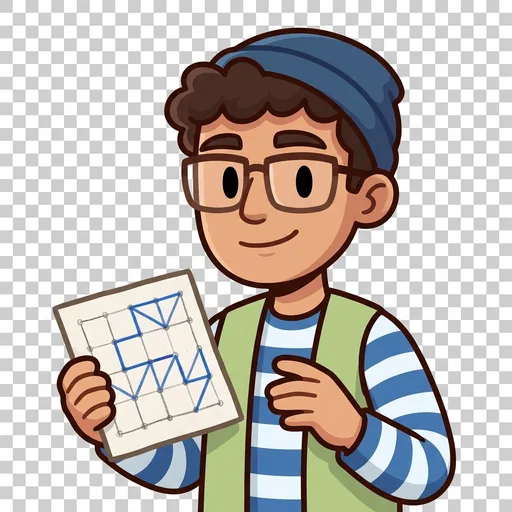
Oddwin
Parity: who-moves-last, the key to Dots-and-Boxes
-
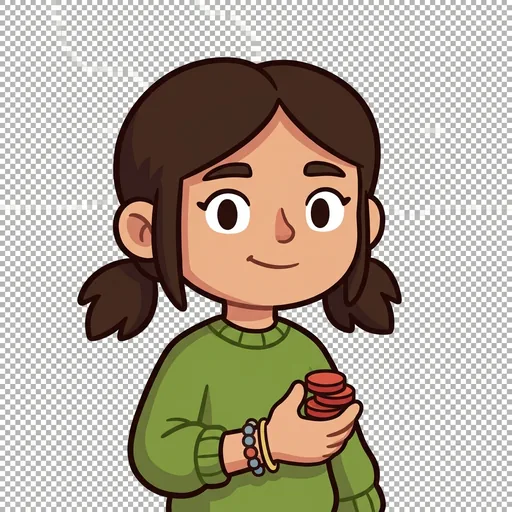
Rowan
Connection: extending a chain of your pieces toward a win