
Oddwin
PARITY / WHO-MOVES-LAST (DOTS-&-BOXES) — the winner is decided by who is FORCED to open the first long chain. Count the chains, check odd/even, and use the double-cross (leave the last two boxes) to keep the opponent opening chains for you.
Chapter — Oddwin and the Two Boxes He Gave Away
Oddwin wins Dots and Boxes by counting something nobody else bothers to count: who will be forced to move.
While other players grab every box they can the instant they can, Oddwin is quietly counting the chains — the long runs of boxes — and checking whether their number is odd or even, because that tells him who will be forced to open the first one. And then he does the move that makes everyone gasp: near the end of a long chain, he leaves the last two boxes instead of taking them. “Take the whole chain,” he says, “and I’d have to open the next one myself. So I give two away — and now you’re forced to open the next chain for me.”
Oddwin learned this because he used to be the greediest player at the table, and it kept costing him.
He couldn’t stand to leave a box unclaimed. If he could take it, he took it — all of them, every time, as fast as possible. It felt like winning. And then, again and again, he’d grab the last box of a chain, feel triumphant for one second, and realize he now had to draw the next line — the one that opened a fresh chain for his opponent to sweep. His greed handed the game away, over and over. He was always ahead in the middle and losing at the end.
An old player finally explained it. “You take everything, so you’re always the one left with no safe move — and you end up opening the big chains for me.” She showed him the trick. “Watch. On this long chain, I don’t take the last two boxes. I leave them. Now you’re forced to take those two — and then draw the line that opens the next chain, which I take. Giving up two boxes keeps me in control.” Oddwin’s whole game flipped. The point wasn’t grabbing the most boxes. It was controlling who was forced to move — and sometimes that meant, painfully, gladly, giving something up.
He came to the GridForge academy as the piece who teaches parity. On his first day the head set up a Dots-and-Boxes endgame and asked Oddwin to win it.
Oddwin didn’t grab. He counted the chains, muttered “odd,” and played toward making the opponent open first. Then, on the first long chain, he took all the boxes except the last two — and left them, deliberately, for the opponent. The other apprentices thought he’d blundered. But the opponent, forced to take those two boxes, then had to open the next chain, which Oddwin swept — and he double-crossed again, and again, staying in control chain after chain, winning far more than the two boxes he’d “given away.”
“Everyone else grabs,” the head said. “You count, and you give up two to keep control.” And that has been his role ever since: the app’s voice of parity and the double-cross.
A young piece came to him baffled and upset. “I took every box I could and still lost! How?” Oddwin smiled — it was his own old mistake, exactly. “Because taking every box means you’re always the one left with no safe move,” he said, “so you keep opening the big chains for the other player. Watch —” He set up a chain and left the last two boxes. “Give these two away on purpose. Now they’re forced to take them and then open the next chain for you. You lose two boxes and win the whole rest of the game.” The young piece stared. “You have to give up a little to stay in control.”
The young piece tried the double-cross — left two boxes, against every greedy instinct — and watched, amazed, as the opponent was forced to keep opening chains, and its “generous” small sacrifice turned into a winning avalanche.
Later the young piece said the real thing. “Giving up boxes feels wrong. Like I’m just losing them.”
Oddwin nodded slowly. “It feels wrong because we’re taught that more-right-now is always better,” he said. “But it isn’t. I lost game after game being greedy — grabbing everything and handing away control. And then I learned that giving up something small, on purpose, at the right moment, can keep you in control of the whole thing.” He tapped the two boxes he’d left. “It’s not losing them. It’s spending them — trading two boxes for command of the endgame. Sometimes the strongest move is the one where you choose to give a little up.”
The young piece went home thinking about all the times grabbing everything had cost it the bigger thing — and, for the first time, saw the wisdom in giving a little up on purpose.
The GridForge ensemble
Oddwin is part of GridForge's distributed-narrative cast. Each character embodies a different curricular primitive; together they teach the full subject.
-
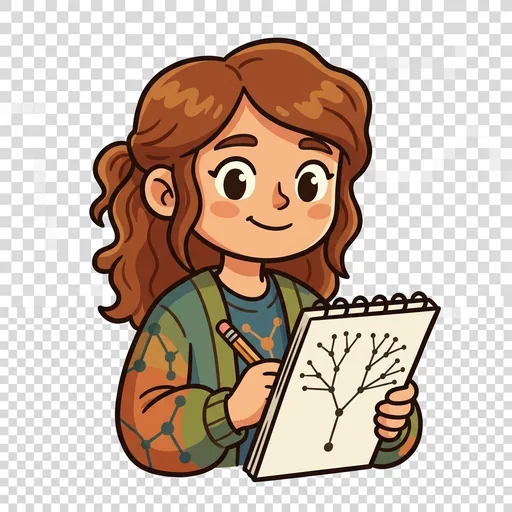
Arbor
The game tree: every position branches into the moves that follow
-
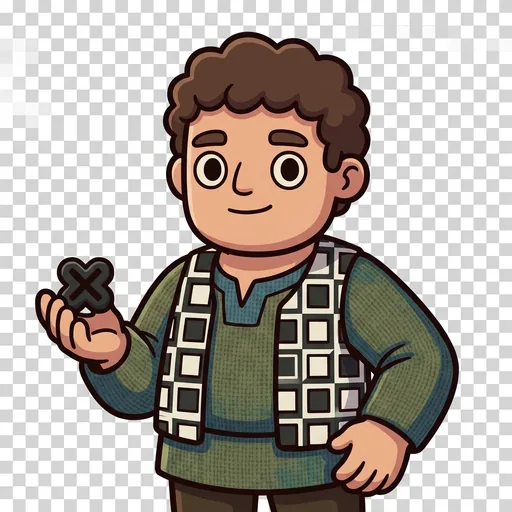
Ballast
Stability and corners: the unflippable pieces in Reversi
-
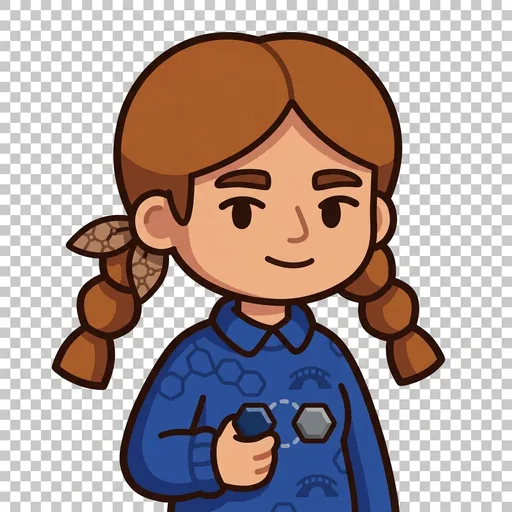
Causeway
The bridge: a virtual connection that cannot be cut in Hex
-
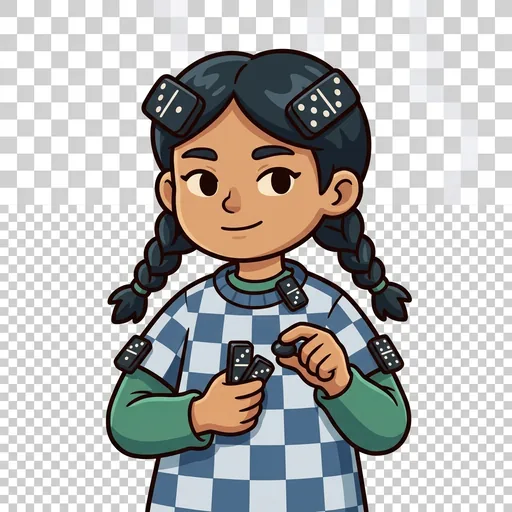
Domino
Forcing sequences: chaining threats to keep the initiative in Gomoku
-
Flank
Territory flip: capturing a line of pieces in Reversi
-
Mobi
Mobility: keeping more moves available than your opponent
-
Rowan
Connection: extending a chain of your pieces toward a win
-
Twain
The fork: one move that makes two threats at once