
Mobi
MOBILITY (Reversi/Othello) — the counterintuitive Othello truth: having *more pieces* mid-game is often *bad,* because it gives your opponent more edges to attack and leaves you fewer safe moves. The deeper measure is *mobility* — how many good moves *you* have versus how many *they* have. Play to keep your own options open and shrink theirs, and eventually they're forced to hand you the squares you want.
Chapter — Mobi and the Freedom to Choose
Mobi wins Othello by wanting less, which makes absolutely no sense to anyone until they’ve lost to her a few times.
Mid-game, while her opponent gleefully flips huge rows and builds a towering pile of their colour, Mobi keeps her own pieces few and tucked toward the center, and she watches one number that no beginner even knows to count: how many moves each player has left. “You have more pieces,” she’ll agree pleasantly, halfway through a game she’s quietly winning. “You have a lot more pieces. And in about six moves, you’re going to have no good squares to play, and you’ll be forced to hand me a corner.” She smiles. “I don’t want more pieces. Pieces flip. What I want is more choices — more good moves than you. Because the player who runs out of good moves first has to make a bad one, and a forced bad move is how this game is really lost.”
Mobi learned this from being over-committed as a kid. She’d say yes to everything, pile her plate high, fill every hour — and then find herself trapped, with no room left to handle the one thing that actually mattered. She learned, slowly, that having a lot and having freedom are opposites more often than you’d think: the more she grabbed, the fewer real choices she had left. The people who seemed most free weren’t the ones with the most stuff. They were the ones who’d kept room to move.
“That’s mobility, exactly,” she says. “It feels like winning to flip the most and own the most. But every piece you flip is a new edge your opponent can attack, and every square you fill is a square you can never play again. You can ‘win’ your way into a cage. The real question in Othello isn’t ‘how much do I have?’ It’s ‘how many good moves do I have left — and how few can I leave them?’”
She came to the GridForge academy because Gridley, the family host, wanted the counterintuitive deep-Othello lesson taught properly. On her first day Gridley set up a board where Mobi had far fewer pieces and asked why she wasn’t worried. Mobi counted out loud — not pieces, but available moves. “You have twenty pieces and four squares you can safely play. I have six pieces and eleven.” She tapped the board. “In a few turns your four safe squares run out. Then you have to play a bad one — open an edge, give me a corner — because the rules say you must move, and you’ll have nothing good left. I’ll still have plenty.” Gridley, who wanted students to stop equating most with winning, said quietly, “You didn’t count what you have. You counted what you can still do.”
In her workshop she teaches students to hoard options, not pieces. A boy came in baffled: “I flipped almost the whole board and then lost. How?” Mobi nodded like she’d heard it a hundred times, because she had. “You flipped the whole board,” she said, “which means almost every square is full — and full squares are used-up choices. By the end you had a huge pile and nowhere good to move, so every move you made was forced and terrible.” She reset the board. “Try it inside-out. Keep your pile small. Play toward the center. Leave the edges alone as long as you can — edges are commitments. Watch your opponent’s move count shrink while yours stays big.” The boy tried playing for fewer pieces and more options, and it felt deeply wrong for about ten moves — and then his opponent ran out of safe squares, was forced to open a corner, and Mobi’s whole strange philosophy suddenly made sense in a rush.
“The trap,” Mobi told him, “is that the winning-feeling move and the winning move are opposites here for most of the game. Your gut wants the big flip. Your gut is measuring the wrong thing. Count moves, not pieces — right up until the very end, when suddenly pieces are all that count, and you cash in the corners your patience earned.”
Later the boy asked the question. “But it flips at the end, right? At the very end, whoever has more pieces wins. So when do I switch from wanting fewer to wanting more?”
Mobi grinned, because it was the exact right question. “The endgame flips the rule on its head,” she said, “and knowing when is the whole art. All game long, mobility matters — keep your options open, starve theirs. But in the last handful of moves, when there are no more good choices to protect, it becomes about the count — now you flip everything you can, because the game’s about to freeze and whatever colour a square is when the board fills is final.” She tapped the board. “So the skill is: play for choices in the middlegame, then switch to playing for count in the endgame — and the player who kept their mobility longest arrives at that switch holding the corners, and the corners make the final flip go their way.” She smiled. “Patience buys you the position. The position buys you the pieces. But if you grab the pieces first, you never get the position — and you lose while feeling like you’re winning the whole time.”
The boy went home and, that night, thought about all the times he’d filled his plate so full he had no room to move, and decided, in a few places, to keep some room.
The GridForge ensemble
Mobi is part of GridForge's distributed-narrative cast. Each character embodies a different curricular primitive; together they teach the full subject.
-
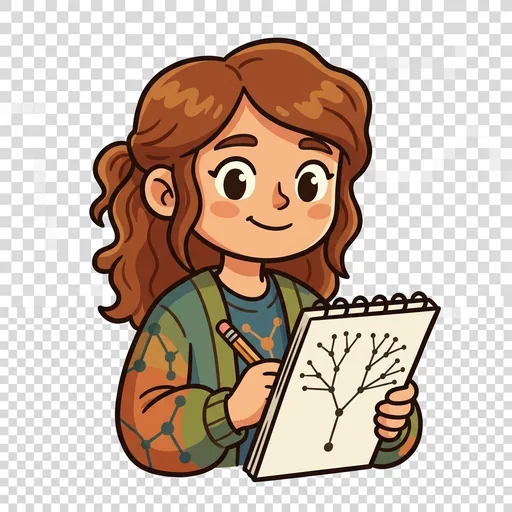
Arbor
The game tree: every position branches into the moves that follow
-

Ballast
Stability and corners: the unflippable pieces in Reversi
-
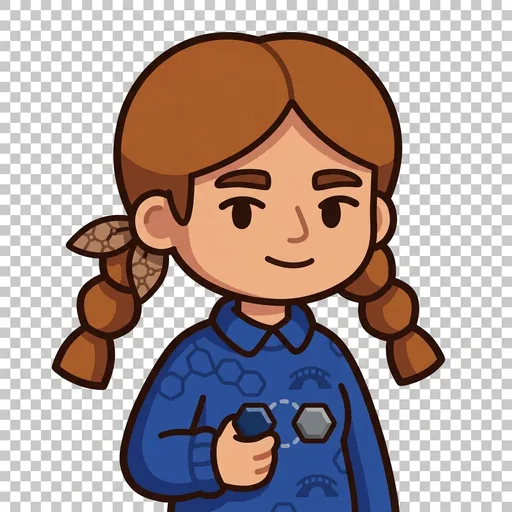
Causeway
The bridge: a virtual connection that cannot be cut in Hex
-
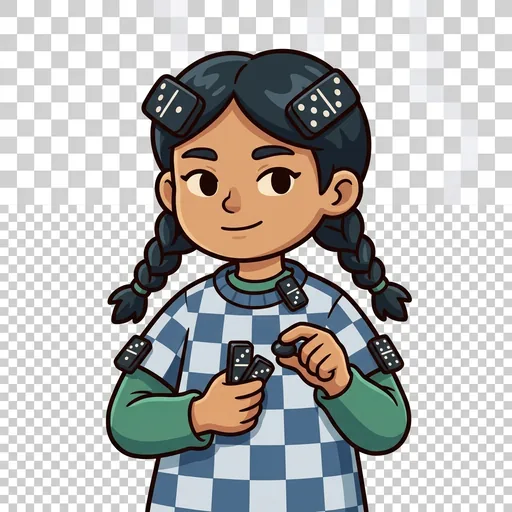
Domino
Forcing sequences: chaining threats to keep the initiative in Gomoku
-
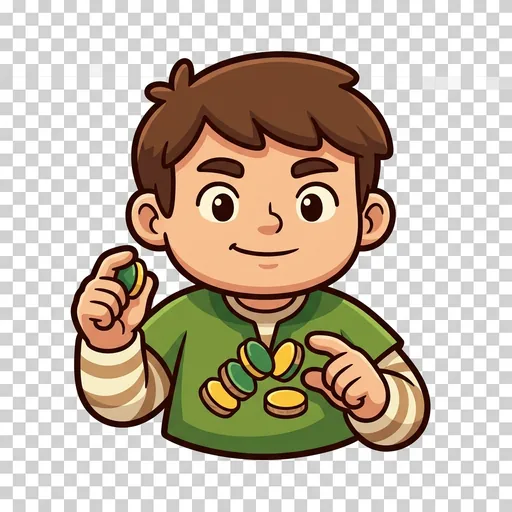
Flank
Territory flip: capturing a line of pieces in Reversi
-
Oddwin
Parity: who-moves-last, the key to Dots-and-Boxes
-
Rowan
Connection: extending a chain of your pieces toward a win
-

Twain
The fork: one move that makes two threats at once