
Ballast
STABILITY / CORNERS (Reversi/Othello) — in a game where pieces flip colour constantly, a *corner* can never be flipped — it has no two sides to be trapped between. A corner is *permanent.* From a stable corner, whole edges become stable too. The deepest Othello skill is valuing what *lasts* over what looks big right now, because a board full of your colour can flip in one move — but a corner is forever.
Chapter — Ballast and the Square That Could Not Be Taken
Ballast has watched more players lose while “winning” than anyone else at the academy, and it has made him very calm.
He plays Othello — the game where every piece can flip from your colour to your opponent’s and back — and while beginners chase the thrill of flipping a huge row and filling the board with their colour, Ballast mostly ignores all of it. He waits. He angles quietly toward a corner. And when he takes it, he sets his piece down with a small, final sound, because he knows something the flashy players don’t: “This one,” he says, tapping the corner, “can never be flipped. It has no two sides to be caught between. Everything else on this board can change colour a dozen times before the game ends. But this corner is mine, right now, forever. And in a game where everything flips, the only thing that counts at the end is the thing that couldn’t.”
Ballast grew up watching people chase things that didn’t last — the loudest friend group that dissolved by spring, the toy everyone wanted and forgot in a week, the “sure thing” that wasn’t. He noticed, quietly, that the biggest, shiniest, most-of-it things were often the least stable — here today, flipped tomorrow — and that the small, solid, unglamorous things were the ones still standing when the dust cleared. It made him patient in a way that frustrated flashier kids, who mistook his patience for not trying. He was trying. He was just trying for the things that stayed.
“That’s Othello, and it’s a trap the game sets on purpose,” he says. “Halfway through, you can have almost the whole board your colour and feel like you’re crushing it — and then your opponent makes two moves and half of it flips back. All that ‘winning’ was borrowed. It was never yours to keep. A corner is owned. Learn the difference between borrowed and owned, and you’ve learned the deepest thing this game has to teach.”
He came to the GridForge academy because Gridley, the family host, needed someone to teach that not all squares are equal — that position matters more than count. On his first day Gridley set up a board where Ballast was far behind on pieces and asked him to explain why he was actually winning. Ballast pointed at the two corners he held, and the stable edges anchored to them. “Count the pieces and I’m losing,” he agreed. “But count the pieces that can’t be flipped — the ones anchored to my corners — and every one of those is a guaranteed point at the end. Your big pile in the middle?” He gestured at the opponent’s board-filling colour. “Half of it is loans. Mine is small and permanent. At the end, permanent wins.” Gridley, who wanted students to stop confusing momentary with real, said quietly, “You didn’t count the board. You counted what would survive it.”
In his workshop he teaches students to resist the flip. A girl came in thrilled by a move that flipped eleven pieces at once. Ballast smiled, because he remembered that thrill. “Eleven pieces! It feels amazing,” he said. “Now — how many of those eleven can your opponent flip back next turn?” The girl checked, and her face fell. ”…Most of them.” “Right. So that giant move was mostly sound and light. It felt like power. It was rented power.” He set up a corner opportunity beside it — modest, just one piece, no flashy flip. “This move flips nothing and looks like nothing. But it takes a corner, and a corner is stability — it can’t be undone, and it makes the edge beside it un-flippable too.” He looked at her kindly. “The hardest skill in this game is wanting the quiet, permanent move more than the loud, temporary one. Your eyes want the big flip. Train them to want the corner.”
The girl practiced choosing the small stable move over the big flashy flip, and — a few losses later — watched her “boring” corners quietly hold the whole board together while her opponent’s flashy piles flipped away.
Later the girl asked the question. “But if I only ever go for corners, isn’t that too slow? Can’t my opponent just take the middle and beat me while I wait?”
Ballast nodded, pleased. “Yes — which is why it’s not ‘only corners,’ it’s valuing correctly,” he said. “A corner isn’t valuable because it’s a corner. It’s valuable because it’s stable — it can’t be taken back. So the real skill isn’t ‘grab corners.’ It’s asking of every move: how much of this is permanent, and how much is borrowed?” He tapped the board. “Sometimes a middle move IS worth it — because it sets up a corner, or denies one to your opponent. And here’s the twist that catches everyone: often the best move is to not flip much, to keep your pile small, because a small position has fewer edges for your opponent to attack, and it steers them into giving you the corner.” He smiled. “Stability isn’t about playing scared. It’s about knowing, on every single move, the difference between what you’d keep and what you’d only hold for a minute — and spending your moves on keep.”
The girl went home and, that night, thought about the difference between the things in her life that were borrowed and the things that were truly hers, and found herself, a little more than before, taking care of the corners.
The GridForge ensemble
Ballast is part of GridForge's distributed-narrative cast. Each character embodies a different curricular primitive; together they teach the full subject.
-
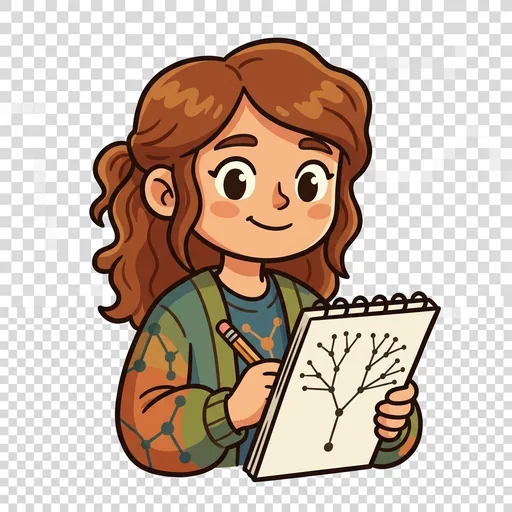
Arbor
The game tree: every position branches into the moves that follow
-
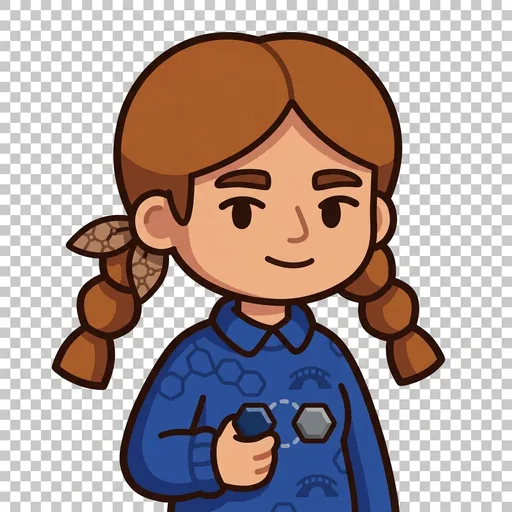
Causeway
The bridge: a virtual connection that cannot be cut in Hex
-
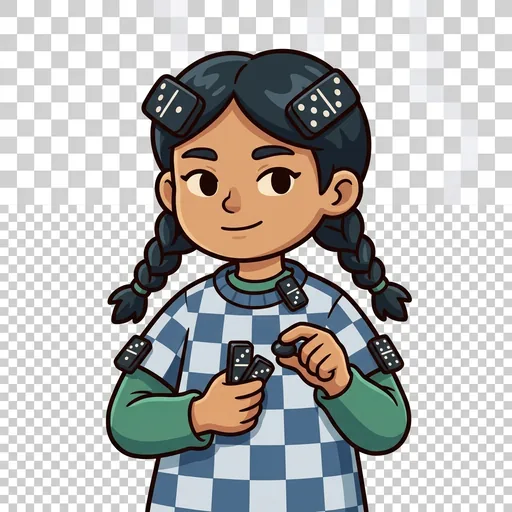
Domino
Forcing sequences: chaining threats to keep the initiative in Gomoku
-

Flank
Territory flip: capturing a line of pieces in Reversi
-

Mobi
Mobility: keeping more moves available than your opponent
-

Oddwin
Parity: who-moves-last, the key to Dots-and-Boxes
-
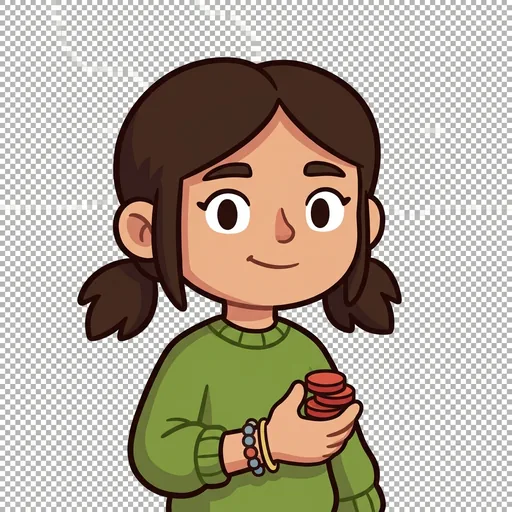
Rowan
Connection: extending a chain of your pieces toward a win
-

Twain
The fork: one move that makes two threats at once