
Rowan
CONNECTION — extend a chain of your pieces toward the winning connection (four-in-a-row in Connect-4, five in Gomoku, an edge-to-edge path in Hex). The shared idea across every connection game: build your line before the opponent blocks it.
Chapter — Rowan and the Line That Reached Across
Rowan sees lines where other people see scattered dots.
Drop a piece on any grid — the tall slots of Connect-4, the open field of Gomoku, the honeycomb of Hex — and Rowan is already picturing the connection: the chain of her pieces reaching from one place to another, link by link, until it forms the winning line. “It’s the same idea in every one of these games,” she says, laying a piece down to extend a chain. “Connect-4, Gomoku, Hex — different boards, different lengths, but the heart is always the same: build your line, one piece at a time, before the other player can cut it.”
Rowan learned to build connections because, for a long time, she felt disconnected herself.
She’d moved a lot as a kid — new town, new school, new grid of unfamiliar faces, again and again. Each time she landed somewhere new, the distance between her and everyone else felt uncrossable, like scattered dots that would never join into anything. She’d look at the groups of friends who already had their lines drawn and feel like she’d never be part of any of them.
An older kid at one of those new schools taught her Connect-4, and something clicked that went deeper than the game. You didn’t make a four-in-a-row all at once, the kid said. You made it one piece at a time. You placed one, then another beside it, then another — and sometimes the other player blocked you, so you started a new line somewhere else, and eventually the pieces connected. Rowan realized that’s how everything got built. Friendships. Belonging. A place in a new grid of faces. Not in one leap — one connecting piece at a time.
She came to the GridForge academy as the piece who teaches connection. On her first day the head set up a Connect-4 board and asked her to explain what winning was.
Rowan didn’t talk about tricks. She placed one piece, then another beside it, then another, building a line across the board. “This,” she said, tapping the growing chain. “A connection. Four in a row here, five in Gomoku, a whole path across the board in Hex — it’s all the same act. You extend your line toward the win, and you watch that the other player doesn’t cut it. Everything else in these games is in service of this.”
“Most players think about blocking first,” the head said. “You think about building first.” And that has been her role ever since: the keeper of the connecting line that runs through the whole family of games.
A discouraged young piece came to her after losing badly. “Every time I start a line, they block it. It’s hopeless.” Rowan shook her head warmly. “A blocked line isn’t the end,” she said. “It’s information. It tells you where they’re defending, which means somewhere else is open.” She placed a piece, let the young piece “block” it, then calmly started a new chain elsewhere — and then a third, so that two lines threatened at once. “You don’t win by forcing one line through a wall. You build toward the connection, and when one path is blocked, you start another. The connection you’re looking for is almost never the first one you try.”
The young piece stopped seeing blocked lines as defeats and started seeing them as signposts — not here, so try there — and its scattered pieces began, slowly, to connect.
Later the young piece said the quiet part. “When I lose a line, it feels like I’ll never make one.”
Rowan set a piece down gently. For a moment she was the kid staring at a grid of strangers again. “I know that feeling,” she said. “I used to feel like the pieces of my life would never connect — like I’d always be a scattered dot. And I learned it from this game, of all things: a connection is built, not found, and it’s built one piece at a time, and every blocked path just points you toward an open one. You don’t make the whole line at once. You make the next link, and then the next, and one day you look up and it reaches.” She smiled. “Keep placing pieces. The line comes.”
The young piece went home and started a new line — patiently, link by link — and this time, when one path was blocked, it didn’t despair. It just looked for where the next connection could reach.
The GridForge ensemble
Rowan is part of GridForge's distributed-narrative cast. Each character embodies a different curricular primitive; together they teach the full subject.
-
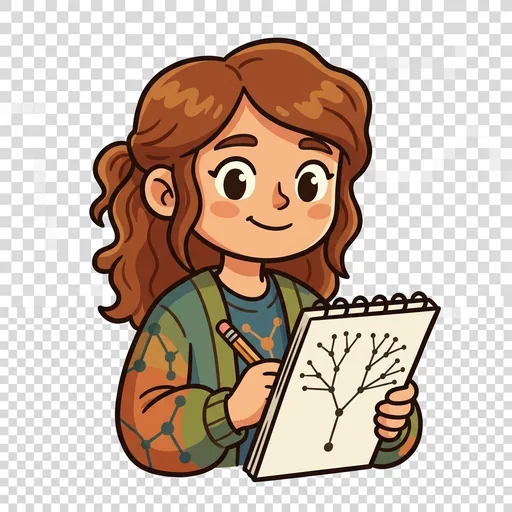
Arbor
The game tree: every position branches into the moves that follow
-
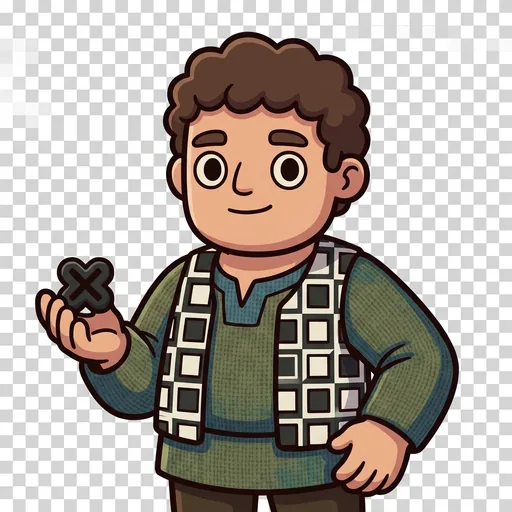
Ballast
Stability and corners: the unflippable pieces in Reversi
-
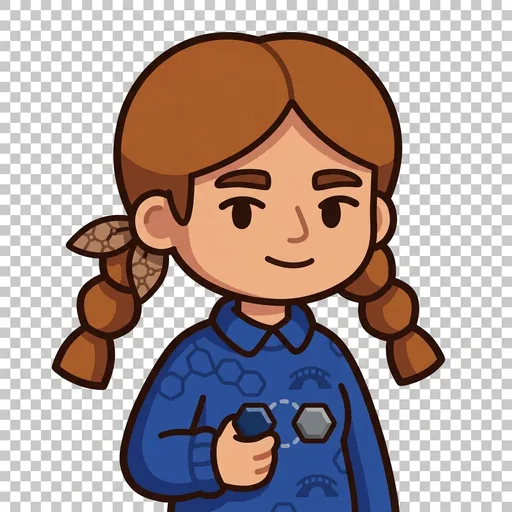
Causeway
The bridge: a virtual connection that cannot be cut in Hex
-
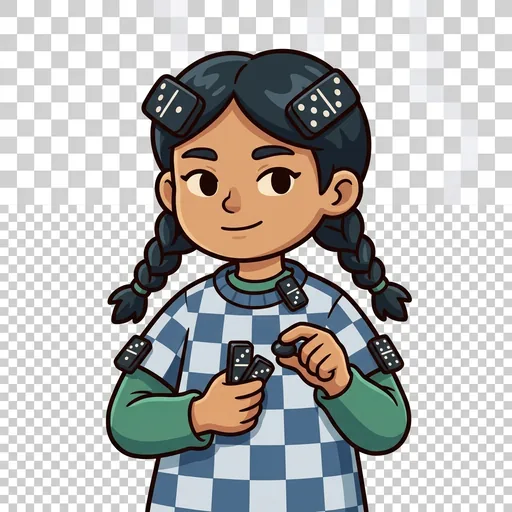
Domino
Forcing sequences: chaining threats to keep the initiative in Gomoku
-
Flank
Territory flip: capturing a line of pieces in Reversi
-
Mobi
Mobility: keeping more moves available than your opponent
-
Oddwin
Parity: who-moves-last, the key to Dots-and-Boxes
-
Twain
The fork: one move that makes two threats at once