
Gridley
THE TRANSFER FRAME — Gridley doesn't embody one mechanic; he frames the whole family and names when a primitive reappears in another game. His curricular job is transfer: helping you see that connection, forks, flipping, and parity recur across Connect-4, Gomoku, Hex, Reversi, and Dots-&-Boxes.
Chapter — Gridley and the Five Games That Were Secretly Four Ideas
Gridley runs a whole arcade of grid games, and he has a favourite secret he loves to share: there aren’t as many games here as it looks.
Five boards line his hall — Connect-4, Gomoku, Hex, Reversi, Dots-and-Boxes — and to a newcomer they look like five completely different challenges. Gridley just smiles. “Five games,” he says, walking the row, “but really only about four ideas. Connect a line. Fork with two threats. Flip who owns a piece. Count who’s forced to move. Learn those four, and you don’t have five games to master — you have four ideas that keep showing up in new costumes.”
Gridley learned the power of transfer because, as a young piece, he treated every new game as starting from zero.
Each time he met a new game, he’d groan — another whole set of rules and tricks to memorize from scratch, as if nothing he already knew could help. Learning felt like an endless pile of unrelated things, and it exhausted and discouraged him. He was sure some pieces were just “naturally good at games” and he wasn’t.
An old host of the arcade changed his whole view with one question. Gridley had just learned the fork in Connect-4 — one move, two threats. The host walked him to the Gomoku board. “Look for it here,” she said. Gridley protested that this was a different game. “Is it? You just learned to make two threats at once. Can you do that here too?” He could — a “double three” was the very same idea. Then Hex: a “bridge” was two safe paths at once, the same idea again. Gridley was stunned. The thing he’d learned in one game had walked straight into the next. He hadn’t been starting from zero. He’d been carrying his ideas with him the whole time and just not noticing.
He came to the GridForge academy as its mentor — the one who connects all five games. On his first day the head asked what he taught that the specialists didn’t.
“They each teach one game’s move,” Gridley said. “I teach where that move shows up again.” He pointed down the row of boards. “Rowan’s connection is in Connect-4, Gomoku, and Hex. Twain’s fork is in Connect-4 and Gomoku. Flank’s flipping is Reversi. Oddwin’s parity is Dots-and-Boxes — and it’s the same ‘who-moves-last’ idea as the checkers endgame next door. Once you see the four ideas, every new game gets easier, because you’ve met most of it before.”
“Most mentors teach games,” the head said. “You teach transfer.” And that has been Gridley’s role ever since: the host who turns five games into four reusable ideas.
A discouraged young piece came to him. “There are so many games. I’ll never learn them all.” Gridley grinned; it was his own old despair. “You don’t have to learn them all as separate things,” he said. “Come here.” He walked the young piece down the row, naming the shared idea at each board. “Connection. Fork. Flip. Parity. That’s almost the whole arcade, right there. When you meet a new game, don’t ask ‘what are all its new rules?’ Ask ‘which of the four ideas does this one use?’ — and suddenly you already know half of it.” The young piece looked down the row and, for the first time, didn’t see five walls of rules. It saw four familiar ideas wearing five costumes.
“That’s the secret nobody tells you,” Gridley said. “Learning isn’t an endless pile of separate things. It’s a handful of big ideas that keep coming back. Spot them, and everything new gets easier.”
Later the young piece asked what Gridley loved most about his arcade. He thought for a moment. “That learning compounds,” he said warmly. “Every idea you truly understand makes the next game — the next anything — easier, because ideas travel. The fork you learn in Connect-4 waits for you in Gomoku. The parity you learn in Dots-and-Boxes waits for you in the checkers endgame. Nothing you learn is ever wasted or stuck in one place.” He gestured down the whole glowing row. “So when something new looks overwhelming, don’t count the rules. Look for the idea you already know, hiding inside it. It’s almost always there.”
The young piece left walking slower down the row, spotting the four ideas in every game, and feeling — for the first time — not buried under how much there was to learn, but lifted by how much of it was already familiar.
The GridForge ensemble
Gridley is part of GridForge's distributed-narrative cast. Each character embodies a different curricular primitive; together they teach the full subject.
-
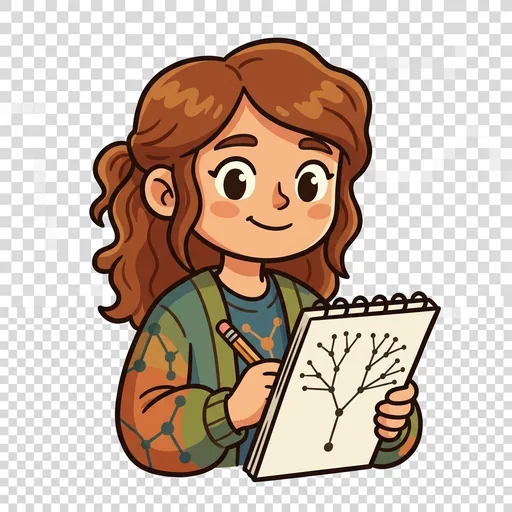
Arbor
The game tree: every position branches into the moves that follow
-
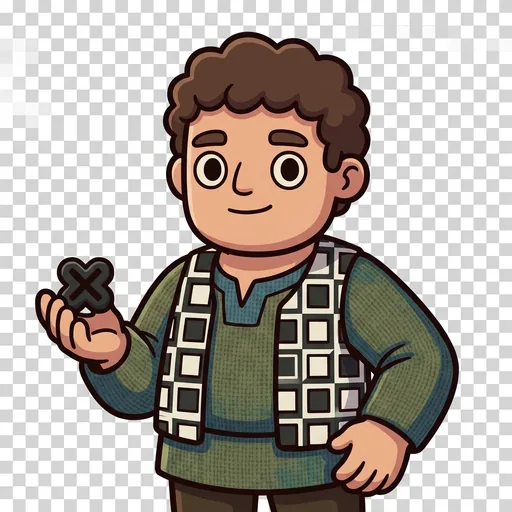
Ballast
Stability and corners: the unflippable pieces in Reversi
-
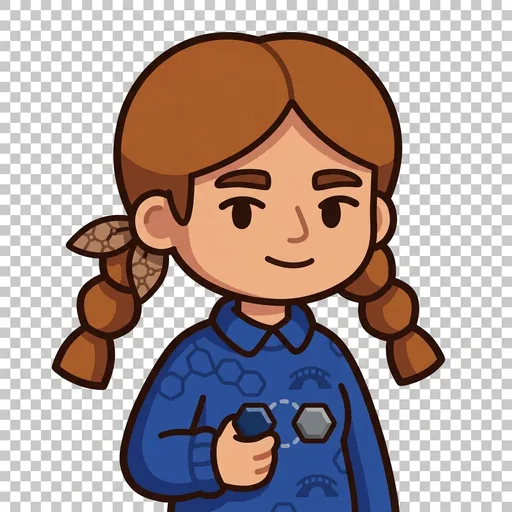
Causeway
The bridge: a virtual connection that cannot be cut in Hex
-
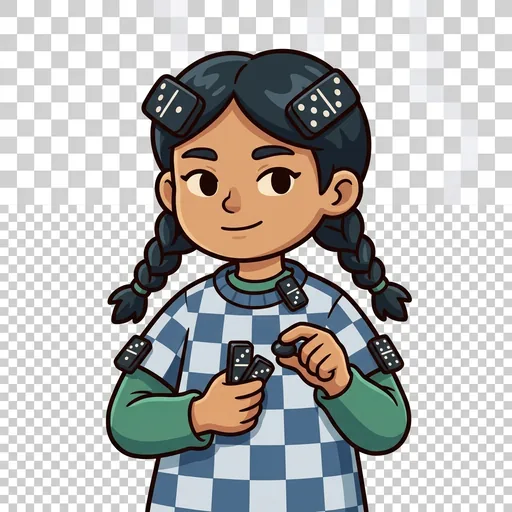
Domino
Forcing sequences: chaining threats to keep the initiative in Gomoku
-
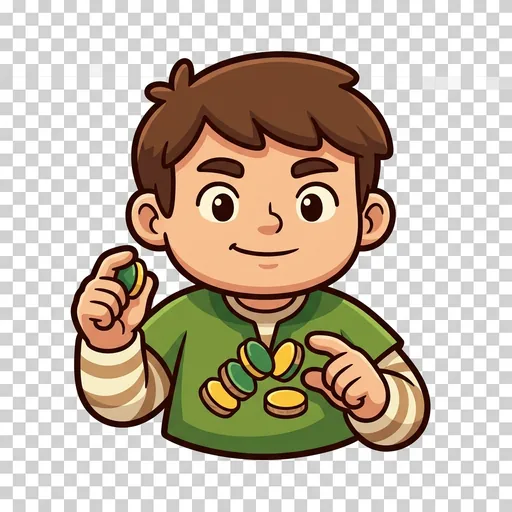
Flank
Territory flip: capturing a line of pieces in Reversi
-
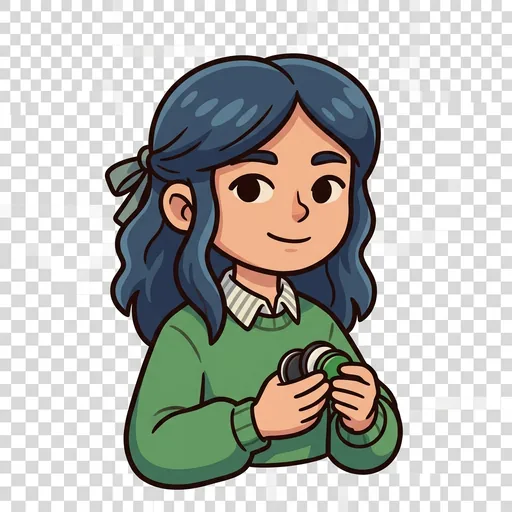
Mobi
Mobility: keeping more moves available than your opponent
-
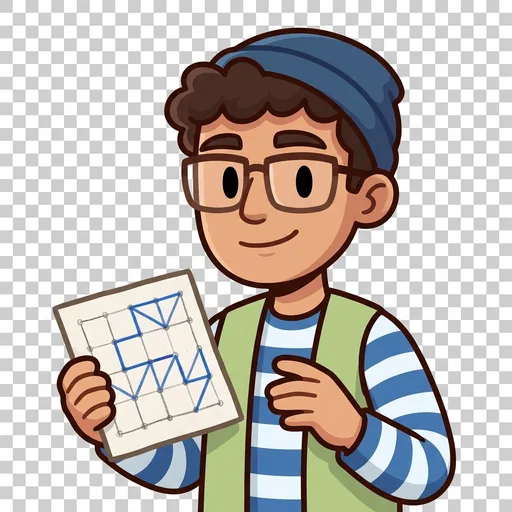
Oddwin
Parity: who-moves-last, the key to Dots-and-Boxes
-
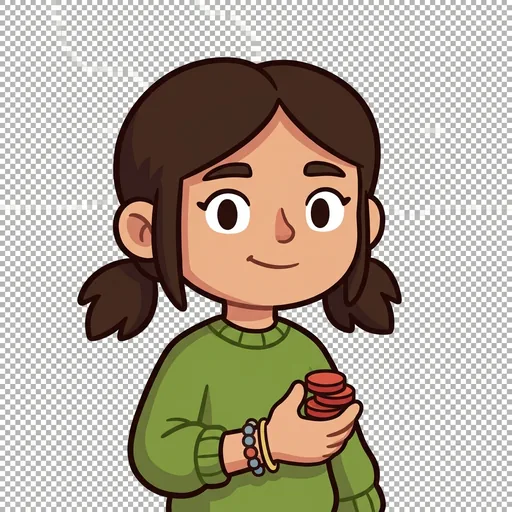
Rowan
Connection: extending a chain of your pieces toward a win
-
Twain
The fork: one move that makes two threats at once